

Indian companies are striving to expand their exports over the coming years, as the government focuses on trying to narrow the trade deficit and countries diversify their supply chains geographically.
“I think there’s generally a realisation that India has to play a larger role in the global supply chain,” says Adarsh Sharma, managing director of consultancy Primus Partners.
The coronavirus pandemic helped to accelerate this process, he says.
However, India’s exporters are facing headwinds amid fears of a global recession and currency fluctuations, which could hamper businesses in the near term, analysts say.
With India’s export contribution to global trade still relatively low, this leaves enormous scope for growth this decade.
Merchandise exports from India have the potential to more than double to $1 trillion in 2028, up from $418 billion in the financial year to March 2022, according to Bain & Company. This is helped by factors including diversification, government initiatives to bolster manufacturing in the country and greater investment into the sector.
Among the companies looking to capitalise on the opportunity is Godrej Process Equipment, which manufactures equipment for the oil and gas sector. The company is part of one of India’s oldest conglomerates, Godrej Group.
“We have supplied to 36 countries so far and targeting to reach 40 by next year,” says Hussain Shariyarr, senior vice president and business head of Godrej Process Equipment.
Exports make up about 40 per cent of the company’s business and the target is to eventually increase it to as much as 80 per cent, he adds.
To help expand its exports, Godrej has invested in expanding its manufacturing facility in Dahej in the western state of Gujarat.
“The business has been enhancing its capacity and capability to focus on and expand its global footprint,” Mr Shariyarr says, adding that the company’s exports slumped during the pandemic, but overseas business is recovering.
“With the prospects of major global projects in the Middle East and America, we are gradually getting more export business,” he says.
Along with industrial machinery, products including chemicals, pharmaceuticals, electronics, automotive and textiles will play a key role in India’s exports growth, according to Bain & Company.
Although India is the world’s fifth-largest economy and S&P Global Ratings projects it will overtake Germany and Japan to move up to third place by 2030, Bain’s research shows that its export contribution to global trade is only 1.6 per cent.
As part of India's efforts to expand its trade, it has been working on free trade agreements. New Delhi is in the process of negotiating a free trade agreement with the UK, which it hopes will boost exports of textiles, food products and jewellery, among other goods.
The South Asian country’s free trade agreement with Australia will come into effect on December 29.
Earlier this year, India and the UAE signed a Comprehensive Economic Partnership Agreement, which is aimed at increasing the total value of bilateral trade in goods to more than $100 billion within five years.
-
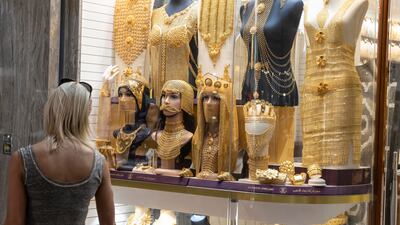
The Gold Souk in Deira on the banks of the Dubai Creek. An agreement between the UAE and India is expected to boost trade in gold, benefitting jewellers and shoppers. All photos: Antonie Robertson / The National -

Chandu Siroya, managing director of Siroya Jewellers, says the UAE India trade pact is a win-win for both countries. -

Import duties have been removed for jewellery exported to the UAE from India. -

India has agreed to a one per cent concession on duty on gold imports from the UAE for up to 120 tonnes of gold in the first year, rising to 200 tonnes in five years. -
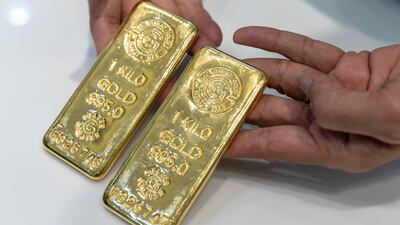
The UAE accounts for 80 per cent of India’s plain gold jewellery exports and 20 per cent of studded jewellery exports. -
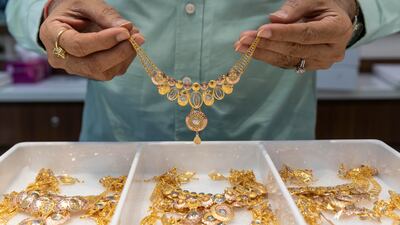
Some of the jewellery from India, Italy and Turkey on display at Siroya Jewellers in Dubai. -
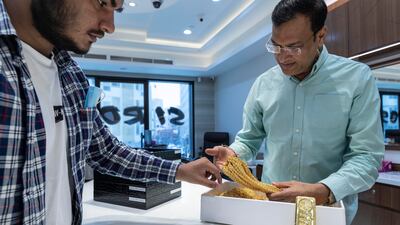
A jeweller examines a necklace at Siroya Jewellers in Dubai. -
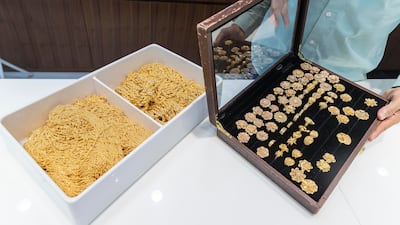
Dubai is set to become a major gateway for Indian jewellery to the world, because of the economic agreement. -
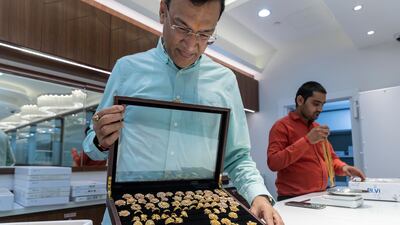
The family-owned Siroya Jewellers is one of Dubai’s biggest wholesalers, supplying jewellery to more than 30 countries. -
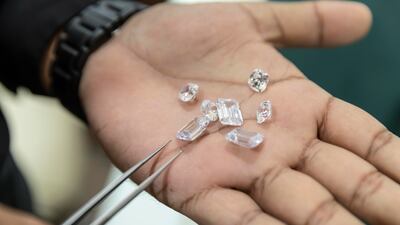
Gem and jewellery exports to the UAE declined to US$1.18 billion in 2020-2021 during the Covid-19 pandemic. -
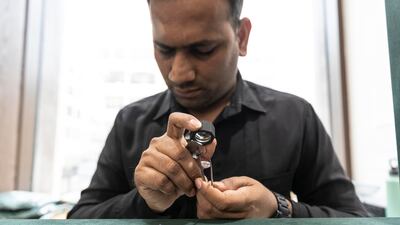
With the duty waiver, India's Gem and Jewellery Export Promotion Council has said exports of gold from India to the UAE are expected to grow to US$10 billion in 2023.


Delhi-based Pansari Group, which manufactures wheat flour and edible oils along with other food products, has started exporting its goods in recent years.
The company now ships its products to more than 60 countries, including the GCC region, Canada and Australia.
“Our experience this year has been mixed,” says Pansari Group director Shammi Agarwal.
“In the first two quarters, we saw a major hike in the number of wheat exports as Russia stopped its wheat exports due to its conflict with Ukraine, and the world looked towards India to manage the supply chain.
“Later, due to the ban imposed by the government on wheat exports, the numbers declined.”
This year, the Indian government placed bans on exports of wheat and wheat flour in an effort to cool domestic prices, as crops were affected by heatwaves.
“Currently, a lot of subsidies are suspended and duty fees are applied to control domestic food prices, which is right and beneficial for Indian customers,” says Mr Agarwal.
“We expect that by next year [when] these rules are modified, it will boost exporters’ benefit and the export numbers will rise.”
However, he points out that one of the biggest challenges exporters face in India is changeable government policies.
“The foremost challenge every Indian exporter faces is currency fluctuations — changes in dollar value,” Mr Agarwal says.
Alongside concerns about foreign exchange movements, an uncertain outlook for the global economy and inflation scenario is weighing heavily on Indian exporters’ minds.
The International Monetary Fund has warned that the global economic outlook has been getting gloomier since it issued its last projection in October, when it cut its 2023 global growth forecast to 2.7 per cent from 2.9 per cent.
Several economists now project that global growth will slip below 2 per cent in the coming year.
“Next year predictions are a drop in sales and turnover with recession looming,” says Meenakshi Kalsi, managing partner at Metro and Metro Shoes, which exports its footwear to markets in Europe and the US.
Other worrying factors include Russia's war in Ukraine, which is causing geopolitical instability and the unpredictability of materials from China and the cost of freight transports due to fluctuations in fuel prices, Ms Kalsi says.
Aditya Gupta, founder of The Rug Republic, which exports its handcrafted Indian rugs to 85 countries, has similar concerns.
The company has reported a 25 per cent decline in earnings in 2022, as consumers shift their spending preferences to travel and socialising, he says.
“I expect 2023 to be slower than 2022 because of the economic situation looming on the world with high interest rates and low GDP [gross domestic product] growth,” says Mr Gupta, adding that the company’s main markets are Europe and the US.
“Bleak global demand continued to weigh on exports in addition to the various export restrictions,” says Madhavi Arora, lead economist at Emkay Global Financial Services in Mumbai.
India’s exports grew modestly in November, official data shows. Merchandise exports totalled $31.99 billion last month, up 0.59 per cent from a year earlier. This followed a contraction of 16.7 per cent on the year in October for India’s exports.
“The underlying trend remains weak,” says Sonal Varma, chief economist for India and Asia (excluding Japan) at Nomura Holdings, a global financial services group.
India’s low exports are a challenge for the country’s trade and current account deficits — although imports have also been moderating recently amid factors including lower oil prices.
“We expect the current account deficit to narrow to 2.5 per cent of GDP in 2023 from 3 per cent in 2022, but funding this deficit will still require large debt and equity inflows,” says Ms Varma.
Boosting exports would help to address the imbalance.
lead economist, Emkay Global Financial Services
“I think from an India standpoint, it’s going to be a two way, or rather two-pronged strategy, not just looking at increasing exports, which brings in the dollar, but also looking at import substitution,” says Mr Sharma of Primus Partners.
“As a country, we have a huge dependency on imports of goods and commodities.”
Working on ensuring that Indian goods meet the quality and various standards set by overseas markets is another hurdle for the country and companies to work on.
“We see the Indian produce is also getting better and better, to be able to match the demand and the quality standards of the other countries,” says Sharath Loganathan, co-founder of Indian fresh food supply chain company Ninjacart, which is backed by US retail giant Walmart.
The company has expanded internationally, with the launch in September of an import-export platform. “There's a lot of opportunity, but there's a lot more to do,” Mr Loganathan says.

