


Global exports of the creative economy exceeded $1.62 trillion in 2020, highlighting that the sector offers an opportunity for countries to tap into to boost their economies, a study by the UN Conference on Trade and Development (Unctad) has found.
Decade-long data analysed by Unctad revealed that the value of creative goods increased by a quarter to $524 million in 2020 from $419m in 2010, while exports of creative services more than doubled to $1.1tn from $487 billion during the same period, the agency said in a report.
Notably, when compared to World Bank data for 2021, the $1.62tn figure surpasses the gross domestic product of all countries except for 11, further highlighting the enormous potential the sector has.
"International trade in creative goods and services generates increasing revenues for countries, but creative services exports vastly exceed those of creative goods," Rebeca Grynspan, the secretary general of Unctad, wrote in the report.
"Yet more data and innovative and multidisciplinary policy responses are needed to enhance the development impacts of the creative sector. This is essential, as the creative economy provides all countries, particularly developing economies, with a feasible option for development."
Definitions of creative industries vary by organisations, but Unctad describes it as cycles of creating, producing and distributing goods and services that use creativity and intellectual capital as primary inputs.
They comprise a set of knowledge-based activities that produce tangible goods and intangible intellectual or artistic services with creative content, economic value and market objectives.
Fields that are considered to be part of the creative economy include cultural and natural heritage, books and press, performing arts and celebration, audiovisual and interactive media, visual arts and crafts, and design and creative services.
Other fields branching out from these are also covered, including the publishing industry and books, cinema, film and video, music, various art domains, cultural heritage museums, historical sites, archives, major cultural events, libraries and other related sub-sectors.
Ms Grynspan had already urged countries to support and grow the creative and cultural sectors and increase their contribution to the economy during the World Conference on Creative Economy in Dubai last December.
secretary general of Unctad
The UAE Cabinet last November ratified a national strategy for cultural and creative industries, with an aim to make them one of the nation's top economic contributors. The programme includes 40 projects and initiatives aimed at raising their contribution to 5 per cent of GDP, in partnership with the private sector.
However, much like practically every industry, the Covid-19 pandemic, which emerged in 2020, did not spare the creative sector.
The health crisis had a "devastating" impact on certain creative industries and deepened their pre-existing vulnerabilities, Unctad said. These sectors lost as much as 10 million jobs and contracted by about $750bn globally during the health crisis-stricken year, it added, citing industry reports.
But with restrictions largely lifted and the world returning to normality, it is expected that the creative industry — which is increasingly being noticed and supported more by economies — will strongly rebound.
The Unctad report said developing economies are more likely to export more creative goods compared to developed nations. In 2020, China was by far the largest exporter of creative goods with a $169bn value, followed by the US ($32bn), Italy ($27bn), Germany ($26bn) and Hong Kong ($24bn).
-
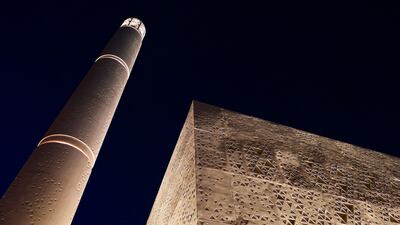
The Mosque of Light in Dubai's Al Quoz Industrial Area. Pawan Singh / The National. -
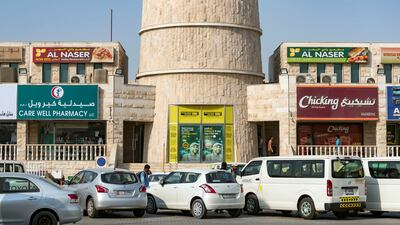
Al Quoz Mall with its fort-like structures. Chris Whiteoak / The National -

Artist Gordon Cheung exhibits work at Al Serkal Avenue in Al Quoz. Antonie Robertson/The National -
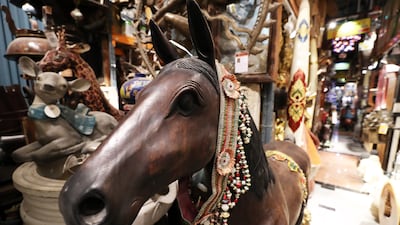
A teak horse from Thailand is on display at the Antique Museum in Al Quoz. Pawan Singh / The National -
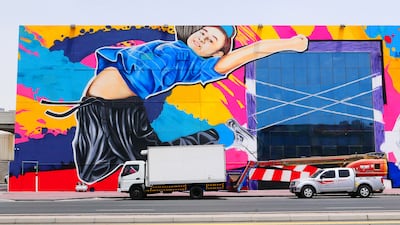
A mural brightens up the industrial area. Pawan Singh/The National. -
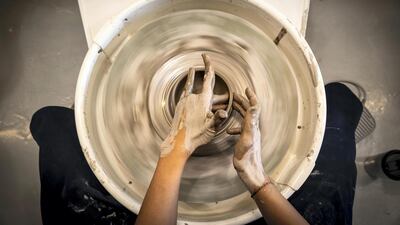
The Mud House in Al Quoz offers classes for beginners and seasoned potters alike. Antonie Robertson / The National -
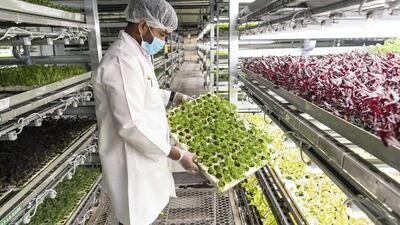
The UNS Hydroponic Farm also calls the industrial area home. Antonie Robertson/The National -
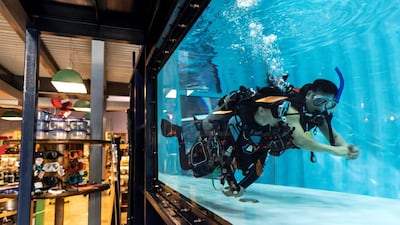
Michela Colella conducts a training session with a learner diver in the newly opened indoor pool at Dive Garage in Al Quoz 4. Antonie Robertson/The National -
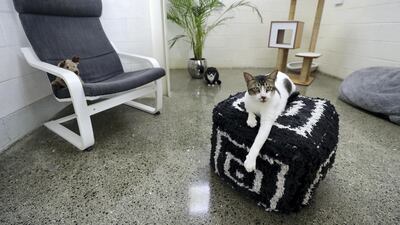
Pawsome Paws has opened a new luxury cat hotel in Al Quoz. Chris Whiteoak / The National -

Woo-hoo is a new children's edutainment museum in Al Quoz. Chris Whiteoak / The National -

Petsville water park for dogs is also in Al Quoz. Antonie Robertson/The National


The same goes for creative services: developed economies accounted for more than 82 per cent of all creative services exports in 2020, with the largest exporters being the US with a value of $206bn, followed by Ireland ($174bn), Germany ($75bn), China ($59bn) and the UK ($57bn).
"Countries have increasingly turned their attention to capturing the economic contribution of their creative industries," Unctad said.
"They produce various statistics about the creative economy, such as contribution to GDP, the share of creative goods and services from total exports and imports, the number of employed persons and enterprises in the creative sector and participation in culture."

