


S&P Global Ratings has affirmed Saudi Arabia’s rating at “A-/A-2” with a positive outlook as the Arab world’s largest economy continues to recover from the Covid-19 pandemic on the back of higher oil prices, rising oil production and the government’s reform programme.
The A-/A-2 rating indicates the obligor's strong capacity to meet its financial commitment.
“The positive outlook reflects Saudi Arabia's relatively robust GDP growth and fiscal trajectory tied to the country's improved oil and non-oil sector dynamics, ongoing structural reforms and continued emergence from the pandemic,” the rating agency said on Sunday.
Saudi Arabia’s economy continues to recover from the pandemic-induced slowdown amid higher oil prices and a rise in production, as the Opec group, led by Saudi Arabia and Russia, unwinds record production cuts put in place in 2020.
The group also decided to increase production by 100,000 barrels per day for this month on expectations of higher demand. But it decided to cut output by the same volume for October amid the Covid-19 lockdowns in China, the world’s largest importer of oil.
Demand for Saudi crude is also rising due in large part to the Ukraine conflict as western countries seek alternative supplies and reduce Moscow’s oil revenue.
Saudi oil production will average about 10.5 million bpd in 2022, compared with 9.1 million bpd in 2021, 9.2 million in 2020, and 9.8 million in 2019, S&P said.
The rating agency expects Brent oil prices to average about $103 per barrel in 2022, $85 in 2023 and $55 from 2024.
“Since the war in Ukraine erupted in late February, demand for Saudi hydrocarbons and petrochemicals has been underpinned by Western Alliance countries [including the US, the EU, the UK and Japan] wanting to swiftly secure alternative suppliers as they attempt to sharply reduce hydrocarbon imports from Russia,” S&P said.
“Macroeconomic reforms, including efforts to drive non-oil economic growth via investment and mega-projects, widen the non-oil tax base, and decouple the oil price from fiscal plans, should also help support GDP growth and fiscal balances.”
The rating agency projects Saudi Arabia's gross domestic growth to reach a 10-year high of 7.5 per cent in 2022 amid higher oil prices.
The kingdom's non-oil sector growth also remains strong, with “robust services growth as the economy continues to rebound after the pandemic”, it said. The country's economy benefits from large public investment projects, funded by the Public Investment Fund and National Development Fund, it said.
With more than $620 billion in assets under management at the end of the first quarter of 2022, PIF is one of the largest sovereign wealth funds in the world. It is playing an important role in the diversification of the country's economy and is investing in a number of projects in the kingdom including the $500bn Neom economic zone, the Qiddiya project in Riyadh and a tourism project at the Red Sea, among others.

The National Development Fund, with assets worth 496bn Saudi riyals ($132.26bn) is also supporting the kingdom’s economy with various funding programmes.
The fund has pumped more than 690bn riyals into the Saudi economy through its affiliates since it was founded in 2017.
The kingdom’s real GDP expanded by 11 per cent in the first half of 2022, its highest in more than a decade, driven by a sharp increase in oil activity by 22 per cent. Non-oil GDP grew 5.9 per cent during the same period with mining and quarrying, wholesale and retail trade, and manufacturing contributing more to the growth.
Saudi Arabia is also set to become one of the world's fastest-growing economies in 2022, with the International Monetary Fund forecasting a GDP growth of 7.6 per cent growth this year after a 3.2 per cent expansion last year.
Saudi Arabia’s economy grew by 12.2 per cent in the second quarter, exceeding initial estimates and registering the fastest expansion in more than a decade, due to higher oil prices, the kingdom’s General Authority for Statistics (Gastat) said this month.
Saudi Arabia will also return to fiscal surpluses, at 6.3 per cent of GDP in 2022 and 3.5 per cent in 2023, Gastat said.
The kingdom posted a large budget surplus of 135bn riyals in the first half 2022, reversing a deficit of 12bn riyals registered during the same period last year. Revenue was up 43 per cent to 648bn riyals, led by a 75 per cent increase in oil revenue and a 5 per cent recovery in non-oil revenue.
“Given sharply increased oil volumes and prices in 2022, we forecast a general government budget surplus of 6.3 per cent of GDP in 2022, the first since 2013. We forecast a further surplus of 3.5 per cent in 2023 before a fall in prices leads to a return to deficits in 2024 and 2025,” S&P said.
Despite the effect of the conflict in Ukraine on global food and fuel prices, inflation in Saudi Arabia has remained largely under control owing to supply-side price caps and the dollar peg.
“We forecast inflation at 2.5 per cent in 2022, before rising to 2.7 per cent in 2023 and averaging 2.2 per cent in 2023-2025,” the rating agency said.
Inflation in the kingdom averaged 2 per cent in the first half of 2022, it said.
-
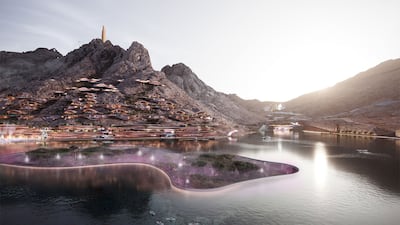
Trojena will open in 2026 as part of Saudi Arabia's megacity of the future. Photo: Neom -
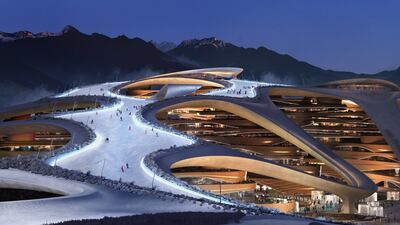
Trojena is designed to attract visitors, holidaymakers and winter sports enthusiasts from around the world. PA -
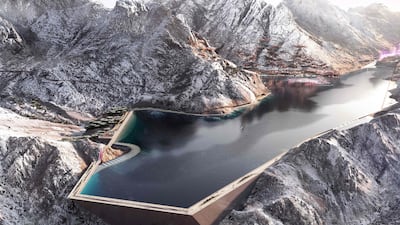
The design plan for Trojena, an area in Saudi Arabia's planned megacity of Neom chosen to host the 2029 Asian Winter Games. AFP -

The Line is also being built at Neom. It will be free of cars and streets and have zero carbon emissions. Photo: Neom -
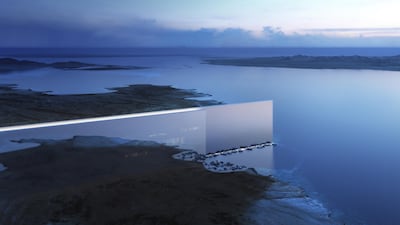
Neom chief executive Nadhmi Al Nasr said The Line would make use of artificial intelligence technology to the fullest. Photo: Neom -
Neom city will be powered by clean energy, officials say. Photo: Neom -
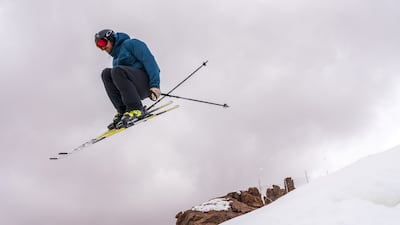
Trojena in Neom will host the first outdoor snow skiing destination in the GCC region. Photo: Neom -
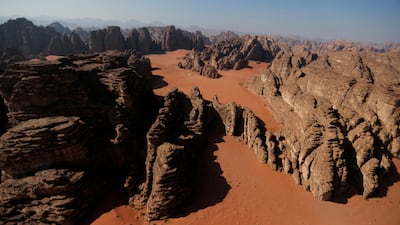
Neom lies in a desert bordering the Red Sea in Saudi Arabia. Reuters -
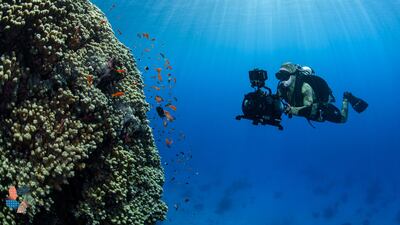
Architects say Neom will be designed to make the most of its environmental surroundings. Photo: Neom -
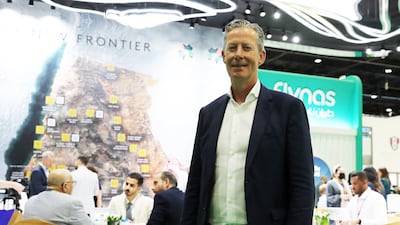
Andrew McEvoy, sector head for tourism at Neom, at Arabian Travel Market held at Dubai World Trade Centre. Pawan Singh / The National -
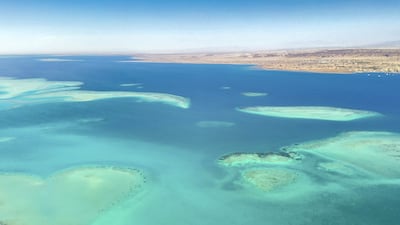
The $500bn Neom project in the Tabuk Province of north-western Saudi Arabia is supported by the kingdom's Public Investment Fund. Photo: Saudi Commission for Tourism and Natural Heritage



