


Live updates: follow the latest news on Russia-Ukraine
The International Monetary Fund's board approved $1.4 billion in emergency funding support to Ukraine on Wednesday.
The assistance was extended under the Washington-based lender's rapid financing instrument (RFI) to help meet urgent financing needs and mitigate the economic impact of the conflict with Russia.
The outlook for the country "is subject to extraordinary uncertainty", the IMF said, and "the economic consequences are already very serious".
The conflict has created more than two million refugees in just 13 days and could have a "severe impact" on the global economy, according to the multi-lateral lender.
The disbursement of funds is equivalent to 50 per cent of Ukraine’s quota in the IMF and will help meet the country's balance of payment needs. The assistance will address short-term needs and help usher in financing from other partners.
Ukrainian authorities "have expressed their intent to work with the IMF to design an appropriate economic programme aimed at rehabilitation and growth, when conditions permit", the fund said.
"The tragic loss of life, huge refugee flows, and immense destruction of infrastructure and productive capacity is causing severe human suffering and will lead to a deep recession this year. Financing needs are large, urgent, and could rise significantly as the war continues," IMF managing director Kristalina Georgieva said.
Ukrainian authorities have introduced administrative measures and capital controls to preserve the availability of foreign exchange reserves and reduce uncertainty regarding the exchange rate, Ms Georgieva said.
The country's central bank, the National Bank of Ukraine, has created a new liquidity facility and introduced other regulatory measures to ensure financial stability. Cash withdrawal limits have been imposed and fiscal policy has focused on ensuring priority payments, while the country has met all its current debt obligations.
"Against this extraordinary background, the IMF has approved critical financial support," Ms Georgieva said. "This should be instrumental in catalysing the large-scale mobilisation of additional concessional financing that will be required to help fill the financing gap and mitigate the economic impacts of the war."
Once the conflict is over and an assessment of the damage is completed, additional support will probably be needed to support reconstruction efforts, she said.
-
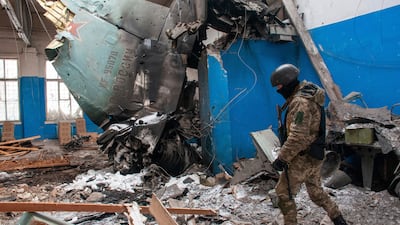
A Ukrainian serviceman walks past the vertical tail fin of a Russian Su-34 bomber lying in a damaged building in Kharkiv, Ukraine. AP Photo -
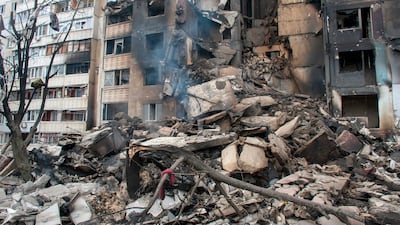
An apartment building damaged after shelling in Kharkiv, Ukraine. AP Photo -
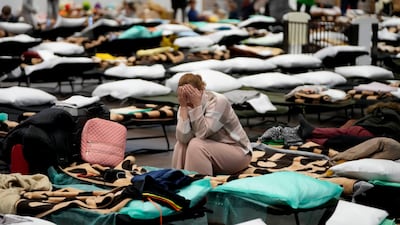
A woman puts her head in her hands as she sits on a cot in a shelter, set up for displaced persons fleeing Ukraine, inside a school gymnasium in Przemysl, Poland. AP Photo -
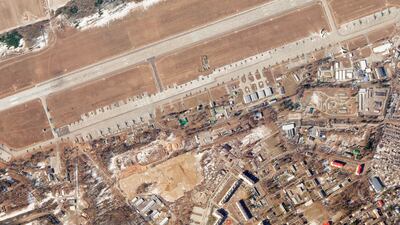
Belarussian and suspected Russian helicopters on the flight line at Machulishchy Air Base outside Minsk, Belarus. AP Photo -
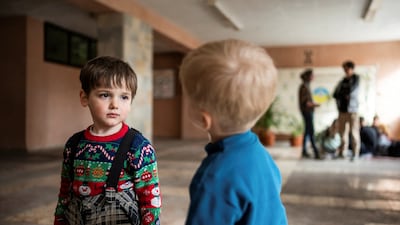
Children look on as people fleeing Russia's invasion of Ukraine shelter in a school, in Drohobych, Ukraine. Reuters -
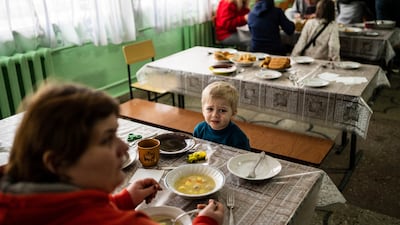
Families eat in the shelter. Reuters -
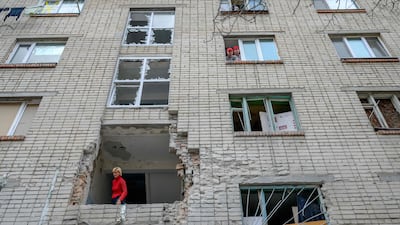
A woman looks out from a building damaged by Russian shelling in Mykolaiv, 100 kilometres away from Odesa, western Ukraine. AFP -
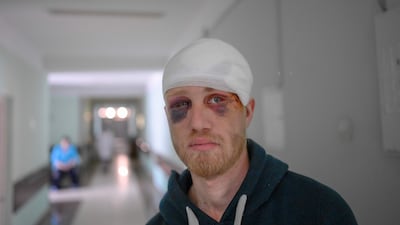
A wounded Ukrainian man waits in the corridor of the central hospital of Mykolaiv. AFP -
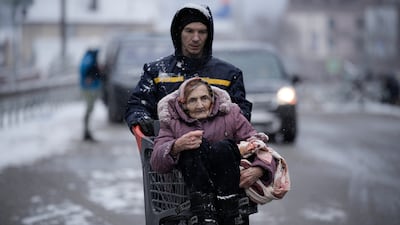
An elderly woman is carried in a shopping cart after being rescued from Irpin, on the outskirts of Kyiv, Ukraine. AP -
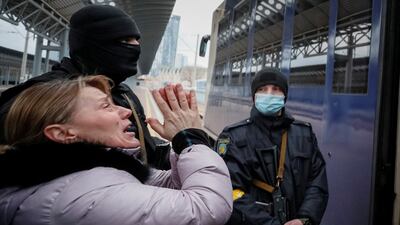
A woman reacts as a train carrying children from Kyiv's Central Children's Hospital leaves the Ukrainian capital on its way to Lviv. Reuters -
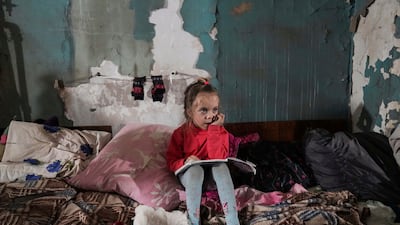
A girl sits in an improvised bomb shelter in Mariupol, Ukraine. AP -
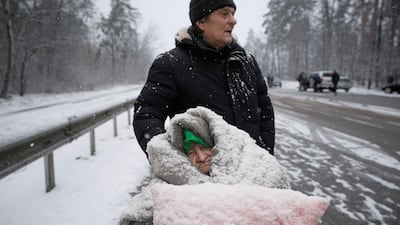
An elderly woman is coated in snow as she sits in a wheelchair after being rescued from Irpin. AP -
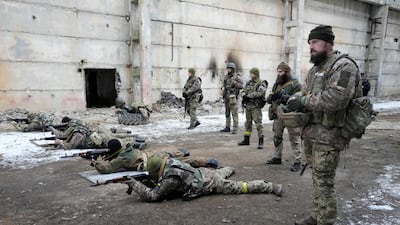
Belarusian volunteers take part in military exercises at the Belarusian Company base in Kyiv. AP -
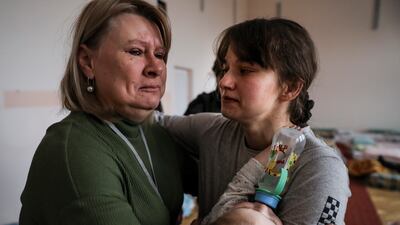
Lessa, left, director of a nursery school turned into a refugee shelter, cries as she hugs Olega, who arrived from Kyiv with her baby, near Lviv. EPA -
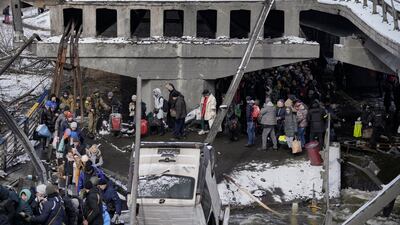
Ukrainians pass a damaged bridge as they flee from Irpin. AP -
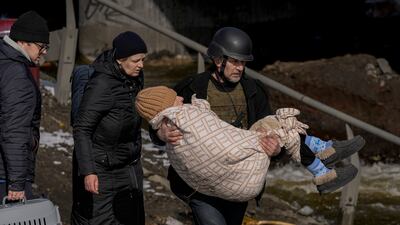
A man carries an elderly woman as people continue to leave Irpin. AP -
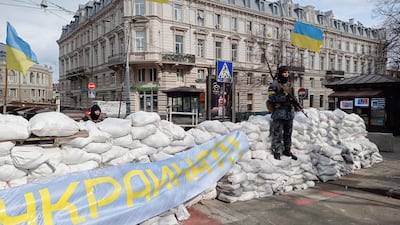
A soldier stands on a barricade made of sandbags in central Odesa, Ukraine. Reuters -
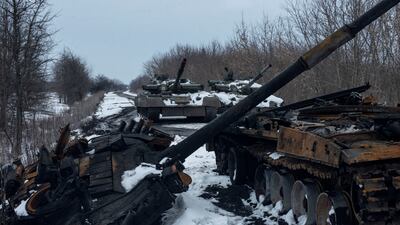
A charred Russian tank and captured tanks in the Sumy region. Reuters -
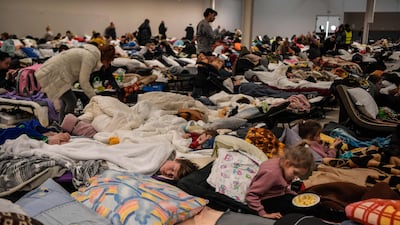
People rest at a temporary shelter for Ukrainian refugees in Przemysl, Poland. AFP -
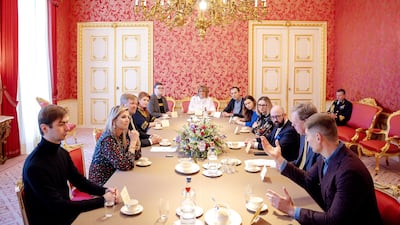
Ukraine's ambassador to the Netherlands, Maksym Kononenko, third right, and his wife Tetiana Doroshenko, fourth left, attend a meeting of members of the Ukrainian community with Dutch King Willem-Alexander, third left, and Queen Maxima, second left, to discuss the situation in Ukraine, in The Hague. EPA -
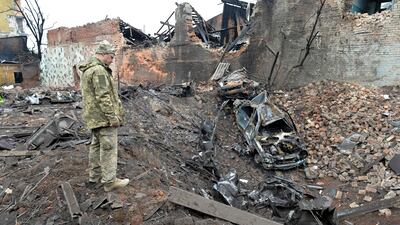
A Ukrainian soldier looks at the destruction after shelling in Ukraine's second-largest city of Kharkiv. AFP -
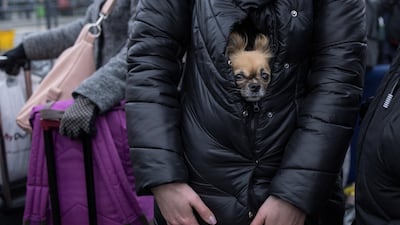
A refugee holds her dog as they wait for trains to Poland in Lviv, Ukraine. Reuters -
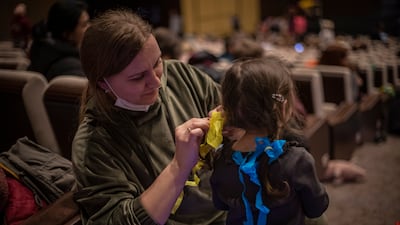
A woman ties ribbons in Ukrainian national flag colours in a girl's hair as people wait at a refugee assistance centre in Prague, Czech Republic. EPA -
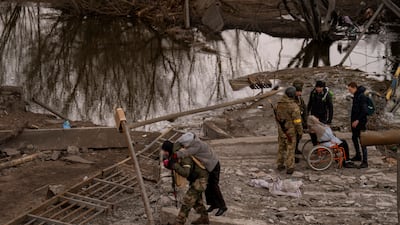
A Ukrainian soldier carries an elderly woman crossing the Irpin river on the outskirts of Kyiv. AP -
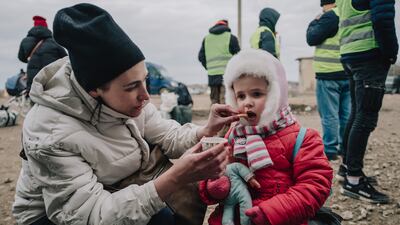
Lena, who had never left Ukraine before fleeing into Moldova, feeds Dasha, 3, soon after crossing the border. Erin Clare Brown for The National -
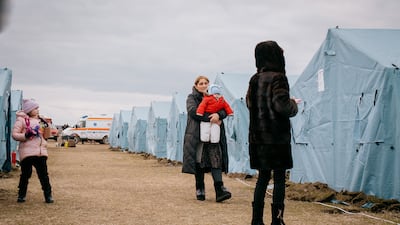
Refugees without immediate plans to move further inland can stay the night in tents set up on Moldova's side of the border. Erin Clare Brown for The National -
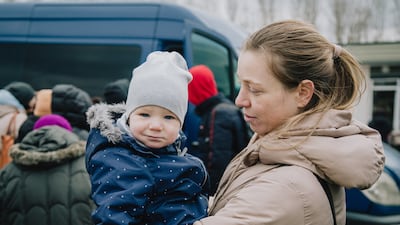
Tatiana and her son wait for a van that will carry them from the Moldovan border to Chisinau. Erin Clare Brown for The National -
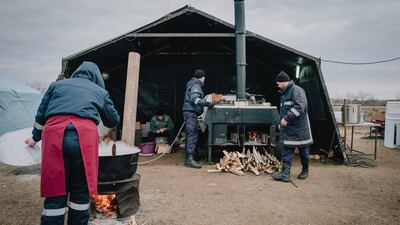
Each night, the Palanca refugee camp in Moldova feeds up to 300 people who arrive with no onward plans. Erin Clare Brown for The National -
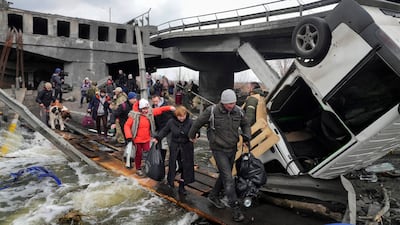
People pass a damaged bridge while fleeing the town of Irpin, close to the Ukrainian capital of Kyiv. AP -
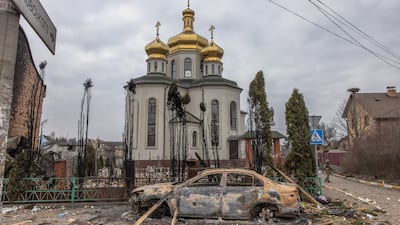
A Ukrainian soldier stands guard next to a church in Irpin. EPA -
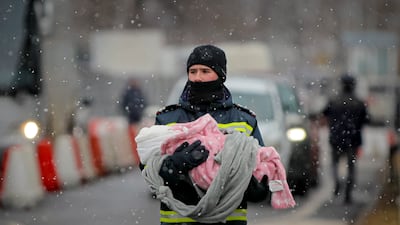
A firefighter holds the baby of a Ukrainian refugee at the border in Romania. AP -
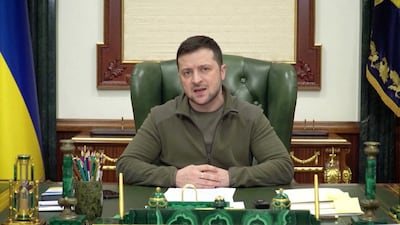
Ukrainian President Volodymyr Zelenskyy speaks in Kyiv. Reuters -
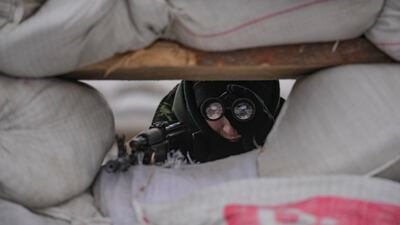
A Ukrainian soldier at a checkpoint in Kyiv. AP -
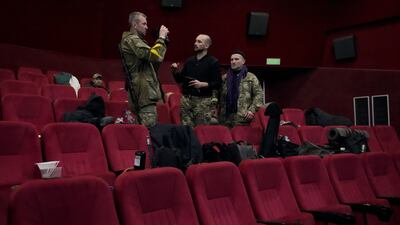
Ukrainian activist Ihor Mazur, left, a veteran of the war in the country's east, looks at a night-vision device in Kyiv. AP -
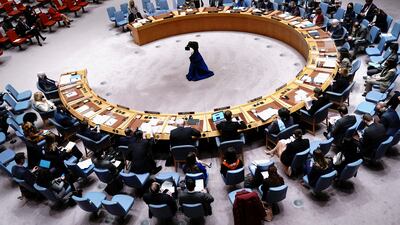
Ambassadors attend a UN Security Council meeting on threats to international security after Russia's invasion of Ukraine, in New York. Reuters -
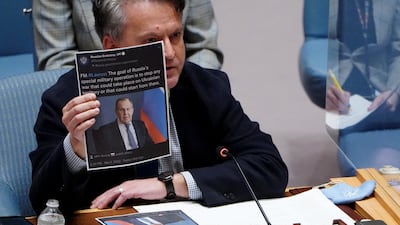
Ukraine's UN ambassador Sergey Kyslytsya holds a paper with an image of Russia's Foreign Minister Sergey Lavrov as he addresses the Security Council in New York. Reuters -
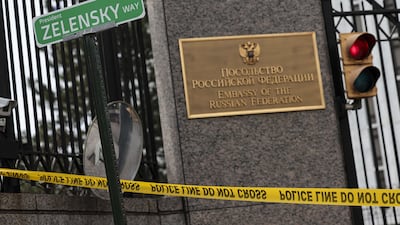
A road sign put up in support of Mr Zelenskyy outside Russia's embassy in Washington. AFP -
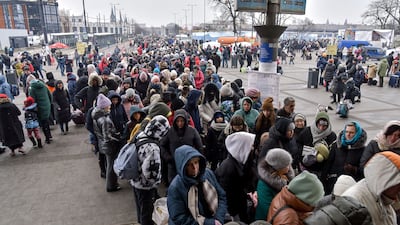
Ukrainian refugees at the train station in Lviv, western Ukraine. EPA -
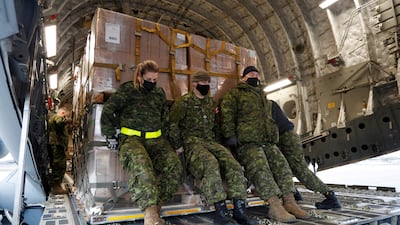
Lethal and non-lethal Ukrainian aid is loaded on to a plane bound for Poland by Canadian soldiers in Trenton, Ontario. Reuters -
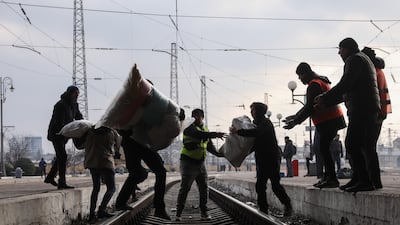
Volunteers carry medical aid and necessities at a train station in Lviv. EPA -
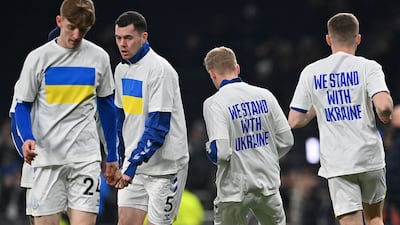
Everton players wear T-shirts in support of Ukraine as they warm up for an English Premier League football match against Tottenham Hotspur. AP -
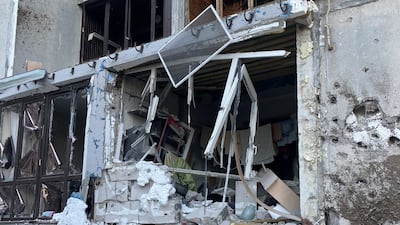
A residential building damaged by Russian shelling in Chernihiv, Ukraine. Reuters -
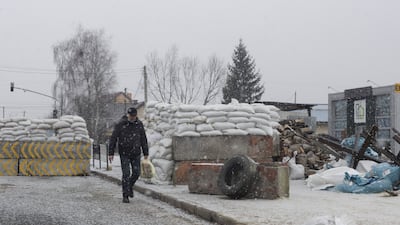
A man walks past a checkpoint in heavy snow in Lviv. Getty -
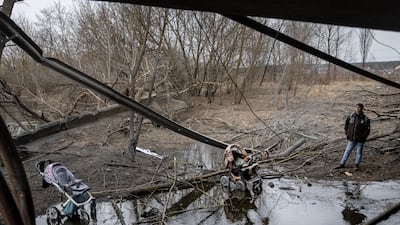
A man fleeing fighting in Irpin waits to cross a river after Russian forces entered the city. Getty -
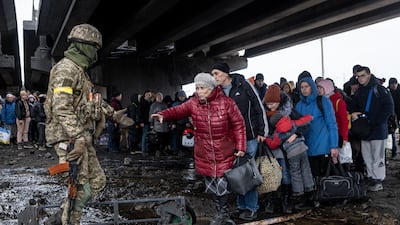
Soldiers assist Irpin residents underneath a damaged bridge as they flee. Getty -
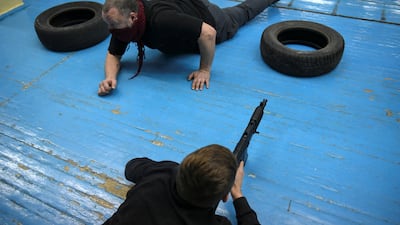
Ukrainian civilians who volunteered to join the Territorial Defence Forces take part in a training exercise in Odesa after Russia's invasion. Reuters -
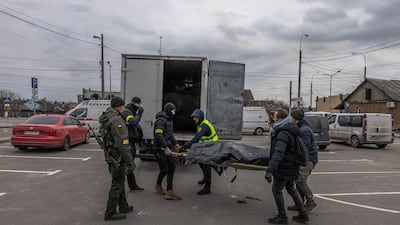
Men carry a body to a lorry as people flee from the frontline town of Irpin. EPA -
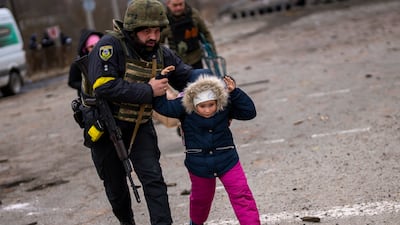
A Ukrainian police officer runs with a child as the sound of shelling echoes nearby in Irpin. AP -
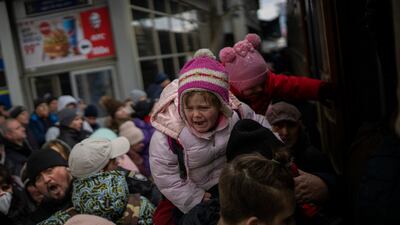
Parents and children struggle to board a train in Lviv. AP



