

The conviction of former cryptocurrency mogul Sam Bankman-Fried for stealing at least $10 billion from customers and investors is the latest black mark for the cryptocurrency industry, but in Washington there seems to be little to no interest in pushing through regulation.
When cryptocurrencies collapsed and a number of companies failed last year, Congress considered multiple approaches on how to regulate the industry in the future.
However, most of those efforts have gone nowhere, especially in this chaotic year that has been dominated by geopolitical tensions, inflation and the 2024 presidential election.
Ironically, the failure of Mr Bankman-Fried's FTX and his subsequent arrest late last year may have contributed to the momentum for regulation stalling out.
Before FTX imploded, he spent millions of dollars – illegally taken from his customers it turns out – to influence the discussion around cryptocurrency regulation in Washington and push for action.
Without Congress, federal regulators like the Securities and Exchange Commission have stepped in to take their own enforcement actions against the industry, including the filing of lawsuits against Coinbase and Binance, two of the biggest cryptocurrency exchanges.
And most recently PayPal received a subpoena from the SEC related to its PayPal USD stablecoin, the company said in a filing with securities regulators on Wednesday.
“The subpoena requests the production of documents,” the company said. “We are co-operating with the SEC in connection with this request.”
Still, Congress still has yet to act.
Senators Debbie Stabenow and John Boozman proposed last year to hand over the regulatory authority over cryptocurrencies bitcoin and ether to the Commodities Futures Trading Commission. Ms Stabenow and Mr Boozman lead the Senate Agriculture Committee, which has authority over the CTFC.
One big stumbling block in the Senate has been Senator Sherrod Brown, chairman of the Senate Banking Committee.
Mr Brown has been highly sceptical of cryptocurrencies as a concept and he's been generally reluctant to put Congress's blessing on them through regulation.
He's held several committee hearings over cryptocurrency issues, ranging from the negative impact on consumers to use of the currencies in funding illicit activities, but has not advanced any legislation out of his committee.
“Americans continue to lose money every day in crypto scams and frauds,” Mr Brown said in a statement after Mr Bankman-Fried was convicted. “We need to crack down on abuses and can’t let the crypto industry write its own rule book.”
In the House, a bill that would put regulatory guardrails around stablecoins – cryptocurrencies that are supposed to be backed by hard assets like the US dollar – passed out of the House Financial Services Committee this summer. But that bill has had zero interest from the White House and the Senate.
President Joe Biden last year signed an executive order on government oversight of cryptocurrency that urges the Federal Reserve to explore whether the central bank should jump in and create its own digital currency. So far, however, there has been no movement on that front.
Consumer advocates are sceptical about the need for new rules.
“There is no need for any special interest crypto legislation which would only legitimise an industry that is used by speculators, financial predators, and criminals,” said Dennis Kelleher, president of Better Markets, a non-profit that works to “build a more secure financial system for all Americans”, according to its website.
-
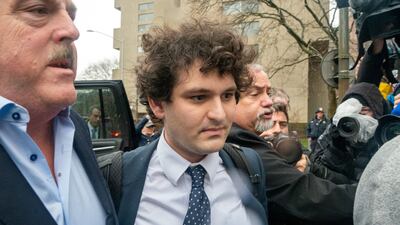
Former FTX chief executive Sam Bankman-Fried arrives on the day of his hearing at Manhattan federal court in New York. Reuters -
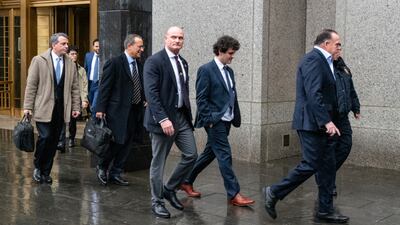
Mr Bankman-Fried faces fraud charges over the collapse of the FTX cryptocurrency exchange. AP -
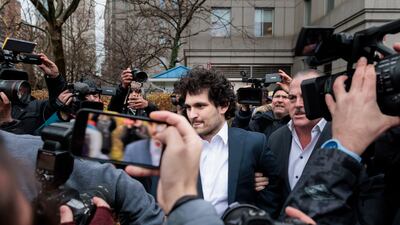
Mr Bankman-Fried pleaded not guilty to charges that he cheated investors and looted customer deposits on his cryptocurrency trading platform. EPA -

Mr Bankman-Fried is facing federal charges that he illegally used money from investors for personal gain. Reuters -
The FTX Group has installed a new chief executive as Mr Bankman-Fried deals with his legal challenges. Reuters -
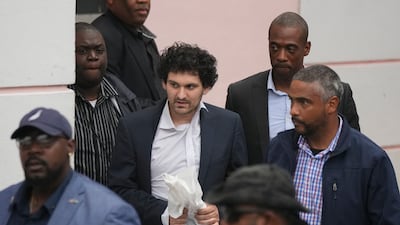
Mr Bankman-Fried was extradited to the US from the Bahamas in December. AP -

The FTX Group has filed for bankruptcy and has begun an 'orderly process to review and monetise assets for the benefit of all global stakeholders'. AFP -
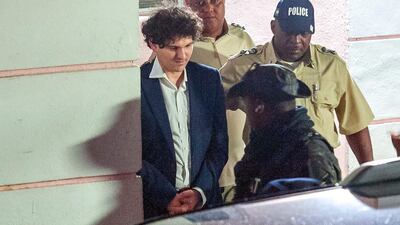
Mr Bankman-Fried was arrested on December 13, 2022, in the Bahamas after being served with several US criminal charges. AFP -
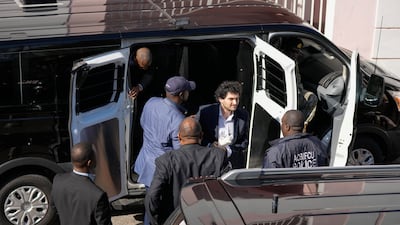
Mr Bankman-Fried lost much of his wealth in the FTX collapse. AP -
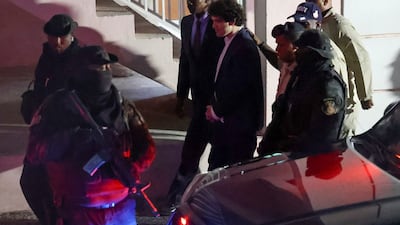
The US accuses Mr Bankman-Fried of committing one of the biggest financial frauds in history. Reuters -
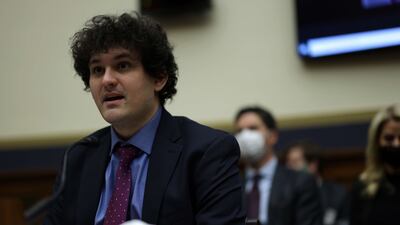
Mr Bankman-Fried, seen here in February 2021, has testified on Capitol Hill about cryptocurrency policy. AFP


“Moreover, almost everything the crypto industry does is clearly covered by existing securities and commodities laws that every other law-abiding financial firm in the country follow,” he said.
Bartlett Collins Naylor, a financial policy advocate for Public Citizen's Congress Watch said “laws on fraud and securities are currently sound”.
Cryptocurrency advocates, meanwhile, are quick to note that it was Mr Bankman-Fried on trial, not the entire industry.
“As the jury found, this was a clear case of fraud committed by a small group of individuals,” said Sheila Warren, chief executive of the Crypto Council for Innovation.
“It’s an unrelated fact that the US needs regulatory clarity in the digital asset space. Policymakers were focused on this reality before this trial, and will continue to focus on it going forward.”

