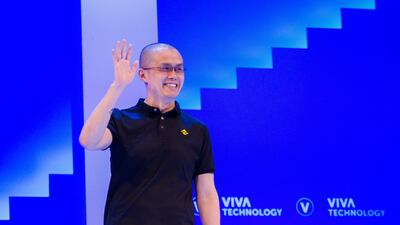
Even as some of Wall Street’s old guard have an “I told you so” moment after the collapse of Sam Bankman-Fried’s FTX, futures exchanges are not giving up on crypto.
CME Group chief executive Terry Duffy, who has been one of Mr Bankman-Fried’s fiercest critics, said he would not stop cryptocurrency futures trading because of “one bad actor”.
Cboe Global Markets, another Chicago exchange, and software provider Trading Technologies also recommitted to digital assets despite the FTX meltdown.
“I am not prepared to say I would delist it,” Mr Duffy, 64, said in an interview this week, in which he recalled his spat with Mr Bankman-Fried at an industry event in March.
“We have been at the cutting edge of innovative products, but what we don’t do is do it in a reckless manner.”
Executives at futures exchanges had expressed concerns about FTX’s business model before the collapse.
The bankruptcy of FTX potentially caused billions of dollars in losses for millions of account holders and resulted in investigations into allegations of wrongdoing.
It has also ensnared one of the biggest lenders in the cryptocurrency industry, Genesis, as well as Gemini, which halted redemptions, and BlockFi — a lender previously bailed out by FTX.
“These events reinforce our strategy,” said Chris Isaacson, chief operating officer and chair of Cboe’s digital board, on Friday.
“If there is ever a time where trust in markets needs to be built and reinforced in digital assets, it is now. That is what we are committed to doing.”
Mr Isaacson said Cboe will continue with cryptocurrency futures trading.
Jason Shaffer, executive vice president of product management at Trading Technologies, said his company would stay the course as well, and that customers want to engage in cryptocurrency in the same way they trade other currencies.
At a Futures Industry Association event this week, conference goers compared FTX’s collapsed to energy trader Enron, which went under in 2001 and became a symbol of corporate fraud.
And Christy Goldsmith Romero of the Commodity Futures Trading Commission went as far as to draw parallels to the worldwide financial crisis.
“Opaque, complex, leveraged, unregulated products, highly interconnected market, concerns about the quality of underlying assets, high potential for contagion risk,” she said. “These are the types of things that existed in 2008 that I see parallels with now.”
Mr Bankman-Fried was a driving force behind a failed campaign to penetrate traditional finance. He proposed handling every step in a cryptocurrency derivative transaction — clearing trades and eliminating the middlemen that in many cases help spread the risk.
If approved by the CFTC, the plan could have increased risks for the traditional industry and disrupted business models such as CME’s that have been around since the late 1800s.
The plan drew attacks from Wall Street businesses and heightened calls for more oversight of Mr Bankman-Fried’s company and its rivals.
The idea was “rubbish from Day 1”, Mr Duffy said. “I’m surprised so many people were enamoured by his nonsense.”
Another critic of the plan was ICE’s founder and chief executive Jeff Sprecher. At the FIA event in Chicago on Tuesday, he said, “Generally speaking, you can’t have an exchange, a market maker and a clearing settlement organisation under one roof.”
Mr Bankman-Fried, 30, has been a key donor to the Democratic party. He gave about $40 million to candidates in the past two years, nearly all to Democrats, and has visited legislators in an effort to affect developing cryptocurrency regulations.
Mr Duffy said he hoped politicians who received the donations from Mr Bankman-Fried would return them.
“I never bought into the whole thing,” he said.
Politicians who accepted his money will be quick to show “they are not influenced by that”, Mr Sprecher said.
Regulators are probing whether Mr Bankman-Fried and his associates misused customer funds, and his company’s collapse is adding urgency to a Washington push to transform the CFTC into a top cryptocurrency watchdog, the agency’s chairman Rostin Behnam said at the FIA event.
While the industry may take a breather for now, it will come back when confidence is restored, said Ram Vittal, North America chief executive at Marex Group, a futures and options broker that has a partnership with Coinbase.
“What is the ingredient that will be the spark? The proper regulatory framework that allows everybody a lot more conviction so that some of these FTX-like things don’t happen,” Mr Vittal said.
Rob Creamer, chief executive of Chicago-based proprietary trader Geneva Trading and chairman of FIA’s Principal Traders Group, said there may also be opportunities ahead.
“It is dangerous to say there is no value in crypto or the underlying technology because Sam did X, Y or Z,” he said.
“Seeing what happened post-Enron, there may be a lot of opportunity for a reputable company with strong governance to pick up the pieces of FTX.”

KEY%20DATES%20IN%20AMAZON'S%20HISTORY
%3Cp%3E%3Cstrong%3EJuly%205%2C%201994%3A%3C%2Fstrong%3E%20Jeff%20Bezos%20founds%20Cadabra%20Inc%2C%20which%20would%20later%20be%20renamed%20to%20Amazon.com%2C%20because%20his%20lawyer%20misheard%20the%20name%20as%20'cadaver'.%20In%20its%20earliest%20days%2C%20the%20bookstore%20operated%20out%20of%20a%20rented%20garage%20in%20Bellevue%2C%20Washington%3C%2Fp%3E%0A%3Cp%3E%3Cstrong%3EJuly%2016%2C%201995%3A%3C%2Fstrong%3E%20Amazon%20formally%20opens%20as%20an%20online%20bookseller.%20%3Cem%3EFluid%20Concepts%20and%20Creative%20Analogies%3A%20Computer%20Models%20of%20the%20Fundamental%20Mechanisms%20of%20Thought%3C%2Fem%3E%20becomes%20the%20first%20item%20sold%20on%20Amazon%3C%2Fp%3E%0A%3Cp%3E%3Cstrong%3E1997%3A%3C%2Fstrong%3E%20Amazon%20goes%20public%20at%20%2418%20a%20share%2C%20which%20has%20grown%20about%201%2C000%20per%20cent%20at%20present.%20Its%20highest%20closing%20price%20was%20%24197.85%20on%20June%2027%2C%202024%3C%2Fp%3E%0A%3Cp%3E%3Cstrong%3E1998%3A%3C%2Fstrong%3E%20Amazon%20acquires%20IMDb%2C%20its%20first%20major%20acquisition.%20It%20also%20starts%20selling%20CDs%20and%20DVDs%3C%2Fp%3E%0A%3Cp%3E%3Cstrong%3E2000%3A%3C%2Fstrong%3E%20Amazon%20Marketplace%20opens%2C%20allowing%20people%20to%20sell%20items%20on%20the%20website%3C%2Fp%3E%0A%3Cp%3E%3Cstrong%3E2002%3A%3C%2Fstrong%3E%20Amazon%20forms%20what%20would%20become%20Amazon%20Web%20Services%2C%20opening%20the%20Amazon.com%20platform%20to%20all%20developers.%20The%20cloud%20unit%20would%20follow%20in%202006%3C%2Fp%3E%0A%3Cp%3E%3Cstrong%3E2003%3A%3C%2Fstrong%3E%20Amazon%20turns%20in%20an%20annual%20profit%20of%20%2475%20million%2C%20the%20first%20time%20it%20ended%20a%20year%20in%20the%20black%3C%2Fp%3E%0A%3Cp%3E%3Cstrong%3E2005%3A%3C%2Fstrong%3E%20Amazon%20Prime%20is%20introduced%2C%20its%20first-ever%20subscription%20service%20that%20offered%20US%20customers%20free%20two-day%20shipping%20for%20%2479%20a%20year%3C%2Fp%3E%0A%3Cp%3E%3Cstrong%3E2006%3A%3C%2Fstrong%3E%20Amazon%20Unbox%20is%20unveiled%2C%20the%20company's%20video%20service%20that%20would%20later%20morph%20into%20Amazon%20Instant%20Video%20and%2C%20ultimately%2C%20Amazon%20Video%3C%2Fp%3E%0A%3Cp%3E%3Cstrong%3E2007%3A%3C%2Fstrong%3E%20Amazon's%20first%20hardware%20product%2C%20the%20Kindle%20e-reader%2C%20is%20introduced%3B%20the%20Fire%20TV%20and%20Fire%20Phone%20would%20come%20in%202014.%20Grocery%20service%20Amazon%20Fresh%20is%20also%20started%3C%2Fp%3E%0A%3Cp%3E%3Cstrong%3E2009%3A%3C%2Fstrong%3E%20Amazon%20introduces%20Amazon%20Basics%2C%20its%20in-house%20label%20for%20a%20variety%20of%20products%3C%2Fp%3E%0A%3Cp%3E%3Cstrong%3E2010%3A%3C%2Fstrong%3E%20The%20foundations%20for%20Amazon%20Studios%20were%20laid.%20Its%20first%20original%20streaming%20content%20debuted%20in%202013%3C%2Fp%3E%0A%3Cp%3E%3Cstrong%3E2011%3A%3C%2Fstrong%3E%20The%20Amazon%20Appstore%20for%20Google's%20Android%20is%20launched.%20It%20is%20still%20unavailable%20on%20Apple's%20iOS%3C%2Fp%3E%0A%3Cp%3E%3Cstrong%3E2014%3A%3C%2Fstrong%3E%20The%20Amazon%20Echo%20is%20launched%2C%20a%20speaker%20that%20acts%20as%20a%20personal%20digital%20assistant%20powered%20by%20Alexa%3C%2Fp%3E%0A%3Cp%3E%3Cstrong%3E2017%3A%3C%2Fstrong%3E%20Amazon%20acquires%20Whole%20Foods%20for%20%2413.7%20billion%2C%20its%20biggest%20acquisition%3C%2Fp%3E%0A%3Cp%3E%3Cstrong%3E2018%3A%3C%2Fstrong%3E%20Amazon's%20market%20cap%20briefly%20crosses%20the%20%241%20trillion%20mark%2C%20making%20it%2C%20at%20the%20time%2C%20only%20the%20third%20company%20to%20achieve%20that%20milestone%3C%2Fp%3E%0A
Semi-final fixtures
Portugal v Chile, 7pm, today
Germany v Mexico, 7pm, tomorrow
Hurricanes 31-31 Lions
Wellington Hurricanes:
Tries: Gibbins, Laumape, Goosen, Fifita tries, Barrett
Conversions: Barrett (4)
Penalties: Barrett
British & Irish Lions:
Tries: Seymour (2), North
Conversions: Biggar (2)
Penalties: Biggar (4)
Real estate tokenisation project
Dubai launched the pilot phase of its real estate tokenisation project last month.
The initiative focuses on converting real estate assets into digital tokens recorded on blockchain technology and helps in streamlining the process of buying, selling and investing, the Dubai Land Department said.
Dubai’s real estate tokenisation market is projected to reach Dh60 billion ($16.33 billion) by 2033, representing 7 per cent of the emirate’s total property transactions, according to the DLD.
Pharaoh's curse
British aristocrat Lord Carnarvon, who funded the expedition to find the Tutankhamun tomb, died in a Cairo hotel four months after the crypt was opened.
He had been in poor health for many years after a car crash, and a mosquito bite made worse by a shaving cut led to blood poisoning and pneumonia.
Reports at the time said Lord Carnarvon suffered from “pain as the inflammation affected the nasal passages and eyes”.
Decades later, scientists contended he had died of aspergillosis after inhaling spores of the fungus aspergillus in the tomb, which can lie dormant for months. The fact several others who entered were also found dead withiin a short time led to the myth of the curse.
bundesliga results
Mainz 0 Augsburg 1 (Niederlechner 1')
Schalke 1 (Caligiuri pen 51') Bayer Leverkusen 1 (Miranda og 81')
Mercer, the investment consulting arm of US services company Marsh & McLennan, expects its wealth division to at least double its assets under management (AUM) in the Middle East as wealth in the region continues to grow despite economic headwinds, a company official said.
Mercer Wealth, which globally has $160 billion in AUM, plans to boost its AUM in the region to $2-$3bn in the next 2-3 years from the present $1bn, said Yasir AbuShaban, a Dubai-based principal with Mercer Wealth.
“Within the next two to three years, we are looking at reaching $2 to $3 billion as a conservative estimate and we do see an opportunity to do so,” said Mr AbuShaban.
Mercer does not directly make investments, but allocates clients’ money they have discretion to, to professional asset managers. They also provide advice to clients.
“We have buying power. We can negotiate on their (client’s) behalf with asset managers to provide them lower fees than they otherwise would have to get on their own,” he added.
Mercer Wealth’s clients include sovereign wealth funds, family offices, and insurance companies among others.
From its office in Dubai, Mercer also looks after Africa, India and Turkey, where they also see opportunity for growth.
Wealth creation in Middle East and Africa (MEA) grew 8.5 per cent to $8.1 trillion last year from $7.5tn in 2015, higher than last year’s global average of 6 per cent and the second-highest growth in a region after Asia-Pacific which grew 9.9 per cent, according to consultancy Boston Consulting Group (BCG). In the region, where wealth grew just 1.9 per cent in 2015 compared with 2014, a pickup in oil prices has helped in wealth generation.
BCG is forecasting MEA wealth will rise to $12tn by 2021, growing at an annual average of 8 per cent.
Drivers of wealth generation in the region will be split evenly between new wealth creation and growth of performance of existing assets, according to BCG.
Another general trend in the region is clients’ looking for a comprehensive approach to investing, according to Mr AbuShaban.
“Institutional investors or some of the families are seeing a slowdown in the available capital they have to invest and in that sense they are looking at optimizing the way they manage their portfolios and making sure they are not investing haphazardly and different parts of their investment are working together,” said Mr AbuShaban.
Some clients also have a higher appetite for risk, given the low interest-rate environment that does not provide enough yield for some institutional investors. These clients are keen to invest in illiquid assets, such as private equity and infrastructure.
“What we have seen is a desire for higher returns in what has been a low-return environment specifically in various fixed income or bonds,” he said.
“In this environment, we have seen a de facto increase in the risk that clients are taking in things like illiquid investments, private equity investments, infrastructure and private debt, those kind of investments were higher illiquidity results in incrementally higher returns.”
The Abu Dhabi Investment Authority, one of the largest sovereign wealth funds, said in its 2016 report that has gradually increased its exposure in direct private equity and private credit transactions, mainly in Asian markets and especially in China and India. The authority’s private equity department focused on structured equities owing to “their defensive characteristics.”
Company%C2%A0profile
%3Cp%3E%3Cstrong%3EDate%20started%3A%20%3C%2Fstrong%3EMay%202022%3Cbr%3E%3Cstrong%3EFounder%3A%20%3C%2Fstrong%3EHusam%20Aboul%20Hosn%3Cbr%3E%3Cstrong%3EBased%3A%20%3C%2Fstrong%3EDIFC%3Cbr%3E%3Cstrong%3ESector%3A%20%3C%2Fstrong%3EFinTech%20%E2%80%94%20Innovation%20Hub%3Cbr%3E%3Cstrong%3EEmployees%3A%20%3C%2Fstrong%3Eeight%3Cbr%3E%3Cstrong%3EStage%3A%20%3C%2Fstrong%3Epre-seed%3Cbr%3E%3Cstrong%3EInvestors%3A%20%3C%2Fstrong%3Epre-seed%20funding%20raised%20from%20family%20and%20friends%20earlier%20this%20year%3C%2Fp%3E%0A