

Binance, the world's largest crypto exchange by trading volume, signed a non-binding agreement on Tuesday to buy FTX's non-US unit to help cover a “liquidity crunch” at the rival exchange, in a stunning bailout that raised fresh concerns among investors about cryptocurrencies.
The deal between high-profile rivals Sam Bankman-Fried, co-founder and chief executive of FTX, and Binance chief executive Changpeng Zhao came as speculation about FTX's financial health snowballed into $6 billion of withdrawals in the 72 hours before Tuesday morning.
The pressure on FTX came in part from Mr Zhao, who tweeted on Sunday that Binance would liquidate its holdings of the rival's token owing to unspecified “recent revelations”.
“It's scary to think that FTX, which is one of the largest crypto exchanges in the world, was bitten by liquidity concerns and Binance, their biggest rival, is coming to their rescue,” said Dan Raju, chief executive of Tradier, a financial services provider and broker.
The move, a dramatic reversal in the fortunes of billionaire Mr Bankman-Fried, 30, is the latest emergency rescue in the world of cryptocurrencies this year, as investors pulled out from riskier assets amid rising interest rates.
The cryptocurrency market has fallen by about two thirds from its peak to $1.07 trillion.
Major cryptocurrencies initially rallied on the news of the deal on Tuesday, but those gains were quickly erased.
As of 11am on Wednesday UAE time, Bitcoin was down 7.36 per cent and trading at $18,325.19, while Ethereum had dropped 12.85 per cent to $1,295.46. Other cryptocurrencies, including Cardano, Solana and Polkadot, were also down.
FTX token — which gives holders discounts on FTX trading fees — was last trading at $5.33, having slumped by more than three quarters.
In a blog, Coinbase Global assured investors it had minimal exposure to FTX after its shares fell more than 10 per cent.
Mr Bankman-Fried, whose net worth is $16.6bn, according to Forbes, had said just months ago he had billions on hand to help struggling digital asset platforms.
In May he revealed a 7.6 per cent stake in Robinhood Markets, capitalising on the trading app's weakened share price.
Tuesday's developments left FTX investors scrambling to figure out what the deal with Binance means for their investment in FTX, according to people familiar with the matter.
In a note to investors late on Tuesday, shared on Twitter and verified by a source familiar with the situation, Mr Bankman-Fried tried to reassure FTX investors, saying that “protecting shareholders is our highest priority” but said details of the deal were “still being hashed out”.
FTX did not immediately respond to a request for comment.
The companies did not disclose the terms of the deal, and it remains to be seen whether it will close.
Binance will conduct due diligence in the coming days as the next step towards an acquisition of FTX.com.
The US operations of Binance and FTX are not part of the deal, said Mr Bankman-Fried, who is from California but lives in the Bahamas, where FTX is based.
It is not clear how regulators will regard a deal between the two crypto exchanges.
US antitrust enforcers could insist on probing the merger, experts said.
“They could sue to stop it if they think it has an adverse effect on US customers,” said Seth Bloom, an antitrust expert at Bloom Strategic Counsel.
Binance is also under investigation by the US Justice Department for possible violations of money-laundering rules, one of a series of investigations this year into Binance's troubled history with financial regulatory compliance.
Last month, Reuters revealed fresh details about Binance's strategy for keeping regulators at arm's length and continuing disarray in its compliance programme.
Binance said in response that it was helping to drive higher industry standards and was seeking to improve its ability to detect illegal crypto activity.
A representative for the US Commodity Futures Trading Commission said the agency was monitoring the situation. The Federal Trade Commission declined to comment.
Two of the most powerful moguls in the crypto industry, Mr Bankman-Fried and Mr Zhao, known by his initials CZ, have had a turbulent relationship.
In late 2019, Binance invested in FTX, then a far smaller exchange, before exiting the investment in July last year.
By then FTX had mushroomed into a growing rival to Binance, which dominates the crypto industry with more than 120 million users.
Tensions between Mr Zhao and Mr Bankman-Fried surfaced in recent days, with a public disagreement playing out on Twitter, following a report by news website CoinDesk on a leaked balance sheet from Alameda Research, a trading company founded by Mr Bankman-Fried that has close ties with FTX.
However, the pace of withdrawals proved to be too much.
“On an average day, we have tens of millions of dollars of net in/outflows,” Mr Bankman-Fried wrote in a message to staff sent on Tuesday morning, saying how that amount had run into billions.
FTX did not respond to a request for comment on the message to staff.
In a tweet announcing the deal on Tuesday, Mr Zhao said that FTX had “asked for our help” after “a significant liquidity crunch”.
Mr Bankman-Fried said his teams were working on clearing out the withdrawal backlog: “This will clear out liquidity crunches. This is one of the main reasons we've asked Binance to come in.”
“A *huge* thank you to CZ, Binance,” Mr Bankman-Fried wrote.
________
World's 10 richest crypto billionaires — in pictures
-

Changpeng Zhao, founder and chief executive of Binance, is the world’s richest crypto billionaire with a net worth of $65 billion. Bloomberg -
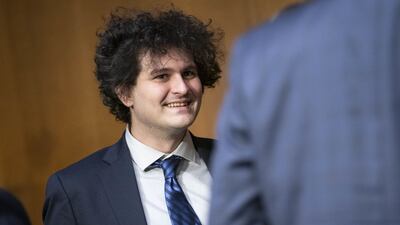
Sam Bankman-Fried, founder and chief executive of FTX cryptocurrency exchange, ranked as the second-wealthiest crypto billionaire with a personal fortune of $24bn. Bloomberg -
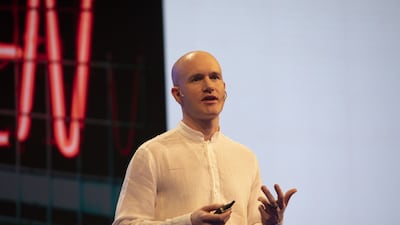
Brian Armstrong, co-founder of Coinbase, is the third-wealthiest crypto billionaire with a net worth of $6.6bn. Bloomberg -
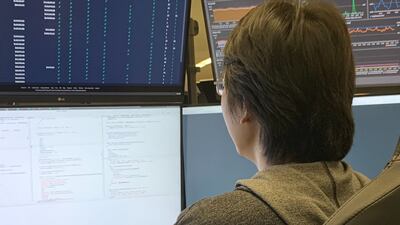
Gary Wang, co-founder of FTX cryptocurrency exchange, ranked fourth with a net worth of $5.9bn. FTX -
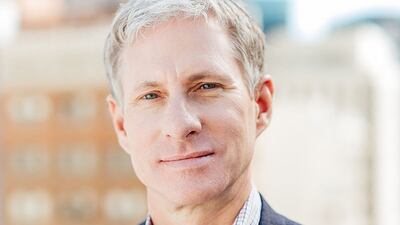
Chris Larsen, executive chairman of Ripple’s board of directors and former chief executive and co-founder of Ripple, rounded out the list of top five wealthiest crypto billionaires with a fortune of $4.3bn. Ripple -

Song Chi-hyung, founder of Upbit, the largest cryptocurrency exchange in South Korea, has a net worth of $3.7bn. Courtesy: Dunamu -
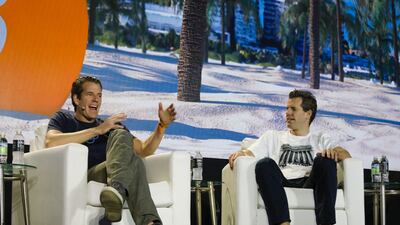
Tyler Winklevoss, chief executive and co-founder of Gemini Trust, left, and Cameron Winklevoss, president and co-founder of Gemini Trust, have a net worth of $4bn each. Bloomberg -
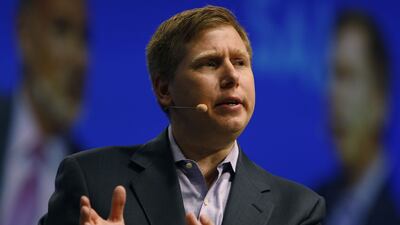
Barry Silbert, founder and chief executive of Digital Currency Group, has a net worth of $3.2bn. Bloomberg -
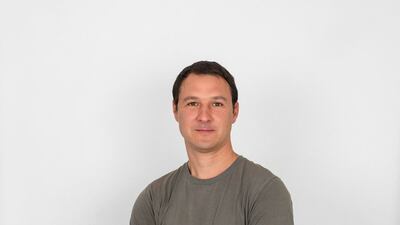
Jed McCaleb, founder and chief architect of the Stellar Development Foundation and co-founder of Ripple, has a net worth of $2.5bn. Courtesy: Stellar Development Foundation



