From an economic perspective, 2023 was a good year for the GCC.
Higher interest rates and slowing global growth appeared to have little impact on regional non-oil economic activity, which was underpinned by significant investment, some population growth and a continued rebound in post-coronavirus travel and tourism.
Internationally, growth slowed last year but the deep recession that had been feared at the start of 2023 was avoided.
Major developed market central banks appear to be winning the battle against inflation with consumer price index falling back to the low single digits in the US, the UK and the EU, from peaks of more than 10 per cent for the UK and EU in 2022, and more than 9 per cent for the US.
In 2024, the International Monetary Fund expects global growth to slow slightly to 2.9 per cent from an estimated 3 per cent in 2023 as tight monetary policy continues to weigh on consumption and investment, particularly in the first half of the year.
This scenario is consistent with softer demand for oil, particularly in advanced economies, and oil sector gross domestic product growth in the GCC will remain a drag on headline GDP growth in 2024 as Opec+ production curbs continue.
Emirates NBD expects oil prices to average $82.5 a barrel this year, similar to 2023, based on balanced supply and demand dynamics this year, notwithstanding any geopolitical risk premium.
However, we think non-oil growth across the GCC will remain relatively robust, averaging 3.6 per cent in 2024, underpinned by continued investment as oil-exporting countries push ahead with ambitious economic diversification programmes.
While government spending growth will probably be more modest this year than over the past couple of years, we do not expect governments to cut spending or tighten fiscal policy through higher taxes (other than those already announced such as the UAE’s corporate income tax, which came into effect in mid-2023).
In addition, economic and social reforms are expected to support continued private sector investment and growth in the expatriate population, particularly in Saudi Arabia and the UAE.
Rate cuts from the US Federal Reserve and other major central banks, expected in the second half of 2024, should also support investment and consumption.
Finally, tourism is expected to remain a key driver of economic growth in the region in 2024 (and beyond), with the return of visitors from China and the growth of the Saudi tourism sector off its relatively low base.
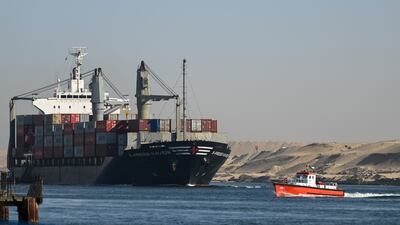
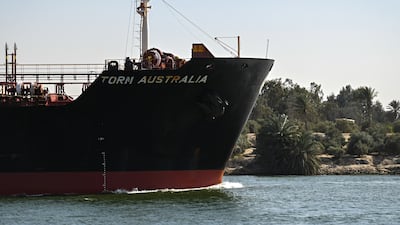
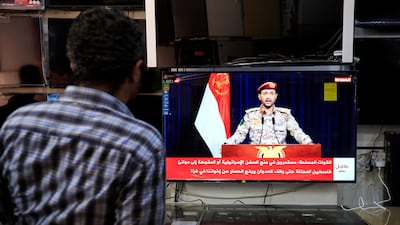
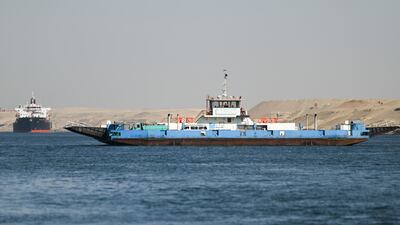
There are some risks to the growth outlook, not least the recent escalation in geopolitical tension in the Middle East and subsequent disruption to shipping routes via the Red Sea, which have pushed up freight costs to levels last seen in 2022 and could result in longer delivery times.
Supply chain disruption and potentially higher energy prices, if sustained, pose upside risks to inflation in developed markets and could delay monetary policy easing. An escalating conflict may also deter tourism to and within the region, which would pose a downside risk to growth.
So far, the impact of the shipping disruptions on the oil price has been limited, with concerns about weak demand seemingly outweighing the risk of a material disruption of energy supplies.
For GCC oil exporters, any boost to oil prices would be beneficial for budgets at the margin. In our base case scenario, Saudi Arabia’s budget deficit is set to widen to more than minus 4 per cent of GDP this year as oil revenue reflects the impact of extended production cuts, while ambitious development plans will require continued investment spending.
Bahrain and Kuwait are also expected to run small budget deficits this year but Oman, the UAE and Qatar are still expected to record surpluses.
Overall, sovereign balance sheets in the GCC are much stronger than a few years ago, with lower public debt and healthy foreign currency reserves, which should allow governments to tap capital markets at attractive rates, if needed.
Saudi Arabia has already taken advantage of lower yields to issue $12 billion worth of bonds last week to finance some of its expected budget shortfall.
Khatija Haque is chief economist and head of research at Emirates NBD

Mercer, the investment consulting arm of US services company Marsh & McLennan, expects its wealth division to at least double its assets under management (AUM) in the Middle East as wealth in the region continues to grow despite economic headwinds, a company official said.
Mercer Wealth, which globally has $160 billion in AUM, plans to boost its AUM in the region to $2-$3bn in the next 2-3 years from the present $1bn, said Yasir AbuShaban, a Dubai-based principal with Mercer Wealth.
“Within the next two to three years, we are looking at reaching $2 to $3 billion as a conservative estimate and we do see an opportunity to do so,” said Mr AbuShaban.
Mercer does not directly make investments, but allocates clients’ money they have discretion to, to professional asset managers. They also provide advice to clients.
“We have buying power. We can negotiate on their (client’s) behalf with asset managers to provide them lower fees than they otherwise would have to get on their own,” he added.
Mercer Wealth’s clients include sovereign wealth funds, family offices, and insurance companies among others.
From its office in Dubai, Mercer also looks after Africa, India and Turkey, where they also see opportunity for growth.
Wealth creation in Middle East and Africa (MEA) grew 8.5 per cent to $8.1 trillion last year from $7.5tn in 2015, higher than last year’s global average of 6 per cent and the second-highest growth in a region after Asia-Pacific which grew 9.9 per cent, according to consultancy Boston Consulting Group (BCG). In the region, where wealth grew just 1.9 per cent in 2015 compared with 2014, a pickup in oil prices has helped in wealth generation.
BCG is forecasting MEA wealth will rise to $12tn by 2021, growing at an annual average of 8 per cent.
Drivers of wealth generation in the region will be split evenly between new wealth creation and growth of performance of existing assets, according to BCG.
Another general trend in the region is clients’ looking for a comprehensive approach to investing, according to Mr AbuShaban.
“Institutional investors or some of the families are seeing a slowdown in the available capital they have to invest and in that sense they are looking at optimizing the way they manage their portfolios and making sure they are not investing haphazardly and different parts of their investment are working together,” said Mr AbuShaban.
Some clients also have a higher appetite for risk, given the low interest-rate environment that does not provide enough yield for some institutional investors. These clients are keen to invest in illiquid assets, such as private equity and infrastructure.
“What we have seen is a desire for higher returns in what has been a low-return environment specifically in various fixed income or bonds,” he said.
“In this environment, we have seen a de facto increase in the risk that clients are taking in things like illiquid investments, private equity investments, infrastructure and private debt, those kind of investments were higher illiquidity results in incrementally higher returns.”
The Abu Dhabi Investment Authority, one of the largest sovereign wealth funds, said in its 2016 report that has gradually increased its exposure in direct private equity and private credit transactions, mainly in Asian markets and especially in China and India. The authority’s private equity department focused on structured equities owing to “their defensive characteristics.”
Like a Fading Shadow
Antonio Muñoz Molina
Translated from the Spanish by Camilo A. Ramirez
Tuskar Rock Press (pp. 310)
VEZEETA PROFILE
Date started: 2012
Founder: Amir Barsoum
Based: Dubai, UAE
Sector: HealthTech / MedTech
Size: 300 employees
Funding: $22.6 million (as of September 2018)
Investors: Technology Development Fund, Silicon Badia, Beco Capital, Vostok New Ventures, Endeavour Catalyst, Crescent Enterprises’ CE-Ventures, Saudi Technology Ventures and IFC
'Shakuntala Devi'
Starring: Vidya Balan, Sanya Malhotra
Director: Anu Menon
Rating: Three out of five stars
MATCH INFO
UAE Division 1
Abu Dhabi Harlequins 12-24 Abu Dhabi Saracens
Sly%20Cooper%20and%20the%20Thievius%20Raccoonus
%3Cp%3E%3Cstrong%3EDeveloper%3A%3C%2Fstrong%3E%20Sucker%20Punch%20Productions%3Cbr%3E%3Cstrong%3EPublisher%3A%3C%2Fstrong%3E%20Sony%20Computer%20Entertainment%3Cbr%3E%3Cstrong%3EConsole%3A%3C%2Fstrong%3E%20PlayStation%202%20to%205%3Cbr%3E%3Cstrong%3ERating%3A%3C%2Fstrong%3E%205%2F5%3C%2Fp%3E%0A
Key findings of Jenkins report
- Founder of the Muslim Brotherhood, Hassan al Banna, "accepted the political utility of violence"
- Views of key Muslim Brotherhood ideologue, Sayyid Qutb, have “consistently been understood” as permitting “the use of extreme violence in the pursuit of the perfect Islamic society” and “never been institutionally disowned” by the movement.
- Muslim Brotherhood at all levels has repeatedly defended Hamas attacks against Israel, including the use of suicide bombers and the killing of civilians.
- Laying out the report in the House of Commons, David Cameron told MPs: "The main findings of the review support the conclusion that membership of, association with, or influence by the Muslim Brotherhood should be considered as a possible indicator of extremism."
Will the pound fall to parity with the dollar?
The idea of pound parity now seems less far-fetched as the risk grows that Britain may split away from the European Union without a deal.
Rupert Harrison, a fund manager at BlackRock, sees the risk of it falling to trade level with the dollar on a no-deal Brexit. The view echoes Morgan Stanley’s recent forecast that the currency can plunge toward $1 (Dh3.67) on such an outcome. That isn’t the majority view yet – a Bloomberg survey this month estimated the pound will slide to $1.10 should the UK exit the bloc without an agreement.
New Prime Minister Boris Johnson has repeatedly said that Britain will leave the EU on the October 31 deadline with or without an agreement, fuelling concern the nation is headed for a disorderly departure and fanning pessimism toward the pound. Sterling has fallen more than 7 per cent in the past three months, the worst performance among major developed-market currencies.
“The pound is at a much lower level now but I still think a no-deal exit would lead to significant volatility and we could be testing parity on a really bad outcome,” said Mr Harrison, who manages more than $10 billion in assets at BlackRock. “We will see this game of chicken continue through August and that’s likely negative for sterling,” he said about the deadlocked Brexit talks.
The pound fell 0.8 per cent to $1.2033 on Friday, its weakest closing level since the 1980s, after a report on the second quarter showed the UK economy shrank for the first time in six years. The data means it is likely the Bank of England will cut interest rates, according to Mizuho Bank.
The BOE said in November that the currency could fall even below $1 in an analysis on possible worst-case Brexit scenarios. Options-based calculations showed around a 6.4 per cent chance of pound-dollar parity in the next one year, markedly higher than 0.2 per cent in early March when prospects of a no-deal outcome were seemingly off the table.
Bloomberg
Read more from Johann Chacko
Countries offering golden visas
UK
Innovator Founder Visa is aimed at those who can demonstrate relevant experience in business and sufficient investment funds to set up and scale up a new business in the UK. It offers permanent residence after three years.
Germany
Investing or establishing a business in Germany offers you a residence permit, which eventually leads to citizenship. The investment must meet an economic need and you have to have lived in Germany for five years to become a citizen.
Italy
The scheme is designed for foreign investors committed to making a significant contribution to the economy. Requires a minimum investment of €250,000 which can rise to €2 million.
Switzerland
Residence Programme offers residence to applicants and their families through economic contributions. The applicant must agree to pay an annual lump sum in tax.
Canada
Start-Up Visa Programme allows foreign entrepreneurs the opportunity to create a business in Canada and apply for permanent residence.
The%20specs
%3Cp%3E%3Cstrong%3EEngine%3A%20%3C%2Fstrong%3E2.3-litre%204cyl%20turbo%0D%3Cbr%3E%3Cstrong%3EPower%3A%20%3C%2Fstrong%3E299hp%20at%205%2C500rpm%0D%3Cbr%3E%3Cstrong%3ETorque%3A%20%3C%2Fstrong%3E420Nm%20at%202%2C750rpm%0D%3Cbr%3E%3Cstrong%3ETransmission%3A%20%3C%2Fstrong%3E10-speed%20auto%0D%3Cbr%3E%3Cstrong%3EFuel%20consumption%3A%20%3C%2Fstrong%3E12.4L%2F100km%0D%3Cbr%3E%3Cstrong%3EOn%20sale%3A%20%3C%2Fstrong%3ENow%0D%3Cbr%3E%3Cstrong%3EPrice%3A%20%3C%2Fstrong%3EFrom%20Dh157%2C395%20(XLS)%3B%20Dh199%2C395%20(Limited)%3C%2Fp%3E%0A
Israel Palestine on Swedish TV 1958-1989
Director: Goran Hugo Olsson
Rating: 5/5
The biog
Prefers vegetables and fish to meat and would choose salad over pizza
Walks daily as part of regular exercise routine
France is her favourite country to visit
Has written books and manuals on women’s education, first aid and health for the family
Family: Husband, three sons and a daughter
Fathiya Nadhari's instructions to her children was to give back to the country
The children worked as young volunteers in social, education and health campaigns
Her motto is to never stop working for the country