

As we take stock of what has happened to the global economy over the course of 2022, it is clear that very little has evolved as expected.
The outlook at the start of this year was one of cautious optimism that economies would continue to recover from the Covid-19 pandemic, and that monetary and fiscal policy would start to normalise after two years of exceptional stimulus on both fronts.
The war in Ukraine upended those expectations and resulted in an energy and commodity price shock that pushed up inflation around the world to multi-decade highs.
Watch: US Federal Reserve chief warns of 'pain' in reducing inflation
Central banks responded by raising interest rates at the fastest pace in recent history — much more aggressively than anticipated at the start of the year — and global economic growth has slowed sharply in recent months.
However, inflation has remained higher and stickier than many analysts expected in developed economies.
Inflation in the UK and the eurozone remains in double digits. In the US, it slowed to just 7.7 per cent in October, from a peak of 9.1 per cent in June.
High inflation is not just due to energy and food prices — services inflation is accelerating even as goods inflation eases.
Another surprise for many economists this year has been the resilience of labour markets, even in the face of higher borrowing costs and slower economic growth.
Unemployment rates in the US, the UK and the eurozone are at their lowest levels in 30 years and the demand for labour continues to outstrip supply, putting upwards pressure on wage growth.
To some extent, this reflects the fact that many workers who left the labour force during the pandemic have not returned to look for work even as demand for employees remains strong.
Notwithstanding the recent headlines on tech-sector layoffs in the US, the number of people claiming unemployment benefit for the first time has not yet started to rise, and the monthly growth in non-farm employment remains robust.
With aggregate demand seemingly very resilient in the face of higher borrowing costs to date and inflation still too high relative to central bank targets, it seems likely that officials will continue to tighten monetary policy in the coming weeks.
UK Chancellor Jeremy Hunt works on his Autumn Statement speech — in pictures
-
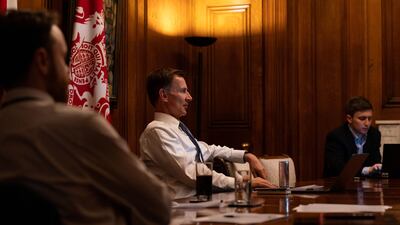
The Chancellor, Jeremy Hunt, works on his speech before the Autumn Statement in his office in No 11 Downing Street, London. All photos: Zara Farrar / HM Treasury -

Mr Hunt is interviewed over details of his budget statement -

The Chancellor faces anger from some Conservative Party members about the prospect of raising taxes to weather Britian's economic storm -
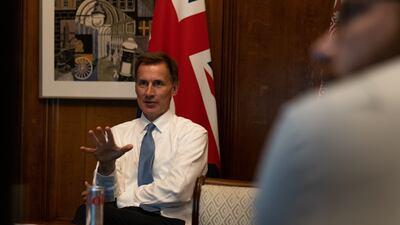
Mr Hunt will insist to MPs that his financial plan puts the UK on a 'balanced path to stability' -
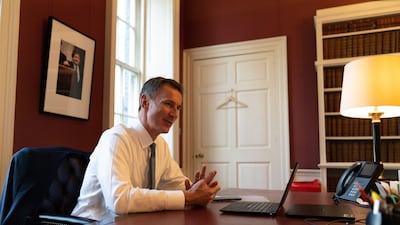
Mr Hunt insists his strategy 'protects long-term economic growth' while showing compassion to the most vulnerable in society -

Mr Hunt leaves TV studios after being interviewed -
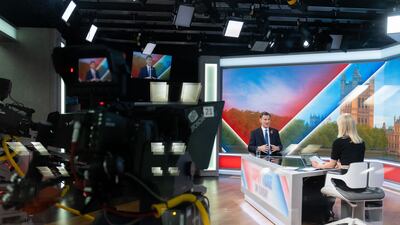
His package will stand in stark contrast to his predecessor Kwasi Kwarteng’s splurge of tax cuts, which further dented the UK’s finances


The Bank of England, the European Central Bank and the US Federal Reserve are likely to deliver another 150 basis points of cumulative rate increases when they meet in mid-December and more hikes are expected in the first half of 2023.
The silver lining for borrowers is that the pace of rate hikes is likely to slow, barring any negative inflation surprises between now and mid-December.
Fed officials have indicated they are open to 50 bps increases in policy rates rather than the 75 bps we have seen in the previous four meetings. The ECB and BoE are also expected to deliver similar-sized increments.
chief economist and head of research at Emirates NBD
This slower pace of tightening is to allow more time for the full impact of rate hikes to date to feed through to the real economy, which can take a year or more.
However, it does not mean that central banks are becoming more sanguine about the inflation outlook.
In the past couple of weeks, several Fed officials have pushed back against market expectations for a “pivot” in policy, saying rates could go higher than indicated in the last set of projections (in September), even if they get there more slowly.
And even once the Fed is ready to pause, it is unlikely to cut rates until inflation has well and truly been wrenched out of the economy.
Khatija Haque is chief economist and head of research at Emirates NBD

