

Environmental, social and governance (ESG) standards are not “nice-to-have” criteria for companies. Instead, ESG is integral to investment decision-making and is set to grow even more in influence in the coming years.
This is one of the key findings from a recent study by Bloomberg Media, sponsored by Mubadala Investment Company.
The research captures insights from more than 800 global business decision-makers, including venture capitalists, government officials and fund managers in the US, China, the UK, France and the UAE.
It found that sustainable investing is a high priority today and will increase in focus by 2030 for many in the private and public investment sectors.
Globally, 79 per cent of respondents said sustainable investing is a significant consideration in their investing process today, with that figure rising to 86 per cent in the UAE.
This finding should be a source of pride for the UAE as our leaders articulate a vision of a more sustainable future.
The study highlights how ESG has become a significant part of investment decision-making to drive a sustainable future, shareholder value and overall returns.
It also addresses a key misconception about ESG: that it is inherently in conflict with making a profit.
Forty-four per cent of respondents to the study said their top motivation for considering ESG in investment decisions was the prospect for greater returns.
In China, half of the respondents said they hoped for bigger profits while the figure was 53 per cent in France and 46 per cent in the UK.
ESG assets will hit $50 trillion by 2025, according to Bloomberg. The findings are backed up by how survey respondents say they are building their portfolios.
Seventy per cent of respondents said their allocation to sustainable investment has increased over the past five years. The rest said their allocation had remained flat and none said it had decreased.
Looking to the future, 83 per cent agree that sustainable investments will be a high priority by the end of the decade, with 45 per cent predicting their ESG capital allocations will increase by at least 20 per cent over the next five years.
Capturing sunlight at the Mohammed Bin Rashid Al Maktoum Solar Park — in pictures
-
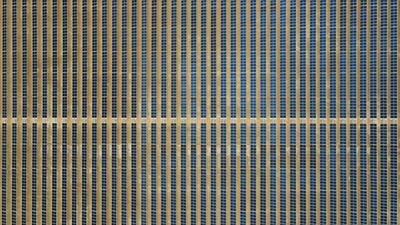
An aerial view of Mohammed bin Rashid Solar Park in Dubai in January 2022. Solar is essential to the UAE's new energy mix. All photos by Pawan Singh / The National -
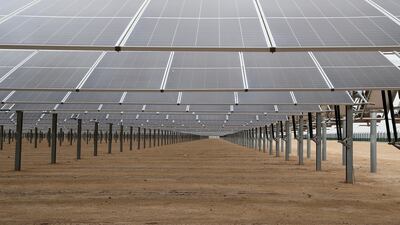
The fifth phase of a clean energy project at the Mohammed bin Rashid Solar Park will further help reduce carbon emissions. -

An aerial view of the Solar Park in the Dubai desert. -
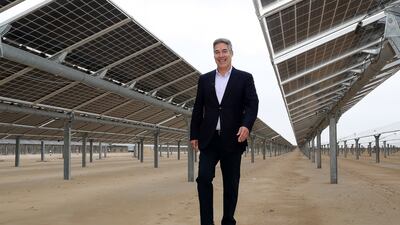
Marco Garcia, chief commercial officer of Nextracker, a US company which has provided photovoltaic technology used in the project. -
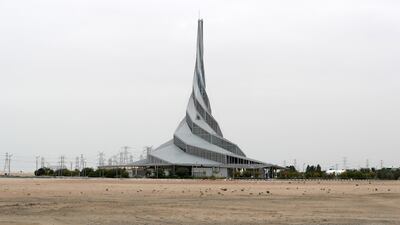
The Innovation Centre at the MBR Solar Park in Dubai, where machine learning is being utilised to track direct sunlight to maximise efficient energy capture, storage and transmission. -

The solar powered panels follow the path of the sun to help the emirate reach its clean energy transition goals. -
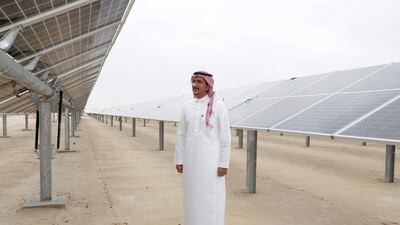
Omar Al Hassan, chief executive of Shuaa Energy 3, the company operating the scheme, says the vast project will ultimately create clean energy to power more than 250,000 houses in Dubai. -
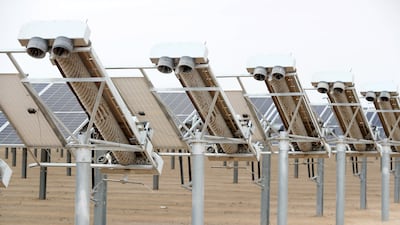
Robotic cleaning systems are installed on the solar panels. -
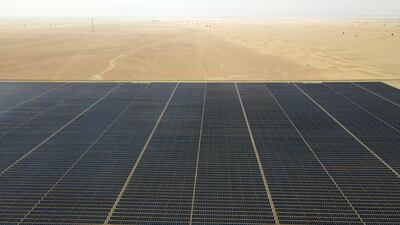
More than 2.5 million photovoltaic modules have been fitted during phase 5 of the project.


Realising this potential, however, requires a continued maturation of ESG data, mechanisms and tools, as well as a conducive market environment.
The barrier cited by more respondents than any other, at 35 per cent, is the lack of consistent and widely accepted standards, which makes calculations and comparisons challenging.
It is important to recognise that a key driver behind this challenge is simply that the ESG data market is still immature and requires times to strengthen its standards and methodologies.
This will improve over time and highlights the need for a focused effort by investors, companies, financial institutions and regulators to drive greater integrity in ESG data and harmonisation.
With 86 per cent of all respondents in the study believing that responsible investment is a powerful driver of a more sustainable future, all parties — public and private — need to co-ordinate and push for more standardisation.
We must be patient and purposeful as market participants move to a more codified and consistent approach based on common definitions and high-quality data.
At Mubadala, we wholeheartedly believe that embedding ESG into our investment life cycle will drive stronger financial returns and produce positive outcomes for society.
This is consistent with our multi-generational mandate, in which we seek to provide stability and prosperity over the very long term.
Helping to drive convergence in market norms and a common understanding of what it means to be a responsible investor is a core part of our pragmatic approach to ESG integration.
A good example of this is our support for the Task Force on Climate-Related Financial Disclosures (TCFD) framework, which we are extending to companies we invest in to determine their understanding of the potential direct and indirect financial effects of climate change on their operations.
Mubadala is also actively working with the One Planet Sovereign Wealth Funds (OPSWF) network to promote the adoption of the TCFD to integrate climate-change risks and investing in the smooth transition to a low-emissions economy.
Abu Dhabi will host this year’s OPSWF’s annual conference, an important step in the conversation about ESG standardisation.
As individuals and companies in the UAE and abroad, we must continue to institutionalise the integration of ESG principles and considerations into our investment processes and daily lives to ensure that the potential of responsible investing is not left unrealised.
Ahmed Al Calily is the chief strategy and risk officer at Mubadala Investment Company

