


The charcoal industry in the West Bank can be traced back to the era of the Ottomans, where people burn wood and bury it into holes under the sand until it turns into charcoals. Around 10,000 Palestinians work in this business, producing an estimated 1,600 tonnes of charcoal every month.
-
-
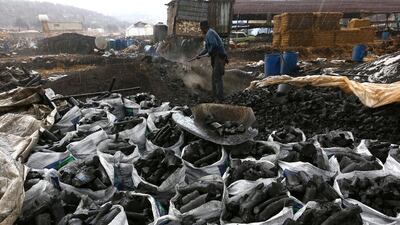
A worker sorts charcoal at a plant in the West Bank village of Yabed. Over the past years, Yabed has been considered as the economic capital of the Palestinians for producing charcoals. Alaa Badarneh / EPA -
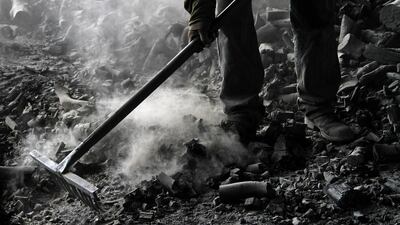
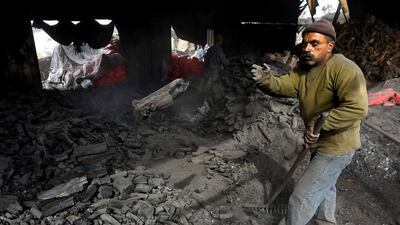
A worker spreads charcoal for cooling in the West Bank village of Yabed. The charcoal is made of citrus wood the workers say comes from Israel, and is later sold to Israelis and Palestinians for approximately 10 shekels (US$2.70) a kilo. Alaa Badarneh / EPA -
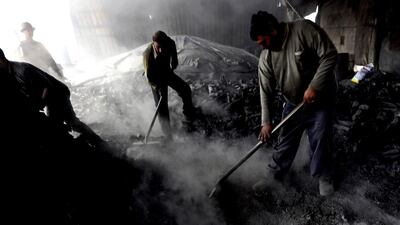
Workers spread charcoal for cooling in the West Bank village of Yabed. Around 400 kilns are in operation in the West Bank, producing 1,600 tonnes of charcoal every month most of which is sold to Israel. Alaa Badarneh / EPA -
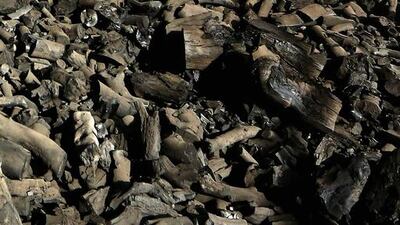
Israel has implemented measures against the charcoals factories Jenin several years ago on complaints of air pollution, beginning with banning the import of woods and issuing the warrants of demolition. Alaa Badarneh / EPA -
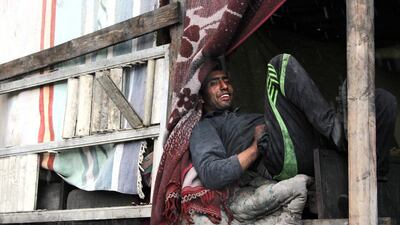
A worker takes a break at a charcoal plant in the West Bank village of Yabed. Alaa Badarneh / EPA -
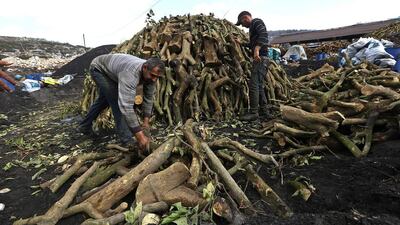
Workers prepare a charcoal kiln in the West Bank village of Yabed. Around to 10,00 Palestinians are engaged in a fully manual labour to turn wood into charcoal in a 10-day process during which the kilns have to be permanently supervised. Alaa Badarneh / EPA -
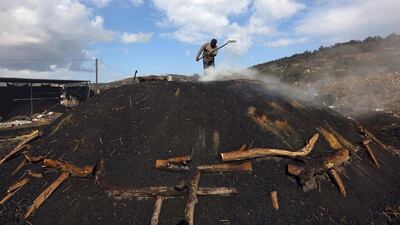
A worker tends to a charcoal kiln in the West Bank village of Yabed. Around to 10,00 Palestinians are engaged in a fully manual labour to turn wood into charcoal in a 10-day process during which the kilns have to be permanently supervised. Alaa Badarneh / EPA -
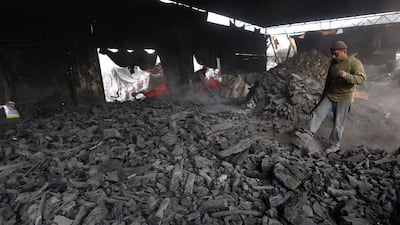
A worker spreads charcoal for cooling in the West Bank village of Yabed. The charcoal is made of citrus wood the workers say comes from Israel, and is later sold to Israelis and Palestinians for approximately 10 shekels (US$2.70) a kilo. Alaa Badarneh / EPA -
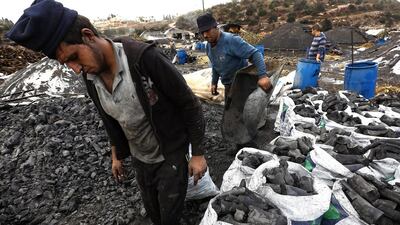
Workers fill bags with charcoal in the West Bank village of Yabed, near Jenin. Charcoal making has been a family tradition for the 10,000 Palestinians who have been living in the area. Alaa Badarneh / EPA
Charcoal production in the West Bank – in pictures
Most popular today

