


Rolls-Royce is working with Emirates to find a resolution for the performance issues on the engine that powers the Airbus A350-1000, as a potential order by the long-haul airline for A350 aircraft hangs in the balance.
The engine maker is addressing Emirates' concerns about the duration of the engine's time on the wing or the period between maintenance visits.
“I want an engine that stays on the wing for the right amount of time and Emirates wants an engine that stays on the wing for the right amount of time, so we're jointly aligned on this and we will continue to work through it,” Ewen McDonald, Rolls-Royce's chief customer officer of civil aerospace told The National at the Dubai Airshow.
“We are always open, honest and give Emirates updates, we believe in transparency, we believe in the strong relationship that comes through trust.”
Rolls-Royce's long-standing relationship with Emirates Airline and its president Tim Clark remains unaffected by the situation.
“Our relationship is unchanged through this, it's very positive and will continue to be very positive. We have lots of aircraft with Emirates and we will continue to work with him on what he wants to do with his fleet and we will support that,” Mr McDonald said.
Rolls-Royce is taking measures to enhance the durability of the Trent XWB-97 engines that power the A350-1000 craft and insists the engines are not defective.
That engine “is the most efficient engine … flying today, so it really is high-tech and something we're very proud of. That engine works great and perfectly in environments which are not harsh, we call them benign environments”, he said.
But the desert environment can prove to be harsh, he added.
“When you come to non-benign environments, sandy and hot conditions, it's really testing for engines because they run it at very high temperatures. Sand with high temperatures is a challenge, it's an industry challenge to all new generation engines as far as harsh conditions,” he said.
“It's not that the engines cannot perform a mission, they just do not stay on wing as long as they should.
“It's a durability issue, it's not a defect issue as has been mentioned.”

Earlier at the Dubai Airshow, Sheikh Ahmed bin Saeed, chairman and chief executive of Emirates Airline and Group, said the carrier would not buy the flagship A350-1000 from Airbus until issues with the Rolls-Royce engine had been addressed.
“When we feel that we have a good deal, we will sign,” he said on Tuesday.
The airline requires specific guarantees from the engine maker.
“I need guarantees on when, at what price and the maintenance cost per hour. That would solve it,” he said.
Emirates already has an existing order for 50 units of the smaller A350-900 model. It also placed an additional order for 15 more of the aircraft on Thursday. The first delivery is expected next summer.
Rolls-Royce is already developing technology to use on existing engines to improve durability, Mr McDonald said.
-
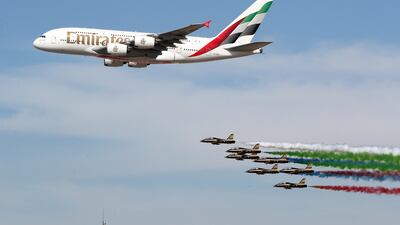
An Emirates plane accompanied by the UAE's Al Fursan aerobatic team during a flying display at the Dubai Airshow. Pawan Singh / The National -
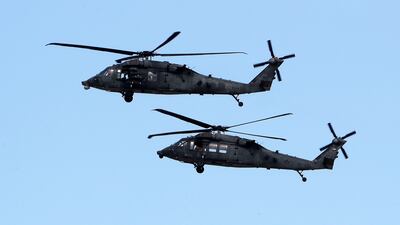
UAE craft flying in formation during a flying display at the Dubai Airshow. Pawan Singh / The National -

The Italian Air Force during a display at the Dubai Air show at DWC in Dubai. Pawan Singh / The National -
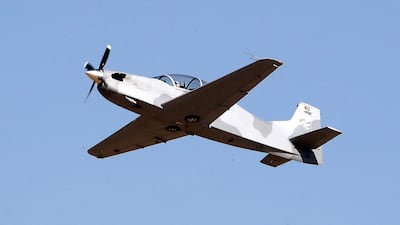
A Bader 250 craft during the flying display at the Dubai Air show. Pawan Singh / The National -
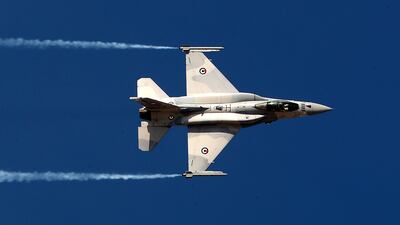
An F16-60 during a display at the Dubai Airshow. Pawan Singh / The National -
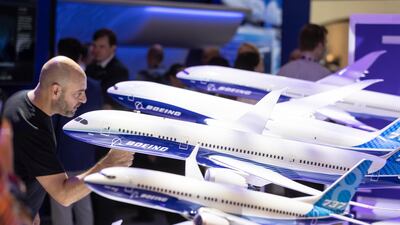
Day one of the Dubai Airshow at Al Maktoum Airport. Antonie Robertson / The National -
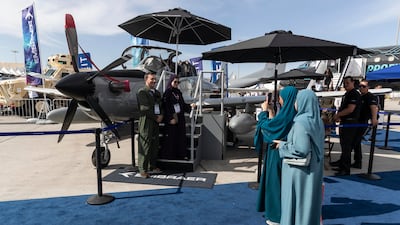
The Embraer stand. Antonie Robertson / The National -
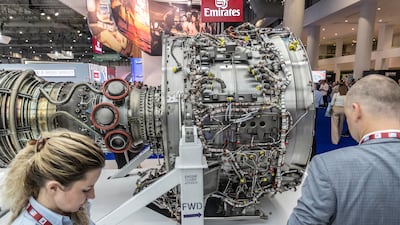
The SANAD stand. Antonie Robertson / The National -
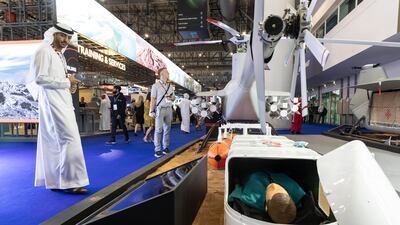
Exhibits on show on day one. Antonie Robertson / The National -

The space agency stand at Dubai Airshow. Leslie Pableo for The National -
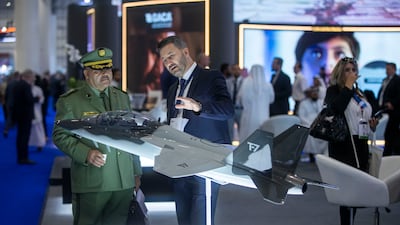
Military aircraft on show. Leslie Pableo for The National -
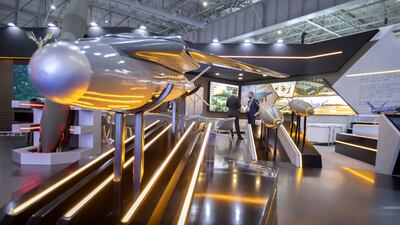
Visitors at Dubai Airshow. Leslie Pableo for The National -
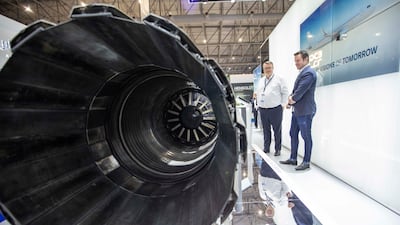
The engine of a plane on display at Dubai Airshow. Leslie Pableo for The National -
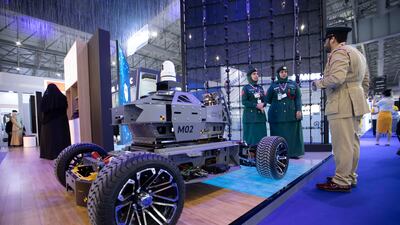
The Dubai Police stand. Leslie Pableo for The National -
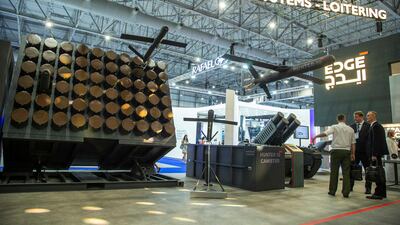
Visitors looking at missiles at Dubai Airshow. Leslie Pableo for The National -
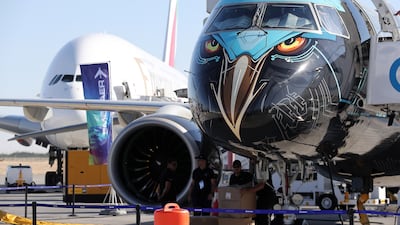
An exhibit with a bird-themed paint scheme the Dubai Airshow at Dubai World Central. Pawan Singh / The National -
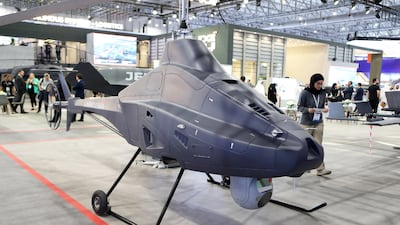
A drone on display at the stand of UAE military technology company EDGE, at Dubai Airshow. Pawan Singh / The National -

Visitors at the Dubai Airshow. The event has attracted more than 1,400 exhibitors from 95 countries. Pawan Singh / The National -
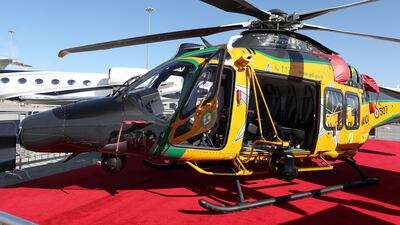
A helicopter on display at the Dubai Airshow. Pawan Singh / The National -
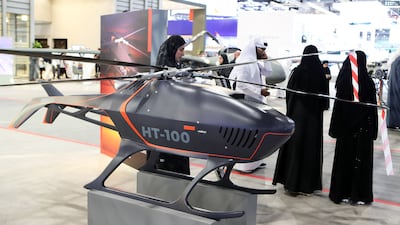
An EDGE drone at Dubai Airshow. Pawan Singh / The National -

An Etihad Airways passenger jet on display at Dubai Airshow. Pawan Singh / The National -
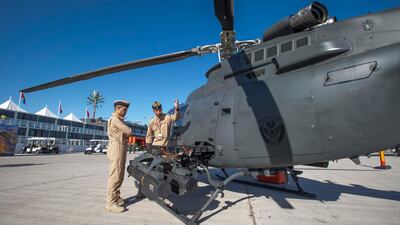
UAE military aircraft at Dubai Airshow, Al Maktoum International Airport. Leslie Pableo for The National -

Emirates crew with an Emirates plane at the Dubai Airshow, Al Maktoum International Airport. Leslie Pableo for The National -
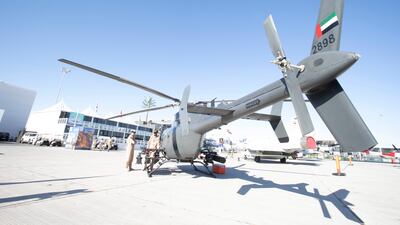
UAE military aircraft at the Dubai Airshow. Leslie Pableo for The National -

Abu Dhabi Police aircraft at the Dubai Airshow. Leslie Pableo for The National -
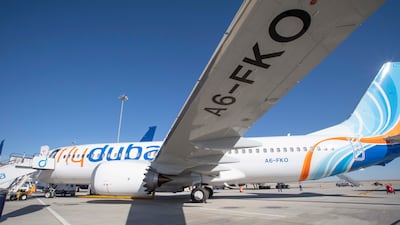
A flydubai plane at the Dubai Airshow. Leslie Pableo for The National -
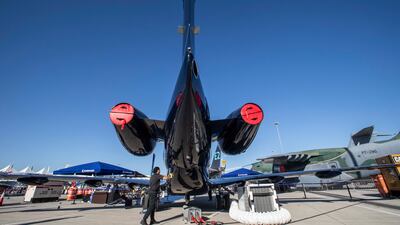
Crew preparing an aircraft for Dubai Airshow. Leslie Pableo for The National -
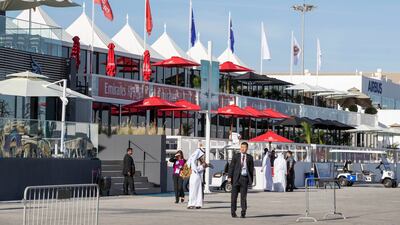
Emirates chalet at the Dubai Airshow. Leslie Pableo for The National -
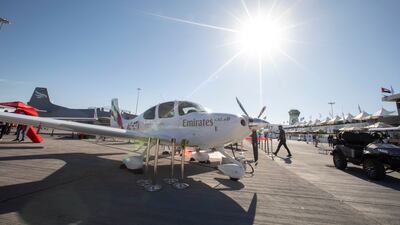
Emirates planes on display at the Dubai Airshow. Leslie Pableo for The National -
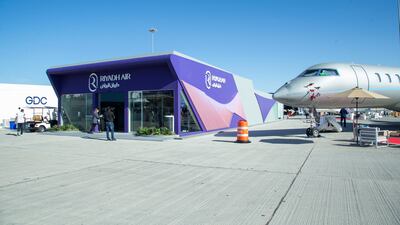
Riyadh Air's chalet at Dubai Airshow, Al Maktoum International Airport. Leslie Pableo for The National -
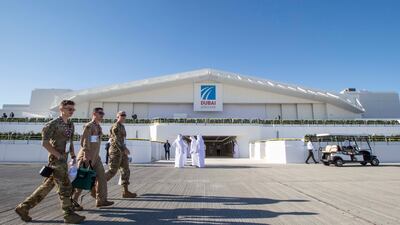
Visitors attend the Dubai Airshow. Leslie Pableo for The National -
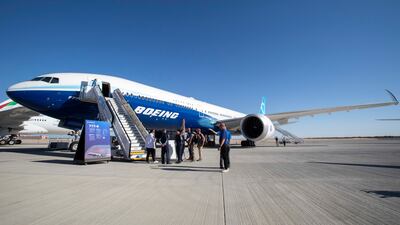
A Boeing plane on display at the Dubai Airshow. Leslie Pableo for The National -

UAE military aircraft at the Dubai Airshow. Leslie Pableo for The National


Wide-body jet market revival
Rolls-Royce is optimistic about the recovery of the overall wide-body aircraft market, which is trailing the narrow-body market in terms of orders following the Covid-19 pandemic.
"This year what we've seen is a strong return to international travel around the world, even China's international [travel market] is coming back strongly," Mr McDonald said.
"So what you're seeing is airlines focus on securing wide-body new generation aircraft because they've done a lot of the narrow-bodies and now they're looking at their international fleet."
Airlines are queuing up to secure positions for new aircraft as delivery slots become more scarce and plane makers' backlogs stretch into the 2030s.
"People are worried about availability of slots, I would say the market is hot, it's very lively, and people who want to secure these slots because there's only so many and if you don't get in then you might miss out," he said.
Airlines are also seeking more fuel-efficient aircraft as one way to meet their sustainability goals.
"One of the quickest ways you can make an impact is replacing older aircraft with more fuel-efficient aircraft," Mr McDonald said.
The combination of these factors means there will be more wide-body order announcements through to the end of the year.
"There is so much activity in the market at the moment. It is to be expected, once people start buying aircraft, other people start sitting up and thinking 'maybe I need to buy some'," the Rolls-Royce executive said.
"Outside the launch of a new aircraft, which always [attracts] lots of orders, I would say this year would be the biggest year ... for the wide-bodies market."
The Dubai Airshow kicked off on Monday with home airlines Emirates and flydubai ordering 125 wide-body jets worth $63 billion.
EgyptAir and Ethiopian Airlines also ordered Airbus A350 wide-bodies during the event.

