


The Mohammed bin Rashid Aerospace Hub (MBRAH) in Dubai South has launched its suppliers' complex, the first vertical aerospace complex in the region, as the aviation industry continues to recover from the coronavirus slowdown.
The hub houses 86 leasable units for maintenance services companies, aircraft parts traders and aerospace and drone companies, with plans to expand further.
The first phase of the complex attracted about Dh60 million ($16.33m) in investment, Mohammed bin Rashid Aerospace Hub chief executive Tahnoon Saif told The National on Tuesday at its soft opening.
He said there would be two more phases of the project.
"What we have built in phase one is unique because of the utilisation of land — the small and medium companies in aerospace, they don't necessarily require big hangars, they require easy and affordable access to the industry," Mr Saif said.
"They don't need [a] 1,000-square metre space or [to be] 12 metres high. They need convenience and a place for their aerospace parts, corridors, elevators and doors from which they can access their parts. That is the backbone and key differentiator of this building from other buildings."

The building is already "40 per cent leased" and there is demand for it to be "50 per cent leased by the end of the year", Mr Saif said.
"We are positive that we will need one or two more buildings in the next five years and have reserved the area for similar development."
The overall aerospace complex is about 30 per cent occupied and developed on seven square kilometres of land adjacent to Al Maktoum International Airport, Mr Saif said.
"Imagine when that [Al Maktoum International Airport] is fully operational," he said. "This hub will be 100 per cent occupied, maybe sooner. A lot of the companies now serve DXB clients or some outside the UAE. We are expecting it to run out of space and facilities when Al Maktoum International is fully operational."
-
-
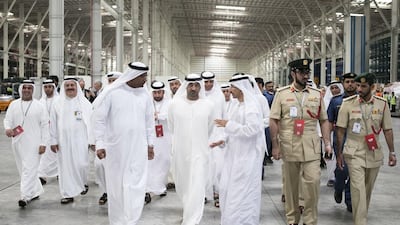
Sheikh Ahmed Al Maktoum, centre, chairman and chief executive of Emirates Airline and Group, inaugurated the new cargo terminal. He was given a tour by Nabil Sultan, left, Emirates Divisional senior vice president, Cargo. Reem Mohammed / The National -
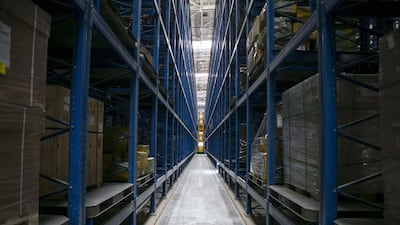
An aisle storage system inside the cargo facility. Reem Mohammed / The National -
"The space it currently occupies on the land allocated to us at Dubai South is part of a much bigger area, which we can develop over time to increase our cargo handling capacity to achieve our vision of 12 million tonnes annually by 2050, from the current 2.3 million tonnes,” said Nabil Sultan, Emirates divisional senior vice president, cargo. Reem Mohammed / The National -
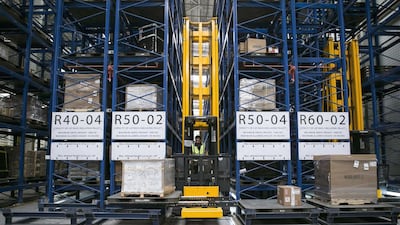
"Dubai South offers the ideal connection point for sea and air cargo, which calls for rapid movement to the markets of the Middle East, Asia and Africa,” said Mohsen Ahmed, vice president of logistics at Dubai South. Reem Mohammed / The National -
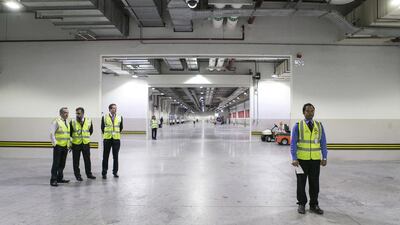
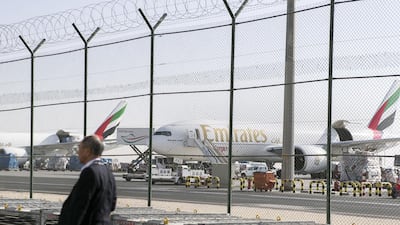
Emirates SkyCentral is located 77 kilometres from Dubai International Airport. Reem Mohammed / The National -
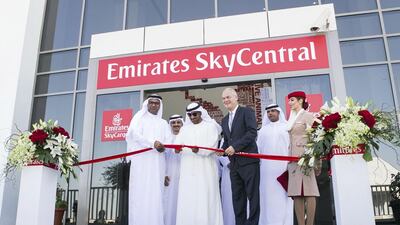
Sheikh Ahmed inaugurates the Emirates SkyCargo terminal. Reem Mohammed / The National -
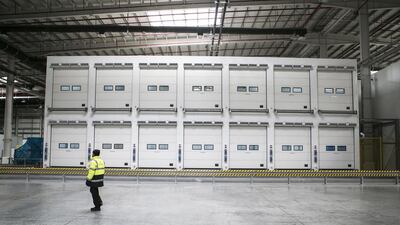
Inside the perishable cargo facility. Reem Mohammed / The National -
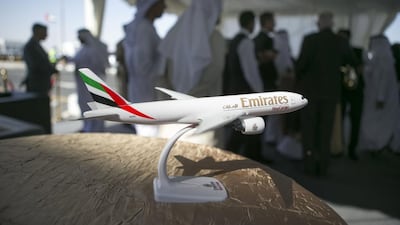
Emirates SkyCargo currently uses cargo hold capacity in Emirates’ fleet of more than 240 aircraft, including 15 freighters – 13 Boeing 777-Fs and two B747-400ERFs – and provides air cargo services to more than 145 destinations around the world. Reem Mohammed / The National -
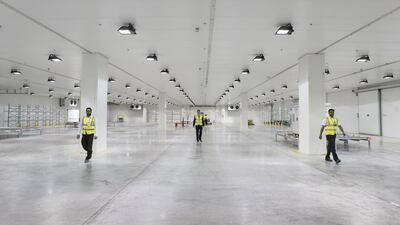
Inside the perishable goods facility. Reem Mohammed / The National -
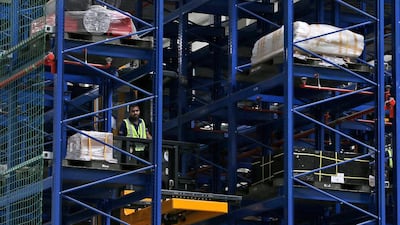
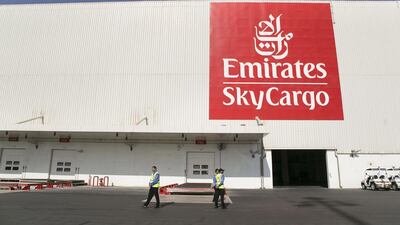
An employee of Emirates SkyCentral uploads goods at the new facility. Kamran Jebreili / AP Photo -
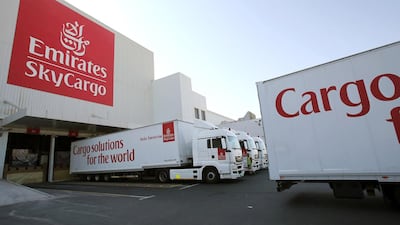
Trucks are loaded at Emirates SkyCentral. Kamran Jebreili / AP Photo


Middle East airlines will require almost 3,000 new planes in the next 20 years, US plane maker Boeing says.
This is "very promising for maintenance suppliers", Mr Saif said.
"Things like the coronavirus and Ukraine-Russia war, they have an impact but when they end, things will pick up again," he said.
"Our approach is to be very proactive and prepared for the next growth. We know that with coronavirus, things were paralysed and they picked up slightly, and now the data says things will go back to normal next year in the second half. Whatever has been frozen, there is a time or period where we need those parts delivered and available to the airlines."
Companies setting up at the complex will benefit from an incubator within the development to help them expand.
MBRAH will offer incentives and packages for interested companies to support them, it said in a statement.
Industry segments covered by the complex include maintenance, repair, and operating supplies, aero-logistics, spare parts trading, drones, space sector, software and avionics.
The hub counts among its tenants the likes of Boeing, General Electric and Lufthansa Technik.

