

As border curbs and mandatory quarantines fall away, a fresh challenge is emerging for global aviation — rehiring staff fast enough to cope with a rebound in air travel that is already straining the industry.
Singapore, which has flung open its borders again, is hosting a two-day job fair until May 28 targeting everyone from graduates to mid-career professionals and former aviation workers who quit during the Covid-19 crisis. More than 6,600 jobs are available at the country’s airport, often voted the world’s best.
The task is to lure people to work in an industry that’s been decimated by the virus. Job losses and pay cuts hit aviation workers hard, and many have taken up other, less volatile careers. That’s resulted in a lack of manpower to properly handle the recovery.
Sydney Airport has struggled with queues and flight disruptions, while staff shortages at London’s Heathrow Airport hurt the earnings of British Airways parent IAG.
“People may be thinking twice about returning to such a cyclical industry, especially with economic growth concerns on the horizon,” said Jason Sum, an analyst at DBS Bank.
Hong Kong’s Cathay Pacific Airways, which saw its workforce shrink 37 per cent from a 2019 high to the end of 2021, sent out emails to hundreds of former cabin crew to gauge their interest in rejoining the company, according to a person familiar with the matter.
It’s an uphill task for a carrier hit harder than most due to Hong Kong’s travel restrictions.
In its recently released 2021 sustainability report, Cathay said the number of permanent employees voluntarily leaving jumped to a record high of 17 per cent. Two-fifths of all departures were aged under 30, a sign that younger people may have concluded that aviation isn’t a viable career.
In the US, which reopened quicker than Asia, thousands of flights were cancelled by Southwest Airlines and American Airlines Group last year partly due to crew issues.
Dutch airline KLM capped the sale of flights from its Amsterdam Schiphol hub due to an acute shortage of airport security staff.

Airline passengers, having been starved of travel options for so long, are getting frustrated as the impact of staffing shortages becomes clear.
Airlines mishandled 24 per cent more bags in 2021 than in 2020, according to SITA Baggage IT Insights, as international and long-haul flights resumed.
In India, 79 per cent of customers said service and the behaviour of airline staff has deteriorated sharply since Covid-19, a survey undertaken for Bloomberg News shows.
Hiring at Singapore’s Changi Airport will be focused on front-line passenger service positions, cargo, retail and cleaning, the airport operator said.
Before Covid-19, air transport and spending by foreign tourists arriving in Singapore by air contributed 11.8 per cent to the local economy and supported 375,000 jobs, according to the International Air Transport Association.
A wide range of companies are looking for talent at the Singapore job fair, including Pratt & Whitney Engine Services, duty-free operator Lotte Travel Retail Singapore and ground-handling and caterer SATS.
There are openings for service staff at check-in rows, food inspectors and emergency services, according to Changi Airport.
On Friday afternoon, at least 500 job seekers — including teenagers in school uniform — roamed the conference hall in the middle of Singapore’s business district, speaking with potential employers. They had the option of expressing interest to apply for a particular company, and then immediately go for interviews in tiny stalls.
In an adjacent makeshift hall, experienced aviation employees made speeches about their jobs.
Chandelle Chong, 25, who is interning with Dnata, Emirates Group’s aviation services arm, was looking for opportunities at United Parcel Services, Singapore Airlines' budget carrier Scoot and France’s Safran. In her final year of studying air transport management, Ms Chong is upbeat.
“I’m interning at Dnata, so we see the progress first hand and the industry is booming again,” she said. “We are more optimistic. We have been seeing potential.”
Dnata is looking to hire at least 300 staff in the second half of the year, according to Michelle Woon, a human resources manager with the company.
Work has resumed work on Terminal 5 at Singapore’s Changi Airport after being halted two years ago, while there are also plans to reopen Terminal 2 this weekend. Passenger traffic at the airport has returned to close to 50 per cent of pre-Covid levels from less than 20 per cent in mid-March.
“More flights and passengers mean more airport staff are needed to support this growth,” Changi said. “Airport partners are offering market competitive salaries, incentives and better career prospects.”
Best business class airlines in the world - in pictures
-

Singapore Airlines business class seating. It topped the Bounce business class ratings survey, with a score of 9.57. Reuters -
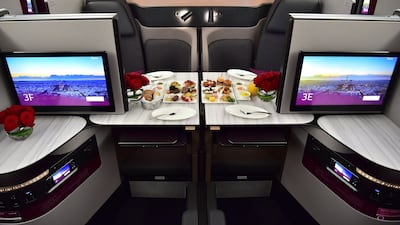
Business class with Qatar Airways. The airline came second in the survey, with a score of 9.29. AFP -
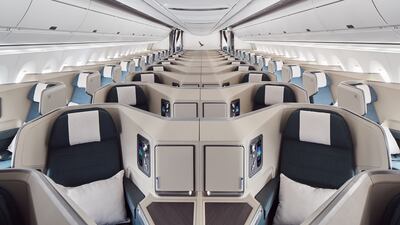
Hong Kong's Cathay Pacific was placed third, with an overall score of 9. Photo: Cathay Pacific -
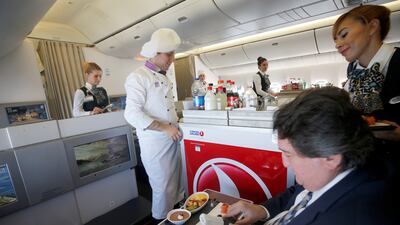
Staff serve a business class meal on a Turkish Airlines flight. Turkey's flag carrier came fourth in the survey. Getty Images -
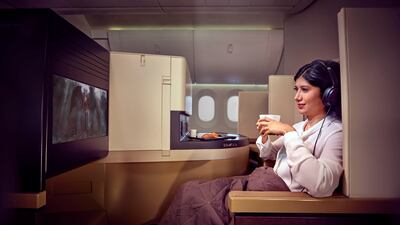
Business class with Etihad. The Abu Dhabi airline was praised for its cabins and seating, cuisine and service. Photo: Etihad -

Emirates business class. The Dubai airline scored particularly highly for airport experience, entertainment and amenities. Emirates and Etihad tied in fifth place. Photo: Emirates -

Business class with Japan Airlines. Bloomberg -
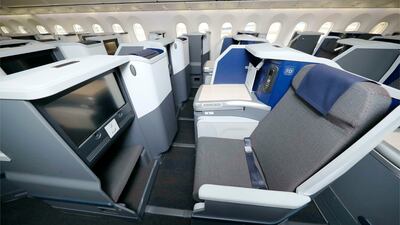
All Nippon Airways tied with its Japanese rival in seventh place. AP -

Business class on Air New Zealand. AFP -

Staff cleaning business class seats on a Thai Airways aircraft. EPA -

Sleeping arrangements in Virgin Atlantic business class. Photo: Virgin Atlantic -

Business class aboard a Delta Air Lines aircraft. Photo: Delta



