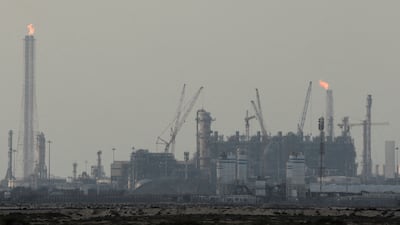

QatarEnergy has signed a 20-year agreement to buy up to three million tonnes a year of liquefied natural gas from Woodside Energy’s Louisiana LNG project. The deal deepens Doha’s push into US supply, which it is using to hedge against disruption in the Strait of Hormuz.
Supplies will be delivered free-on-board. They will start when the project’s second train begins operating and rise to the full three million tonnes when the third train starts up. QNA, the state news agency, said it expects first deliveries in 2030.
“These additional volumes make QatarEnergy the largest buyer of LNG from the US,” said Saad Al Kaabi, Minister of State for Energy Affairs and QatarEnergy’s president and chief executive. He added that the company’s Golden Pass project in Texas and its growing portfolio of US purchases support its “long-term growth and diversification strategy”.
Liz Westcott, Woodside’s chief executive, called the agreement “a strong vote of confidence in Louisiana LNG”. The project, near Lake Charles, will have three trains with a combined capacity of 16.5 million tonnes a year. It took a final investment decision in April last year and is targeting first LNG in 2029.
The deal comes a week after QatarEnergy agreed to buy four million tonnes a year from Cheniere through 2054. Golden Pass began exports in March.
QatarEnergy chief executive Saad Al Kaabi told Reuters on Thursday that the company expected to sign more long-term purchase deals with US and other suppliers by the end of the year, targeting volumes “much higher” than the seven million tonnes a year agreed so far. He said the company was talking to “everybody”, including Venture Global, and that buying LNG required no capital spending and was much cheaper than building pipelines or new trains.
On Thursday, Cheniere raised its full-year guidance as Middle East gas disruptions lifted demand for US cargoes. It now expects adjusted earnings before interest, tax, depreciation and amortisation of $8.75 billion to $9.25 billion, up from $7.9 billion to $8.4 billion previously. Third-quarter revenue rose 39 per cent to $6.17 billion, and the company shipped 188 cargoes.
The Woodside deal also comes as QatarEnergy extends force majeure on its own shipments. This week Italy’s Edison said the Qatari company had pushed force majeure on its deliveries to the end of December. Buyers in Pakistan and Bangladesh were told their notices would run to year-end, Reuters reported. Bangladesh’s Petrobangla said it was buying spot cargoes at “a significant cost”.
It also comes as QatarEnergy keeps extending force majeure on its own shipments. This week Italy’s Edison said the Qatari state company had pushed force majeure on deliveries to the end of December, from early December. Buyers in Pakistan and Bangladesh were told the notices would run to year-end. Bangladesh’s Petrobangla said it was buying spot cargoes at “a significant cost”.
The Iranian strike on Ras Laffan knocked out about 17 per cent of Qatar’s LNG capacity. Mr Al Kaabi also said the two damaged trains would take about three years to repair, although full production at the undamaged facilities could restart within a week of a peace deal if ships were available. He also ruled out pipelines that bypass Hormuz for QatarEnergy, saying any infrastructure in the region could be targeted.
Gulf producers have been racing to secure US LNG supply since the war began. Abu Dhabi’s Mubadala Energy is building a $13 billion project in Louisiana, while XRG has increased its stake in Texas’s Rio Grande LNG.
The strait normally carries about a fifth of global LNG trade. Shortfalls from Qatar have pushed Europe’s TTF gas benchmark above €95 a megawatt-hour this week, close to its highest level since December 2022.

