

Domestic and international defence companies will descend on Abu Dhabi on Monday for the Middle East’s largest defence expo, to showcase the latest in advanced technological products amid geopolitical threats, conflicts and rising tensions worldwide.
The International Defence Exhibition (Idex), and Naval Defence and Maritime Security Exhibition (Navdex), will take place in the UAE capital from February 17-21, with the biennial event's largest expo yet, organisers said.
More than 150,000 visitors are expected through the doors during the week-long event, where more than 1,565 exhibitors from around the world will be in attendance. Featuring 41 country pavilions across more than 180,000 square metres of exhibition space, Idex will gather decision-makers, industry leaders and top companies to explore the future of maritime defence and security.
“This edition will feature 41 national pavilions, with the UAE pavilion being the largest at 25,000 square metres, a 4 per cent increase from the previous edition. The number of national companies has reached 213, making up 16 per cent of exhibitors, while international companies constitute 84 per cent,“ Humaid Matar Al Dhaheri, managing director and group chief executive of Adnec Group, said.
Seven new countries, including Qatar, Ethiopia, Hungary, Latvia, Lithuania, Romania, and Cyprus are participating this year. Additionally, a dedicated platform, with participation from 38 companies across 13 countries, has been introduced to raise awareness of chemical, biological, radiological, nuclear, and explosive threats.
More than 3,300 products and technologies will be displayed at the event. The exhibitions will also host more than 156 start-ups, accounting for 10 per cent of total exhibitors.
Emirati defence conglomerate Edge, alongside major international companies such as Raytheon Technologies, Lockheed Martin, Boeing, Saab and Thales will be participating in this year's event.
“Idex is a key opportunity to engage with partners across the region and showcase how our advanced defence solutions can support the country’s security and aerospace ambitions,” said Kuljit Ghata-Aura, president of Boeing Middle East, Turkey, Africa, and Central Asia. “We look forward to ... further contributing to the growing domestic defence industrial base.”
Navdex will feature a display of naval fleets from countries such as the UAE, Bahrain, Oman, Pakistan, Greece, South Korea and India.
The event will feature the launch of several warships for the UAE Armed Forces, with the participation of 21 vessels from allied nations, including newly manufactured ships that highlight the advanced technology of the Emirati defence industry, organisers said.
-
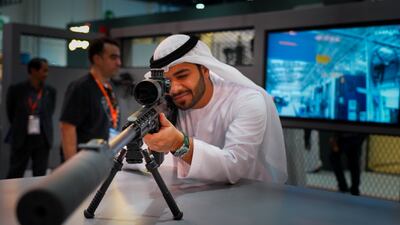
Visitors try out a sniper rifle scope sight on the first day of Idex in Abu Dhabi. AFP -
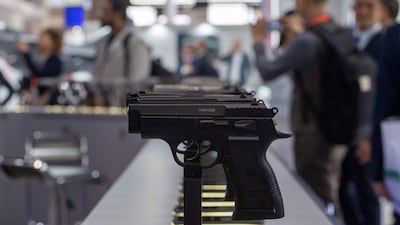
The Middle East's biggest defence show is expected to host more than 100,000 visitors over five days. Ryan LIM / AFP -
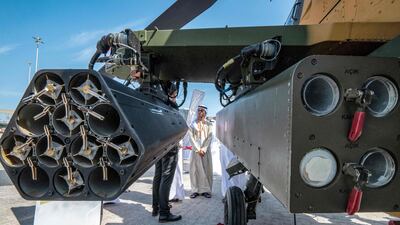
Visitors stand near the weapons platform of a TAI/AgustaWestland T129 ATAK attack helicopter on display. AFP -
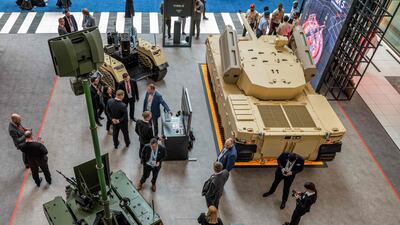
Visitors view the Type-X robotic combat vehicle (RCV) at the Edge pavilion. AFP -
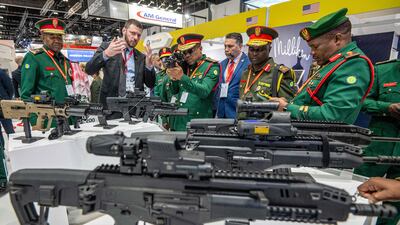
Tanzanian military officers attend a demonstration of assault rifles and other firearms. AFP -

A Russian helicopter on display. Khushnum Bhandari / The National -
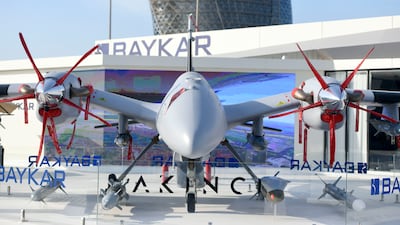
The Turkish-made Baykar drone at Abu Dhabi National Exhibition Centre. Khushnum Bhandari / The National -
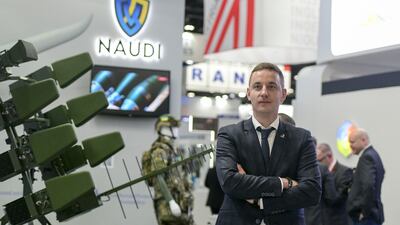
Oleg Skliar, from Ukraine's Kyiv Design Bureau, which makes spotter drones. Khushnum Bhandari / The National -
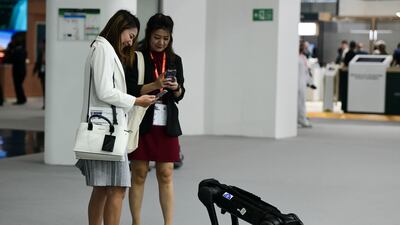
Robots entertaining visitors at Idex and Navdex 2023 at Abu Dhabi National Exhibition Centre. Khushnum Bhandari / The National -
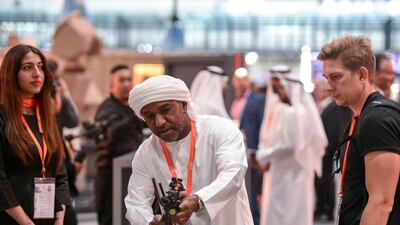
The arms and defence technology sales exhibition is held every two years -
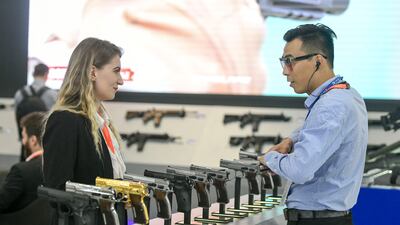
Steel-frame pistols made by Sarsilmaz are on show -
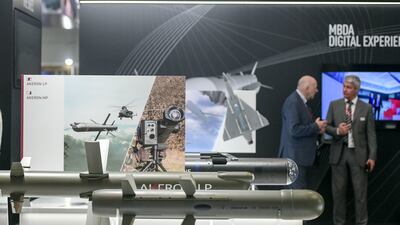
A combat missile system on display -
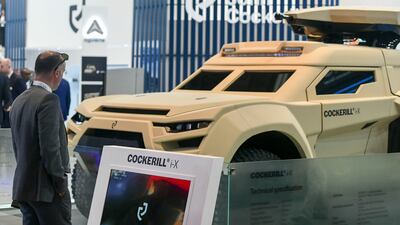
The John Cockerill stand at Idex -
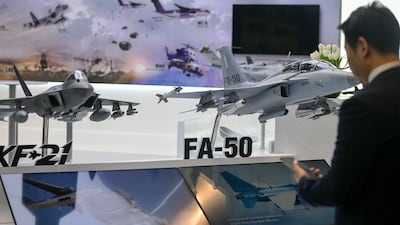
Model warplanes displayed by Korea Aerospace Industries -
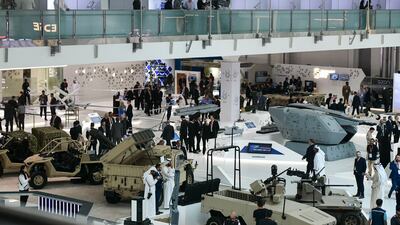
The busy opening day of Idex and Navdex -
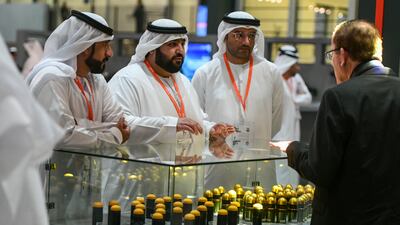
The event is being held at Abu Dhabi National Exhibition Centre from February 20-24 -
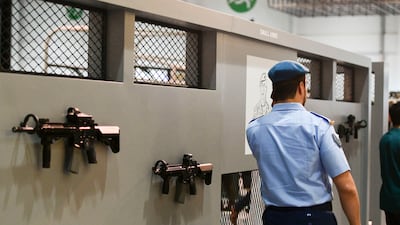
The event highlights the UAE's progress in the defence industry -
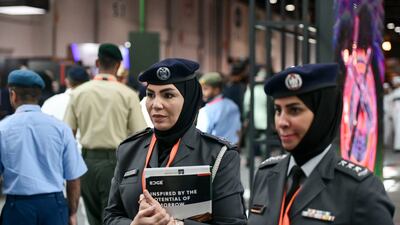
People gather for the opening day -
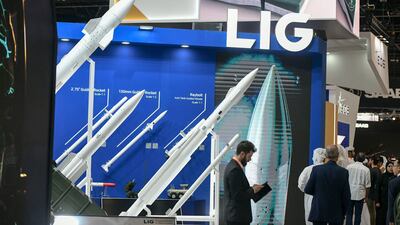
The LIG stand -
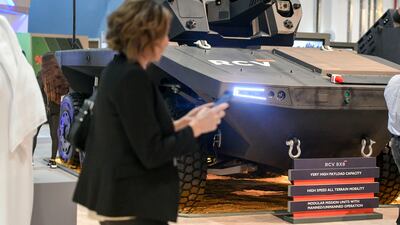
A Nimr 8x8 robotic combat vehicle -
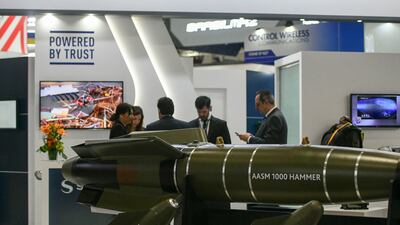
Weapons at the Safran stand


The UAE and Saudi Arabia are developing their military production capabilities to reduce their reliance on foreign suppliers. The move is intended to diversify economies from oil, encourage domestic manufacturing and create more jobs. It will also boost sectors such as maintenance and repair operations where local capabilities exist.
The world's top arms producers have recorded a rise in revenue on the back of several wars and rising regional tension.
Revenue from the sales of arms and military services by the 100 largest companies in the industry reached $632 billion in 2023, an increase of 4.2 per cent on 2022, according to data by the Stockholm International Peace Research Institute (Sipri) released in December 2024.
"Arms revenue increases were seen in all regions, with particularly sharp rises among companies based in Russia and the Middle East," Sipri said in its report. "Overall, smaller producers were more efficient at responding to new demand linked to the wars in Gaza and Ukraine, growing tension in East Asia and rearmament programmes elsewhere."
Six of the top 100 arms companies were based in the Middle East, with their combined arms revenue growing by 18 per cent to $19.6 billion, the data showed.
"The biggest Middle Eastern arms producers in the Top 100 saw their arms revenue reach unprecedented heights in 2023 and the growth looks set to continue," said Diego Lopes da Silva, senior researcher with the Sipri Military Expenditure and Arms Production Programme.

