


Dr Noha Khater does not like being told she cannot do or achieve something. If anything, the Egyptian entrepreneur says, it is almost like a challenge for her to then do precisely that.
Describing herself as a “high achiever”, Ms Khater, an ophthalmologist, was keen to tick all the boxes: she graduated top of her school, finished medical school and then her residency and PhD at Cairo University and pursued fellowship degrees in the UK.
“I remember very well when I decided to sub-specialise in ophthalmology. I decided to be a retina specialist, and everybody came and said, ‘there's no such thing as being a female retina specialist in Egypt. There are none, no patients will come to you. It will always be men who are leading this specialty in this field’. And of course, because someone told me you can't do it, I decided to do it,” she says.
That led her to pursue fellowship training in the US, where she witnessed the impact of poor diabetes management on eye disorders, including blindness. A key aspect was that patients who were from a lower economic background did not always have their records, which caused further issues.
Returning to Egypt, she began practising and set up her own private clinic in 2003, but remained keen to tackle the challenge of supporting more diabetic patients with better services and care.
“I wanted to create this specialised service where patients have their medical data on them, they don't have to carry it in this paper bag or plastic bag and lose it in their house or in the cab or anywhere.”
Five ways to prevent diabetes – in pictures
-
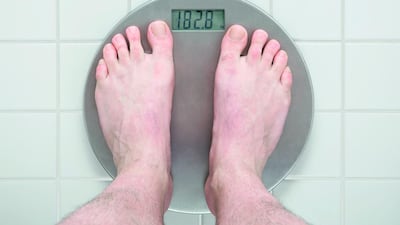
Maintain a healthy body weight ... One of the leading causes of diabetes is obesity, so keeping a healthy weight for your height is vital. -
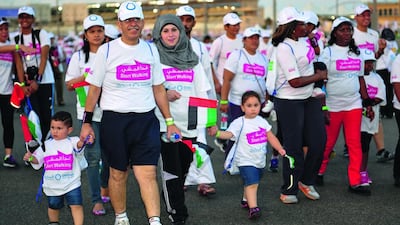
Move more ... Aim for at least 30 minutes of moderate exercise five or more times a week. Walking is great. -

Right fuel ... Eat a healthy diet with plenty of fresh vegetables, while avoiding fried and sugary foods. -
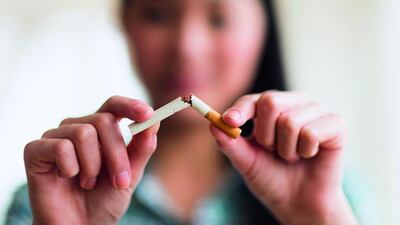
Quit smoking ... Stopping smoking won’t just be helpful in preventing diabetes, it will do wonders for your overall health – and the health of those around you. -

Get checked ... If you are at risk of developing diabetes, have regular check-ups with your doctor.


In 2014, she and a friend, Rania Kadry, started working on the concept of Almouneer, a health technology company, trialling an in-house software in her clinic. The company was officially launched three years later, in 2017.
“We started the first chain of tech-enabled clinics in Egypt, catering to diabetic eye diseases. And we had created our own software so, basically … it's a fully electronic medical record practice management system,” Ms Khater says.
The start-up then started providing its solution, called NoRa, to other clinics on a revenue-sharing basis.
As the next step, Almouneer, which means “one who lights” in Arabic, wanted to further personalise the experience. “We wanted the patient to have their own medical records on them, so they own their medical data,” says Ms Khater.
That led to the launch of the Dru app, where patients can upload their medical records and information about vitals such as sugar and blood pressure. The bilingual app, available in Arabic and English, also provides them reminders about medications.
Another key service, says Ms Khater, is that the subscription-based app offers a 24/7 medical support line, allowing patients to connect with doctors whenever they have concerns.
The rates start at $2 a month and patients also get discounts on lab services, radiology reports and other areas.
The company currently has a network of more than 200,000 patients and works with more than 70 providers.
In May, it partnered with the International Medical Centre, an Egyptian military hospital, with Ms Khater saying they are “growing the network” rapidly to add other hospitals and clinics.

The focus on diabetes is rising as the condition continues to affect a growing population worldwide.
Roughly one in 10 of the adult population (aged 20 to 79 years) or an estimated 537 million people have diabetes, the International Diabetes Federation's Diabetes Atlas (2021) report found.
Almost half are unaware that they are living with the condition.
The number of diabetics is predicted to rise to 643 million by 2030 and 783 million by 2045, the report found.
In the Mena region, one in six adults (73 million) are living with diabetes, the report found, with one in three undiagnosed.
The number of adults with diabetes is expected to reach 95 million by 2030 and 136 million by 2045 in the region.
Meanwhile, diabetic retinopathy is the leading cause of blindness in working-age adults, according to the US Centres for Disease Control and Prevention. The condition occurs when high blood sugar damages blood vessels in the retina. Damaged blood vessels can swell and leak, causing blurry vision, the CDC states.
The increased focus on tackling the condition and its related health issues has led to a growth in the number of specialised service providers.
Almouneer, which was started with about $500,000 and bootstrapped until 2022, raised $3.6 million from its first seed investment round which closed last year.
It was led by Dubai-based Global Ventures, with participation from Proparco and Digital Africa, through the Bridge Fund, UK-based Wrightwood Investments – the family office of Diane and Henry Engelhardt, and other international funds.
“We broke even very early on, we made sure of that because we had the mindset of bootstrapping from the very beginning,” Ms Khater says.
As a women-led venture in health care, the start-up “ticked a lot of boxes” and depended heavily on support, including SME loans from the government and grant funding from other organisations. It was also selected as a case study by Insead three times, all of which helped the start-up sustain through Covid-19 as well.
“After we took on the funding, we are now investing more in growth, we maintain our profitability, but … we can afford to hire talent, Ms Khater says. “The hires in tech are very challenging, very costly, especially in Egypt where now you have a lot of talent escaping towards certain countries that are actually a very important market for us.
“So, it is a different challenge. But we're trying to address it, especially as we move towards our regional expansion.”
The start-up aims to expand into Saudi Arabia first, to leverage the massive market in the kingdom.
“If we go to Saudi, we have to have a local team. We can keep part of the operations in Egypt because the overheads here are less, but going to Saudi we definitely will have … a very strong company presence, if not, maybe even consider having headquarters there,” she says.
The start-up is planning its series A funding round by the end of this year, and is hoping to raise a minimum of $10 million, which will be used to support its expansion into Saudi Arabia as well as the UAE.
As a tech venture, the start-up is also focused on data privacy and is investing in a data team to ensure compliance. It is already seeing major gains from the adoption of technology.
“We have data on how we have managed our patients, how we have improved their lifestyle – it's 70 per cent improvement, [we have] maintained the vision by 60 per cent,” Ms Khater says.
“And then we have the experience, we have the passion, we have the presence … so I think we have a good head start.”
Looking ahead, artificial intelligence will prove to be extremely beneficial, she says.
“It's going to help us in scaling, in serving more patients, in taking the right decisions, in looking at data in a different way, in using this data to assist the doctors, because the number of doctors in the world by no means can match the number of patients in the world. So, this is why you need more investment in technology and particularly in AI, so it's a blessing.”
Technology can also help providers ensure that they focus on prevention as much as possible.
“We want to serve our patients better and we believe that this very much starts with lifestyle, what you eat, how you exercise, how you sleep, and then, even if you have type two diabetes, you can reverse the disease by proper lifestyle management and awareness,” she says.
“My vision for the company is to become the number one lifestyle management app for any human being.”
Q&A with Dr Noha Khater, chief executive and co-founder of Almouneer
Who is your role model?
My father, because he inspired me. He made me believe that I can do whatever I want. That there is no limit to your ambition or your dreams and that no matter what people try to tell you, if you think you can do it, then you will do it. So for inspiring me to do the things that I thought I couldn't do.
If there was any other company that you could have started, what would it be?
[Something] in education.
If you could start all over again, is there anything that you would do differently?
Yes, I would educate myself more about financials.
What are the key things that you've learned in the process of setting up this venture?
It is important to build the proper structure from the very beginning and not to have to work things backward. I guess it's against the nature of an entrepreneur, but now that you move forward, you want to go back and start things the right way.
What is the key advice you would give to other entrepreneurs?
Choose the right partner. Don't give up. And there's always a way, it's never a dead end.
What is your personal vision?
I hope to create an impact in what I'm doing … I'm always driven by impact and value. You know, like when you treat a patient, when they come back to you and they are seeing well and they are happy, this is the best kind of reward you can ever get. I want to see the same in all the patients that we touch or we deal with.

