


Electric cars, space exploration and now burgers. Elon Musk's latest venture is a little more down to earth than what we've come to expect from the billionaire entrepreneur.
The Tesla founder expressed his plans on Twitter back in 2018 for an "old school drive-in, roller skates and rock restaurant at one of the new Tesla Supercharger locations in LA".
Now the idea is a step closer to reality after Tesla submitted documents to the City of Los Angeles for a diner that would be open 24 hours a day at 7001 West Santa Monica Boulevard in Hollywood.
The 864-square-metre space includes plans for a drive-in movie theatre and a 28-stall supercharging station, Bloomberg reported.
There will be a two-storey diner with more than 200 seats, indoors and outside, with views of two tall movie screens.
Last June, Tesla filed an application for three new trademarks with the US Patent and Trademark Office, with the intention of using its T logo design and two other versions of the Tesla stylised logo in the food industry.
-
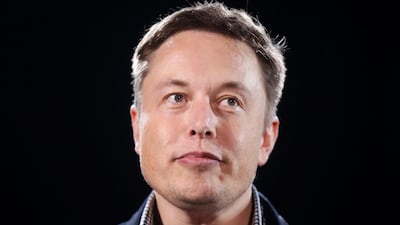
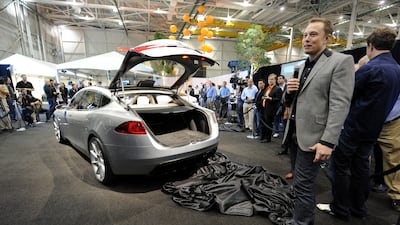
Mr Musk unveils a new all-wheel-drive version of the Model S car in Hawthorne, California, in 2014. Reuters -
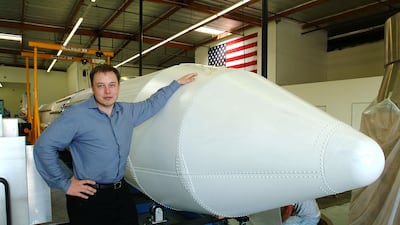
Tesla and SpaceX founder Elon Musk. Getty Images -
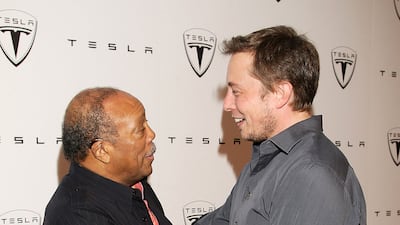
Mr Musk with music producer Quincy Jones. AFP -
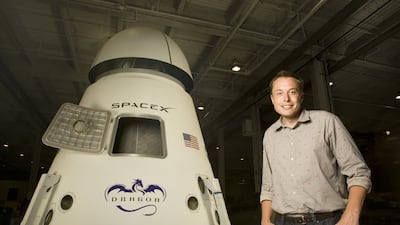
The wealthiest person in the world with a worth of $274.3 billion, Mr Musk was named 'Person of the Year' by 'Time' magazine in 2021. Getty Images -
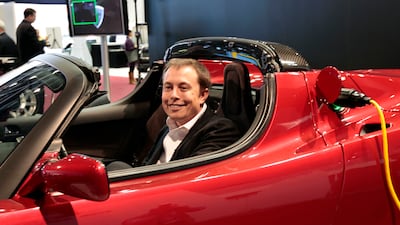
Focus on Mr Musk's taxes grew last year as Tesla achieved a rarefied $1 trillion in market value. Reuters -
The billionaire has hit back, saying he does not draw a salary from either SpaceX or Tesla, and pays an effective tax rate of 53 per cent on stock options he exercises. AFP -
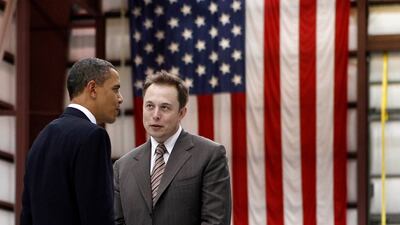
Then US president Barack Obama speaks to Mr Musk on a tour of Cape Canaveral Air Force Station in Cape Canaveral, Florida, in 2010. Reuters -
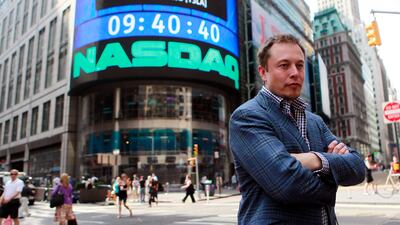
Mr Musk during a television interview after Tesla's initial public offering at the Nasdaq market in New York, in 2010. Reuters -
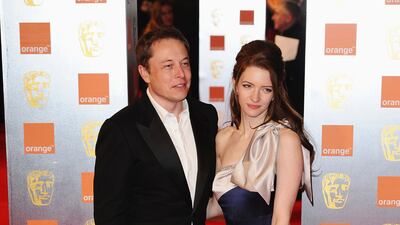
With former wife Talulah Riley at the 2011 Orange British Academy Film Awards in London. Getty Images -
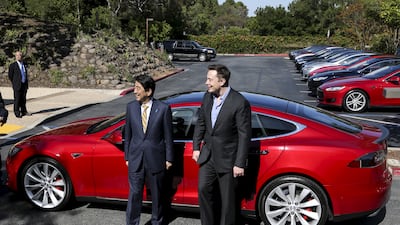
With Japan's former prime minister Shinzo Abe after a test drive of the Tesla Model S P85D in Palo Alto, California, in 2015. Reuters -
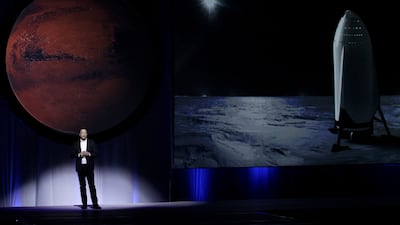
Mr Musk during the 67th International Astronautics Congress in Guadalajara, Mexico, in 2016. EPA -
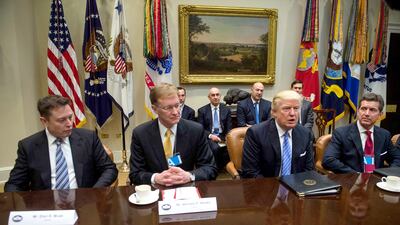
From left: SpaceX chief executive Elon Musk, Corning chief executive Wendell Weeks, then US president Donald Trump and Johnson & Johnson chief executive Alex Gorsky during a meeting at the White House. AFP -
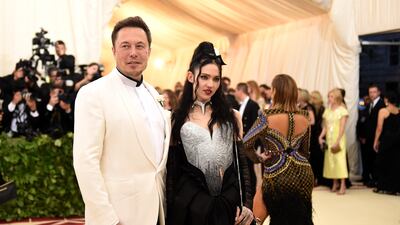
Mr Musk and former wife Grimes at The Metropolitan Museum of Art in New York City, in 2018. AFP -
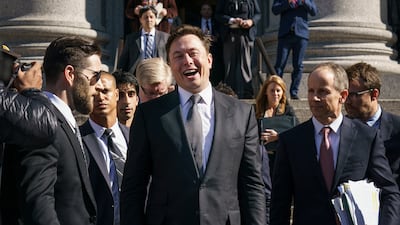
Mr Musk leaves a court in New York City, in 2019, after a hearing in a lawsuit brought against him by the US Securities and Exchange Commission. Getty Images -
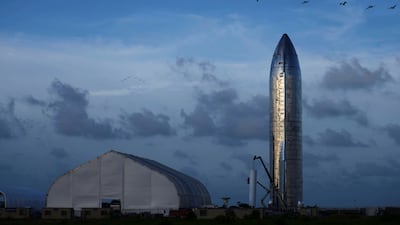
A prototype of SpaceX's Starship spacecraft is seen before Mr Musk gives an update on the company's Mars rocket Starship in Boca Chica, Texas, in 2019. Reuters -
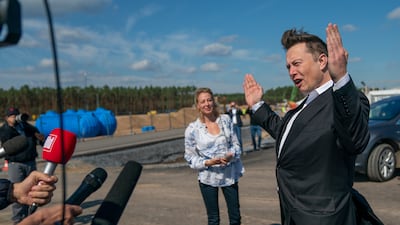
Mr Musk at the construction site of the Tesla Gigafactory in Gruenheide, near Berlin, Germany, last year. EPA -
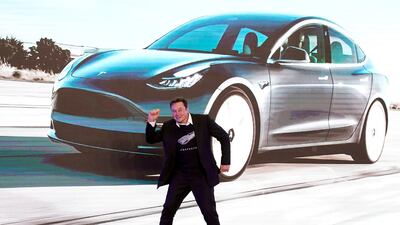
Dancing onstage during a delivery event for Tesla's China-made Model 3 cars in Shanghai. Reuters -
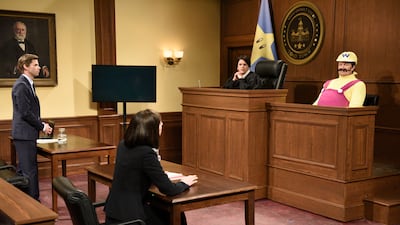
Mikey Day as a lawyer, Cecily Strong as a judge, and host Elon Musk as Wario during the "Wario" sketch on NBC's 'Saturday Night Live', in May. Getty Images -
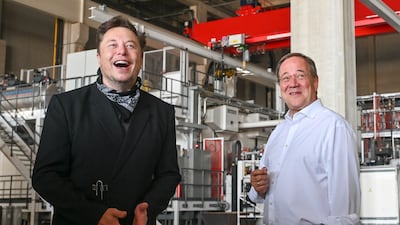
Mr Musk with Armin Laschet, CDU party federal chairman and prime minister of Germany's North Rhine-Westphalia, talk during a tour of the plant of the future foundry of the Tesla Gigafactory in Grünheide, near Berlin, Germany. Getty Images


These trademarks would cover "restaurant services, pop-up restaurant services, self-service restaurant services, take-out restaurant services", Tesla said in the application.
The original location of the Tesla restaurant was reported to be in Santa Monica, although that supercharger location opened in February without any branded eating options.
Tesla has not commented further on the restaurant plans, although Mr Musk did add weight to his plans in February when on Twitter he again mentioned a "futuristic diner / drive-in theatre" concept.
"And, of course, you can pay in Ðoge," he said, referring to the open source peer-to-peer digital currency Dogecoin.
Tesla shares plunged 6.9 per cent to $628.16 in New York on Tuesday because of production woes in China.
The shares rose 50 per cent last year and closed at $1,145 on April 4, when Mr Musk announced his 9.2 per cent stake in Twitter.
Tesla’s stock has been in freefall since, sinking to $620.57 at its lowest on Tuesday and wiping out almost half its market capitalisation after touching a record high in November.

