

The outlook for hotels in the Middle East and North Africa is “positive” in 2022, with most markets in the region expected to improve on last year's performance as Covid-19-related safety measures help mitigate the pandemic's long-term impact on recovery, according to Colliers.
Dubai hotels are forecast to be the busiest in the region this year, with occupancy rates as high as 74 per cent in some areas, while hotels in Kuwait City are projected to record the lowest occupancy rates of 26 per cent, the data showed.
“The priority for most markets in 2022 remains measures to minimise a resurgence of Covid-19 [and] building consumer confidence in key source markets,” the report said. “For select markets, the principal challenge will be managing demand interruptions from key markets in the CIS regions.”
Russia and Ukraine are among the key source markets in Eastern Europe for several tourism spots in the region, but the intensifying conflict has prompted a surge in flight cancellations to and from Russia, according to data from travel trends firm ForwardKeys.
A collapse in Russian travel will also have damaging consequences on tourism-dependent economies, it said. Countries likely to see the biggest impact include Armenia — which depends on Russia for 47 per cent of all visitors — Azerbaijan, Uzbekistan, Bulgaria, the Seychelles, Maldives and Cyprus.
“Rising instability in key CIS source markets is expected to suppress demand. However, the diversity of source markets for the UAE may be leveraged at a lower price positioning to mitigate the impact,” the report said.
In the Mena region, hotels in the UAE are expected to be among the top performers in terms of occupancy rates this year, the report showed.
The six-month Expo 2020 Dubai that ends on March 31 has had a “positive effect” on all markets in the UAE, while the Fifa World Cup Qatar 2022 is expected to result in overspill demand to the key transit hubs in Dubai and Abu Dhabi, Colliers said.
Average occupancy among hotels in Dubai is anticipated at 71 per cent, at 60 per cent in Abu Dhabi, 66 per cent in Sharjah, 63 per cent in Ras Al Khaimah and 62 per cent in Fujairah.
In Saudi Arabia, hotel occupancy rates in 2022 will range from 66 per cent in Riyadh and 57 per cent in Jeddah to 41 per cent in Makkah, 44 per cent in Madinah and 59 per cent in Al Khobar, the data showed.
The Riyadh Season entertainment festival and growing consumer confidence has benefited both the Riyadh and Jeddah markets, Colliers said. Recovering demand for religious tourism has also improved the outlook for Makkah and Madinah.
“The rising price of oil has historically led to increased corporate demand in Al Khobar and Dammam and will be monitored as the year progresses,” the report said.
Oil prices surged past $130 a barrel this week, their highest since 2008, after President Joe Biden announced that the US would ban crude, gas and coal imports from Russia, intensifying its sanctions on the world's second-largest energy exporter, after its military offensive in Ukraine.
-

Hegra After Dark. Photo: RCU Commission -
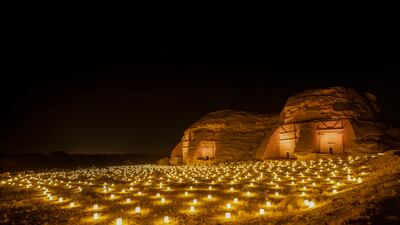
Hegra After Dark launched in November as a new way to experience AlUla. Photo: RCU Commission -
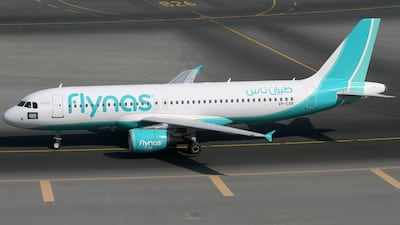
Saudi Arabian airline flynas launched direct flights from Dubai to AlUla in 2021. Photo: Wikimedia Commons -
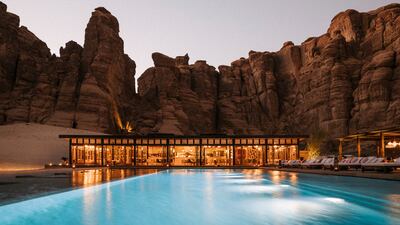
The new Habitas Al Ula. Photo: Habitas Al Ula -
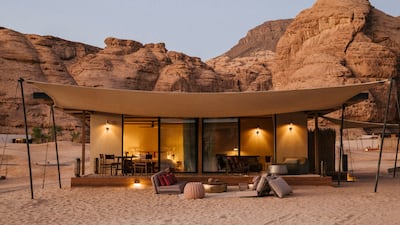
Habitas adds 96 much-needed rooms to AlUla's inventory. Photo: Habitas Al Ula -
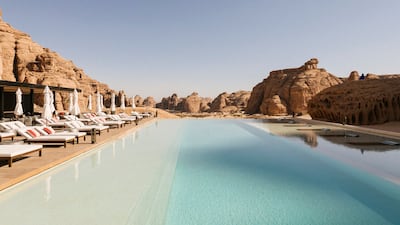
Luxury eco resort Habitas sits in an ancient oasis in the desert canyons of the Ashar Valley. Photo: Habitas Al Ula -
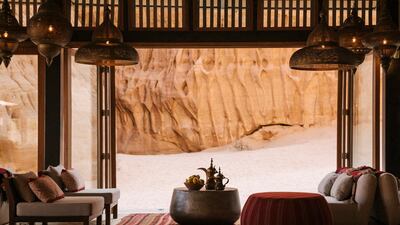
Habitas Al Ula. Photo: Habitas Al Ula -
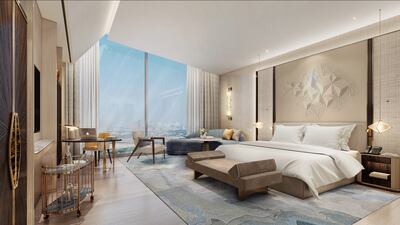
A rendering of The St Regis Riyadh, which is due to open in 2022. Photo: Marriott International -
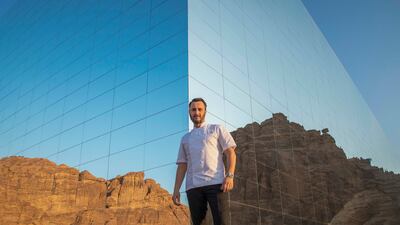
Jason Atherton opened a restaurant in the Maraya Hall. Photo: Maraya Social -
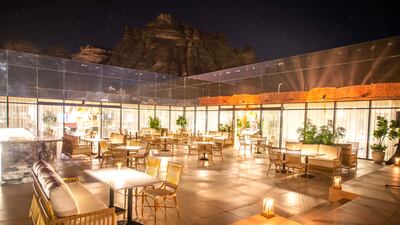
Maraya Social by Jason Atherton. Photo: Maraya Social -
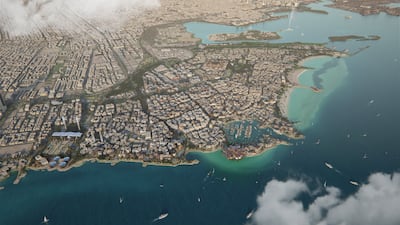
Jeddah Central Project will involve the development of 5.7 million square metres of land overlooking the Red Sea. Photos: Jeddah Central Project -
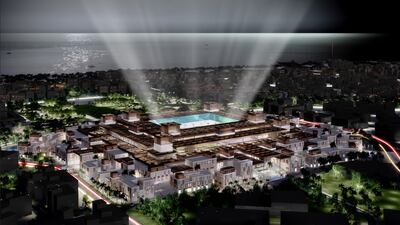
A sports stadium will act as one of Jeddah Central Project's anchors. Photo: Jeddah Central Project -
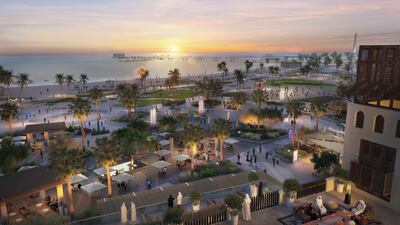
The development's beach and promenade. Photo: Jeddah Central Project -

Soundstorm 2021. Getty Images -

Steve Aoki performs on stage during the Soundstorm festival in Saudi Arabia. Getty Images -

David Guetta at Soundstorm 2021. Getty Images -
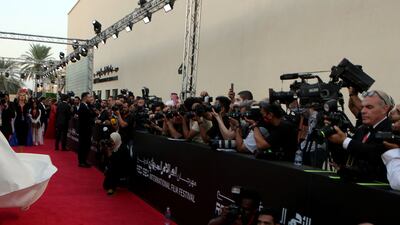
Saudi actress Fay Fouad walks the red carpet for the closing ceremony of the first Red Sea Film Festival. AFP -

Red Sea Film Festival chairman Mohamed Turki poses with British model Naomi Campbell at the event's closing ceremony. AFP -

Zahrah Al Ghamdi, 'Birth of a Place', 2021. This was one of dozens of works by 63 artists on show in Riyadh as part of the Diriyah Contemporary Art Biennale. Photo: Diriyah Foundation -
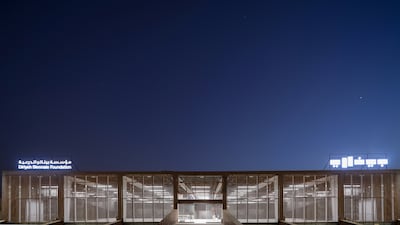
The first Diriyah Contemporary Art Biennale is on until March 2022. Photo: Diriyah Foundation


In Qatar, Doha recorded a high level of demand in 2021 that exceeded 2019 levels, the report said.
“Further improvement is expected in 2022 with the Fifa World Cup Qatar expected to be a key driver in the final quarter of the year,” it said.
Hotels in Omani capital Muscat will see occupancy rates of 46 per cent this year, while those in Bahrain's Manama can expect 44 per cent occupancy on average.
Outside of the GCC, new attractions opening in Egyptian capital Cairo are expected to help attract more visitors, along with the opening of new hotels.
Hotel occupancy rates are projected to reach 64 per cent in Cairo this year, 58 per cent in Hurghada and 54 per cent in Sharm El Sheikh.
“The increased travel uncertainty from the key CIS markets is expected to have the largest impact on the Red Sea markets of Sharm El Sheikh and Hurghada,” Colliers said.
Elsewhere in the region, Covid-19 restrictions have eased for inbound travellers in Jordan as of March, including the lifting of PCR testing requirements.
Both Aqaba and Amman hotels are expected to record occupancy rates of 43 per cent during 2022.
“Given the large tour-driven demand in the market, this is expected to improve demand later in the year,” Colliers said.
In Lebanon, which is dealing with an economic collapse, Beirut hotel occupancy will decline slightly year-on-year to 42 per cent.

