



Baz Luhrmann and Elvis Presley were always going to be a match made in showbiz heaven. The Australian director of Strictly Ballroom and Moulin Rouge! seems tailor-made to bring the life story of the king of rock’n’roll to the big screen.
Premiering out of competition at the Cannes Film Festival, Elvis is a dazzling, sometimes overwhelming, biopic that throws everything at the wall. Rising star Austin Butler must surely have blasted his way in contention in next year’s Oscar race with a titanic performance as Elvis, brimming with vim and vigour.
Narrating the film is Colonel Tom Parker (Tom Hanks), the mysterious impresario who became Elvis’s manager, craftily sending this boy from Memphis to stratospheric heights. While Luhrmann, who penned the script with Sam Bromell and Craig Pearce, takes a largely chronological approach — the film starts with an ageing Parker in a hospital bed in Las Vegas. “Without me, there would be no Elvis Presley,” he grouses, and there’s an immediate sense that the film’s narrator, a man who truly understands showmanship, is crafting his own biography here.
The film’s early stages are about Parker discovering Elvis, watching agog as his on-stage charisma and pelvic movements — the “wiggle”, as one of his bandmates quaintly puts it — sends girls wild. Touring alongside the more wholesome Hank Snow (David Wenham) and Jimmie Rodgers (Kodi Smit-McPhee), Elvis is soon outgrowing them. Parker shrewdly invites Elvis’s god-fearing family into the fold, making his father Vernon (Richard Roxburgh) the business manager, but without involving him in any real decisions.
According to Parker, he invents the idea of merchandise — Elvis’s name and image plastered on hats, T-shirts, cushions, you name it. He even manufactures "I Hate Elvis" pin-badges. The haters will always hate, he reasons, so better to profit from them than not. Then comes hostilities from the authorities, shocked by Elvis’s on-stage “lewd gyrations”, as Snow puts it. “Crimes of lust and perversions” scream the headlines, with the singer facing jail time.
When he heads to Germany for a two-year stint in the army to avoid imprisonment, he meets Priscilla (Olivia DeJonge), the love of his life and, eventually, mother of his child, Lisa Marie. The Australian-born DeJonge (recently seen in HBO show The Staircase) initially struggles to find any oxygen in the film — no surprise, given Butler’s show-stopping turn and a corpulent-looking Hanks with his faux European accent taking centre stage. But as their relationship experiences lows, with Elvis increasingly popping prescription drugs, she makes her mark with a couple of killer scenes.
Scroll through the gallery below to see the 'Elvis' premiere in Cannes:
-
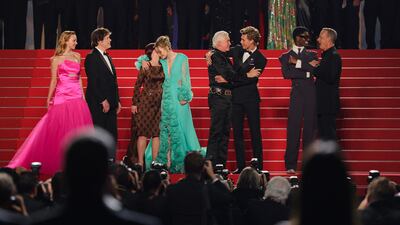
From left, Australian actress Natasha Bassett, producer Jerry Schilling, Priscilla Presley, Australian actress Olivia DeJonge, Australian director Baz Luhrmann, US actor Austin Butler, actor Alton Mason and US actor Tom Hanks leave the Festival Palace following the screening of the film 'Elvis' during the 75th Cannes Film Festival. AFP -
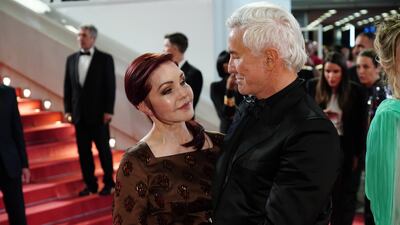
Priscilla Presley, left, and Baz Luhrmann at the screening of 'Elvis' at Cannes Film Festival. EPA -
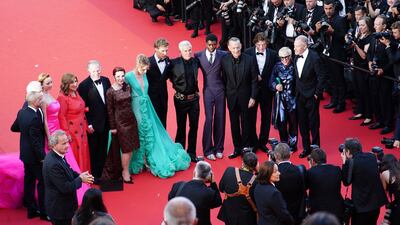
(6L-R) Priscilla Presley, Olivia DeJonge, Austin Butler, Baz Luhrmann, Alton Mason, Tom Hanks, Steve Binder, Catherine Martin, and Patrick McCormick. EPA -
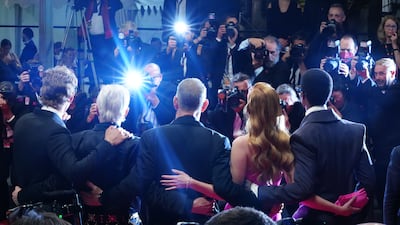
From left, Austin Butler, Baz Luhrmann, Tom Hanks, Natasha Bassett and Alton Mason. EPA -
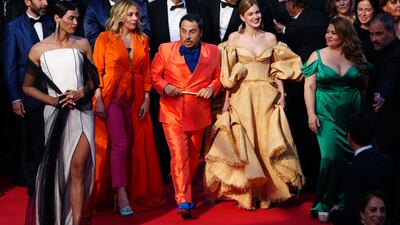
From left, Tzef Montana, Smaragda Karydi, Director Panos H Koutras, Natasa Exintaveloni and Mariella Savvides. EPA -

Olivia DeJonge. Getty Images -
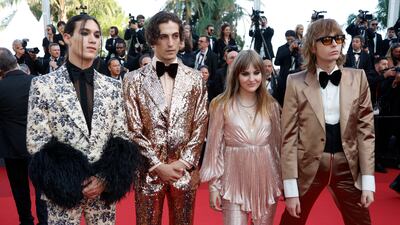
Members of Italian band Maneskin, from left, Ethan Torchio, Damiano David, Victoria De Angelis and Thomas Raggi. EPA -
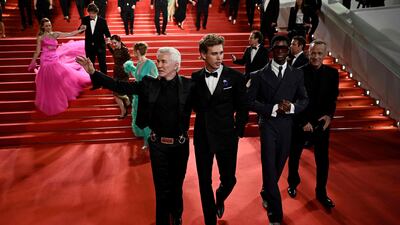
From left, Australian director Baz Luhrmann, US actor Austin Butler and actor Alton Mason. AFP -
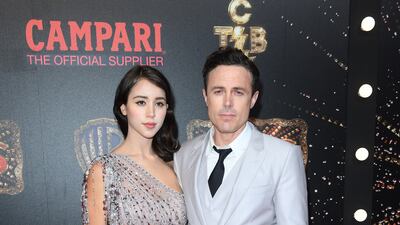
Caylee Cowan and Casey Affleck. Getty Images -

Winnie Harlow. AP -
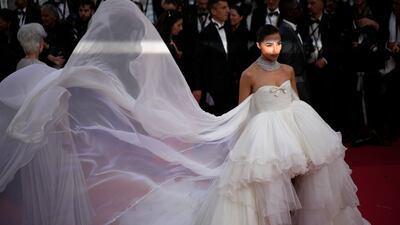
Olivia Culpo. AP -
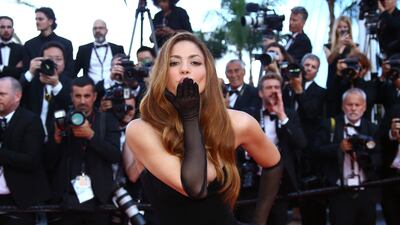
Shakira poses for photographers. AP -
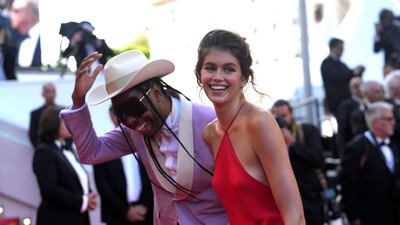
Jeremy O Harris, left, and Kaia Gerber. AP -
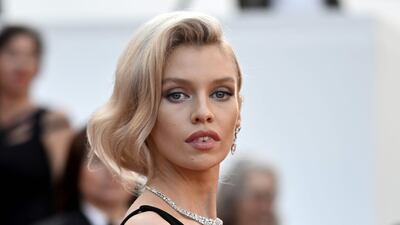
Belgian model Stella Maxwell. AFP -
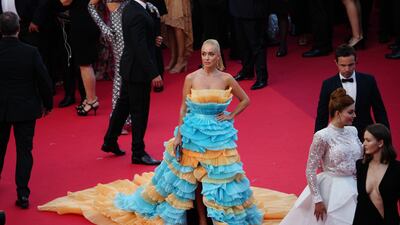
Ukrainian entrepreneur Sasha Ray (C) arrives for the screening of 'Elvis'. EPA -
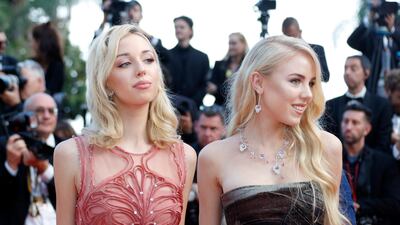
Princess Maria Chiara and Princess Maria Carolina of Bourbon. EPA -
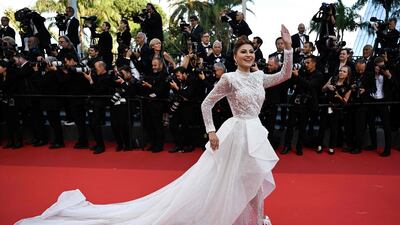
Indian actress Urvashi Rautela arrives for the screening of the film 'Elvis'. AFP -
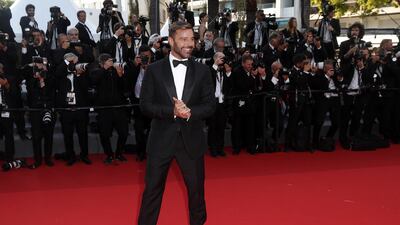
Ricky Martin. EPA -

Noomi Rapace. Getty Images -
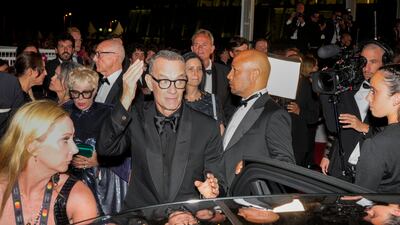
Tom Hanks is seen departing the premiere of the film 'Elvis' at the 75th international film festival. AP -

Conor McGregor and Kylie Minogue attend the 'Elvis' after party at Stephanie Beach. Getty Images -
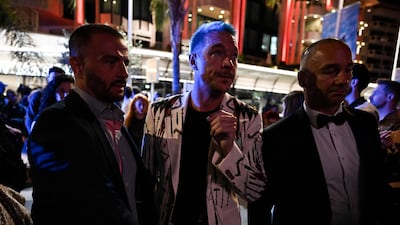
US DJ Diplo (C) leaves after attending a party. AFP


As for Luhrmann, he simply won’t let this film rest. The camera rarely stops moving, whirling up and around Elvis, while the editing by Jonathan Redmond and Matt Villa is utterly dynamic. Costumes and production design, time-travelling you back to the era, are also superlative. But the film doesn’t truly come into its own until the 1968 section. “Is it my fault the world changed?” remarks Parker, as civil rights protests and assassinations of Dr Martin Luther King and Bobby Kennedy flood the news.
Parker doesn’t want Elvis making political statements — he doesn’t even want him leaving the country to tour internationally for “security” reasons. But there comes a point when the singer needs a rebirth. The so-called ’68 Comeback Special, with Elvis dressed in black leather and rocking out raw versions of songs such as Heartbreak Hotel and Guitar Man, is brilliantly staged — more so, as Luhrmann reminds us that it was supposed to be a sanitised Christmas TV show. Butler pours everything into these scenes, commanding the stage, sweating from every pore.
As Elvis takes up residency in Vegas (a sequence that includes a stunning version of That’s All Right), he suffers from exhaustion and cracks appear in his relations with Priscilla and Parker. With its subject alone and isolated, the final act takes an unsurprisingly more sombre turn.
Luhrmann, who hitherto uses split screen for some moments, takes a breath. Given the singer’s death in 1977 — dying aged 42 from a heart attack — the film brings Elvis’s story to a poignant and dignified close. An Unchained Melody rendition will likely elicit tears, as will real footage of the King cut into the finale.
Does the film get under Elvis’s skin enough? Perhaps not. It’s not the most psychologically probing of films. But Luhrmann is a director who knows how to put on a show, much like Parker, and in that regard Elvis is the greatest show on Earth.
A whirlwind of a movie, filled with light, colour and sound, it captures the 1950s and 1960s with real aplomb, a lavish spectacle on steroids. As the final credits remind us, Elvis was the biggest selling solo recording artist of all time. You can imagine after this, he’ll be selling a few more records.
Stars turn out in force for 'Top Gun: Maverick' premiere in Cannes — in pictures
-

Tom Cruise attends the screening of 'Top Gun: Maverick' during the 75th annual Cannes Film Festival at Palais des Festivals on May 18, 2022. Getty Images -
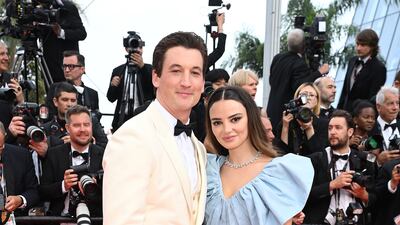
Miles Teller and wife Keleigh Sperry. Getty Images -

French Alpha Jets Patrouille de France fly over the venue of the 'Top Gun: Maverick' premiere. AP Photo -

Eva Longoria in a mirrored Cristina Ottaviano gown. Reuters -
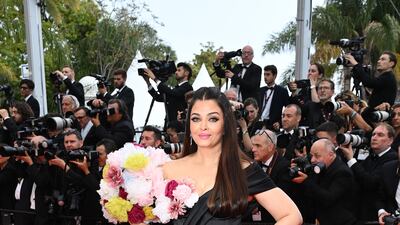
Aishwarya Rai Bachchan in Dolce & Gabbana Alta Moda. Getty Images -
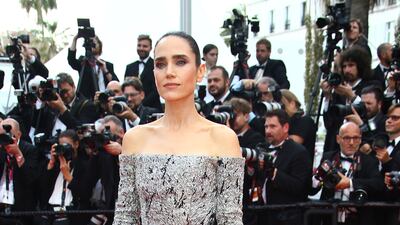
Jennifer Connelly in Louis Vuitton. AP -

Producer Andre Lemmers and model Adriana Lima, who took pregnancy style inspiration from Rihanna to bare her growing bump on the red carpet. Getty Images -
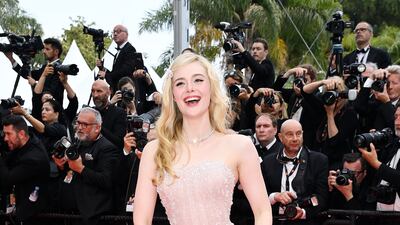
Elle Fanning in Giorgio Armani. Getty Images -
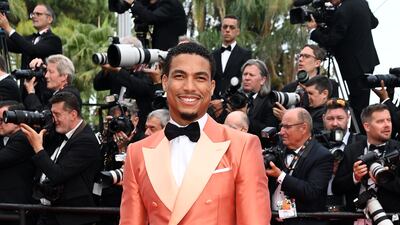
Actor Greg Tarzan Davis attends. Getty Images -
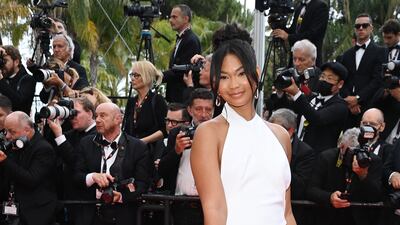
Model Chanel Iman attends. Getty Images -
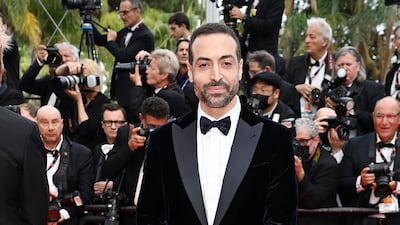
Producer and entrepreneur Mohammed Al Turki attends. Getty Images -
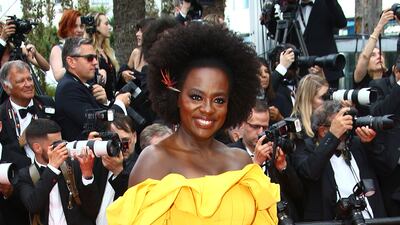
Actress Viola Davis on the red carpet. AP -
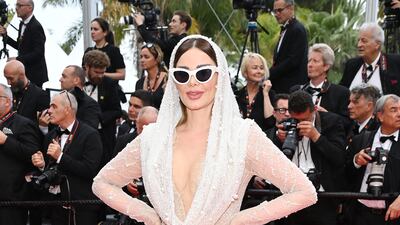
Iraqi singer and actress Jwana Karim. Getty Images -
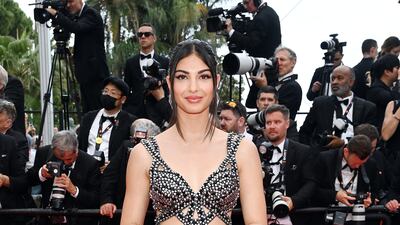
TikTok star Elisa Maino. Getty Images -
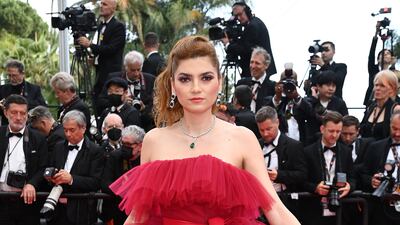
Actress Blanca Blanco. Getty Images -
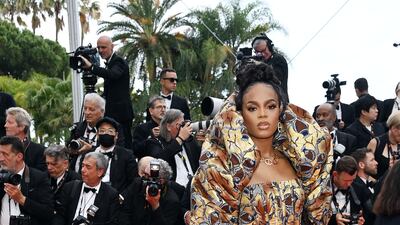
French model and infleuncer Didi Stone. Getty Images -
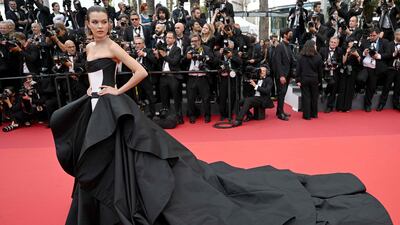
Danish model Josephine Skriver arrives. AFP -
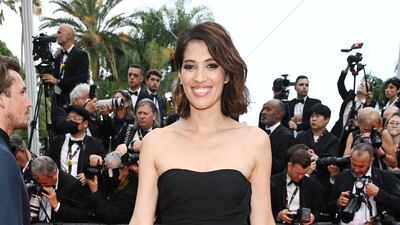
French television host Laurie Cholewa. Getty Images -
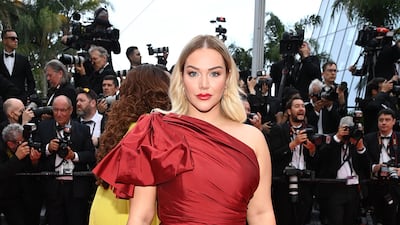
Influencer and make-up artist Militza Yovanka. Getty Images -
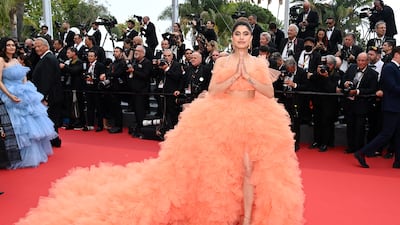
Beauty influencer Malvika Sitlani. Getty Images -
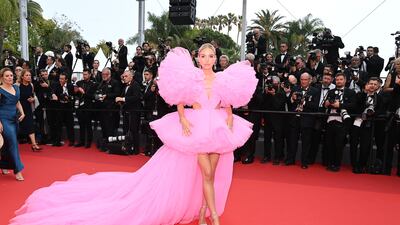
Social media influencer Leonie Hanne. Getty Images -
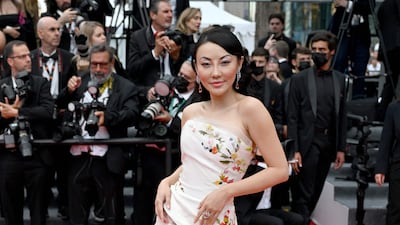
Chinese social media personality Jessica Wang. AFP -
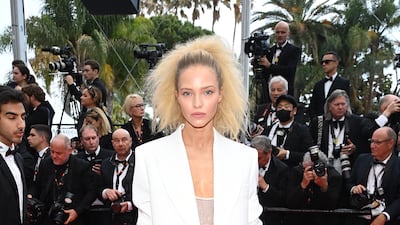
Russian model and actress Sasha Luss. Getty Images -
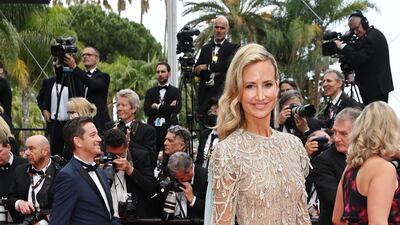
UK model and socialite Lady Victoria Hervey. Getty Images -
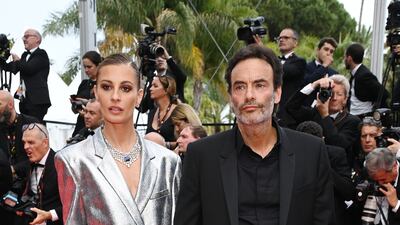
Italian actress Sveva Alviti and French-American actor Anthony Delon. Getty Images -
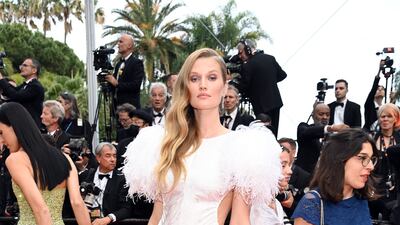
German model and actress Toni Garrn. Getty Images -

Turkish-German actress and model Meryem Sarah Uzerli. EPA -
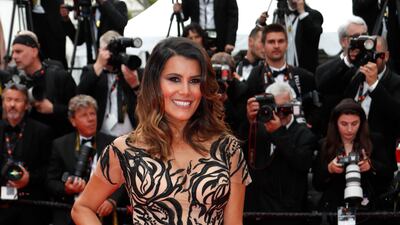
French television personality Karine Ferri. EPA -

TikTok star India Sasha. Getty Images -
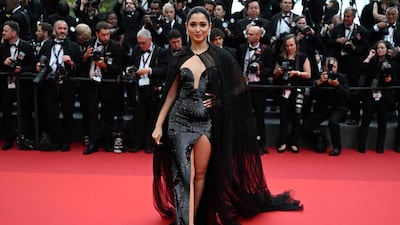
Indian actress Tamannaah Bhatia arrives. AFP



