


Mohamed Al-Fayed and his late son Dodi feature prominently in the new series of Netflix drama The Crown.
The Egyptian-born billionaire was at one time among the most high-profile businessmen in Britain, at one stage owning Fulham football club, luxury department store Harrods and the Paris Ritz.
But he was also a controversial figure who became a pantomime villain in the British press after pursuing conspiracy theories about the death of his son, who perished in a car crash alongside Princess Diana in 1997.
Who plays Mohamed Al-Fayed in the Crown?
Mohamed Al-Fayed is played by veteran Palestinian actor Salim Daw, with Khalid Abdalla playing son Dodi.
Mr Al-Fayed is portrayed as a domineering figure in the life of his eldest son, whom he controls with money.
Episode three also touches on his upbringing in Egypt, charting his rise from a Coca-Cola seller on the streets of Alexandria to a charismatic businessman with interests across Europe and the Middle East, including the then-burgeoning commercial hub of Dubai.
But the series also presents him as an ostentatious social climber who reveres the British royal family.
His fascination with the monarchy leads him to renovate the villa in France where King Edward lived, befriend and hire the king’s valet, and splash out on Polo memberships to get a seat physically close to the queen.
However, his efforts are never quite enough to become part of the inner circle, as he eventually realises that and no amount of money can help one penetrate Britain's class system.
Dodi Al-Fayed's Death
Dodi and Diana's romance sparked a frenzy in the British tabloids, ultimately culminating in a fatal car crash in the Pont de l'Alma tunnel in Paris in August 1997. They were aged 42 and 36, respectively, at the time of their deaths.
Henri Paul, their chauffeur, was also among the victims, but bodyguard Trevor Rees-Jones survived with serious injuries.
The death of his son was devastating blow to Mr Al-Fayed, who maintained that Dodi and Princess Diana were killed by MI6 on the orders of Prince Philip, an outlandish allegation that was dismissed by several investigations.
Ten years after the crash, a high-profile £4.5 million inquest found that the princess was unlawfully killed because driver Henri Paul was drunk and driving too fast and the car was being chased by photographers.
Diana and Dodi might have survived, the inquest found, had they been wearing seat belts.
Later life
Now aged 93, Mr Al-Fayed's advancing age has seen his presence in the public eye decline. He is said to be spending his remaining years at his estates in Surrey, England, and in Scotland.
Mr Al-Fayed has four surviving children, including Omar, a prominent environmentalist and space exploration advocate; and Camilla, a restaurateur who owns Farmacy, a popular vegan restaurant in Notting Hill, west London.
The Crown season 5 — in pictures
-

The cast of 'The Crown' season 5, back row, from left: Senan West, Dominic West, Elizabeth Debicki, Theo Fraser Steele, Claudia Harrison, Sam Woolf, James Murray; front row, from left: Will Powell, Marcia Warren, Imelda Staunton, Jonathan Pryce, Lesley Manville. All photos: Netflix -
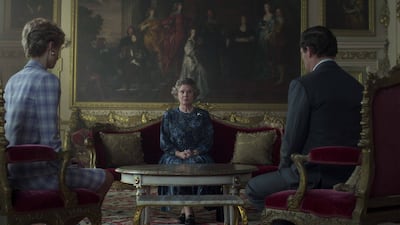
Imelda Staunton as Queen Elizabeth II. -
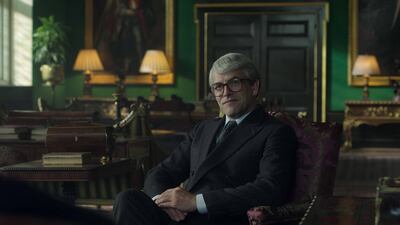
Jonny Lee Miller as prime minister John Major. -

Jonathan Pryce as Prince Philip. -

Elizabeth Debicki as Princess Diana. -
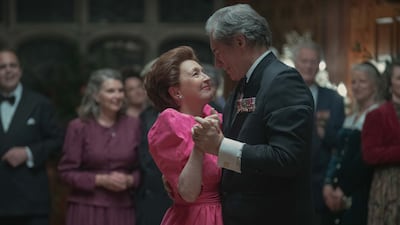
Lesley Manville as Princess Margaret and Timothy Dalton as Peter Townsend. -

Dominic West, Teddy Hawley, Elizabeth Debicki and Timothee Sambor. -

Imelda Staunton as Queen Elizabeth II. -

Elizabeth Debicki as Princess Diana. -

Prasanna Puwanarajah as Martin Bashir. -

Dominic West as Prince Charles and Olivia Williams as Camilla.



