
One day 10 years ago, in the early hours of the morning, Deena Mohamed, aged 18, posted a webcomic on Tumblr. Qahera was about a female Muslim superhero who confronted social issues such as misogyny and Islamophobia.
Mohamed intended it as a light-hearted diversion for her online friends. However, the next day she discovered it had attracted a lot of interest. It wasn’t long before her “semi-satirical semi-sincere” strip turned into a viral sensation.
She kept making comics because people liked them, but also because they allowed her to let off steam or express her thoughts about a particular topic. Telling stories through art was a natural development.
“I’ve been drawing for as long as I can remember,” the Egyptian designer, illustrator and writer tells The National. As a child, she drew constantly. When she visited her grandparents’ house, she would unfold her grandfather’s Cleopatra cigarette packets and doodle on the blank insides.
“I was drawing stories I had made up myself, rather than being someone who drew people around them or observations from nature,” she says. “It was the desire to see these stories that kept me interested in drawing.”

Despite her talent, and the success of Qahera, Mohamed didn’t think she could plan a future career in such an unreliable field. She studied graphic design because she considered it a “sensible art-adjacent” path, and for her undergraduate thesis, she researched the history of Egyptian comics. But when she garnered more plaudits as a comics artist, she came to view her hobby as a possible profession.
And so Mohamed got to work on something different to Qahera — fiction not social commentary, longform rather than short, and printed and published instead of a webcomic. She derived inspiration from a variety of sources.
Palestine by Joe Sacco and Zahra’s Paradise by Amir and Khalil showed her the range graphic novels could have. Closer to home, the Egyptian anthology magazine TokTok and Sherif Adel’s sci-fi comedy comic Fut Aleina Bokra also spurred Mohamed on. “It felt special to realise contemporary Egyptian comics had this much wit, beautiful design and dedication, even with little or no appreciation of their genius from within Egypt."
Shubeik Lubeik takes flight
She says she had “a small but fixed goal” — to take a self-published book to the CairoComix Festival. She also harboured the distant hope that someday she might find her work in bookshops. The fruit of her labours, Shubeik Lubeik, won Best Graphic Novel and the Grand Prize of the CairoComix Festival in 2017. The following year, it was published in Egypt.
Mohamed went on to write two further instalments. “It wasn’t one book becoming three, but rather three books becoming one,” she explains. The trilogy, translated by Mohamed herself, has recently appeared in English.

Shubeik Lubeik is a beguiling fantasy — and sobering cautionary tale — about wishes. The idea for it came from, of all things, Egyptian kiosks. “I’ve had a longtime appreciation for them as colourful oases in the urban sprawl of Cairo,” Mohamed says. “I thought of a kiosk that sold a magical object, and once I decided it was a wish, I considered what a world where you could buy a wish at a kiosk would look like.”
That world is both grittily real and airily fanciful. Mohamed introduces three diverse characters and demonstrates how their lives are transformed by a desperate attempt to make their dreams come true. Aziza, a poor widow, is accused by the authorities of being a “wish thief” and imprisoned. Nour, a university student, agonises over buying a wish to battle depression. And kiosk owner Shokry struggles to reconcile the use of wishes with his religious beliefs.
Throughout, Mohamed deftly balances flights of fancy (talking donkeys, flying cars, dinosaurs and dragons) with darker matter such as death, cruelty and injustice. Her storytelling is compelling; her art is stunning.
The power of comics
Critics still snobbish about graphic novels may scoff at what some might call a modern masterpiece, but, to her credit, Mohamed is unconcerned about how they are received in literary circles. “The invention of graphic novels was largely a US marketing tactic to convince adults that it was OK to read comics after growing up,” she says. “Comics are a medium, not a genre, and a graphic novel is simply a long comic.
“Rather than respect, it’s just awareness I want. Artists won’t be able to create new work for us to fall in love with without a readership that can support them. We won’t have a market for that until people know graphic novels are available for them, and come to appreciate that they can experience a whole new range of emotions and knowledge not just within graphic novels but all comics, and at any age.”

Mohamed believes Arabic comics are going from strength to strength. “There is so much talent and innovation across the Arab world,” she says. “There are incredible artists consistently putting out challenging, thoughtful and visually fascinating work. The field is evolving rapidly. Five years ago, having all three parts of Shubeik Lubeik still in print would have seemed impossible. Events like CairoComix have grown exponentially each year. There were three new Arabic graphic novels released by my Egyptian publisher, El-Mahrousa, this past round of CairoComix, and lots of new interest in foreign graphic novels translated into Arabic."
She says the culture has mainly grown around artists with a "pure love of comics, rather than being dictated by big publishers or profit goals”.
Mohamed would love this phase of Arab comics to continue but knows that in order for it to do so, artists must be given both the recognition and remuneration they deserve.
“I hope the people who are safeguarding these ventures, like Mohammed Shennawy and Magdy El Shafee, will come to be appreciated for making events like CairoComix free and inclusive, and for paying tribute to the legacy of artists that came before them,” she says.
“I hope that the future of Arab comics is one where readers get to experience bold creative work and artists get to make a dignified living doing what they love — one that will push our region forward and open everyone’s minds to the power of comics for storytelling.”
Nineteen graphic novels set in the Middle East — in pictures
-
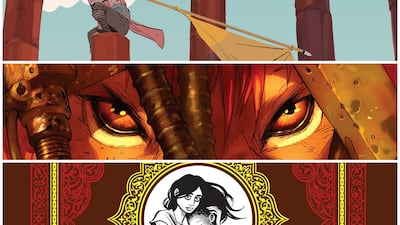
From across genres, writers and illustrators are telling authentic stories and nuanced experiences set in the Middle East. Photo: Supplied -
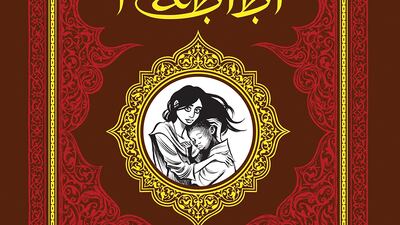
'Habibi' by Craig Thompson is set in a fictional Arab world and tells the story of refugee child slaves Dodola and Zam, who escape their captors. Photo: Craig Thompson -
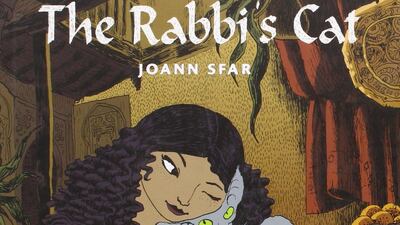
'The Rabbi’s Cat' by Joann Sfar is a comical story set in 1930s Algeria about a photo that gains the ability to speak after eating the family parrot. Photo: Joann Sfar -
'Hasib & the Queen of Serpents' by David B is an engrossing story influenced by the structural frame of the classic 'One Thousand and One Nights'. Photo: David B -
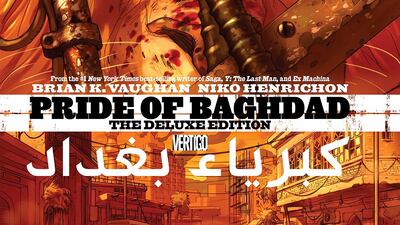
'Pride of Baghdad' by Brian K Vaughan is a story based on true events set in 2003 Iraq where a pride of lions, Zill, Safa, Noor and Ali, escape from the Baghdad Zoo after the city is bombed by American forces. Photo: Brian K Vaughan -
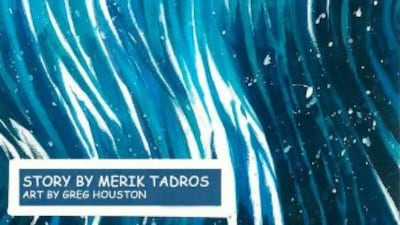
'River Jordan' by Merik Tadros is set in Chicago and Amman, Jordan and tells the story of Rami, 9, who is coming to terms with his father’s murder by creating art. Photo: Merik Tadros -

'Palestine' by Joe Sacco explores the Palestinian revolution and the Gulf War, detailing many of the difficulties faced by the Palestinian people. Photo: Joe Sacco -
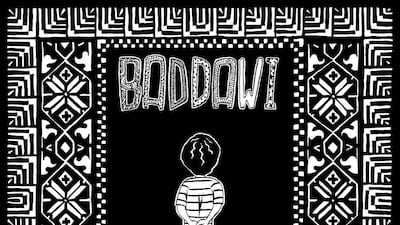
In 'Baddawi', Leila Abdelrazaq explores her father Ahmed’s harrowing childhood when he was raised in a refugee camp in northern Lebanon among thousands of Palestinians who fled their homeland after the 1948 war. Photo: Leila Abdelrazaq -
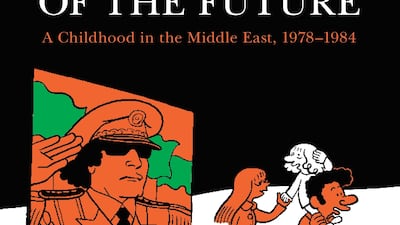
'The Arab of the Future' by Riad Sattouf is an autobiographical graphic novel set in rural France, Libya and Syria in the 1970s and '80s that featured three dictators that altered the course of Sattouf's life - Gaddafi, Assad, and his father. Photo: Riad Sattouf -
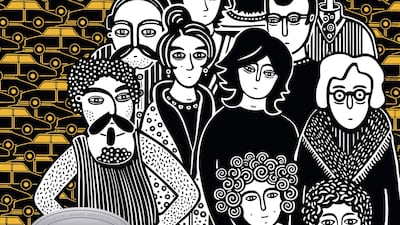
'A Game for Swallows' by Zeina Abirached is set in 1984, East Beirut, during the Lebanese Civil War, where Zeina, 6, and her brother must endure a night of bombings when their parents don’t return home. Photo: Zeina Abirached -

'I Remember Beirut' by Zeina Abirached is a collection of stories based on Abirached’s childhood in post-war Lebanon and is filled with poignant and powerful details on the impact of war. Photo: Zeina Abirached -
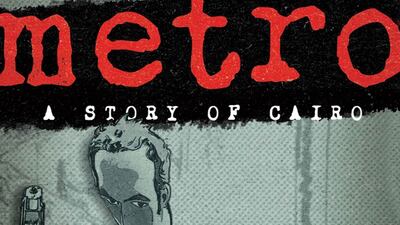
'Metro' by Magdy El Shafee is set in busy, dynamic Cairo, where Shihab, who in an attempt to pay back a loan, decides to rob a bank and finds himself in the middle of a government cover-up. Photo: Magdy El Shafee -

'Cairo' by G Willow Wilson is an urban fantasy set in the city, where a set of unlikely characters are in search of an artefact of formidable power - a jinn trapped in a stolen hookah. Photo: G Willow Wilson -
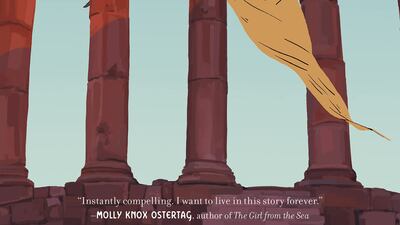
'Squire' by Sara Alfageeh and Nadia Shammas is an exciting fantasy adventure about swords, knights and squires. Photo: Sara Alfageeh and Nadia Shammas -
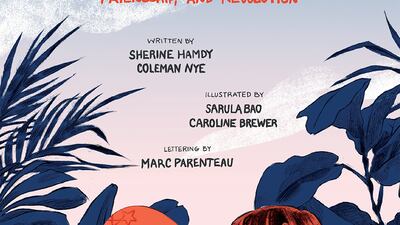
'Lissa: A Story about Medical Promise, Friendship, and Revolution' by Sherine Hamdy tells the story of an unlikely friendship, between Anna and Layla who come from different classes, cultural backgrounds and religions. Photo: Sherine Hamdy -
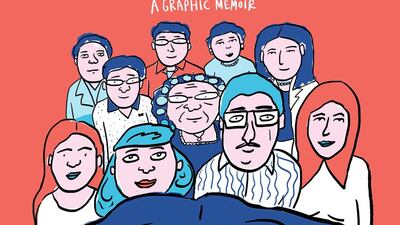
'I Was Their American Dream' by Malaka Gharib is a graphic memoir about heritage, self-discovery and family and the lives of modern immigrants in America. Photo: Malaka Gharib -
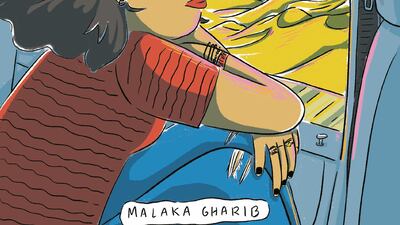
'It Won't Always Be Like This' is another intimate graphic memoir from Malaka Gharib about her experiences as a young American girl growing up with her Egyptian father's new family. Photo: Malaka Gharib -
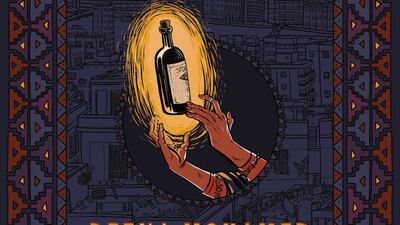
'Shubiek Lubiek' by Deena Mohamed is set in modern day Cairo but in a world where wishes from genies are not only real, but for sale. Photo: Deena Mohamed -
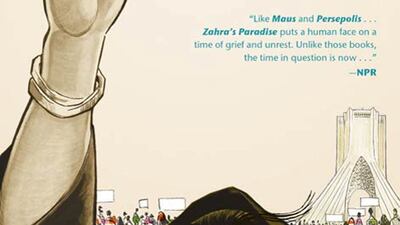
'Zahra's Paradise' by Amir Soltani and Khalil Bendib is set in modern Iran after the 2009 election and follows the chain of events after the disappearance of a young protestor and activist Mehdi. Photo: Amir Soltani and Khalil -
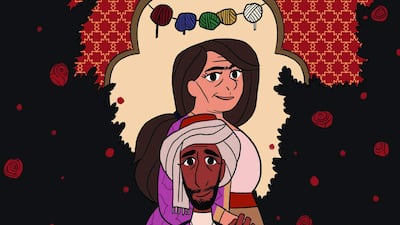
'The Carpet Merchant of Konstantiniyya' by Reimena Yee is the story of Zeynel who must reconnect to faith, love and his home after he is turned into a vampire by a stranger. Photo: Reimena Yee



