


Hisham Bustani’s short story collection The Monotonous Chaos of Existence strikes the senses like a series of fever dreams.
Historical events, such as the Nakba, are examined with blistering, tempestuous prose. Contemporary urban transformations in Arab cities are presented as glitzy dystopic landscapes, hallucinatory conversations lay bare complex interpersonal dynamics and there are surreal takes on social dilemmas.
And all while taking its literary cues from poet Mourid Barghouti, The Matrix and the Quran.
Most of the characters in the short stories are unnamed, and although a few historical figures make an appearance, protagonists are usually identified by personal pronouns, narrowing the divide between reader and subject.
This all might seem like it makes for a dizzying reading experience. At times, it is, but delightfully so. Even in its most convulsive passages Bustani makes sure to anchor the reader, using surgically precise imagery and making sure the stories are ensconced in the now.

“I've always had this image about how I want my writing to be,” Bustani tells The National. “And if I want to explain it a bit, it's like putting the reader on a wall, and then having all these buckets of pain, smells, emotions, experiences, just thrown at that person.”
Plot is not the focus of the stories, nor is character development. Bustani, rather, is more concerned with achieving “an emotional sensual experience” with his writing.
That’s as far as the technical aspect is concerned. When it comes to subject matter, the Jordanian writer explores topics ranging from the Palestinian struggle to identity politics, and what he calls the dystopian postmodernist experience in the Arab world.
author
“I think we left colonialism without modernity,” he says. “We’re somehow stuck. Like in the stories, we’re stuck between a past that was never matured and fulfilled, and a future that’s never arriving because it is imaginary. We’re stuck at an image of modernity, which is malformed and traumatic.”
The urban transformation of Arab cities is scrutinised in several of Bustani’s works, but is especially prominent in The Monotonous Chaos of Existence. Old family homes disappear beneath an onslaught of glass and steel, as characters scuffle to retrieve the memories housed within.
The stories reflect on the changes sweeping several Arab cities, but particularly Amman, where Bustani lives and where commercial districts are overtaking long-standing residential areas.
“You can see it all around,” he says. “But in Al Abdali it is very prominent, and you can see the difference by just crossing the street.”
Originally published in Arabic in 2010, The Monotonous Chaos of Existence was released in English earlier this year. The translation by Maia Tabet captures much of the nuances and percussive elements of the original Arabic.
“Flow is very important in my writing, and Arabic itself flows as a language,” Bustani says. “Maia is very competent at translating flow into another language, which is very special. I don’t think anything is lost in the translation in that sense. It’s a very good text. It is a complete text.
"Of course, there are some things that are inevitably lost in translation because you can’t translate an entire historical context and psychological burden of the word. But what is not lost is the integrity of the text and how it’s written. Of course, the translated text is another text. This is a cliche but it’s true.”
The English version of the book also has a few new additions, including Museum of Found Objects, which features old photos and letters that tether stories from the collection, and the illustrated comic book-style Vodka at the Seaside.
One of the first stories from the collection that Bustani wrote was Paper on Table Next to Overturned Chair. It reflects on a real-life suicide at a student hostel in Irbid in Jordan, where the writer was staying in the mid-1990s.
“The story is a written response to that,” he says. “Certain lines in the story are the same as in the suicide note. The person was a Christian man who was in love with a Muslim. I first wrote a small response in 1996, then returned to it and transformed it into an existential experience.”
Some of the last pieces Bustani wrote for the collection were those set in Gaza. The stories were written soon after the 2008 conflict and viscerally evoke the events with cataclysmic imagery. The conflict, which lasted for three weeks, resulted in the deaths of about 1,400 Palestinians, including 313 children, and 13 Israelis, according to reports.

“Death smiles as his devoted children play with some of his favourite toys: Apache helicopters; F-16s and boom goes another rocket,” Bustani writes in Etched in Red. In another passage: “The sea is calm. Below the surface, shoals of fish glide among the multi-coloured coral. Above, the metal-gray warship fires its load on bands of children, leaving them swimming in water the colour of blood.”
At just over 150 pages, The Monotonous Chaos of Existence is not a lengthy book, but it isn’t a brisk read, either. Most of the stories in the collection are appendaged with footnotes that explain historical context and references, prompting a rereading of the text.
The collection is also being adapted into a graphic novel, with an illustrated version set to be released in September. Fawda — Arabic for chaos — will pair seven stories from the collection with illustrations by Egyptian artist Mahmoud Hafez.
“This is his first complete published book, but he’s very, very creative,” Bustani says of his collaborator. “My condition was that we aren’t going into an adaptation of the text. The text is there in full and the artist thus has to invent his own image about the text.”
Overall, The Monotonous Chaos of Existence is a riveting read, but it's no page-turner. The stories in the collection require time and reader participation to unpack. Its pleasures are not in big reveals and twists, but in giving room for your senses to navigate through the space of the text.
Nineteen graphic novels set in the Middle East — in pictures
-
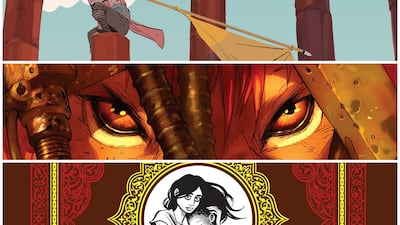
From across genres, writers and illustrators are telling authentic stories and nuanced experiences set in the Middle East. Photo: Supplied -
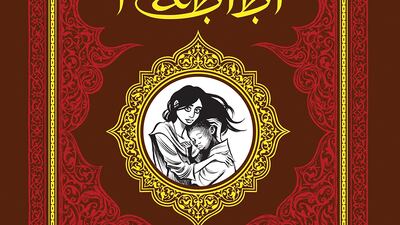
'Habibi' by Craig Thompson is set in a fictional Arab world and tells the story of refugee child slaves Dodola and Zam, who escape their captors. Photo: Craig Thompson -
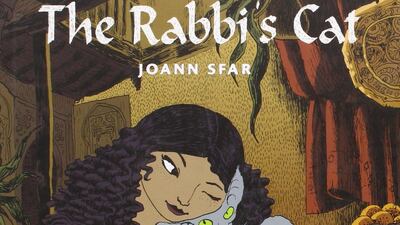
'The Rabbi’s Cat' by Joann Sfar is a comical story set in 1930s Algeria about a photo that gains the ability to speak after eating the family parrot. Photo: Joann Sfar -
'Hasib & the Queen of Serpents' by David B is an engrossing story influenced by the structural frame of the classic 'One Thousand and One Nights'. Photo: David B -
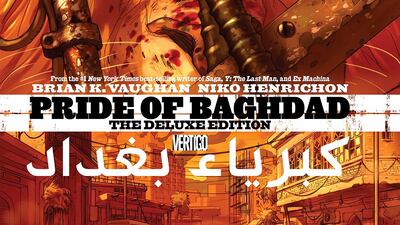
'Pride of Baghdad' by Brian K Vaughan is a story based on true events set in 2003 Iraq where a pride of lions, Zill, Safa, Noor and Ali, escape from the Baghdad Zoo after the city is bombed by American forces. Photo: Brian K Vaughan -
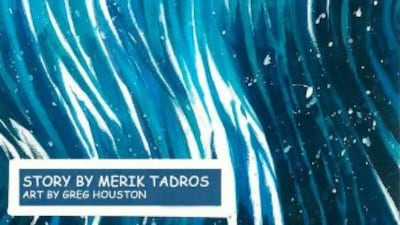
'River Jordan' by Merik Tadros is set in Chicago and Amman, Jordan and tells the story of Rami, 9, who is coming to terms with his father’s murder by creating art. Photo: Merik Tadros -

'Palestine' by Joe Sacco explores the Palestinian revolution and the Gulf War, detailing many of the difficulties faced by the Palestinian people. Photo: Joe Sacco -
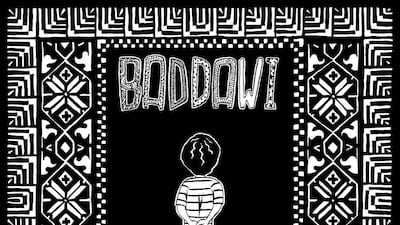
In 'Baddawi', Leila Abdelrazaq explores her father Ahmed’s harrowing childhood when he was raised in a refugee camp in northern Lebanon among thousands of Palestinians who fled their homeland after the 1948 war. Photo: Leila Abdelrazaq -
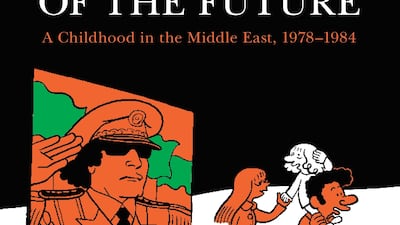
'The Arab of the Future' by Riad Sattouf is an autobiographical graphic novel set in rural France, Libya and Syria in the 1970s and '80s that featured three dictators that altered the course of Sattouf's life - Gaddafi, Assad, and his father. Photo: Riad Sattouf -
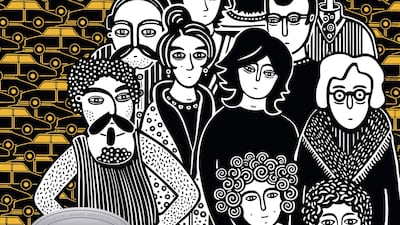
'A Game for Swallows' by Zeina Abirached is set in 1984, East Beirut, during the Lebanese Civil War, where Zeina, 6, and her brother must endure a night of bombings when their parents don’t return home. Photo: Zeina Abirached -

'I Remember Beirut' by Zeina Abirached is a collection of stories based on Abirached’s childhood in post-war Lebanon and is filled with poignant and powerful details on the impact of war. Photo: Zeina Abirached -
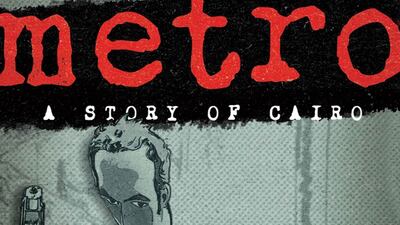
'Metro' by Magdy El Shafee is set in busy, dynamic Cairo, where Shihab, who in an attempt to pay back a loan, decides to rob a bank and finds himself in the middle of a government cover-up. Photo: Magdy El Shafee -

'Cairo' by G Willow Wilson is an urban fantasy set in the city, where a set of unlikely characters are in search of an artefact of formidable power - a jinn trapped in a stolen hookah. Photo: G Willow Wilson -
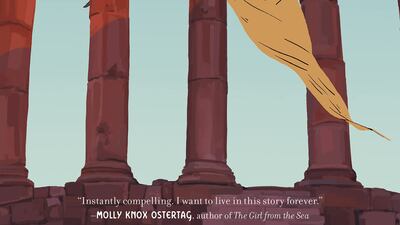
'Squire' by Sara Alfageeh and Nadia Shammas is an exciting fantasy adventure about swords, knights and squires. Photo: Sara Alfageeh and Nadia Shammas -
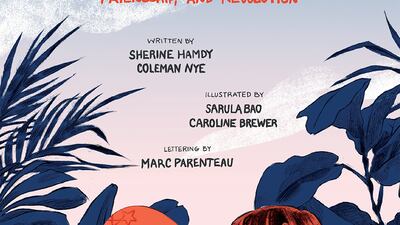
'Lissa: A Story about Medical Promise, Friendship, and Revolution' by Sherine Hamdy tells the story of an unlikely friendship, between Anna and Layla who come from different classes, cultural backgrounds and religions. Photo: Sherine Hamdy -
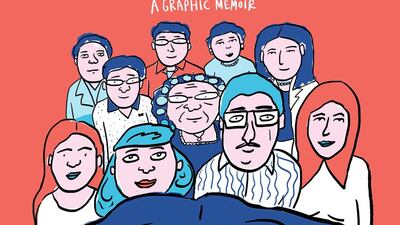
'I Was Their American Dream' by Malaka Gharib is a graphic memoir about heritage, self-discovery and family and the lives of modern immigrants in America. Photo: Malaka Gharib -
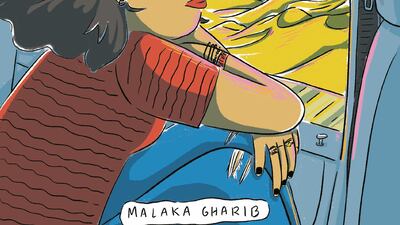
'It Won't Always Be Like This' is another intimate graphic memoir from Malaka Gharib about her experiences as a young American girl growing up with her Egyptian father's new family. Photo: Malaka Gharib -
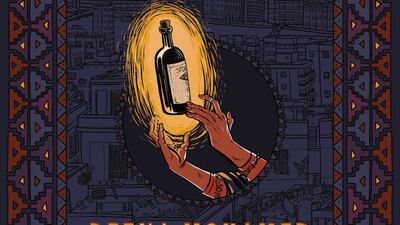
'Shubiek Lubiek' by Deena Mohamed is set in modern day Cairo but in a world where wishes from genies are not only real, but for sale. Photo: Deena Mohamed -
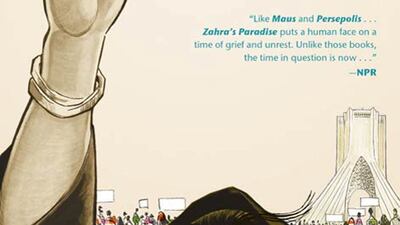
'Zahra's Paradise' by Amir Soltani and Khalil Bendib is set in modern Iran after the 2009 election and follows the chain of events after the disappearance of a young protestor and activist Mehdi. Photo: Amir Soltani and Khalil -
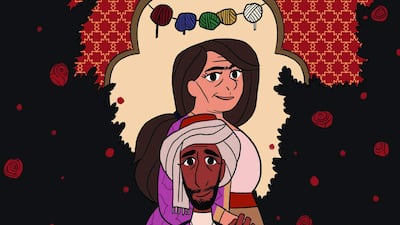
'The Carpet Merchant of Konstantiniyya' by Reimena Yee is the story of Zeynel who must reconnect to faith, love and his home after he is turned into a vampire by a stranger. Photo: Reimena Yee



