


Frank Gehry’s structures have transformed cities. His name is synonymous with great art and the power architecture has on our daily lives.
And at 93, he is a powerhouse of knowledge and influence, with no plans to stop working any time soon.
While in conversation with Mohamed Khalifa Al Mubarak, chairman of the Department of Culture and Tourism — Abu Dhabi, during the second day of the Culture Summit Abu Dhabi, Gehry discussed how he became an architect, the methodology that has fuelled his illustrious career and Guggenheim Abu Dhabi.
He told a packed auditorium that he started his artistic practice studying ceramics as a young man and “was terrible at it”. His teacher at the time took him to a house under construction in California, where an architect was instructing steel workers on what to do.
“I got all excited,” Gehry said. “And so I went back and took the class in architecture and I did really well. I didn't know what I was doing, but I did well.”
The starchitect has done more than just "well" over the course of his career.
From the first building he designed for a graphic designer in California — that he describes as a “plaster box, very simple” and which still stands today as an art gallery — to his deconstructivist structures, Gehry’s work not only inspires architects of his and future generations, but emotionally moves people.
From the Guggenheim Museum Bilbao in Spain to the Walt Disney Concert Hall in Los Angeles and The Dancing House in Prague, Gehry has been prolific in his creations. No matter where they are in the world or their function, his structures are designed with the culture and heritage of the land they are built on in mind, and yet hold in their visual vocabulary, which is Gehry’s unmistakable emotive and monumental style.
Scroll through the gallery below to see more of Frank Gehry's structures
-
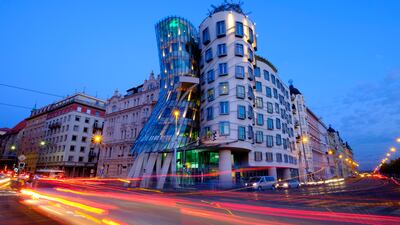
The Dancing House, also called 'Fred and Ginger', by architects Vlado Milunic and Frank Gehry, in Prague, Czech Republic. All Photos: Alamy Stock Photo -
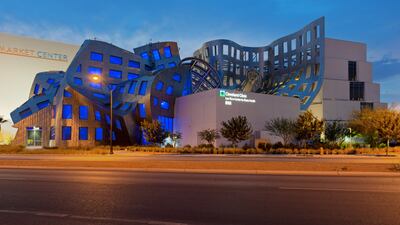
Frank Gehry's Cleveland Clinic Lou Ruvo Centre for Brain Health, in Las Vegas, Nevada, USA -
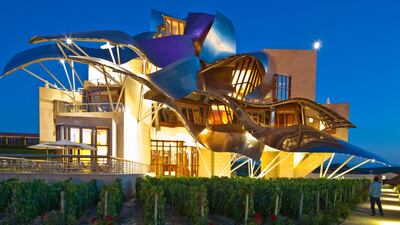
Hotel Marques de Riscal, designed by architects Frank Owen and Frank Gehry, in Elciego, Alava, Basque Country, Spain -
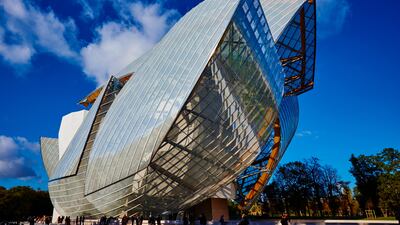
Louis Vuitton Foundation art museum and cultural centre, designed by Frank Gehry, in Paris, France -
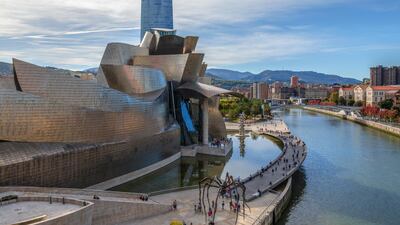
Guggenheim Museum in Bilbao, Basque Country, Spain -

Walt Disney Concert Hall in Los Angeles, California -
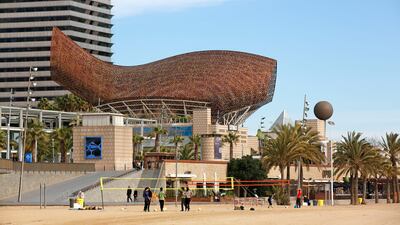
Sculpture Peix D'or, Hotel Arts Barcelona, Mapfre Tower, in Barcelona, Spain


When considering the intention behind how, and more importantly why, he infuses emotions into his buildings, it is interesting to note one of his early inspirations was The Charioteer of Delphi, a life-sized bronze sculpture from ancient Greece.
When Gehry first observed the ancient work he was emotionally affected and cried, especially when he realised it was attributed to "artist unknown".
“In my office, I have a picture of The Charioteer behind my desk, because it reminds me of the importance of expressing feeling with materials,” he said.
“And if that guy could last hundreds of years and still make me cry…”
Abu Dhabi’s dream and Gehry’s vision will meld together with the creation of the Guggenheim Abu Dhabi, located on Saadiyat Island.

Gehry explained in the session that when he came to Abu Dhabi 20 years ago to start working on the project, it was challenging to think of a design when, at the time, the capital’s cityscape was completely different.
Yet through his observations of the people, elements and culture, he played around with ideas that struck a chord.
“I understood that the same form multiplied, was something that was part of the language of the architecture of the region,” Gehry said, referencing the echoing structures of minarets and domes in the building of mosques.
He firmly believes that “the most important thing is to be yourself” and “to remain curious” in order to find one’s own style as an architect or for any creative practitioner.
“Curiosity, I think is number one, right?” he asked. “I mean, you've heard that before. But I think that leads you to new ideas because new ideas grow out of the context of trying something new.”
Gehry also took a moment to praise the UAE not only for its curiosity and imagination, but also its vision.
He said vision is "the message of the miracle of your country".
“I've been watching it for 25 years now. Your people are looking forward.”
Scroll through the gallery below to see more from days one and two of the Culture Summit Abu Dhabi
-
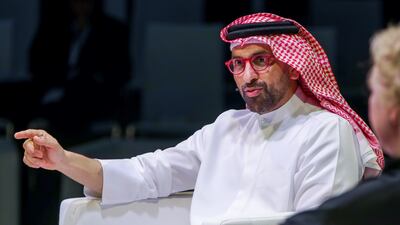
Sultan Sooud Al Qassemi, founder of Barjeel Art Foundation, takes part in the discussion on the third and final day of Culture Summit Abu Dhabi. All photos: Victor Besa / The National -

Manal Ataya, director general at Sharjah Museums Authority, also took part in the panel. -
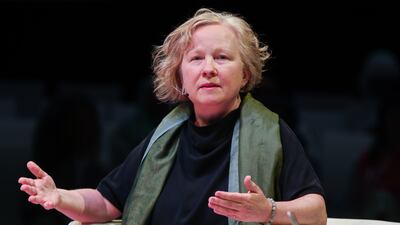
Maya Allison, executive director and chief curator at the NYU Abu Dhabi Art Gallery, joined the discussion. -
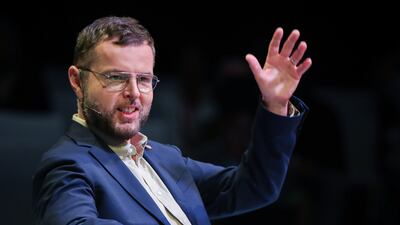
A panellist speaks during the event. -

The New Canon was one of the panels held on day three of the Culture Summit Abu Dhabi. -
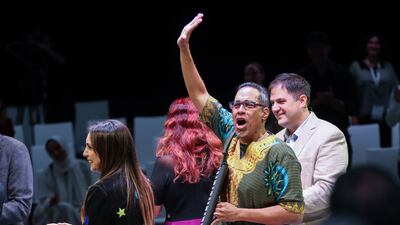
Famed pianist, composer and educator Danilo Perez waves to the crowd. -
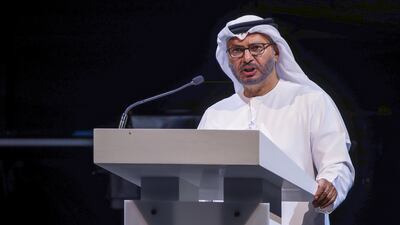
Former minister and now diplomatic advisor Anwar Gargash. Victor Besa / The National -
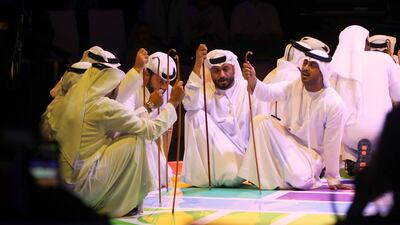
Visitors were treated to a traditional Al Ayala dance, where performers hold thin bamboo canes and move to steady drum rhythms. -
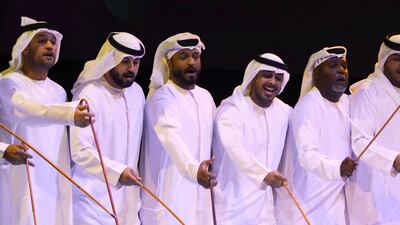
Al Ayala is often performed at weddings and other celebrations. -

Chris Dercon in conversation with architect Sir David Adjaye. -
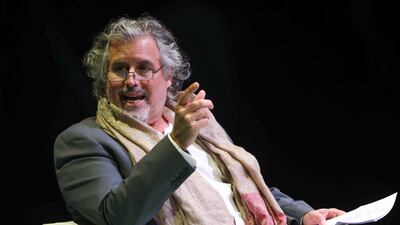
A session on Taking Bollywood Global: Dynamics of Diversity, moderated by Hans Fraikin, Abu Dhabi Film Commissioner. -
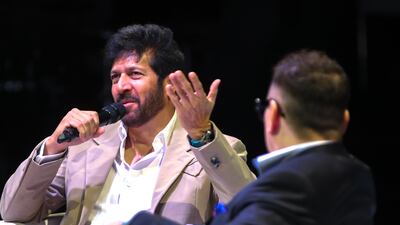
Kabir Khan, director of '83', in the conversation on Bollywood. -
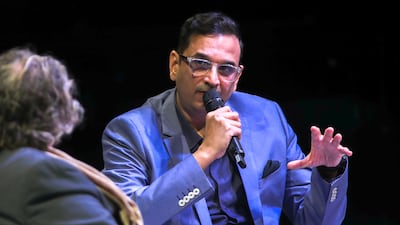
Taking Bollywood Global: Dynamics of Diversity - Aashish Singh, Chief Executive Officer, Lyca Productions. -

Andre Timmins, founder and director of Wizcraft and IIFA, as part of the discussion on Bollywood. -
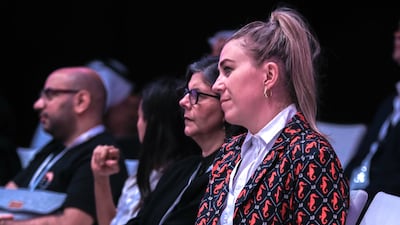
A member of the audience watching a panel called 'Taking Bollywood Global: Dynamics of Diversity'. -
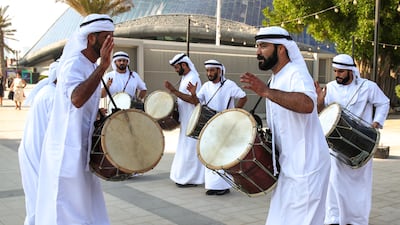
Day three of the Culture Summit Abu Dhabi opened with a traditional performance from the mountain regions. -

The event was a meeting of minds, with visitors from across various sectors sharing their thoughts on the post-Covid cultural world. -

Omar Saif Ghobash, UAE ambassador to Vatican, speaks at the event. -
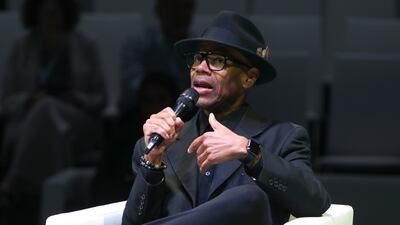
Grammy Award-winning producer Jimmy Jam discussed the regional music scene. -
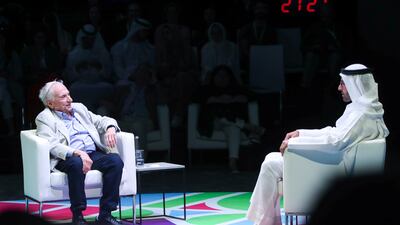
Mohamed Al Mubarak in conversation with Frank Gehry, Architect, Gehry Partners. -
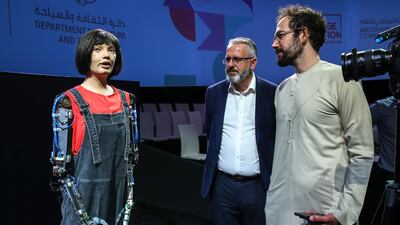
Robot artist Ai-Da, left, in conversation with The National's Hareth Al Bustani, far right, with her creator Aidan Meller, looking on. -
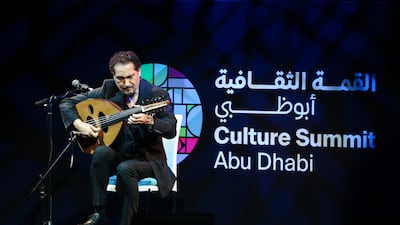
Performance by Iraqi oud virtuoso Naseer Shamma. -
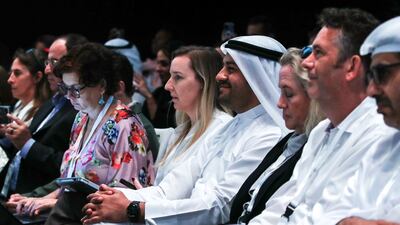
The audience listens to Mohamed Al Mubarak in conversation with Frank Gehry, Architect, Gehry Partners. -
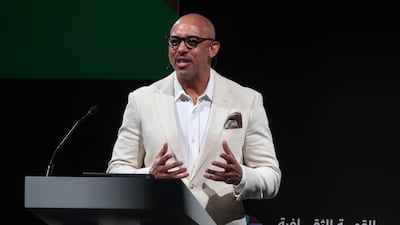
Harvey Mason Jr, chief executive of Recording Academy, lecturing on 'Music and Influence on Global Culture'. -
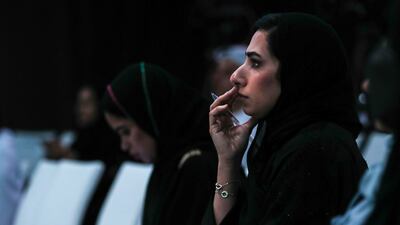
An attendee on day two of the Culture Summit in Abu Dhabi. -
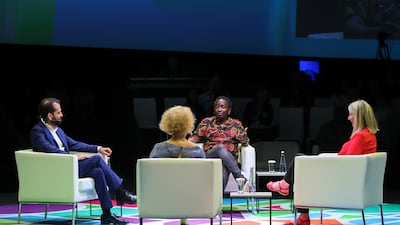
A discussion on 'Mentoring for Impact', with moderator Fiammetta Rocco, senior editor and culture editor of The Economist, and speakers Erica Love, director of Culture Central, Eric Wainaina, artist and founder of The Nairobi Musical Theatre Initiative, and Gael Hedding, director of Berklee Abu Dhabi. -
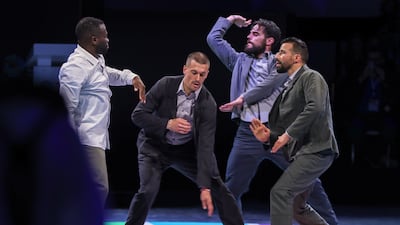
A peformance of 'The Roots' by French Algerian choreographer Kader Attou, a dance performance in which he returns to the origins of hip-hop with an acrobatic celebration of the genre. Eleven dancers perform different facets of the former underground culture and show how the body can bend to different beats: from breakdance to Smurf, electric boogie to popping. -
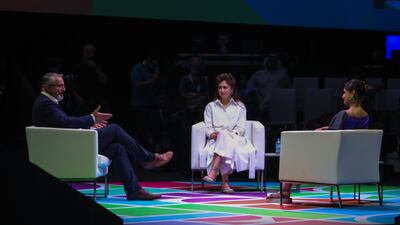
A discussion on 'AI and the Future of Culture', with moderator Priya Khanchandani, head of curatorial + interpretation at the Design Museum, and speakers Aidan Meller, director of Ai-Da Robot and Oxfordians, and Suhair Khan, founder and director of Open/Ended Design. -
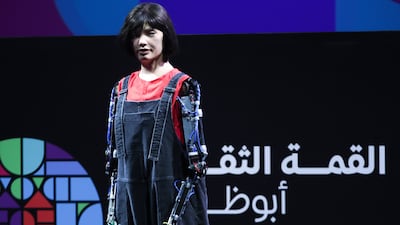
Artificial intelligence-powered robot artist Ai-Da at the Culture Summit in Abu Dhabi. Ai-Da's work reflects human aesthetic tastes and the conditions by which they are shaped. -
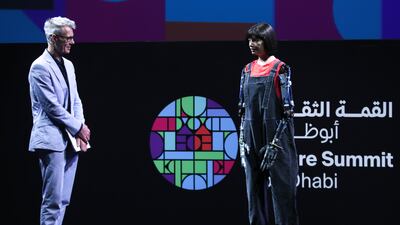
Ai-Da in conversation with Tim Marlow, chief executive and director of London's Design Museum, who analysed the creative philosophy of the world’s first humanoid artist. -
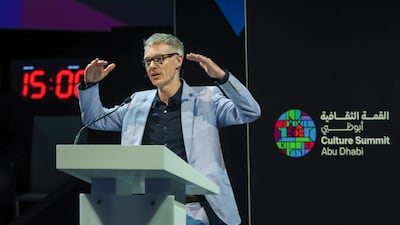
Mr Marlow introduces Ai-Da at the summit. -
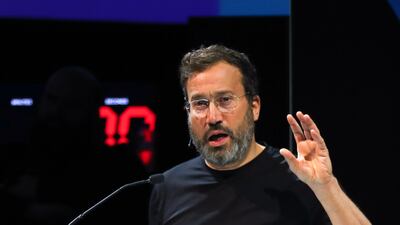
Eyal Weizman, director of research agency Forensic Architecture, speaks on the use of technology such as machine learning, as well as the importance of modelling and simulations. -
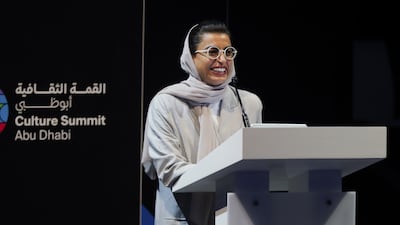
UAE Minister of Culture and Youth Noura Al Kaabi gives the keynote address. -
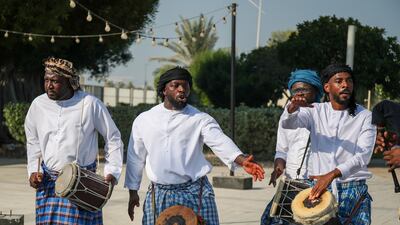
This year’s Culture Summit will be attended by 1,000 people while another 5,000 will take part online. -
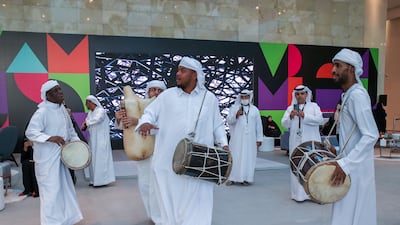
The summit seeks to identify ways in which culture can transform societies and communities around the globe. -
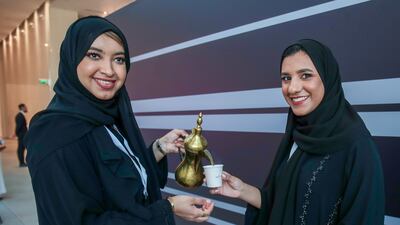
The conference brings together decision makers in culture, heritage, public policy and technology, as well as artists, thinkers and performers from around the world. -
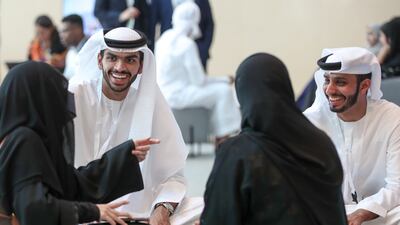
The summit is now in its fifth year. -
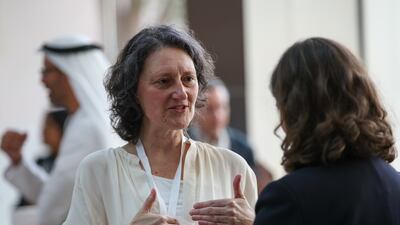
It is organised by Abu Dhabi's Department of Culture and Tourism. -
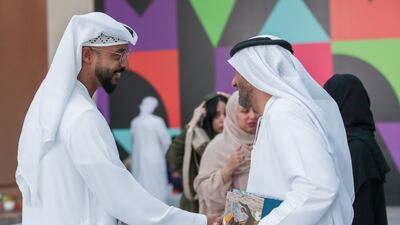
The theme of this year's event is 'A Living Culture'. -
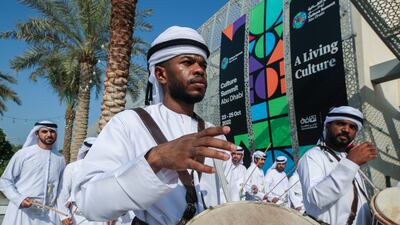
The summit has returned with a more extensive programme. -
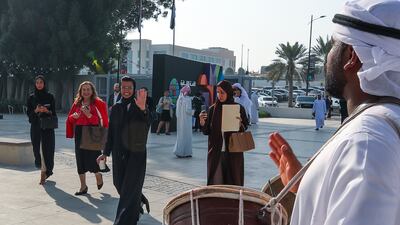
UAE Minister of Culture and Youth, Noura Al Kaabi at the summit. -

In-person attendance returned to the event after it moved online for two years owing to the Covid-19 pandemic. -
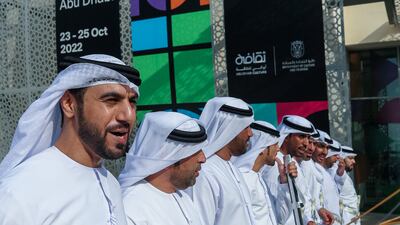
In only five years, the summit has grown from a noble idea into a staple of the international cultural calendar. -
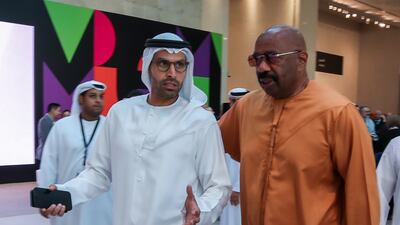
Mohamed Al Mubarak, chairman of DCT — Abu Dhabi, arrives with Steve Harvey. -
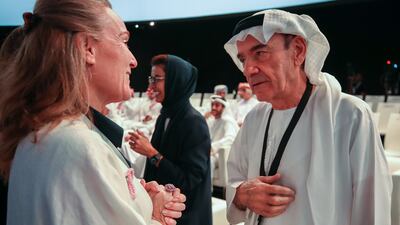
Zaki Nusseibeh, cultural adviser to the President, attends the event. -
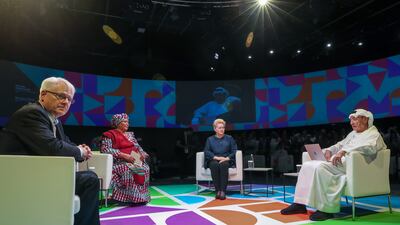
Mr Nusseibeh moderated a discussion on 'The role of culture in making resilient and shared societies', featuring former Lithuanian president Dalia Grybauskaite, former Malawian president Joyce Banda and former Croatian president Ivo Josipovic. -
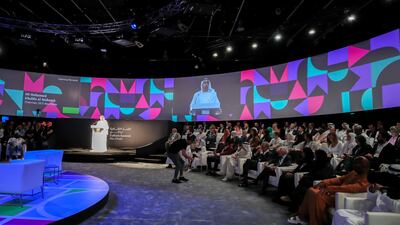
Mr Al Mubarak makes the welcome speech and opening remarks. -
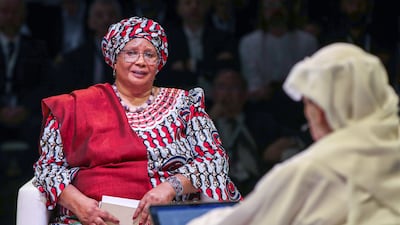
Ms Banda, former president of Malawi, takes part in the discussion moderated by Mr Nusseibeh.



