


The Sharjah Architecture Triennial, which is set to open for the second time in November next year, has launched its public programme.
On Saturday, the event's curator, Tosin Oshinowo, was in conversation with triennial president Sheikha Hoor Al Qasimi for a talk entitled Impermanence, Adaptability, and the Potential of Contextual Architecture. Oshinowo then moderated a panel with an initial selection of triennial participants.
The first of many live discussions and panels that will take place ahead of the opening, it offered architects and cultural enthusiasts an insight into the development of the next triennial and the nuances of its theme, The Beauty of Impermanence: An Architecture of Adaptability.
In the midst of a climate emergency and global pandemic, as the world's population grows and the fabric of societies shifts, architects are rethinking how to design, construct and approach ideas.
“We need to start thinking about interesting ways of solving our problems,” Oshinowo told The National ahead of Saturday's event. “The triennial is an opportunity to create a platform where we showcase the interesting work being done by people in different regions of the world that are dealing with these challenges.”
Oshinowo lives in Lagos and is a Nigerian architect, designer and founder and principal of cmDesign Atelier. She is renowned for her socially conscious and responsive approach to architecture, design and urbanism, and one of her key designs was a project with the United Nations Development Programme to build a new community in northern Nigeria for a village displaced by Boko Haram.
After studying and working in London, Oshinowo noticed a disconnect with the ideas she'd learnt about and what she found on return to Lagos.
“I was very aware that the architecture of where I was from was very different from the architecture of my training,” Oshinowo says. “There's always been this tension around how would I marry the two. What’s great about the triennial’s theme is it gave me the opportunity to theoretically challenge myself on how we would deal with this.”
curator of the Sharjah Architecture Triennial
Oshinowo says architectural ideas in Africa often have to be adapted and implemented owing to constraints and resources available.
“Much of Africa has suffered because of the extraction that happened during colonialism and a lot of infrastructure development was not done,” she says. “So we've been set with a consistent lack of progressive development with an increased population size.”
While other nations in the Global South — the region the triennial will focus on — have not had the same limitations, there are other overlapping histories, challenges and principles that lend themselves to a bigger conversation.
“Some of the challenges facing us today come from overusing resources and extraction,” Oshinowo says. “If we go back to the simple principles of previous times, of being responsible to the environment, you start to see that before the last 400 years of man's mass development, man had been on this Earth and things functioned. We need to almost look back to look forward.”
Reusing, reappropriation, innovation, collaboration and adaptation are all methods that belong to a culture of scarcity that has been developed in the Global South. The theme of the triennial will explore these underutilised modes of practice in order to reorient conversations towards a more sustainable and equitable future.

But Oshinowo warns that sustainability is “an abused buzzword”, which must also be re-examined and challenged in order to make room for different conversations around design and living solutions.
“We need to take sustainability away from sustainability and make it about renewal and regeneration,” Oshinowo says. “We have to give back more — we've already taken too much. And that's what a lot of these cultures would have done.”
One of her main focuses is to ensure that sustainability is explored through many facets, from the theoretical and intangible to the concrete and tangible.
“One of the base criteria for all our participants’ proposals for this triennial is you must think about what happens to your exhibition at the end,” Oshinowo says. “We can't be talking about sustainability and not be responsibly thinking about what happens afterwards.”
The intersection of sustainability and innovation is also a space that Oshinowo plans to explore, shedding the notion that inventiveness is constricted to future or technology-based ideas and fostering dialogue on how past creations can inform the present.
“When I first came to Sharjah and saw some of the houses in the heritage site with their courtyards, so beautiful and fascinating, I thought, how did we go from that to freezing architecture with an air conditioner on the wall?
“There was a time when buildings were designed to consider the heat, consider the shade, consider the air circulation, to make the spaces comfortable.”
An exploration of simpler architectural principles, not based on imposing design ideas but understanding context and design accordingly, is a key idea within the triennial’s theme. Oshinowo’s curatorial vision includes an advisory board of international architects, artists and designers working in the Global South, some of whom explore these ideas but don’t necessarily create architecture from a traditional standpoint.
“Architecture has to be approachable, it needs to be a little bit more lifestyle driven,” Oshinowo says. “People need to understand what you're selling, what you're sharing, to be able to engage with it. By having these opportunities for dialogue and giving visual examples of how this works, it will help people to understand.”
This starts with the newly launched education programme, through which the triennial team will engage with the public to foster an understanding around the role of architecture.
“It starts from dialogue, engagement, building awareness of these principles, getting architects to understand why it's important to push these principles in their practice,” Oshinowo says. “Not everyone will agree. But when you get one, two, three people understanding why it makes more sense, then it's an easier sell. It's a long journey, but it's a worthwhile one.”
Twelve futuristic cities being built around the world, from Saudi Arabia to China — in pictures
-
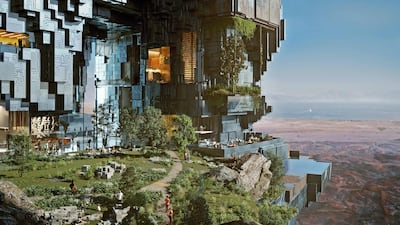
The Mirror Line, Neom, Saudi Arabia. Photo: Neom -

New Administrative Capital, Cairo, Egypt. Photo: Dar Al-Handasah -
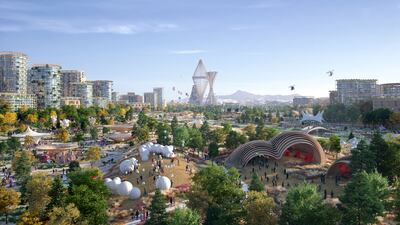
Telosa, USA. Photo: Telosa -
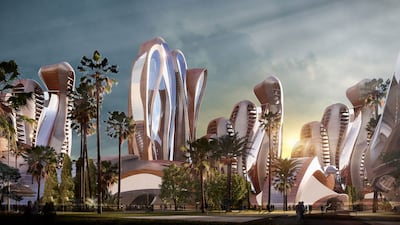
Akon City, Senegal. Photo: Akon City -
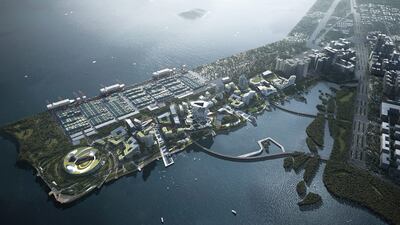
Net City, China. Photo: NBBJ -
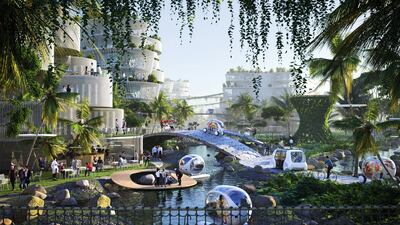
BiodiverCity, Malaysia. Photo: BIG -
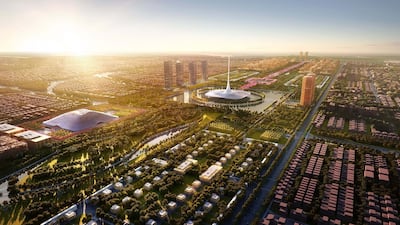
Amaravati, India. Photo: Foster + Partners -

Liberland Metaverse, the metaverse. Photo: Zaha Hadid -
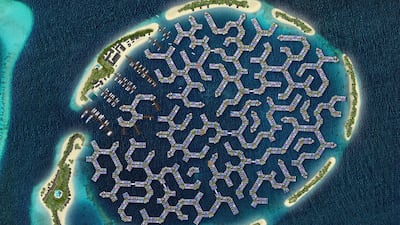
Floating City, Maldives. Photo: Maldives Floating City -
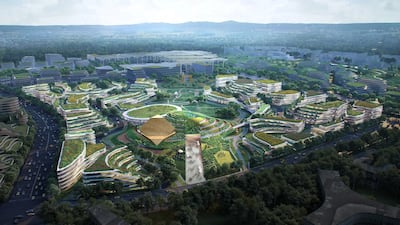
Chengdu Future City, China. Photo: OMA -
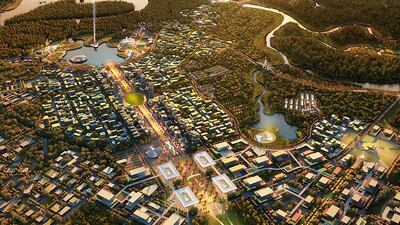
Nusantara, Indonesia. Photo: Urbanplus -
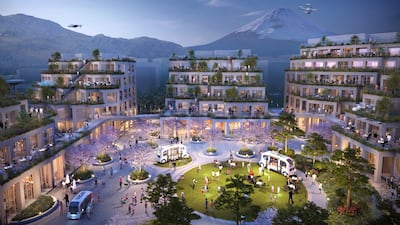
Woven City, Japan. Photo: Woven City



