British Museum's Girsu Project - in pictures
-
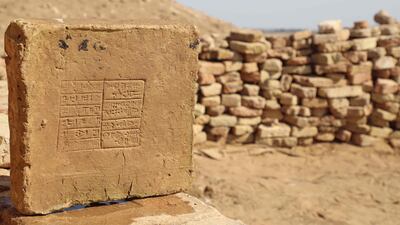
A mud brick bearing a cuneiform inscription found during the Girsu Project's excavation at the ancient Sumerian city, now known as Tello, in Iraq in 2021. Recent excavations of the ancient complex have shed new light on the history and development of the city. AFP -
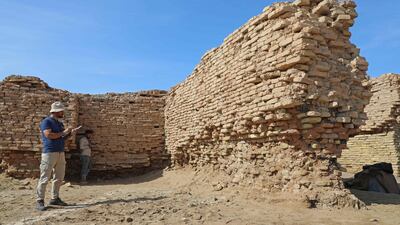
For decades, historians have believed that the Sumerians' mastery of irrigation led to their development. Now, the Girsu Project's discoveries suggest that irrigation was not the cause of these changes after all. AFP -

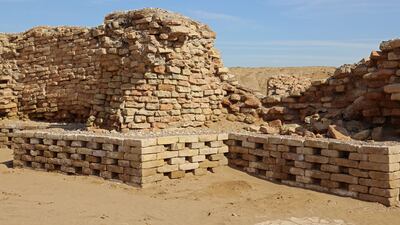
A partial view shows the bridge in the city of Girsu. AFP -
Archaeologists used new technologies to understand the development of the city, flying drones over the vast, 250-hectare site. AFP -

The images they gathered show the extent to which the irrigation system was embedded throughout the city and its surrounds. AFP -
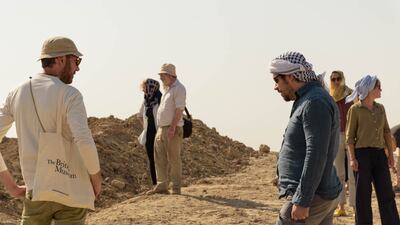
Members of the archaeological team at Girsu, southern Iraq, in autumn 2021. Photo: British Museum -

A statue of King Gudea found in Girsu, dating from circa 2130 BC. The statue and other items from Iraq are currently on show as part of the Ancient Iraq: New Discoveries exhibition in Nottingham in the UK. Photo: British Museum -
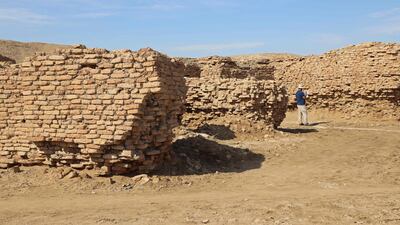
The new discovery indicates that the largest irrigation canals date to the prehistory of Mesopotamia. That means they are much older than the birth of the city, by about 1,000 years. AFP -
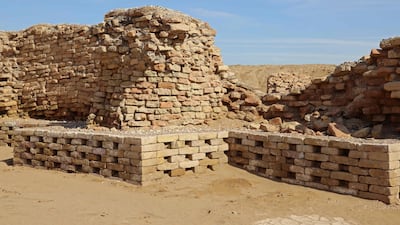
Archaeologists believed that once the ancient Sumerians learnt to irrigate their crops, they were able to move from subsistence farming to building elaborate temples. But the Girsu Project’s discoveries show that they were living with well-watered plains for a full millennium before they began to build the temple complexes. AFP -

Cuneiform inscription is found during excavation at the ancient Sumerian city of Girsu. AFP -
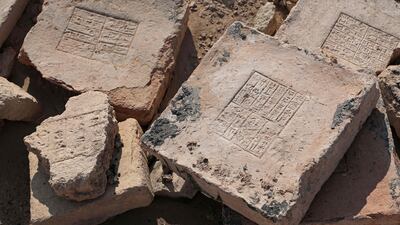
Mud bricks bearing cuneiform inscriptions. AFP -

A cone bearing a cuneiform inscription. AFP -
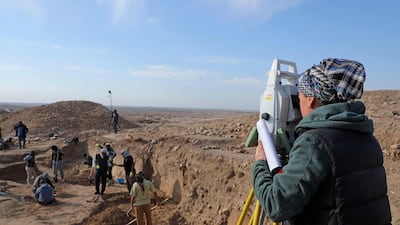
Archaeologists and workers excavate the ancient Sumerian city of Girsu. AFP -

Working with archaeologists from five universities in Iraq, the British Museum team dug out shells and other material from the bottom level of the canals to be carbon-dated. AFP -
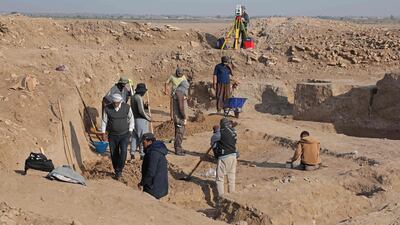
The last time Girsu was excavated was in the 1960s, when now-standard technologies and archaeological practices were not in place. AFP -
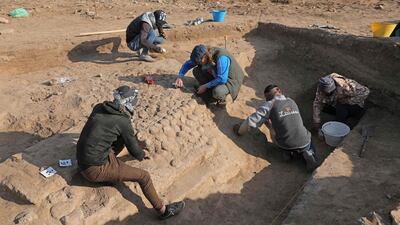
Sumerian scholars have been working off that era’s imperfect knowledge since then, as the US invasion in the 1990s and the ensuing unrest have stalled any archaeological excavation of the site. AFP -

When the archaeological team arrived in 2021, they found Girsu pockmarked, with depressions in the soil where looters dug up items. AFP -
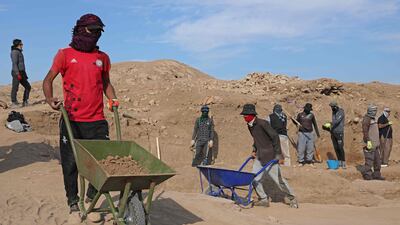
The archaeologists' goals were to research the site but also to practice what they call 'forensic archaeology', treating the dig like a crime scene. AFP -
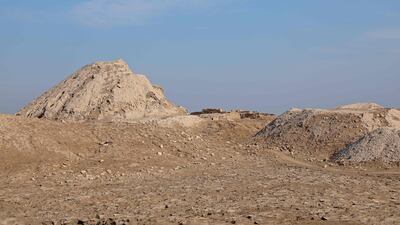
A general view shows the excavation site at the ancient Sumerian city of Girsu, known as Tello, in Iraq. AFP -

Young Iraqi archaeologists received training as part of the Girsu Project, headed by Sebastien Rey of the British Museum, centre. Photo: British Museum -
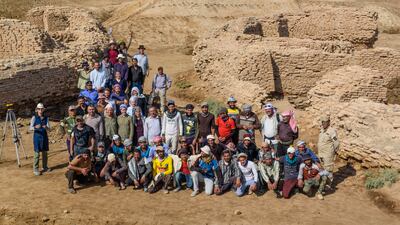
The British Museum excavation team in the ancient city of Girsu. Photo: British Museum


Most popular today

