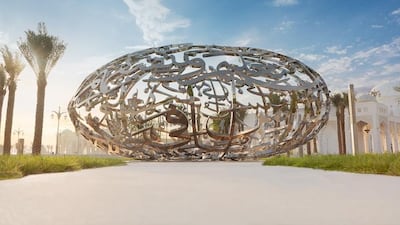
Emirati artist Mattar Bin Lahej marks UAE Golden Jubilee with unique calligraphic work


  • English
  • Arabic

At first glance, it would be hard to tell that Emirati artist Mattar Bin Lahej’s vibrant strokes in his latest work are actually a form of calligraphy. Unlike the curving forms typically found in Arabic writing, his script is sundered, almost confetti-like on the canvas. It is so much his own, in fact, that the artist is calling it the “Mattar Font”.

The new abstract work, unveiled at the Etihad Museum on Tuesday, was made specifically for the occasion of the UAE’s 50th National Day, which is on December 2.

Bin Lahej spent five years researching and creating more than 28 Arabic letters and symbols for Mattar Font. He says that while he did not specialise in classic Arabic fonts such as Al-Thuluth or Req’ah or Nasikh, he researched all of them, but also tried to forge his own style.

Mattar Bin Lahej at work on his new piece. Photo: Loro Piana

What makes the Mattar Font unique is not only its abstract forms, but also how it breaks the tradition of interlocking letters in Arabic writing. Instead, it borrows more from Japanese writing. “The moment of truth dawned on me when I realised that the Mattar Font should be abstract; letters are individual pieces that can be used intertwined or separate when making words and sentences, a rarity in most Arabic fonts, but it is common in Japanese fonts, which are closer to my heart,” the artist said.

For his painting at Etihad Museum, the artist chose to render the words from the UAE National Anthem because they are, as the artist called them, “the perfect expression of love and belonging to my homeland”.

His chosen colour palette was also very deliberate, selecting primary and secondary colours. “They reflect and communicate joy and happiness and add at the same time a touch of aestheticism and elegance. I personally like joyful and happy colours and this is a now recognised signature in my work and one of my values,” he explained.

Bin Lahej has also collaborated with Italian clothing company Loro Piana, which specialises in luxury cashmere and wool products, and his painting will be the print of a new series of plaids from the brand. A total of 50 cashmere plaids will be made, each one numbered and signed by the artist.

Loro Piana has collaborated with Emirati multidisciplinary artist Mattar Bin Lahej on unique pieces for the UAE's Golden Jubilee. Photo: Loro Piana

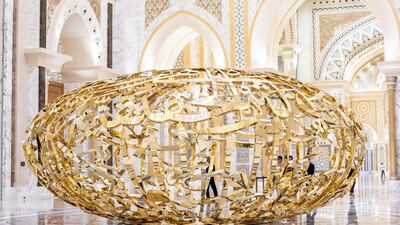
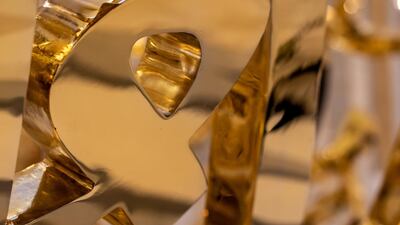
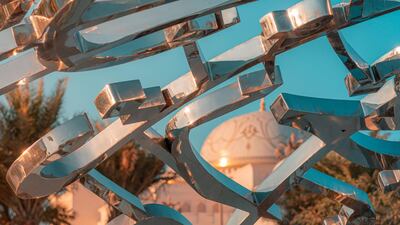
In addition, he has also worked on a stainless steel 3D sculpture of his artwork that will go on display at the Loro Piana store in The Dubai Mall on Thursday, December 2, and will remain on view until the end of the month.

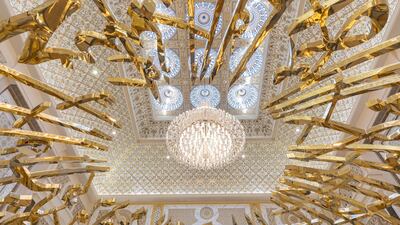
A prominent artist, Bin Lahej has previously worked with larger scale pieces, including his golden and silver Power of Words sculptures in Abu Dhabi’s Qasr Al Watan, a cultural landmark in the presidential palace compound. For that work, he transformed quotes by Sheikh Zayed, the Founding Father, into immersive structures.

The%20Beekeeper
%3Cp%3E%3Cstrong%3EDirector%3A%20%3C%2Fstrong%3EDavid%20Ayer%C2%A0%3C%2Fp%3E%0A%3Cp%3E%3Cstrong%3EStarring%3A%20%3C%2Fstrong%3EJason%20Statham%2C%20Josh%20Hutcherson%2C%20Emmy%20Raver-Lampman%2C%20Minnie%20Driver%2C%20Jeremy%20Irons%3C%2Fp%3E%0A%3Cp%3E%3Cstrong%3ERating%3A%20%3C%2Fstrong%3E3%2F5%3C%2Fp%3E%0A
What vitamins do we know are beneficial for living in the UAE

Vitamin D: Highly relevant in the UAE due to limited sun exposure; supports bone health, immunity and mood.Vitamin B12: Important for nerve health and energy production, especially for vegetarians, vegans and individuals with absorption issues.Iron: Useful only when deficiency or anaemia is confirmed; helps reduce fatigue and support immunity.Omega-3 (EPA/DHA): Supports heart health and reduces inflammation, especially for those who consume little fish.

Barings Bank

 Barings, one of Britain’s oldest investment banks, was
founded in 1762 and operated for 233 years before it went bust after a trading
scandal. 

Barings Bank collapsed in February 1995 following colossal
losses caused by rogue trader Nick Lesson. 

Leeson gambled more than $1 billion in speculative trades,
wiping out the venerable merchant bank’s cash reserves.  

On Instagram: @WithHopeUAE

Although social media can be harmful to our mental health, paradoxically, one of the antidotes comes with the many social-media accounts devoted to normalising mental-health struggles. With Hope UAE is one of them.
The group, which has about 3,600 followers, was started three years ago by five Emirati women to address the stigma surrounding the subject. Via Instagram, the group recently began featuring personal accounts by Emiratis. The posts are written under the hashtag #mymindmatters, along with a black-and-white photo of the subject holding the group’s signature red balloon.
“Depression is ugly,” says one of the users, Amani. “It paints everything around me and everything in me.”
Saaed, meanwhile, faces the daunting task of caring for four family members with psychological disorders. “I’ve had no support and no resources here to help me,” he says. “It has been, and still is, a one-man battle against the demons of fractured minds.”
In addition to With Hope UAE’s frank social-media presence, the group holds talks and workshops in Dubai. “Change takes time,” Reem Al Ali, vice chairman and a founding member of With Hope UAE, told The National earlier this year. “It won’t happen overnight, and it will take persistent and passionate people to bring about this change.”

Mercer, the investment consulting arm of US services company Marsh & McLennan, expects its wealth division to at least double its assets under management (AUM) in the Middle East as wealth in the region continues to grow despite economic headwinds, a company official said.

Mercer Wealth, which globally has $160 billion in AUM, plans to boost its AUM in the region to $2-$3bn in the next 2-3 years from the present $1bn, said Yasir AbuShaban, a Dubai-based principal with Mercer Wealth.

Within the next two to three years, we are looking at reaching $2 to $3 billion as a conservative estimate and we do see an opportunity to do so,” said Mr AbuShaban.

Mercer does not directly make investments, but allocates clients’ money they have discretion to, to professional asset managers. They also provide advice to clients.

“We have buying power. We can negotiate on their (client’s) behalf with asset managers to provide them lower fees than they otherwise would have to get on their own,” he added.

Mercer Wealth’s clients include sovereign wealth funds, family offices, and insurance companies among others.

From its office in Dubai, Mercer also looks after Africa, India and Turkey, where they also see opportunity for growth.

Wealth creation in Middle East and Africa (MEA) grew 8.5 per cent to $8.1 trillion last year from $7.5tn in 2015, higher than last year’s global average of 6 per cent and the second-highest growth in a region after Asia-Pacific which grew 9.9 per cent, according to consultancy Boston Consulting Group (BCG). In the region, where wealth grew just 1.9 per cent in 2015 compared with 2014, a pickup in oil prices has helped in wealth generation.

BCG is forecasting MEA wealth will rise to $12tn by 2021, growing at an annual average of 8 per cent.

Drivers of wealth generation in the region will be split evenly between new wealth creation and growth of performance of existing assets, according to BCG.

Another general trend in the region is clients’ looking for a comprehensive approach to investing, according to Mr AbuShaban.

“Institutional investors or some of the families are seeing a slowdown in the available capital they have to invest and in that sense they are looking at optimizing the way they manage their portfolios and making sure they are not investing haphazardly and different parts of their investment are working together,” said Mr AbuShaban.

Some clients also have a higher appetite for risk, given the low interest-rate environment that does not provide enough yield for some institutional investors. These clients are keen to invest in illiquid assets, such as private equity and infrastructure.

“What we have seen is a desire for higher returns in what has been a low-return environment specifically in various fixed income or bonds,” he said.

“In this environment, we have seen a de facto increase in the risk that clients are taking in things like illiquid investments, private equity investments, infrastructure and private debt, those kind of investments were higher illiquidity results in incrementally higher returns.”

The Abu Dhabi Investment Authority, one of the largest sovereign wealth funds, said in its 2016 report that has gradually increased its exposure in direct private equity and private credit transactions, mainly in Asian markets and especially in China and India. The authority’s private equity department focused on structured equities owing to “their defensive characteristics.”

Who's who in Yemen conflict

Houthis: Iran-backed rebels who occupy Sanaa and run unrecognised government

Yemeni government: Exiled government in Aden led by eight-member Presidential Leadership Council

Southern Transitional Council: Faction in Yemeni government that seeks autonomy for the south

Habrish 'rebels': Tribal-backed forces feuding with STC over control of oil in government territory

BUNDESLIGA FIXTURES

(All games 4-3pm kick UAE time) Bayern Munich v Augsburg, Borussia Dortmund v Bayer Leverkusen, Hoffenheim v Hertha Berlin, Wolfsburg v Mainz , Eintracht Frankfurt v Freiburg, Union Berlin v RB Leipzig, Cologne v Schalke , Werder Bremen v Borussia Monchengladbach, Stuttgart v Arminia Bielefeld

Updated: November 24, 2021, 2:23 PM