

The song Ya Jabal Ma Yhezak Reeh (Oh, mountain, the wind cannot shake you) is a powerful anthem of resilience and pride. Performed by Jordanian folk singer Omar Al-Abdallat, the lyrics celebrate the unyielding strength of the Palestinian people, likening their steadfastness to that of an immovable mountain. The chorus serves as a metaphor for unwavering determination in the face of adversity.
Our Arabic word of the week is jabal, which translates to mountain, the significance of which extends far beyond its physical meaning. The term embodies strength, endurance and a deep connection to the land, reflecting both the landscapes and the values of the Arab world.
The term derives from the roots jeem, baa and lam, which convey the idea of something raised or elevated. Its plural form is jibal, and regional dialects may pronounce it jebel or djebel, highlighting its presence across the Arabic-speaking world and beyond. Jabal could also be used to compliment someone. To be called a jabal is to say that a person is strong, brave and unwavering.

Mountains themselves are prominent topographical features in this part of the world, from the rugged terrains of the Hajar Mountains in the UAE and Oman to the towering peaks of the Asir Mountains in Saudi Arabia. These natural formations have shaped the history and culture of the region, influencing settlement patterns, trade routes and daily life for centuries.
Many mountains are woven into local identity and place names, from Jebel Hafeet in Al Ain to Jebel Jais in Ras Al Khaimah, landmarks that attract visitors and tourists to appreciate their majesty.
They also carry spiritual and historical significance. Jabal al-Noor near Makkah is revered as the site where the Prophet Muhammad received his first revelation, while Jabal Uhud near Madinah marks the location of the famous Battle of Uhud, a pivotal moment in early Islamic history.
In 2023, AlUla’s striking Jabal Ikmah was added to Unesco's Memory of the World Register. Dating back to the second half of the first millennium BC, the site features more than 300 historically significant carved inscriptions, recording many facets of the ancient Dadanite Kingdom’s life, rituals and customs.

Arabs who have lived in mountainous regions developed distinct ways of life, shaped by the challenges and opportunities of the terrain. In Saudi's Hejaz and Asir ranges, for example, communities built terraced farms to grow grains, fruits and coffee, adapting to steep slopes and scarce water.
Villages were often fortified to protect against raiders, and local customs and social structures evolved to reflect the isolation and interdependence of mountain life. Poetry, oral storytelling, and music flourished in these settings, carrying the history and values of these communities across generations.
-
The Arabic word for sign is aya. All photos: The National -

The Arabic word for cat is qita -

Laban is the Arabic word for milk -

Mosa, or Moses in English, is mentioned 136 times in the Quran -

The Arabic word for ownership is tamalouk -

The Arabic word for mint is ne’ena’a -

Shuback is the Arabic word for window -
Hilal is Arabic for crescent -

Musafir, the Arabic word for traveller, is often used in music and poetry, evoking a sense of longing and passion -

Raqaba, the Arabic word for neck, can also denote caution and scrutiny -
Ithin, the Arabic word for permission, has many bureaucratic uses -
The Arabic word for chair is kursee -

Faten is Arabic name that has many spiritual and poetic meanings -
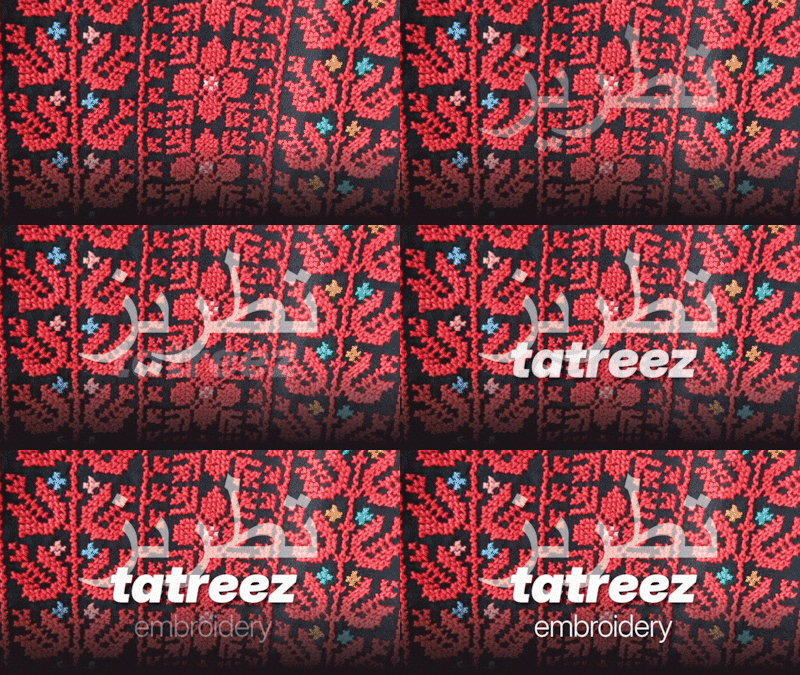
The Arabic word for embroidery is tatreez -
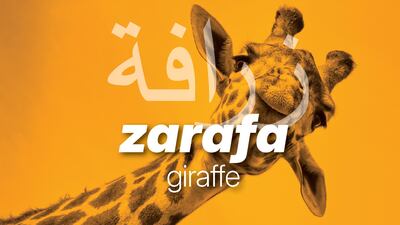
Zarafa is Arabic for giraffe -

The Arabic word for dignity, honour and respect is izza -

Hewi is the Emirati word for front garden -

Lahja is the Arabic word for dialect -
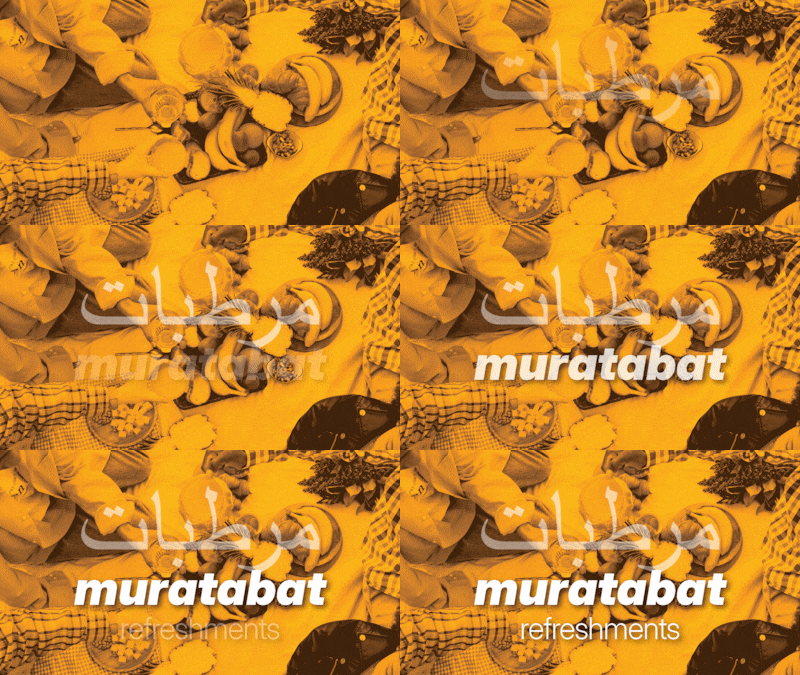
Muratabat is often translated as refreshments -

Handasa is the Arabic word for engineering -

The Arabic word for octopus is akhtaboot -

The Arabic word for mightiness is jabarut -

The Arabic word kibriyaa, often seen in Quranic verses, speaks to might and humility -

Junoon is the Arabic word for madness and obsession -

Adheem is commonly translated as great, magnificent or mighty -

Tanamor is the Arabic word for bullying -

The Arabic word for forgetfulness and oblivion is alnisyan -

Yallah, the Arabic word for 'let's go', is an expression of urgency, encouragement or even impatience -
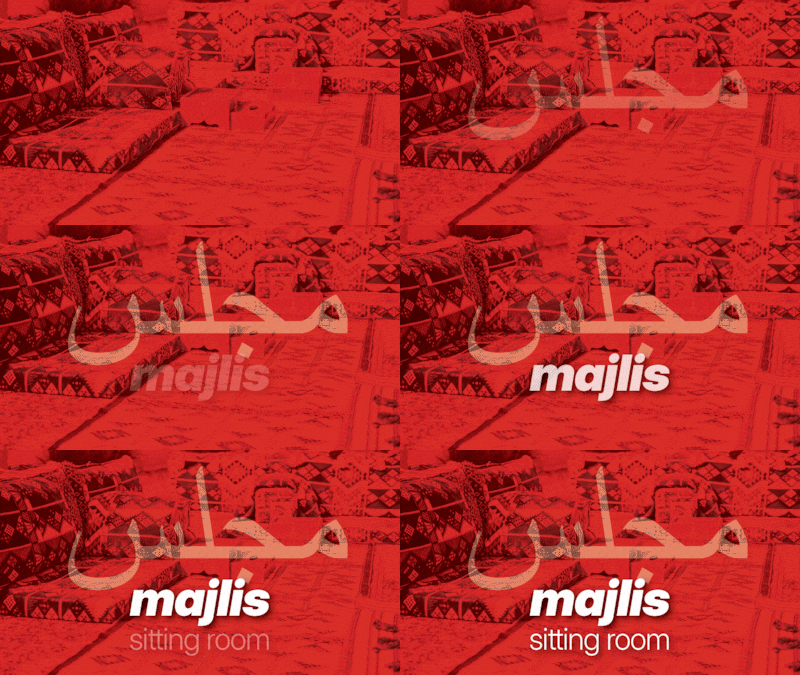
The Arabic word majlis, rooted in Bedouin tradition, refers to a space for hospitality and dialogue -

Falaj is Arabic for water channel -

Ne'meh is Arabic for blessing -

The Arabic word sumud means resilience and steadfastness -

The Arabic word for mountain is jabal. The National -

Kibreet is Arabic for matchstick -

Sahaba means cloud in Arabic -

Qilada is the Arabic word for necklace



