Queen Elizabeth II's 1953 coronation was the first to be televised. PA Images

How the televising of Queen Elizabeth II’s 1953 coronation led to Prince Harry's Spare


  • English
  • Arabic

When her father King George VI died on February 6, 1952, Princess Elizabeth, as she was until that moment, was on tour in Kenya with Prince Philip.

Becoming Queen of the United Kingdom at the age of 25, she would go on to reign for 70 years and 214 days as Queen Elizabeth II, the longest of any British monarch.

Her coronation on June 2, 1953, the fourth and final of the 20th century, became and remains a groundbreaking event in global history thanks to the decision for it to be televised and broadcast around the world.

The sight of the new Queen on television screens brought royalty into the living rooms of her subjects, moving towards demystifying the monarchy in a way that has evolved into today’s royal family with their press officers, social media accounts and tell-all memoirs.

The princess becomes Queen

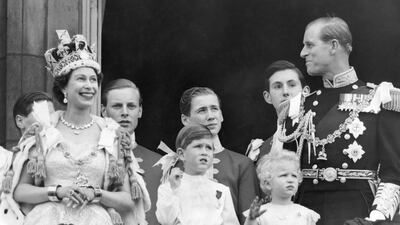
  • Queen Elizabeth II, Prince Charles, Princess Anne and the Duke of Edinburgh at Buckingham Palace after the Queen's coronation in June 1953. All photos: PA
    Queen Elizabeth II, Prince Charles, Princess Anne and the Duke of Edinburgh at Buckingham Palace after the Queen's coronation in June 1953. All photos: PA
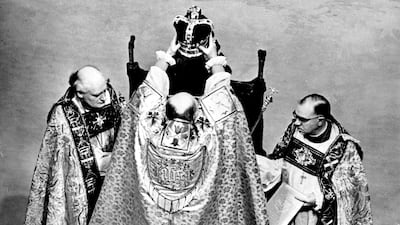
  • Queen Elizabeth sitting on the St Edward's Chair, as she is crowned by the Archbishop of Canterbury.
    Queen Elizabeth sitting on the St Edward's Chair, as she is crowned by the Archbishop of Canterbury.
  • The Duke of Norfolk, the Earl Marshall, paying homage to Queen Elizabeth after her coronation at Westminster Abbey.
    The Duke of Norfolk, the Earl Marshall, paying homage to Queen Elizabeth after her coronation at Westminster Abbey.
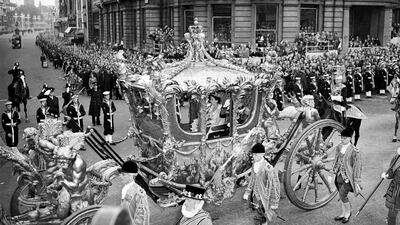
  • Queen Elizabeth riding with the Duke of Edinburgh in the state coach through Trafalgar Square on the way from Buckingham Palace to Westminster Abbey for her coronation.
    Queen Elizabeth riding with the Duke of Edinburgh in the state coach through Trafalgar Square on the way from Buckingham Palace to Westminster Abbey for her coronation.
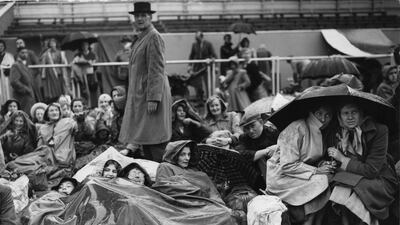
  • People waiting on The Mall for an all-night vigil before the coronation procession of Queen Elizabeth.
    People waiting on The Mall for an all-night vigil before the coronation procession of Queen Elizabeth.
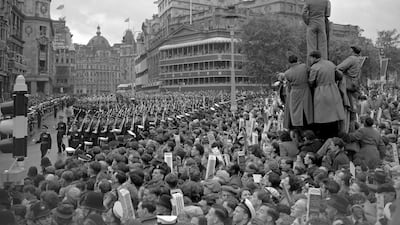
  • A crowded Trafalgar Square in the rain as troops march past on the return from Westminster Abbey after the coronation of Queen Elizabeth.
    A crowded Trafalgar Square in the rain as troops march past on the return from Westminster Abbey after the coronation of Queen Elizabeth.
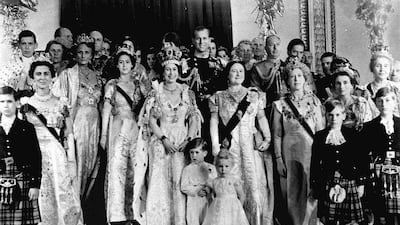
  • Queen Elizabeth and Prince Philip with son Prince Charles and daughter Princess Anne, other members of the royal family and guests at Buckingham Palace on return from the coronation ceremony at Westminster Abbey.
    Queen Elizabeth and Prince Philip with son Prince Charles and daughter Princess Anne, other members of the royal family and guests at Buckingham Palace on return from the coronation ceremony at Westminster Abbey.
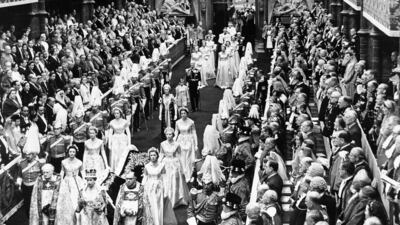
  • Queen Elizabeth at her coronation in Westminster Abbey.
    Queen Elizabeth at her coronation in Westminster Abbey.
  • The view from the roof of Buckingham Palace showing the state coach carrying Queen Elizabeth to Westminster Abbey.
    The view from the roof of Buckingham Palace showing the state coach carrying Queen Elizabeth to Westminster Abbey.
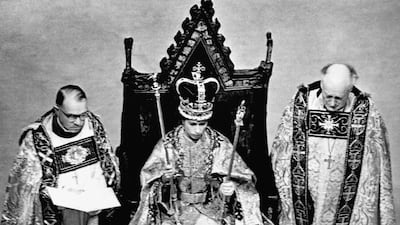
  • Queen Elizabeth wearing the St Edward Crown and carrying the sceptre and rod after her coronation.
    Queen Elizabeth wearing the St Edward Crown and carrying the sceptre and rod after her coronation.

News of her father’s death wasn’t relayed to the princess, but to Prince Philip, after a message sent to the British embassy in Nairobi wasn’t passed on because it was written in code.

Princess Elizabeth’s private secretary, Martin Charteris heard the news from a reporter who was covering the tour.

“Mike crawls in [to the room] as he doesn't want the princess to look up and see him so he's crawling out of her sightline and gesturing to get hold of the radio,” the princess's lady-in-waiting and prince Philip’s cousin, Pamela Hicks, said on her daughter India Hicks’s podcast. “He secretly turns it very, very low and hears all the stations [playing] the same dirge-like music, being very solemn, so it’s obviously true.

“Philip just takes the newspaper and covers his face with it, hides behind it and says: ‘This will be such a shock!’”

Landing in London on February 7, 1952, Hicks revealed that courtiers had to bring a black dress on board as princess Elizabeth didn’t have any mourning clothes. The incident started a tradition of royals always travelling with mourning clothes.

  • Queen Elizabeth II, Prince Charles, Princess Anne and the Duke of Edinburgh at Buckingham Palace after the Queen's coronation in June 1953. All photos: PA
    Queen Elizabeth II, Prince Charles, Princess Anne and the Duke of Edinburgh at Buckingham Palace after the Queen's coronation in June 1953. All photos: PA
  • Queen Elizabeth sitting on the St Edward's Chair, as she is crowned by the Archbishop of Canterbury.
    Queen Elizabeth sitting on the St Edward's Chair, as she is crowned by the Archbishop of Canterbury.
  • The Duke of Norfolk, the Earl Marshall, paying homage to Queen Elizabeth after her coronation at Westminster Abbey.
    The Duke of Norfolk, the Earl Marshall, paying homage to Queen Elizabeth after her coronation at Westminster Abbey.
  • Queen Elizabeth riding with the Duke of Edinburgh in the state coach through Trafalgar Square on the way from Buckingham Palace to Westminster Abbey for her coronation.
    Queen Elizabeth riding with the Duke of Edinburgh in the state coach through Trafalgar Square on the way from Buckingham Palace to Westminster Abbey for her coronation.
  • People waiting on The Mall for an all-night vigil before the coronation procession of Queen Elizabeth.
    People waiting on The Mall for an all-night vigil before the coronation procession of Queen Elizabeth.
  • A crowded Trafalgar Square in the rain as troops march past on the return from Westminster Abbey after the coronation of Queen Elizabeth.
    A crowded Trafalgar Square in the rain as troops march past on the return from Westminster Abbey after the coronation of Queen Elizabeth.
  • Queen Elizabeth and Prince Philip with son Prince Charles and daughter Princess Anne, other members of the royal family and guests at Buckingham Palace on return from the coronation ceremony at Westminster Abbey.
    Queen Elizabeth and Prince Philip with son Prince Charles and daughter Princess Anne, other members of the royal family and guests at Buckingham Palace on return from the coronation ceremony at Westminster Abbey.
  • Queen Elizabeth at her coronation in Westminster Abbey.
    Queen Elizabeth at her coronation in Westminster Abbey.
  • The view from the roof of Buckingham Palace showing the state coach carrying Queen Elizabeth to Westminster Abbey.
    The view from the roof of Buckingham Palace showing the state coach carrying Queen Elizabeth to Westminster Abbey.
  • Queen Elizabeth wearing the St Edward Crown and carrying the sceptre and rod after her coronation.
    Queen Elizabeth wearing the St Edward Crown and carrying the sceptre and rod after her coronation.

The first coronation of the media age

Queen Elizabeth II’s coronation at Westminster Abbey in London was the first to be televised around the world.

According to education platform MacMillan, in 1953, 50 per cent of households in the USA had televisions, while in Britain, fewer than two million homes had a TV set.

As a result of the coronation, there was a huge rise in the number of British homes with televisions, with the BBC reporting: “The number of TV licences shot up from 763,000 in 1951 to 3.2 million in 1954. Many see the coronation as UK television's tipping point.”

In the UK, it is estimated that 27 million people watched the coronation on televisions at home or on screens set up in pubs, village halls and cinemas across the country when it was broadcast on the BBC.

Demystifying the monarchy

After the televised coronation, the royal family, encouraged by Prince Philip, began letting the media in more, such as capturing this photo of Queen Elizabeth II and Prince Charles riding at Windsor Castle in May 1961. PA

The 1953 coronation was the first to be televised in full. While BBC cameras had followed the outdoor procession of the coronation of princess Elizabeth’s parents, King George VI and Lady Elizabeth Bowes-Lyon in 1937, they had not been allowed inside Westminster Abbey for the ceremony.

It was Prince Philip who, wishing to modernise the monarchy and make them more visible, suggested the ceremony be televised at a meeting of the coronation committee of which he was the chairman.

Former prime minister Winston Churchill is alleged to have opposed the idea, saying that it would be “unfitting that the whole ceremony, not only in its secular but also in its religious and spiritual aspects, should be presented as if it were a theatrical performance".

The Queen Mother is also said to have disapproved, but the princess sided with her husband.

It’s impossible not to overstate the impact the televised ceremony had on the UK populace, as an article from The Times the following day noted: “At first it was difficult to grasp the fact that what one saw was not a news film but historic events unfolding even as one watched.

“Yesterday, by penetrating at last, even vicariously, into the solemn mysteriousness of the Abbey scene, multitudes who had hoped merely to see for themselves the splendour and the pomp, found themselves comprehending for the first time the true nature of the occasion.”

Influence on the UK media

The effects of the June 2, 1953 coronation not only paved the way for the British monarchy’s relationship with the media and public today, but it also started a media revolution in the UK.

In the United States, the coronation was televised on all four networks — CBS, NBC, DuMont and ABC.

The inclusion of advertising breaks throughout the ceremony, while upsetting some British sensibilities, acted as a catalyst for the launch of a second British television channel, ITV (Independent Television) three years later in 1955, which included advertising and competed with the monopoly held by the BBC.

Televising the event also made unprecedented strides in drawing back the curtain between the inner workings of the ruling classes and the people of Britain.

“Parliament wasn't broadcast, there was a lot of secrecy and very little accountability,” historian David Kynaston told the BBC. “But suddenly, this new medium could transmit quasi-private events. It was quite a shock.”

The press and the modern monarchy

The groundwork for Prince Harry's tell-all memoir Spare was laid years before he was born, once the royal family started letting the cameras into their lives. AP

It can be argued that a direct line can be drawn from Prince Philip’s recognition of the power of the media as a public relations tool back in 1953, to Prince Harry’s recent appearances in the media promoting his autobiography and Netflix documentary.

The coronation laid the groundwork for creating an intricate relationship between monarchy and media, an association Prince Harry has lifted the lid on.

“Within my family, you have the newspapers laid out pretty much in every single palace,” Prince Harry told ITV’s Tom Bradby. “My family have been briefing the press solidly for well over a decade.”


SPEC%20SHEET%3A%20APPLE%20M3%20MACBOOK%20AIR%20(13%22)
%3Cp%3E%3Cstrong%3EProcessor%3A%3C%2Fstrong%3E%20Apple%20M3%2C%208-core%20CPU%2C%20up%20to%2010-core%20CPU%2C%2016-core%20Neural%20Engine%3C%2Fp%3E%0A%3Cp%3E%3Cstrong%3EDisplay%3A%3C%2Fstrong%3E%2013.6-inch%20Liquid%20Retina%2C%202560%20x%201664%2C%20224ppi%2C%20500%20nits%2C%20True%20Tone%2C%20wide%20colour%3C%2Fp%3E%0A%3Cp%3E%3Cstrong%3EMemory%3A%3C%2Fstrong%3E%208%2F16%2F24GB%3C%2Fp%3E%0A%3Cp%3E%3Cstrong%3EStorage%3A%3C%2Fstrong%3E%20256%2F512GB%20%2F%201%2F2TB%3C%2Fp%3E%0A%3Cp%3E%3Cstrong%3EI%2FO%3A%3C%2Fstrong%3E%20Thunderbolt%203%2FUSB-4%20(2)%2C%203.5mm%20audio%2C%20Touch%20ID%3C%2Fp%3E%0A%3Cp%3E%3Cstrong%3EConnectivity%3A%3C%2Fstrong%3E%20Wi-Fi%206E%2C%20Bluetooth%205.3%3C%2Fp%3E%0A%3Cp%3E%3Cstrong%3EBattery%3A%3C%2Fstrong%3E%2052.6Wh%20lithium-polymer%2C%20up%20to%2018%20hours%2C%20MagSafe%20charging%3C%2Fp%3E%0A%3Cp%3E%3Cstrong%3ECamera%3A%3C%2Fstrong%3E%201080p%20FaceTime%20HD%3C%2Fp%3E%0A%3Cp%3E%3Cstrong%3EVideo%3A%3C%2Fstrong%3E%20Support%20for%20Apple%20ProRes%2C%20HDR%20with%20Dolby%20Vision%2C%20HDR10%3C%2Fp%3E%0A%3Cp%3E%3Cstrong%3EAudio%3A%3C%2Fstrong%3E%204-speaker%20system%2C%20wide%20stereo%2C%20support%20for%20Dolby%20Atmos%2C%20Spatial%20Audio%20and%20dynamic%20head%20tracking%20(with%20AirPods)%3C%2Fp%3E%0A%3Cp%3E%3Cstrong%3EColours%3A%3C%2Fstrong%3E%20Midnight%2C%20silver%2C%20space%20grey%2C%20starlight%3C%2Fp%3E%0A%3Cp%3E%3Cstrong%3EIn%20the%20box%3A%3C%2Fstrong%3E%20MacBook%20Air%2C%2030W%2F35W%20dual-port%2F70w%20power%20adapter%2C%20USB-C-to-MagSafe%20cable%2C%202%20Apple%20stickers%3C%2Fp%3E%0A%3Cp%3E%3Cstrong%3EPrice%3A%3C%2Fstrong%3E%20From%20Dh4%2C599%3C%2Fp%3E%0A
Ten tax points to be aware of in 2026

1. Domestic VAT refund amendments: request your refund within five years

If a business does not apply for the refund on time, they lose their credit.

2. E-invoicing in the UAE

Businesses should continue preparing for the implementation of e-invoicing in the UAE, with 2026 a preparation and transition period ahead of phased mandatory adoption. 

3. More tax audits

Tax authorities are increasingly using data already available across multiple filings to identify audit risks. 

4. More beneficial VAT and excise tax penalty regime

Tax disputes are expected to become more frequent and more structured, with clearer administrative objection and appeal processes. The UAE has adopted a new penalty regime for VAT and excise disputes, which now mirrors the penalty regime for corporate tax.

5. Greater emphasis on statutory audit

There is a greater need for the accuracy of financial statements. The International Financial Reporting Standards standards need to be strictly adhered to and, as a result, the quality of the audits will need to increase.

6. Further transfer pricing enforcement

Transfer pricing enforcement, which refers to the practice of establishing prices for internal transactions between related entities, is expected to broaden in scope. The UAE will shortly open the possibility to negotiate advance pricing agreements, or essentially rulings for transfer pricing purposes. 

7. Limited time periods for audits

Recent amendments also introduce a default five-year limitation period for tax audits and assessments, subject to specific statutory exceptions. While the standard audit and assessment period is five years, this may be extended to up to 15 years in cases involving fraud or tax evasion. 

8. Pillar 2 implementation 

Many multinational groups will begin to feel the practical effect of the Domestic Minimum Top-Up Tax (DMTT), the UAE's implementation of the OECD’s global minimum tax under Pillar 2. While the rules apply for financial years starting on or after January 1, 2025, it is 2026 that marks the transition to an operational phase.

9. Reduced compliance obligations for imported goods and services

Businesses that apply the reverse-charge mechanism for VAT purposes in the UAE may benefit from reduced compliance obligations. 

10. Substance and CbC reporting focus

Tax authorities are expected to continue strengthening the enforcement of economic substance and Country-by-Country (CbC) reporting frameworks. In the UAE, these regimes are increasingly being used as risk-assessment tools, providing tax authorities with a comprehensive view of multinational groups’ global footprints and enabling them to assess whether profits are aligned with real economic activity. 

Contributed by Thomas Vanhee and Hend Rashwan, Aurifer

UPI facts

More than 2.2 million Indian tourists arrived in UAE in 2023
More than 3.5 million Indians reside in UAE
Indian tourists can make purchases in UAE using rupee accounts in India through QR-code-based UPI real-time payment systems
Indian residents in UAE can use their non-resident NRO and NRE accounts held in Indian banks linked to a UAE mobile number for UPI transactions

Ten10 Cricket League

Venue and schedule Sharjah Cricket Stadium, December 14 to 17

Teams

Maratha Arabians Leading player: Virender Sehwag; Top picks: Mohammed Amir, Imad Wasim; UAE players: Shaiman Anwar, Zahoor Khan

Bengal Lions Leading player: Sarfraz Ahmed; Top picks: Sunil Narine, Mustafizur Rahman; UAE players: Mohammed Naveed, Rameez Shahzad

Kerala Kings Leading player: Eoin Morgan; Top picks: Kieron Pollard, Sohail Tanvir; UAE players: Rohan Mustafa, Imran Haider

Pakhtoons Leading player: Shahid Afridi; Top picks: Fakhar Zaman, Tamim Iqbal; UAE players: Amjad Javed, Saqlain Haider

Punjabi Legends Leading player: Shoaib Malik; Top picks: Hasan Ali, Chris Jordan; UAE players: Ghulam Shabber, Shareef Asadullah

Team Sri Lanka Cricket Will be made up of Colombo players who won island’s domestic limited-overs competition

Classification of skills

A worker is categorised as skilled by the MOHRE based on nine levels given in the International Standard Classification of Occupations (ISCO) issued by the International Labour Organisation. 

A skilled worker would be someone at a professional level (levels 1 – 5) which includes managers, professionals, technicians and associate professionals, clerical support workers, and service and sales workers.

The worker must also have an attested educational certificate higher than secondary or an equivalent certification, and earn a monthly salary of at least Dh4,000. 

Our family matters legal consultant

Name: Hassan Mohsen Elhais

Position: legal consultant with Al Rowaad Advocates and Legal Consultants.

Jetour T1 specs

Engine: 2-litre turbocharged

Power: 254hp

Torque: 390Nm

Price: From Dh126,000

Available: Now

The finalists

Player of the Century, 2001-2020: Cristiano Ronaldo (Juventus), Lionel Messi (Barcelona), Mohamed Salah (Liverpool), Ronaldinho

Coach of the Century, 2001-2020: Pep Guardiola (Manchester City), Jose Mourinho (Tottenham Hotspur), Zinedine Zidane (Real Madrid), Sir Alex Ferguson

Club of the Century, 2001-2020: Al Ahly (Egypt), Bayern Munich (Germany), Barcelona (Spain), Real Madrid (Spain)

Player of the Year: Cristiano Ronaldo, Lionel Messi, Robert Lewandowski (Bayern Munich)

Club of the Year: Bayern Munich, Liverpool, Real Madrid

Coach of the Year: Gian Piero Gasperini (Atalanta), Hans-Dieter Flick (Bayern Munich), Jurgen Klopp (Liverpool)

Agent of the Century, 2001-2020: Giovanni Branchini, Jorge Mendes, Mino Raiola

Mica

Director: Ismael Ferroukhi

Stars: Zakaria Inan, Sabrina Ouazani

3 stars

Company profile

Name:​ One Good Thing ​

Founders:​ Bridgett Lau and Micheal Cooke​

Based in:​ Dubai​​ 

Sector:​ e-commerce​

Size: 5​ employees

Stage: ​Looking for seed funding

Investors:​ ​Self-funded and seeking external investors

Updated: April 28, 2023, 9:33 AM