

On Sunday, Culture Summit Abu Dhabi returns with what its curator Reem Fadda calls the most extensive programme yet, which is set to “overshadow all other events that we've done”.
The event, titled A Living Culture, explores culture's transition into a post-pandemic world. Now in its fifth year, the summit will bring together leaders from across the worlds of arts, heritage, museums, public policy and technology to discuss how culture can transform societies for the better.
“The Culture Summit has always tried to programme itself in a way that addresses the urgent issues of our time,” Fadda, who is also director of the Cultural Foundation in Abu Dhabi, tells The National. “What are the peak issues that everyone is facing, internationally and globally, among our constituencies and the stakeholders of people working in this shared field?
“Living culture is an obvious topic that I've personally invested a lot in thinking about — this idea of advocating for the living, as a philosophical concept of time. I think this is an issue where living culture becomes very important in our moment, in post-Covid, to think about aspects related to how we, as institutions, and as people, are working in the cultural sphere and persevering.”
As an example, Fadda points to a recent report that the Department of Culture and Tourism — Abu Dhabi co-drafted with Unesco, showing how those working in the culture sector were among the hardest hit by the pandemic, losing jobs and income.

“We find that there's always this macro theme, but there are always these, what I would call ‘pillar constituents’, or subject matters that we always address,” Fadda says.
Three examples of these pillars are sustainability, resilience and perseverance. As a country with a long heritage of all three, and one of the contemporary cultural capitals of the Arab world, the UAE is an ideal place for these conversations to be taking place.
“There are a lot of components in the inherent collectivity within the mindset of Arab societies, that become an advantage — we're not talking about individualistic modern societies. Here, we are talking about societies that have always thought about collectivity as the anchor point for social well-being," Fadda says.
“So I think there's already a different equation we're building. The building blocks are different from places like the UAE or the extended region. And I think there are models of learning for other places as well in the world to rehash that and rethink that. What are the new living values that are absolutely essential in a post-Covid world?”
Fadda says culture is just as important as technology, politics or any other aspect of society in building a better future, and is something that “Abu Dhabi is invested in, as an important pillar of social and economic well-being for our societies”.
Culture Summit Abu Dhabi is unique in that it not only gives giants of the culture sector a chance to come together annually to discuss the challenges of their time, but also a platform for underrepresented voices from continents that have “long been dismissed” to make themselves heard.
“For countries that have not been seen as active in records of cultural history, I think it's an opportune time. Abu Dhabi is cognisant of this and allows for this platform to be an equitable place for all these voices.
“Diversity is still an urgent issue in the world, and coming from this part of the world, we feel that moving forward and trying to create that equitable balance in representation is essential. It's a must.”
Aside from the main plenary sessions, which address the wider themes across the global cultural sector, the summit will also examine case studies from specific parts of the world, and their implications on policy.
Fadda says this allows for the inclusion of individual voices — those of the filmmakers, curators and artists — to stand out, with workshops also giving participants an opportunity to engage with focus groups.
“Regardless of whether you're on a plenary panel or you're in a policy session, you are still a participant that has an equal voice for us and we want to hear it,” she says.
Another issue the summit finds itself coming back to is technology, Fadda says. “We are in a time where technology is advancing at large, but what is happening to levels of engagement? What is happening to levels of contemplation? What are the kinds of advocacies for the collection, building, object making? There's really a lot to address here.”
Fadda says many of these reflections arose during the online Culture Summit in 2020, which demonstrated how large the event’s digital audience is. “This is where the Culture Summit itself became hybrid. Now we understand that we have a big audience that is also available online," she says.

“Although we are absolutely advocating for coming back into the living aspect of things — that’s the whole purpose — there are live feeds happening simultaneously. And we're showcasing a lot of our plenary sessions online, live to those audiences.
“There has been some level of agility and thinking quick on our feet from various creatives to small and large institutions. I think old models are dying, too, like in museology, and in thinking about civic and cultural spaces.
“We get locked into our boxes in our subfields in culture as well. This is an opportunity for you to break free, go bigger and think on a larger scale for yourself, for your communities and for the world.”
Having worked at a range of diverse institutions across the world, Fadda says she’s “learned a lot” as director of the Cultural Foundation, which she says is an exemplary model of a “civic space”.
The UAE’s Founding Father, the late Sheikh Zayed bin Sultan Al Nahyan, laid the groundwork for the Cultural Foundation shortly after the formation of the UAE in 1971. He foresaw that as the capital of the UAE, Abu Dhabi would play a role in emanating culture across the country, the region and finally the world.
“The Cultural Foundation become a place and a beacon for the people during the time of unification and the formation of the state. It wasn't just a monument that was then just left. No, it really became a centre of engagement. We're hoping the Culture Summit becomes that — for global engagement.”
Scroll through images of the Cultural Foundation's three new art exhibitions below
-
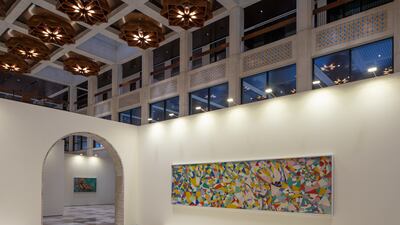
An installation at the Fahrelnissa and the Institutes: Towards a Sky exhibition. Photo: Cultural Foundation -
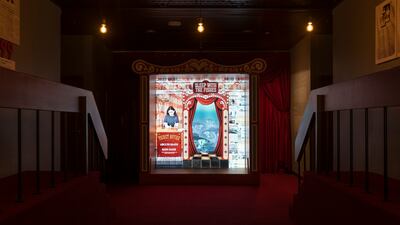
An installation at the Life is a Circus exhibition. Photo: Cultural Foundation -
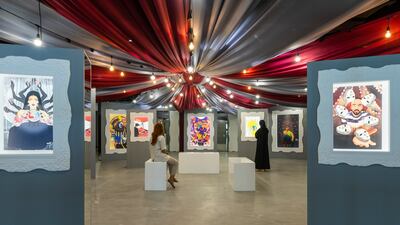
Life is a Circus exhibition. Photo: Cultural Foundation -
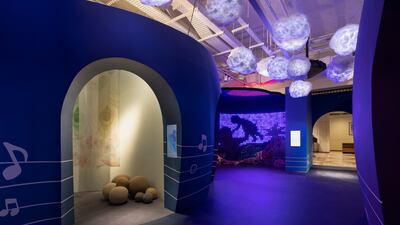
An installation at Lullabies: A Journey Through Song. Photo: Cultural Foundation -

'Untitled' (1950) by Fahrelnissa Zeid. Photo: Guggenheim Abu Dhabi -
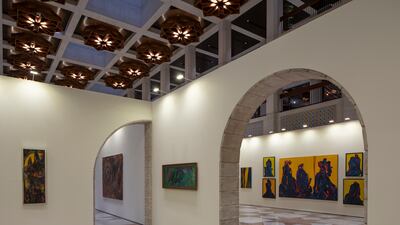
An installation at the Fahrelnissa and the Institutes: Towards a Sky exhibition. Photo: Cultural Foundation -

'The Red City' (1957) by Fahrelnissa Zeid. Photo: Barjeel Art Foundation -
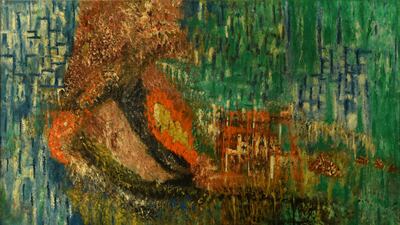
'Chateaux engloutis' (1979) by Ufemia Rizk. Photo: Guggenheim Abu Dhabi -

'Calligraphic Abstraction' (1971) by Wijdan. Photo: Guggenheim Abu Dhabi -
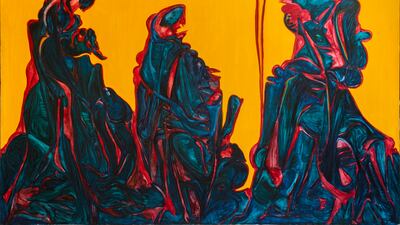
'The Warriors' (1995) by Hind Nasser. Photo: Wadi Finan Gallery -

'Untitled' (1980) by Hind Nasser. Photo: Guggenheim Abu Dhabi



