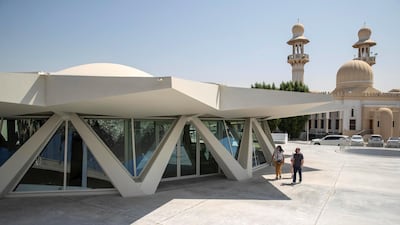
• Flying Saucer, Sharjah, is a 1978 building that was fully restored as a community art space. All photos: Aga Khan Trust for Culture
    Flying Saucer, Sharjah, is a 1978 building that was fully restored as a community art space. All photos: Aga Khan Trust for Culture
  • Wafra Wind Tower, Kuwait City, Kuwait, is a 13-storey building conceived as a wind tower featuring a central, vertical courtyard that provides natural ventilation to each apartment unit.
    Wafra Wind Tower, Kuwait City, Kuwait, is a 13-storey building conceived as a wind tower featuring a central, vertical courtyard that provides natural ventilation to each apartment unit.
  • Expandable House, Batam, Indonesia. This new sustainable dwelling prototype is designed to be flexibly configured around its residents’ (often) precarious resources over time. Photo: Aga Khan Trust for Culture
    Expandable House, Batam, Indonesia. This new sustainable dwelling prototype is designed to be flexibly configured around its residents’ (often) precarious resources over time. Photo: Aga Khan Trust for Culture
  • Tulkarm Courthouse, Tulkarm, Palestine, features two buildings, one for administration and the other containing 10 courtrooms. The Courthouse is anchored to its urban context by a public space.
    Tulkarm Courthouse, Tulkarm, Palestine, features two buildings, one for administration and the other containing 10 courtrooms. The Courthouse is anchored to its urban context by a public space.
  • Blimbingsari Airport, Banyuwangi, Indonesia. This transport hub serves more than 1,100 domestic passengers per day, the airport’s roofs indicate a clear division between departure and arrival halls.
    Blimbingsari Airport, Banyuwangi, Indonesia. This transport hub serves more than 1,100 domestic passengers per day, the airport’s roofs indicate a clear division between departure and arrival halls.
  • Lilavati Lalbhai Library at CEPT University, in Ahmedabad, India. The library, a living case study of passive climate mitigation strategies, integrates seamlessly into the existing campus while forging its own distinct identity.
    Lilavati Lalbhai Library at CEPT University, in Ahmedabad, India. The library, a living case study of passive climate mitigation strategies, integrates seamlessly into the existing campus while forging its own distinct identity.
  • Community Spaces in Rohingya Refugee Response, Teknaf, Bangladesh. Sustainably built structures in the world’s largest refugee camps, which were built by residents in the field without drawings or models.
    Community Spaces in Rohingya Refugee Response, Teknaf, Bangladesh. Sustainably built structures in the world’s largest refugee camps, which were built by residents in the field without drawings or models.
  • Jadgal Elementary School, Seyyed Bar, Iran, is managed by villagers and teachers and funded by tourism and needlework from local women. It is a sustainable development centre for surrounding areas.
    Jadgal Elementary School, Seyyed Bar, Iran, is managed by villagers and teachers and funded by tourism and needlework from local women. It is a sustainable development centre for surrounding areas.
  • Le Jardin d'Afrique, Zarzis, Tunisia. An ecumenical cemetery provides a sanctuary and dignified place of final rest for the hundreds of unburied bodies that had been washing ashore.
    Le Jardin d'Afrique, Zarzis, Tunisia. An ecumenical cemetery provides a sanctuary and dignified place of final rest for the hundreds of unburied bodies that had been washing ashore.
  • Manama Post Office, Manama, Bahrain, was renovated to its original form and role as a functioning post office. A new wing has been added to the existing building.
    Manama Post Office, Manama, Bahrain, was renovated to its original form and role as a functioning post office. A new wing has been added to the existing building.
  • Urban River Spaces, Jhenaidah, Bangladesh, is a community-driven project providing public spaces in a riverine city with 250,000 residents, offering walkways, gardens and cultural facilities, as well as environmental efforts to increase biodiversity along the river.
    Urban River Spaces, Jhenaidah, Bangladesh, is a community-driven project providing public spaces in a riverine city with 250,000 residents, offering walkways, gardens and cultural facilities, as well as environmental efforts to increase biodiversity along the river.
  • Niemeyer Guest House, Tripoli, Lebanon, was designed by Oscar Niemeyer but abandoned when civil war erupted in 1975; the guest house has been transformed into a design platform and production facility for the local wood industry.
    Niemeyer Guest House, Tripoli, Lebanon, was designed by Oscar Niemeyer but abandoned when civil war erupted in 1975; the guest house has been transformed into a design platform and production facility for the local wood industry.
  • Niamey 2000, Niamey, Niger. As a response to a housing shortage amid rapid urban expansion, this prototype housing of six family units seeks to increase density while remaining culturally appropriate.
    Niamey 2000, Niamey, Niger. As a response to a housing shortage amid rapid urban expansion, this prototype housing of six family units seeks to increase density while remaining culturally appropriate.
  • Lanka Learning Centre, Parangiyamadu, Sri Lanka, is a multifunctional cultural centre and adult school where locals learn craftsmanship creates a multi-ethnic meeting point.
    Lanka Learning Centre, Parangiyamadu, Sri Lanka, is a multifunctional cultural centre and adult school where locals learn craftsmanship creates a multi-ethnic meeting point.
  • Outros Bairros Rehabilitation Programme, Mindelo, Cape Verde. This renovation and redesign of a public space allowed residents to execute works in their own neighbourhood and enhance their sense of belonging.
    Outros Bairros Rehabilitation Programme, Mindelo, Cape Verde. This renovation and redesign of a public space allowed residents to execute works in their own neighbourhood and enhance their sense of belonging.
  • CEM Kamanar Secondary School, Thionck Essyl, Senegal. For this secondary school, volunteers, using local techniques, produced vault modules from clay which (with lattices) act as evaporating coolers.
    CEM Kamanar Secondary School, Thionck Essyl, Senegal. For this secondary school, volunteers, using local techniques, produced vault modules from clay which (with lattices) act as evaporating coolers.
  • Issy Valley Improvement, Ait Mansour, Morocco. While improving the palm orchards and water reservoirs, trails and facilities for tourists were also upgraded in the first phase of a larger project for the valley.
    Issy Valley Improvement, Ait Mansour, Morocco. While improving the palm orchards and water reservoirs, trails and facilities for tourists were also upgraded in the first phase of a larger project for the valley.
  • Argo Contemporary Art Museum & Cultural Centre, Tehran, Iran. Distinct materials differentiate new additions from the brick-built historic fabric in this contemporary art museum housed in an abandoned 100-year-old brewery.
    Argo Contemporary Art Museum & Cultural Centre, Tehran, Iran. Distinct materials differentiate new additions from the brick-built historic fabric in this contemporary art museum housed in an abandoned 100-year-old brewery.
  • Tarsus Old Ginnery, Tarsus, Turkey, is an adaptive reuse of an abandoned 19th century ginnery. It allows the operation of a contemporary centre for archaeological research and public engagement.
    Tarsus Old Ginnery, Tarsus, Turkey, is an adaptive reuse of an abandoned 19th century ginnery. It allows the operation of a contemporary centre for archaeological research and public engagement.
  • Aban House, Isfahan, Iran. On a narrow rectangular site in Isfahan’s historic centre, the three-storey house is arranged around three open courtyards.
    Aban House, Isfahan, Iran. On a narrow rectangular site in Isfahan’s historic centre, the three-storey house is arranged around three open courtyards.

Sharjah's Flying Saucer shortlisted for 2022 Aga Khan Award for Architecture


Farah Andrews
  • English
  • Arabic

The candidates for the 2022 Aga Khan Award for Architecture have been announced, with a number of regional projects making the cut.

The restored Flying Saucer in Sharjah has been shortlisted alongside the Manama Post Office, Bahrain; the Wafra Wind Tower, Kuwait; and Tulkarm Courthouse, Palestine. A total of 20 projects from 16 countries are listed and will compete for the $1 million prize.

The Aga Khan Award for Architecture is awarded every three years to projects that "set new standards of excellence in architecture, planning practices, historic preservation and landscape architecture".

The projects in the 15th award cycle were selected by an independent jury from a pool of 463 nominated projects. The prize was started in 1977 "to identify and encourage building concepts that successfully address the needs and aspirations of communities in which Muslims have a significant presence", the Aga Khan Development Network website reads.

Jadgal Elementary School in Iran is shortlisted for the Aga Khan Award for Architecture. Photo: Aga Khan Trust for Culture

"Since it was launched 45 years ago, 121 projects have received the award and nearly 10,000 building projects have been documented. The jury’s selection process emphasises architecture that not only provides for people’s physical, social and economic needs, but that also stimulates and responds to their cultural aspirations."

There are nine members on the prize's master jury for the current cycle. An exhibition of photos of the shortlisted projects is on show in King's Cross, London, until June 30, coinciding with the London Architecture Festival.

In 2019, the last award cycle, the Wasit Wetland Centre in Sharjah was one of six winners of the prestigious prize. Other winners in 2019 included Bahrain's Revitalisation of Muharraq, the Arcadia Education Project, Bangladesh; Palestinian Museum, Palestine; Public Spaces Development Programme, Russia; and Senegal's Alioune Diop University Teaching and Research Unit.

Look back at the history of Sharjah's Flying Saucer:

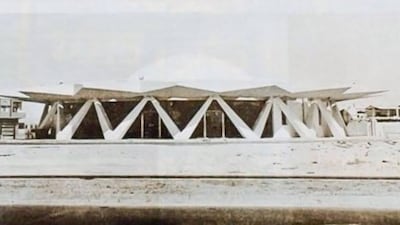
  • The Flying Saucer in 1979. It first opened as a cafe and restaurant in the late 1970s.
    The Flying Saucer in 1979. It first opened as a cafe and restaurant in the late 1970s.
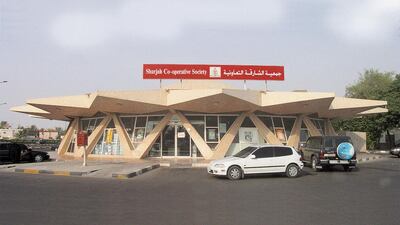
  • The Flying Saucer hosts a branch of Sharjah Co-operative Society in the 1990s.
    The Flying Saucer hosts a branch of Sharjah Co-operative Society in the 1990s.
  • By the 2000s, it hosted a branch of Taza Chicken.
    By the 2000s, it hosted a branch of Taza Chicken.
  • The building was restored by Sharjah Art Foundation and reopened to the public in 2020.
    The building was restored by Sharjah Art Foundation and reopened to the public in 2020.
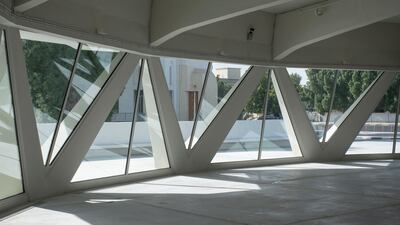
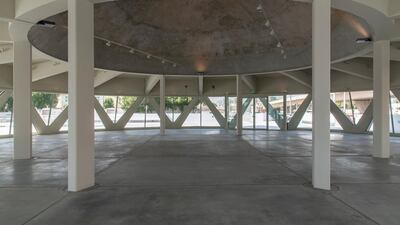
  • Inside the restored Flying Saucer with its distinctive V-shaped pillars.
    Inside the restored Flying Saucer with its distinctive V-shaped pillars.
  • The Flying Saucer is now a community art space.
    The Flying Saucer is now a community art space.
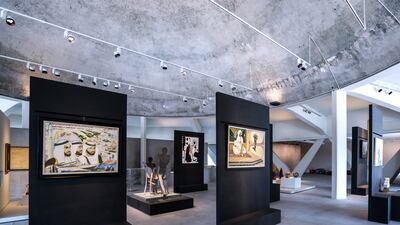
  • An exhibition at the Flying Saucer.
    An exhibition at the Flying Saucer.
  • A cafe and library have also been added.
    A cafe and library have also been added.
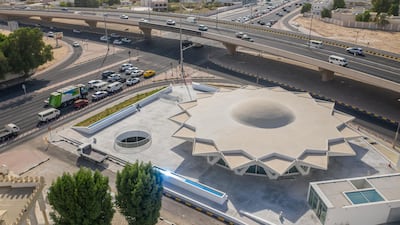
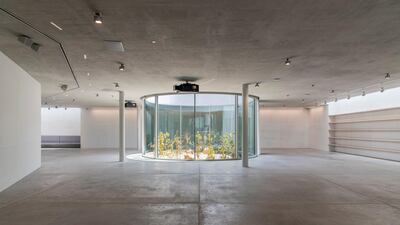
  • The renovation also included introducing an outdoor public space and an underground community area featuring a cafe, library and sunken courtyard filled with greenery.
    The renovation also included introducing an outdoor public space and an underground community area featuring a cafe, library and sunken courtyard filled with greenery.
  • The Flying Saucer takes off again for a bright new future
    The Flying Saucer takes off again for a bright new future
Ziina users can donate to relief efforts in Beirut

Ziina users will be able to use the app to help relief efforts in Beirut, which has been left reeling after an August blast caused an estimated $15 billion in damage and left thousands homeless. Ziina has partnered with the United Nations High Commissioner for Refugees to raise money for the Lebanese capital, co-founder Faisal Toukan says. “As of October 1, the UNHCR has the first certified badge on Ziina and is automatically part of user's top friends' list during this campaign. Users can now donate any amount to the Beirut relief with two clicks. The money raised will go towards rebuilding houses for the families that were impacted by the explosion.”

Updated: June 04, 2022, 1:27 PM