• Located 30 kilometres from Dakar (Senegal), Mbeubeuss is an unauthorised dump site, where each day, 350 rubbish trucks dump about 1,300 tons of household waste, from Dakar and environs. It is an ecological bomb: since its creation in 1968, the dumpsite has been growing and increasingly gaining ground, polluting surrounding waters, soils and the environment. But Mbeubeuss is also a source of income for about 1,800 people who work in and earn their living from the dump site. Photo: Fabrice Monteiro / Prix Pictet
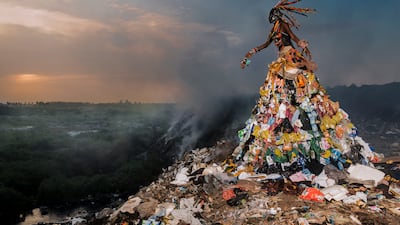
    Located 30 kilometres from Dakar (Senegal), Mbeubeuss is an unauthorised dump site, where each day, 350 rubbish trucks dump about 1,300 tons of household waste, from Dakar and environs. It is an ecological bomb: since its creation in 1968, the dumpsite has been growing and increasingly gaining ground, polluting surrounding waters, soils and the environment. But Mbeubeuss is also a source of income for about 1,800 people who work in and earn their living from the dump site. Photo: Fabrice Monteiro / Prix Pictet
  • Wildfire, 2015. From the series In The Wake, 2015–20. Dye-sublimation print. Photo: David Uzochukwu and Galerie Number 8
    Wildfire, 2015. From the series In The Wake, 2015–20. Dye-sublimation print. Photo: David Uzochukwu and Galerie Number 8
  • Wonder Beirut, The story of a Pyromaniac Photographer, 1998–2006. From the series Wonder Beirut, 1998–2006. Photographic prints. Photo: Joana Hadjithomas and Khalil Joreige, In Situ Fabienne Leclerc and The Third Line
    Wonder Beirut, The story of a Pyromaniac Photographer, 1998–2006. From the series Wonder Beirut, 1998–2006. Photographic prints. Photo: Joana Hadjithomas and Khalil Joreige, In Situ Fabienne Leclerc and The Third Line
  • A young girl in West Bengal, India, plays with a kerosene flame inside a poor household in rural Bengal. More than six million Indian people suffer from fire burns every year, making India the burns capital of the world. These figures are related to the close proximity of housing in many areas, as well as the overwhelming use of an open flame for light, cooking and warmth. Despite these huge numbers, there are very few burns facilities for these victims and many are condemned to a painful, constricted life if they survive at all. Photo: Brent Stirton / Prix Pictet
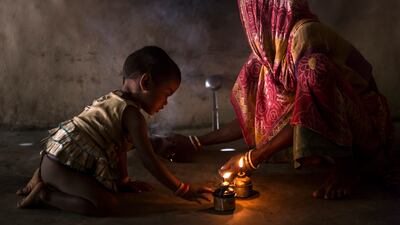
    A young girl in West Bengal, India, plays with a kerosene flame inside a poor household in rural Bengal. More than six million Indian people suffer from fire burns every year, making India the burns capital of the world. These figures are related to the close proximity of housing in many areas, as well as the overwhelming use of an open flame for light, cooking and warmth. Despite these huge numbers, there are very few burns facilities for these victims and many are condemned to a painful, constricted life if they survive at all. Photo: Brent Stirton / Prix Pictet
  • Khmer Rouge soldiers took control Phnom Penh. ‘Khmer Rouge troops took control and occupied the capital city of Phnom Penh on April 17, 1975. The soldiers shot into the air, which could be heard for kilometres around the city, as smoke from burning houses covered the whole city. The soldiers forced my family and all the other residents of the capital to leave to the countryside.’ 2014, from the series Left 3 Days. Inkjet print. Photo: Mak Remissa / Prix Pictet
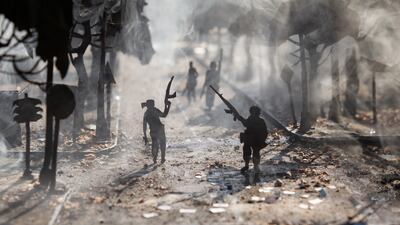
    Khmer Rouge soldiers took control Phnom Penh. ‘Khmer Rouge troops took control and occupied the capital city of Phnom Penh on April 17, 1975. The soldiers shot into the air, which could be heard for kilometres around the city, as smoke from burning houses covered the whole city. The soldiers forced my family and all the other residents of the capital to leave to the countryside.’ 2014, from the series Left 3 Days. Inkjet print. Photo: Mak Remissa / Prix Pictet
  • Untitled, 2001. From the series Hanabi, 2001. C-type prints. Photo: Rinko Kawauchi / Prix Pictet
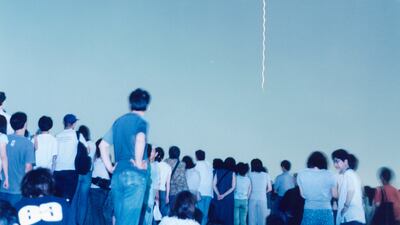
    Untitled, 2001. From the series Hanabi, 2001. C-type prints. Photo: Rinko Kawauchi / Prix Pictet
  • Pendant 1943/2021 (Version II), 2021. From the series Smoke, 2021. Unique silver gelatin photograph. Photo: Lisa Oppenheim and The Approach
    Pendant 1943/2021 (Version II), 2021. From the series Smoke, 2021. Unique silver gelatin photograph. Photo: Lisa Oppenheim and The Approach
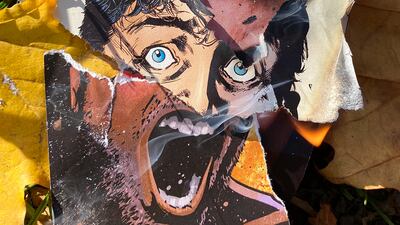
  • Untitled (Burning I), 2020. From the series Fire, 2020. Digital Chromogenic print. Photo: Christian Marclay, Fraenkel Gallery and White Cube
    Untitled (Burning I), 2020. From the series Fire, 2020. Digital Chromogenic print. Photo: Christian Marclay, Fraenkel Gallery and White Cube
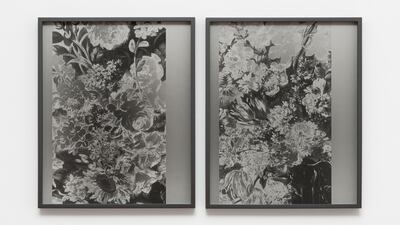
  • Untitled, 2016. From the series Matter / Burn Out, 2016. Inkjet prints. Photo: Daisuke Yokota / Prix Pictet
    Untitled, 2016. From the series Matter / Burn Out, 2016. Inkjet prints. Photo: Daisuke Yokota / Prix Pictet
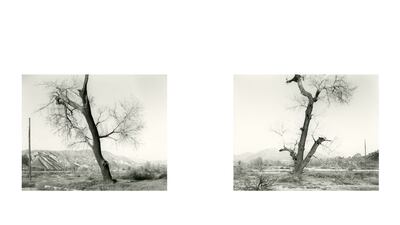
  • Burnt Tree Diptych, Tujunga Wash, 2018. From the series LA Fires, 2017–20. Silver gelatin print. Photo: Mark Ruwudel, Gallery Luisotti and Large Glass
    Burnt Tree Diptych, Tujunga Wash, 2018. From the series LA Fires, 2017–20. Silver gelatin print. Photo: Mark Ruwudel, Gallery Luisotti and Large Glass
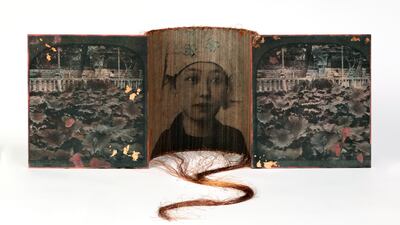
  • The Cloister, 2011. From the series Immolation, 2009–19. Transfer prints on Japanese paper and acrylic with stitching, metal leaf. Photo: Carla Rippey / Prix Pictet
    The Cloister, 2011. From the series Immolation, 2009–19. Transfer prints on Japanese paper and acrylic with stitching, metal leaf. Photo: Carla Rippey / Prix Pictet
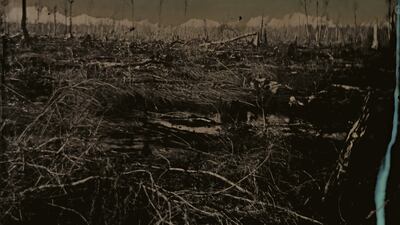
  • Blackwater 3, 2008 – 2012. From the series Blackwater, 2008–1. Tintype. Photo: Sally Mann and Gagosian
    Blackwater 3, 2008 – 2012. From the series Blackwater, 2008–1. Tintype. Photo: Sally Mann and Gagosian

Prix Pictet: Sally Mann wins world's top photography prize


Soraya Ebrahimi
  • English
  • Arabic

American artist Sally Mann has won the 9th Prix Pictet, the global award in photography and sustainability, it was announced on Wednesday.

The winner receives a cash prize of 100,000 Swiss Francs ($109,000).

The announcement was made at a ceremony at the Victoria and Albert Museum in London, marking the opening of a major exhibition at the venue that will display the 12 photographic series shortlisted for the prize.

The exhibition is free and open until January 9, 2022.

Each of the shortlisted bodies of work explores the topical theme of “fire”, the focus of this cycle of the award.

Ms Mann’s winning series Blackwater (2008-2012) is a multifaceted exploration of the devastating fires that enveloped the Great Dismal Swamp in south-eastern Virginia in the US, where the first slave ships docked in America.

In this work, Ms Mann draws a parallel between the all-consuming fires she encountered there with racial conflict in America, explaining: “The fires in the Great Dismal Swamp seemed to epitomise the great fire of racial strife in America — the Civil War, emancipation, the Civil Rights Movement, in which my family was involved, the racial unrest of the late 1960s and most recently the summer of 2020. Something about the deeply flawed American character seems to embrace the apocalyptic as solution.”

  • Located 30 kilometres from Dakar (Senegal), Mbeubeuss is an unauthorised dump site, where each day, 350 rubbish trucks dump about 1,300 tons of household waste, from Dakar and environs. It is an ecological bomb: since its creation in 1968, the dumpsite has been growing and increasingly gaining ground, polluting surrounding waters, soils and the environment. But Mbeubeuss is also a source of income for about 1,800 people who work in and earn their living from the dump site. Photo: Fabrice Monteiro / Prix Pictet
    Located 30 kilometres from Dakar (Senegal), Mbeubeuss is an unauthorised dump site, where each day, 350 rubbish trucks dump about 1,300 tons of household waste, from Dakar and environs. It is an ecological bomb: since its creation in 1968, the dumpsite has been growing and increasingly gaining ground, polluting surrounding waters, soils and the environment. But Mbeubeuss is also a source of income for about 1,800 people who work in and earn their living from the dump site. Photo: Fabrice Monteiro / Prix Pictet
  • Wildfire, 2015. From the series In The Wake, 2015–20. Dye-sublimation print. Photo: David Uzochukwu and Galerie Number 8
    Wildfire, 2015. From the series In The Wake, 2015–20. Dye-sublimation print. Photo: David Uzochukwu and Galerie Number 8
  • Wonder Beirut, The story of a Pyromaniac Photographer, 1998–2006. From the series Wonder Beirut, 1998–2006. Photographic prints. Photo: Joana Hadjithomas and Khalil Joreige, In Situ Fabienne Leclerc and The Third Line
    Wonder Beirut, The story of a Pyromaniac Photographer, 1998–2006. From the series Wonder Beirut, 1998–2006. Photographic prints. Photo: Joana Hadjithomas and Khalil Joreige, In Situ Fabienne Leclerc and The Third Line
  • A young girl in West Bengal, India, plays with a kerosene flame inside a poor household in rural Bengal. More than six million Indian people suffer from fire burns every year, making India the burns capital of the world. These figures are related to the close proximity of housing in many areas, as well as the overwhelming use of an open flame for light, cooking and warmth. Despite these huge numbers, there are very few burns facilities for these victims and many are condemned to a painful, constricted life if they survive at all. Photo: Brent Stirton / Prix Pictet
    A young girl in West Bengal, India, plays with a kerosene flame inside a poor household in rural Bengal. More than six million Indian people suffer from fire burns every year, making India the burns capital of the world. These figures are related to the close proximity of housing in many areas, as well as the overwhelming use of an open flame for light, cooking and warmth. Despite these huge numbers, there are very few burns facilities for these victims and many are condemned to a painful, constricted life if they survive at all. Photo: Brent Stirton / Prix Pictet
  • Khmer Rouge soldiers took control Phnom Penh. ‘Khmer Rouge troops took control and occupied the capital city of Phnom Penh on April 17, 1975. The soldiers shot into the air, which could be heard for kilometres around the city, as smoke from burning houses covered the whole city. The soldiers forced my family and all the other residents of the capital to leave to the countryside.’ 2014, from the series Left 3 Days. Inkjet print. Photo: Mak Remissa / Prix Pictet
    Khmer Rouge soldiers took control Phnom Penh. ‘Khmer Rouge troops took control and occupied the capital city of Phnom Penh on April 17, 1975. The soldiers shot into the air, which could be heard for kilometres around the city, as smoke from burning houses covered the whole city. The soldiers forced my family and all the other residents of the capital to leave to the countryside.’ 2014, from the series Left 3 Days. Inkjet print. Photo: Mak Remissa / Prix Pictet
  • Untitled, 2001. From the series Hanabi, 2001. C-type prints. Photo: Rinko Kawauchi / Prix Pictet
    Untitled, 2001. From the series Hanabi, 2001. C-type prints. Photo: Rinko Kawauchi / Prix Pictet
  • Pendant 1943/2021 (Version II), 2021. From the series Smoke, 2021. Unique silver gelatin photograph. Photo: Lisa Oppenheim and The Approach
    Pendant 1943/2021 (Version II), 2021. From the series Smoke, 2021. Unique silver gelatin photograph. Photo: Lisa Oppenheim and The Approach
  • Untitled (Burning I), 2020. From the series Fire, 2020. Digital Chromogenic print. Photo: Christian Marclay, Fraenkel Gallery and White Cube
    Untitled (Burning I), 2020. From the series Fire, 2020. Digital Chromogenic print. Photo: Christian Marclay, Fraenkel Gallery and White Cube
  • Untitled, 2016. From the series Matter / Burn Out, 2016. Inkjet prints. Photo: Daisuke Yokota / Prix Pictet
    Untitled, 2016. From the series Matter / Burn Out, 2016. Inkjet prints. Photo: Daisuke Yokota / Prix Pictet
  • Burnt Tree Diptych, Tujunga Wash, 2018. From the series LA Fires, 2017–20. Silver gelatin print. Photo: Mark Ruwudel, Gallery Luisotti and Large Glass
    Burnt Tree Diptych, Tujunga Wash, 2018. From the series LA Fires, 2017–20. Silver gelatin print. Photo: Mark Ruwudel, Gallery Luisotti and Large Glass
  • The Cloister, 2011. From the series Immolation, 2009–19. Transfer prints on Japanese paper and acrylic with stitching, metal leaf. Photo: Carla Rippey / Prix Pictet
    The Cloister, 2011. From the series Immolation, 2009–19. Transfer prints on Japanese paper and acrylic with stitching, metal leaf. Photo: Carla Rippey / Prix Pictet
  • Blackwater 3, 2008 – 2012. From the series Blackwater, 2008–1. Tintype. Photo: Sally Mann and Gagosian
    Blackwater 3, 2008 – 2012. From the series Blackwater, 2008–1. Tintype. Photo: Sally Mann and Gagosian

Born in Lexington, Virginia, Ms Mann began studying photography in the late 1960s. She is a Guggenheim fellow, three-time recipient of the National Endowment for the Arts fellowship and was named “America’s Best Photographer” by Time magazine in 2001.

“If ever there was a time for the Prix Pictet to take up the theme of 'fire', that time is now. This past summer we were inundated with images of fire at its most frighteningly destructive … Of course, fire is a most capricious element, and its various faces were present in the group of shortlisted series,” said Sir David King, chairman of the Prix Pictet jury.

“The jury considered an exceptional group of artists, each of whom demonstrated a highly distinctive approach to the theme, at times challenging our understanding of what photography can be.

“Sally Mann’s series in particular is a brilliant repurposing of historic photographic process to tell a chilling contemporary story. At the end of a rich debate, the jury were unanimous in their decision that she was a worthy winner of the ninth Prix Pictet.”

Photographers who also made the award's shortlist include Joana Hadjithomas and Khalil Joreige (Lebanon); Rinko Kawauchi (Japan); Christian Marclay (US/ Switzerland); Fabrice Monteiro (Belgium/Benin); Lisa Oppenheim (US); Mak Remissa (Cambodia); Carla Rippey (Mexico); Mark Ruwedel (US); Brent Stirton (South Africa); David Uzochukwu (Austria/Nigeria) and Daisuke Yokota (Japan).

The Prix Pictet was founded by the Pictet Group in 2008. Today, the award is recognised as the world’s leading prize for photography.

On an approximately 18-month cycle, each theme aims to promote discussion and debate on critical issues of sustainability. The prize money is awarded for a body of work that speaks most powerfully to the theme of the award.

Each cycle of the Prix Pictet tours globally, with exhibitions in over a dozen locations, bringing the work of the shortlisted photographers to a wide international audience.


if you go

Super Rugby play-offs

Quarter-finals

  • Hurricanes 35, ACT 16
  • Crusaders 17, Highlanders 0
  • Lions 23, Sharks 21
  • Chiefs 17, Stormers 11

Semi-finals

Saturday, July 29

  • Crusaders v Chiefs, 12.35pm (UAE)
  • Lions v Hurricanes, 4.30pm
Company%C2%A0profile
%3Cp%3ECompany%3A%20Zywa%3Cbr%3EStarted%3A%202021%3Cbr%3EFounders%3A%20Nuha%20Hashem%20and%20Alok%20Kumar%3Cbr%3EBased%3A%20UAE%3Cbr%3EIndustry%3A%20FinTech%3Cbr%3EFunding%20size%3A%20%243m%3Cbr%3ECompany%20valuation%3A%20%2430m%3C%2Fp%3E%0A
How to avoid crypto fraud
  • Use unique usernames and passwords while enabling multi-factor authentication.
  • Use an offline private key, a physical device that requires manual activation, whenever you access your wallet.
  • Avoid suspicious social media ads promoting fraudulent schemes.
  • Only invest in crypto projects that you fully understand.
  • Critically assess whether a project’s promises or returns seem too good to be true.
  • Only use reputable platforms that have a track record of strong regulatory compliance.
  • Store funds in hardware wallets as opposed to online exchanges.
War and the virus

Profile of Foodics

Founders: Ahmad AlZaini and Mosab AlOthmani

Based: Riyadh

Sector: Software

Employees: 150

Amount raised: $8m through seed and Series A - Series B raise ongoing

Funders: Raed Advanced Investment Co, Al-Riyadh Al Walid Investment Co, 500 Falcons, SWM Investment, AlShoaibah SPV, Faith Capital, Technology Investments Co, Savour Holding, Future Resources, Derayah Custody Co.

Company%20Profile
%3Cp%3E%3Cstrong%3EName%3A%20%3C%2Fstrong%3EDirect%20Debit%20System%3Cbr%3E%3Cstrong%3EStarted%3A%3C%2Fstrong%3E%20Sept%202017%3Cbr%3E%3Cstrong%3EBased%3A%3C%2Fstrong%3E%20UAE%20with%20a%20subsidiary%20in%20the%20UK%3Cbr%3E%3Cstrong%3EIndustry%3A%3C%2Fstrong%3E%20FinTech%3Cbr%3E%3Cstrong%3EFunding%3A%3C%2Fstrong%3E%20Undisclosed%3Cbr%3E%3Cstrong%3EInvestors%3A%3C%2Fstrong%3E%20Elaine%20Jones%3Cbr%3E%3Cstrong%3ENumber%20of%20employees%3A%3C%2Fstrong%3E%208%3Cbr%3E%3C%2Fp%3E%0A
Washmen Profile

Date Started: May 2015

Founders: Rami Shaar and Jad Halaoui

Based: Dubai, UAE

Sector: Laundry

Employees: 170

Funding: about $8m

Funders: Addventure, B&Y Partners, Clara Ventures, Cedar Mundi Partners, Henkel Ventures

Islamophobia definition

A widely accepted definition was made by the All Party Parliamentary Group on British Muslims in 2019: “Islamophobia is rooted in racism and is a type of racism that targets expressions of Muslimness or perceived Muslimness.” It further defines it as “inciting hatred or violence against Muslims”.

Real estate tokenisation project

Dubai launched the pilot phase of its real estate tokenisation project last month.

The initiative focuses on converting real estate assets into digital tokens recorded on blockchain technology and helps in streamlining the process of buying, selling and investing, the Dubai Land Department said.

Dubai’s real estate tokenisation market is projected to reach Dh60 billion ($16.33 billion) by 2033, representing 7 per cent of the emirate’s total property transactions, according to the DLD.

COMPANY%20PROFILE%20
%3Cp%3E%3Cstrong%3EName%3A%3C%2Fstrong%3E%20Haltia.ai%0D%3Cbr%3E%3Cstrong%3EStarted%3A%3C%2Fstrong%3E%202023%0D%3Cbr%3E%3Cstrong%3ECo-founders%3A%3C%2Fstrong%3E%20Arto%20Bendiken%20and%20Talal%20Thabet%0D%3Cbr%3E%3Cstrong%3EBased%3A%3C%2Fstrong%3E%20Dubai%2C%20UAE%0D%3Cbr%3E%3Cstrong%3EIndustry%3A%3C%2Fstrong%3E%20AI%0D%3Cbr%3E%3Cstrong%3ENumber%20of%20employees%3A%3C%2Fstrong%3E%2041%0D%3Cbr%3E%3Cstrong%3EFunding%3A%3C%2Fstrong%3E%20About%20%241.7%20million%0D%3Cbr%3E%3Cstrong%3EInvestors%3A%3C%2Fstrong%3E%20Self%2C%20family%20and%20friends%26nbsp%3B%3C%2Fp%3E%0A
Results

Stage Two:

1. Mark Cavendish (GBR) QuickStep-AlphaVinyl 04:20:45

2. Jasper Philipsen (BEL) Alpecin-Fenix

3. Pascal Ackermann (GER) UAE Team Emirates

4. Olav Kooij (NED) Jumbo-Visma

5. Arnaud Demare (FRA) Groupama-FDJ

General Classification:

1. Jasper Philipsen (BEL) Alpecin-Fenix 09:03:03

2. Dmitry Strakhov (RUS) Gazprom-Rusvelo 00:00:04

3. Mark Cavendish (GBR) QuickStep-AlphaVinyl 00:00:06

4. Sam Bennett (IRL) Bora-Hansgrohe 00:00:10

5. Pascal Ackermann (GER) UAE Team Emirates 00:00:12

Updated: December 16, 2021, 2:48 PM