• iPhone 6s. Photo: Apple
    iPhone 6s. Photo: Apple
  • iPhone 6s Plus. Photo: Apple
    iPhone 6s Plus. Photo: Apple
  • Samsung Galaxy Trend Lite. Photo: Samsung
    Samsung Galaxy Trend Lite. Photo: Samsung
  • Galaxy S2. Photo: Samsung
    Galaxy S2. Photo: Samsung
  • Samsung Galaxy S III Mini. Photo: Samsung
    Samsung Galaxy S III Mini. Photo: Samsung
  • GALAXY Xcover 2. Photo: Samsung
    GALAXY Xcover 2. Photo: Samsung
  • GALAXY Ace 2. Photo: Samsung
    GALAXY Ace 2. Photo: Samsung
  • Samsung Galaxy Core. Photo: Samsung
    Samsung Galaxy Core. Photo: Samsung
  • LG Lucid 2. Photo: LG
    LG Lucid 2. Photo: LG
  • LG Optimus L3 II Dual. Photo: LG
    LG Optimus L3 II Dual. Photo: LG
  • LG Optimus F7. Photo: LG
    LG Optimus F7. Photo: LG
  • LG Optimus L7 II. Photo: LG
    LG Optimus L7 II. Photo: LG
  • ZTE Grand S Flex. Photo: ZTE
    ZTE Grand S Flex. Photo: ZTE
  • Huawei Ascend G740. Photo: Huawei
    Huawei Ascend G740. Photo: Huawei
  • Huawei Ascend D Quad XL. Photo: Huawei
    Huawei Ascend D Quad XL. Photo: Huawei
  • Huawei Ascend D2. Photo: Huawei
    Huawei Ascend D2. Photo: Huawei
  • Sony Xperia Miro. Photo: Sony
    Sony Xperia Miro. Photo: Sony
  • Wiko Darknight. Photo: Wiko
    Wiko Darknight. Photo: Wiko
  • HTC Desire 500. Photo: HTC
    HTC Desire 500. Photo: HTC

WhatsApp to stop working on 43 smartphone models from November


Katy Gillett
  • English
  • Arabic

Users of 43 different models of smartphones will soon be unable to use the popular instant messaging app WhatsApp.

On November 1, the Facebook-owned platform will stop working on phones that run on systems older than Android OS 4.1, Apple's iOS 10 and KaiOS 2.5.1, according to its FAQ section.

All of these phones will not receive support from WhatsApp and will be incompatible with the app.

If this includes your device, you'll need to upgrade to a newer model of phone that has an operating system the company supports – or use a different messaging service altogether.

If you choose the former, then here's what you can do with your old mobile phone once you've got your new device.

However, the company has also introduced a new feature – "one of the most requested features", according to a blog post – to allow users to migrate their chats when switching from iOS to Samsung Android devices.

Before this, iOS chat histories would be stored in iCloud, while Android histories went to Google Drive, making it nearly impossible to transfer chats between phones that use different operating systems. Users would be advised to instead email their chat histories to themselves.

The new feature encompasses voice messages, photos and videos, but not call history or display name.

"To start, this feature is available on any Samsung device running Android 10 or higher, and will be available on more Android devices soon," said WhatsApp.

In a tweet, WhatsApp announced the update was available as of September 3, and that it would also be available "soon across all devices".

The migration will also need to be completed during the initial set-up of new phones, as the WhatsApp instructions read: "Your new Android device must be factory new or reset to factory settings." Users would alternatively need to do a factory reset of a device if already using it. Find out how to do it here.

"This is just a start," said WhatsApp in the blog post. "We look forward to making this option available for more people to switch between platforms of their choice and securely take their chats with them."

Which smartphones will no longer be able to use WhatsApp fom November 1?

Apple

The first generation iPhone SE, 6s and 6s Plus.

Samsung

The Samsung Galaxy Trend Lite, Galaxy Trend II, Galaxy S2, Galaxy S3 mini, Galaxy Xcover 2, Galaxy Core and Galaxy Ace 2.

The iPhone SE will no longer receive support from WhatsApp. Bloomberg

LG

The LG Lucid 2, Optimus F7, Optimus F5, Optimus L3 II Dual, Optimus F5, Optimus L5, Optimus L5 II, Optimus L5 Dual, Optimus L3 II, Optimus L7, Optimus L7 II Dual, Optimus L7 II, Optimus F6, Enact, Optimus L4 II Dual, Optimus F3, Optimus L4 II, Optimus L2 II, Optimus Nitro HD and 4X HD, and Optimus F3Q.

ZTE

The ZTE Grand S Flex, ZTE V956, Grand X Quad V987 and Grand Memo.

Huawei

The Huawei Ascend G740, Ascend Mate, Ascend D Quad XL, Ascend D1 Quad XL, Ascend P1 S and Ascend D2.

Sony

The Sony Xperia Miro, Sony Xperia Neo L and Xperia Arc S.

Others

The Alcatel One Touch Evo 7, Archos 53 Platinum, HTC Desire 500, Caterpillar Cat B15, Wiko Cink Five, Wiko Darknight, Lenovo A820, UMi X2, Faea F1 and THL W8.

__________________

10 companies that hung up on the mobile phone business

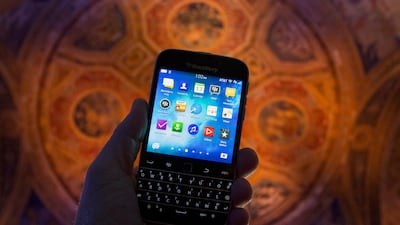
  • The new Blackberry Classic smartphone is shown during a display at the launch event in New York in 2014. Reuters
    The new Blackberry Classic smartphone is shown during a display at the launch event in New York in 2014. Reuters
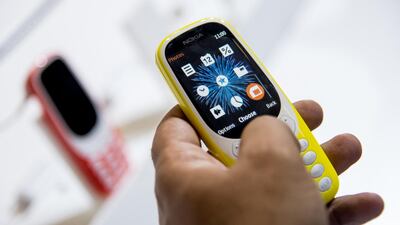
  • Nokia bought back its smartphone business from Microsoft in 2016, before handing the management to Finland HMD. AFP
    Nokia bought back its smartphone business from Microsoft in 2016, before handing the management to Finland HMD. AFP
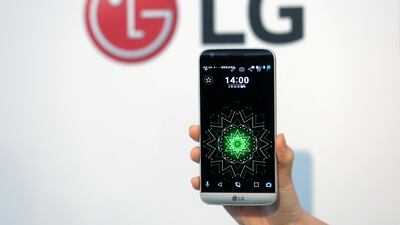
  • LG was the world's third-largest smartphone manufacturer behind Samsung and Apple in 2013. Reuters
    LG was the world's third-largest smartphone manufacturer behind Samsung and Apple in 2013. Reuters
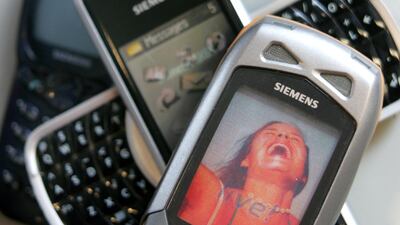
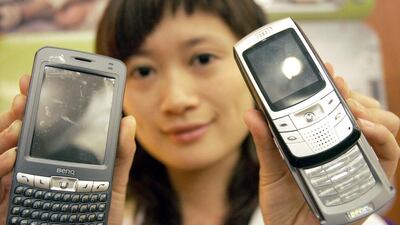
  • Siemens sold its loss-making mobile-phones unit to Taiwanese technology group BenQ. Reuters
    Siemens sold its loss-making mobile-phones unit to Taiwanese technology group BenQ. Reuters
  • Despite a good start, BenQ suffered losses worth $1bn after acquiring Siemens Mobile. STR / AFP
    Despite a good start, BenQ suffered losses worth $1bn after acquiring Siemens Mobile. STR / AFP
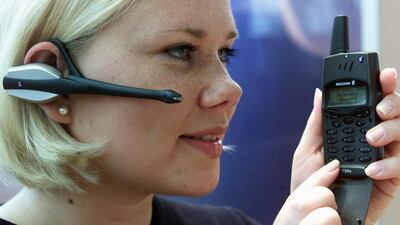
  • Ericsson Mobile entered into a partnership with Sony in 2001, which it later sold to the Japanese company.
    Ericsson Mobile entered into a partnership with Sony in 2001, which it later sold to the Japanese company.
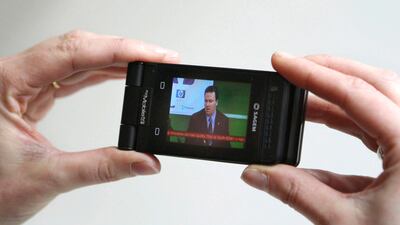
  • Paris-based Sagem manufactured various budget-friendly phones between 1995 and 2000. EPA
    Paris-based Sagem manufactured various budget-friendly phones between 1995 and 2000. EPA
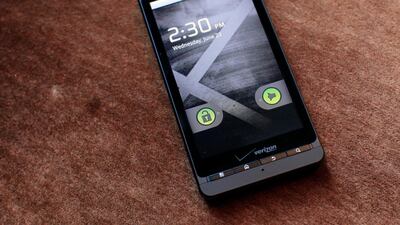
  • Motorola's Droid X smart phone on display. Motorola was the second highest-selling phone after Nokia in 2000. Reuters
    Motorola's Droid X smart phone on display. Motorola was the second highest-selling phone after Nokia in 2000. Reuters
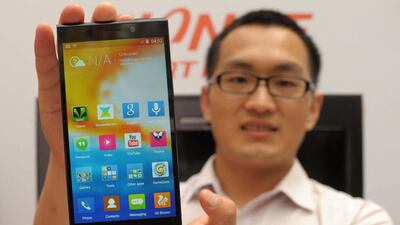
  • Gionee went bankrupt in 2018 and was acquired by New Delhi-based Jaina Group. AFP
    Gionee went bankrupt in 2018 and was acquired by New Delhi-based Jaina Group. AFP
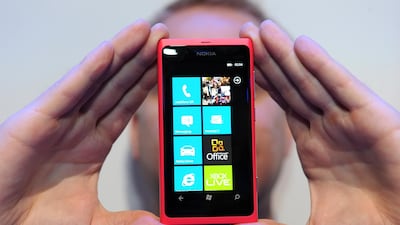
  • Microsoft Lumia phones were originally designed and marketed by Nokia. Reuters
    Microsoft Lumia phones were originally designed and marketed by Nokia. Reuters
Indoor cricket in a nutshell

Indoor cricket in a nutshell
Indoor Cricket World Cup - Sept 16-20, Insportz, Dubai

16 Indoor cricket matches are 16 overs per side
8 There are eight players per team
9 There have been nine Indoor Cricket World Cups for men. Australia have won every one.
5 Five runs are deducted from the score when a wickets falls
4 Batsmen bat in pairs, facing four overs per partnership

Scoring In indoor cricket, runs are scored by way of both physical and bonus runs. Physical runs are scored by both batsmen completing a run from one crease to the other. Bonus runs are scored when the ball hits a net in different zones, but only when at least one physical run is score.

Zones

A Front net, behind the striker and wicketkeeper: 0 runs
B Side nets, between the striker and halfway down the pitch: 1 run
C Side nets between halfway and the bowlers end: 2 runs
D Back net: 4 runs on the bounce, 6 runs on the full

The specs: Hyundai Ionic Hybrid

Price, base: Dh117,000 (estimate)

Engine: 1.6L four-cylinder, with 1.56kWh battery

Transmission: Six-speed automatic

Power: 105hp (engine), plus 43.5hp (battery)

Torque: 147Nm (engine), plus 170Nm (battery)

Fuel economy, combined: 3.4L / 100km

Wicked: For Good

Director: Jon M Chu

Starring: Ariana Grande, Cynthia Erivo, Jonathan Bailey, Jeff Goldblum, Michelle Yeoh, Ethan Slater

Rating: 4/5

The biog

Favourite colour: Brown

Favourite Movie: Resident Evil

Hobbies: Painting, Cooking, Imitating Voices

Favourite food: Pizza

Trivia: Was the voice of three characters in the Emirati animation, Shaabiyat Al Cartoon

How to apply for a drone permit
  • Individuals must register on UAE Drone app or website using their UAE Pass
  • Add all their personal details, including name, nationality, passport number, Emiratis ID, email and phone number
  • Upload the training certificate from a centre accredited by the GCAA
  • Submit their request
What are the regulations?
  • Fly it within visual line of sight
  • Never over populated areas
  • Ensure maximum flying height of 400 feet (122 metres) above ground level is not crossed
  • Users must avoid flying over restricted areas listed on the UAE Drone app
  • Only fly the drone during the day, and never at night
  • Should have a live feed of the drone flight
  • Drones must weigh 5 kg or less
Difference between fractional ownership and timeshare

Although similar in its appearance, the concept of a fractional title deed is unlike that of a timeshare, which usually involves multiple investors buying “time” in a property whereby the owner has the right to occupation for a specified period of time in any year, as opposed to the actual real estate, said John Peacock, Head of Indirect Tax and Conveyancing, BSA Ahmad Bin Hezeem & Associates, a law firm.

Mercer, the investment consulting arm of US services company Marsh & McLennan, expects its wealth division to at least double its assets under management (AUM) in the Middle East as wealth in the region continues to grow despite economic headwinds, a company official said.

Mercer Wealth, which globally has $160 billion in AUM, plans to boost its AUM in the region to $2-$3bn in the next 2-3 years from the present $1bn, said Yasir AbuShaban, a Dubai-based principal with Mercer Wealth.

Within the next two to three years, we are looking at reaching $2 to $3 billion as a conservative estimate and we do see an opportunity to do so,” said Mr AbuShaban.

Mercer does not directly make investments, but allocates clients’ money they have discretion to, to professional asset managers. They also provide advice to clients.

“We have buying power. We can negotiate on their (client’s) behalf with asset managers to provide them lower fees than they otherwise would have to get on their own,” he added.

Mercer Wealth’s clients include sovereign wealth funds, family offices, and insurance companies among others.

From its office in Dubai, Mercer also looks after Africa, India and Turkey, where they also see opportunity for growth.

Wealth creation in Middle East and Africa (MEA) grew 8.5 per cent to $8.1 trillion last year from $7.5tn in 2015, higher than last year’s global average of 6 per cent and the second-highest growth in a region after Asia-Pacific which grew 9.9 per cent, according to consultancy Boston Consulting Group (BCG). In the region, where wealth grew just 1.9 per cent in 2015 compared with 2014, a pickup in oil prices has helped in wealth generation.

BCG is forecasting MEA wealth will rise to $12tn by 2021, growing at an annual average of 8 per cent.

Drivers of wealth generation in the region will be split evenly between new wealth creation and growth of performance of existing assets, according to BCG.

Another general trend in the region is clients’ looking for a comprehensive approach to investing, according to Mr AbuShaban.

“Institutional investors or some of the families are seeing a slowdown in the available capital they have to invest and in that sense they are looking at optimizing the way they manage their portfolios and making sure they are not investing haphazardly and different parts of their investment are working together,” said Mr AbuShaban.

Some clients also have a higher appetite for risk, given the low interest-rate environment that does not provide enough yield for some institutional investors. These clients are keen to invest in illiquid assets, such as private equity and infrastructure.

“What we have seen is a desire for higher returns in what has been a low-return environment specifically in various fixed income or bonds,” he said.

“In this environment, we have seen a de facto increase in the risk that clients are taking in things like illiquid investments, private equity investments, infrastructure and private debt, those kind of investments were higher illiquidity results in incrementally higher returns.”

The Abu Dhabi Investment Authority, one of the largest sovereign wealth funds, said in its 2016 report that has gradually increased its exposure in direct private equity and private credit transactions, mainly in Asian markets and especially in China and India. The authority’s private equity department focused on structured equities owing to “their defensive characteristics.”

Updated: September 13, 2021, 6:47 AM