


UN Secretary General Antonio Guterres warned on Monday that ice in Antarctica and Greenland was melting well over three times faster than it was in the early 1990s.
“New figures show that this September, Antarctic sea ice was 1.5 million square kilometres smaller than the average for the time of year – an area roughly equal to the combined size of Portugal, Spain, France and Germany,” Mr Guterres told reporters in New York.
“And this year, Antarctic sea ice hit an all-time low.”
Mr Guterres recently returned from a three-day trip to Antarctica. Chilean President Gabriel Boric joined him for an official visit to Eduardo Frei Air Force Base on King George Island.
The UN chief blamed global warming spurred by the burning of fossil fuels for rising sea temperatures.
“Without changing course, we’re heading towards a calamitous 3°C temperature rise by the end of the century,” he said, warning the Greenland and West Antarctica ice sheets will cross a “deadly tipping point”.
Warming air and ocean temperatures are causing Antarctic ice to melt. The frozen continent plays a significant role in regulating Earth's climate because it reflects sunlight away and drives major ocean currents.
A study by the British Antarctic Survey published in journal Nature Climate Change last month said warming has increased to the point that the ice sheet will now experience “unavoidable” melting regardless of how much the world reduces planet-warming emissions.
"Reducing emissions can help to prevent the worst-case scenario of melting, but beyond that mitigation has a negligible impact," said lead author Kaitlin Naughten, an ocean-ice modeller at the British Antarctic Survey. "It appears we may have lost control".
Mr Guterres, who will be attending Cop28 in Dubai later this week, urged world leaders to “act to limit global temperature rise to 1.5°C, protect people from climate chaos and end the fossil fuel age”.
“Leaders must not let the hopes of people around the world for a sustainable planet melt away. They must make Cop28 count,” he said.
Stunning images of the world's largest glaciers and icebergs – in pictures
-
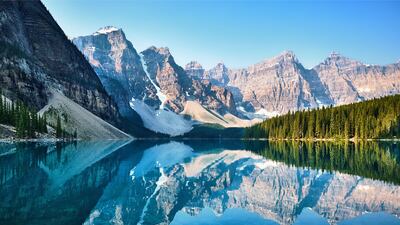
Fay Glacier, which feeds Moraine Lake in Canada. All photos: Unsplash -

The Perito Moreno Glacier in Santa Cruz, Argentina. -
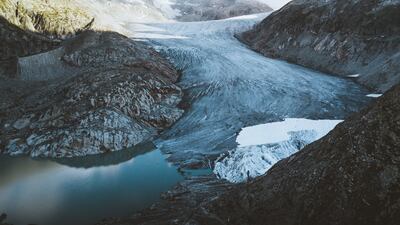
The Rhone Glacier in Obergoms, Switzerland. -

A glacier encroaching on farmland in Iceland. -

Vatnajokull Glacier in Sveitarfelagio Hornafjorour, Iceland. -
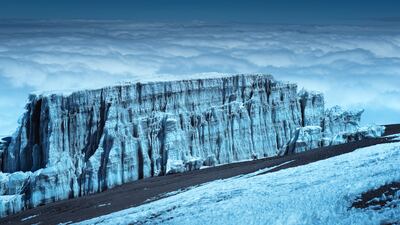
Furtwangler Glacier near the summit of Mount Kilimanjaro, Tanzania. -

The Aletsch Glacier, Switzerland. -

An iceberg in Sermersooq municipality, Greenland. -

The Franz Josef Glacier in New Zealand. -

The Khumbu Glacier in Nepal. -
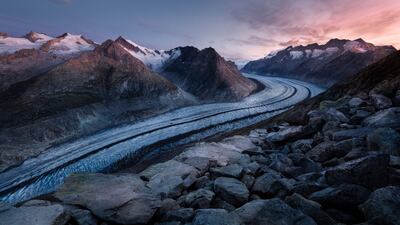
The Aletsch Glacier on Bettmerhorn mountain in the Swiss Alps. -
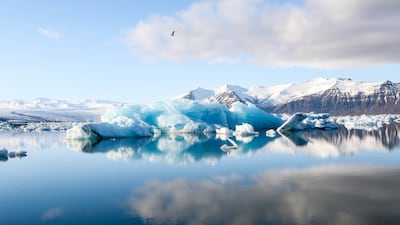
Icebergs in Jokulsarlon, Iceland. -
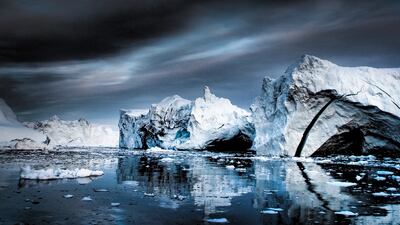
Icebergs in Ilulissat municipality, Greenland. -
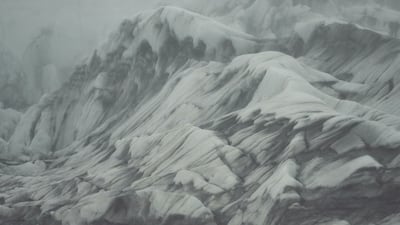
The Vatnajokull Glacier, Iceland. -
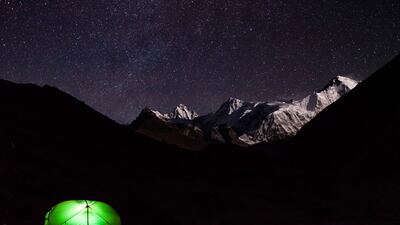
The Ngozumpa Glacier in Nepal. -

The Jade Dragon Glacier in China.



