


UN Security Council members urged the Taliban on Friday to immediately reverse all oppressive measures against women and girls, reiterating the body's call for the allowance of “full, safe and unhindered access for humanitarian actors regardless of gender”.
The group stressed that female aid workers played a vital role in Afghanistan’s “dire humanitarian situation”, given their ability to offer “critical life-saving support to women and girls” in places where men are not allowed.
The joint statement from 11 of the 15 council members added that the body will continue to closely monitor developments on the ground and respond accordingly.
In December, the Taliban issued a decree ordering all domestic and international NGOs to suspend female aid workers, claiming that the women were not observing an edict requiring them to wear a hijab.
On Thursday, UN Secretary General Antonio Guterres told the Security Council that attacks on the rights of women and girls by the Taliban were “creating gender-based apartheid”.
According to a UN official in Kabul familiar with negotiations with the Taliban, the world body has tried for weeks to “deliberately engage” with as many of the regime's leading figures as possible.
“We just tried to be very clear that if they think this is simply a matter of removing a few thousand women from the workplace, then they have got their calculations wrong, and the consequences of this are pretty far reaching,” the UN official told The National.

The official estimated that famine was only narrowly averted in the country last year due to the efforts of NGOs, the donor community and UN aid workers.
However, Amnesty International's regional director of South Asia believes that the Taliban “are intentionally driving the country into famine”.
“Their discriminatory policies are bringing shocking levels of food insecurity and making the delivery of international assistance almost impossible,” Yamini Mishra said in a statement.
“Women were already on the lowest rung of the ladder in terms of access to critical aid services, but it seems they are being completely erased.”
A diplomat in Kabul, speaking on condition of anonymity, told The National that the decisions were being made by “a small, elite group in Kandahar in the south who determine policy” and the group's supreme leader, Hibatullah Akhundzada.
The diplomat added that most of the Taliban did not agree with the decisions issued last month that barred women from working with NGOs and forced them out of classrooms.
Mr Akhundzada was named as the Taliban’s supreme leader in 2016 after the group’s previous leader, Akhtar Mansour, was killed in a US air strike in Pakistan.
“We've seen the Taliban so-called Supreme Leader, whom they refer to as the emir, really exerting his authority and implementing his vision, and the vision of a small group around him, what they believe is a proper Islamic state,” the diplomat said.
“And the ministers themselves — some very, very powerful people who'd been associated with the insurgency so far — claim they were unable to really convey the severity of the position, as they're not being listened to.”
According to the source, Mr Akhundzada “has not met a single foreigner”.
-
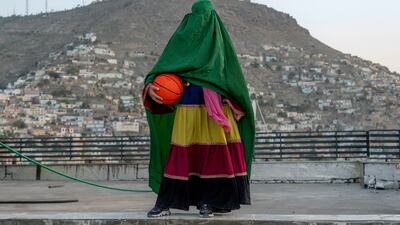
Girls and women in Afghanistan have been barred from playing sports by the Taliban, but some refuse to give up the games they love. All photos: AP -
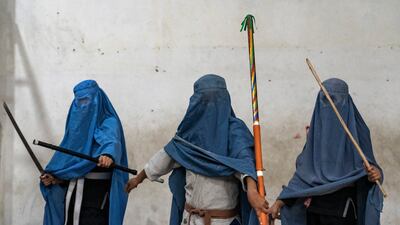
Women took part in sports including the Chinese martial art of wushu before the Taliban returned to power in 2021. Some continue to practise their sports in secret. -
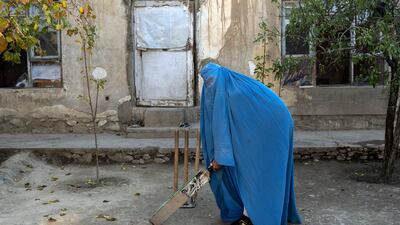
An Afghan woman with her cricket bat in Kabul. The Taliban have issued bans on girls' education and barred women from many types of work. -
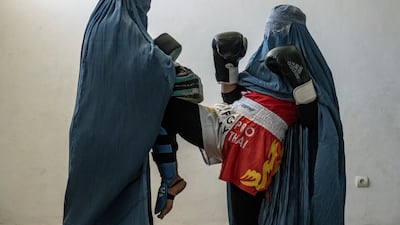
Female Muay Thai enthusiasts in Kabul. Afghanistan's former government introduced national sports programmes and school clubs for women and girls. -
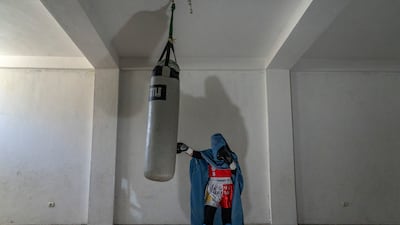
A Muay Thai competitor with a punching bag used for training. -
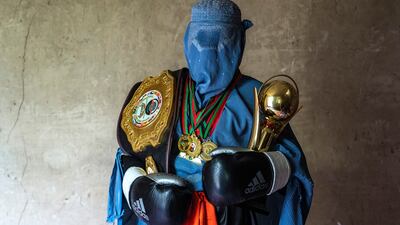
A mixed martial artist with her trophies in Kabul. A female competitor has said she was forced to flee a tournament in the Afghan capital as the Taliban advanced in 2021. -
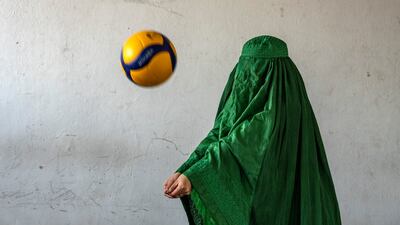
An Afghan woman plays volleyball. The Taliban’s Sports Organisation and National Olympic Committee has said the authorities are looking for ways to restart sports for women. -
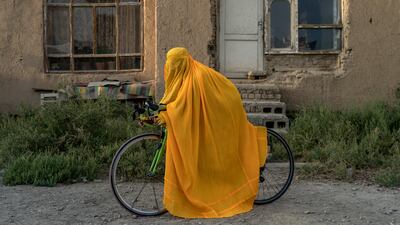
The Taliban have enforced a dress code for women, as well as barring them from education. -
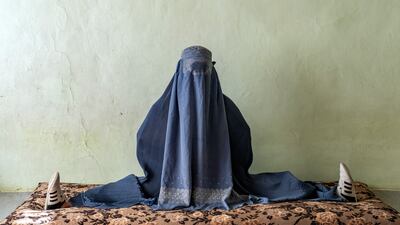
An Afghan girl who once took part in taekwondo. Several women in the country used to practise martial arts. -
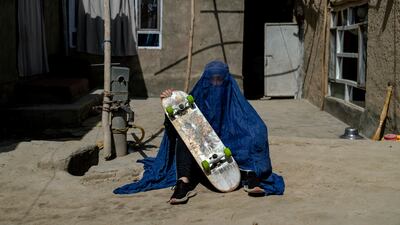
An Afghan girl with her skateboard. Women in once enjoyed sports have faced threats from the Taliban. -
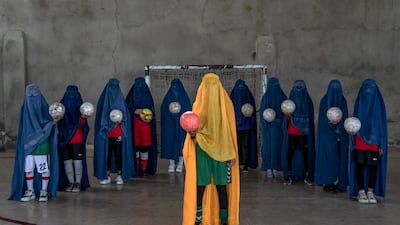
Noura, a female footballer, says she was beaten by her mother when she was 13 after gaining national recognition as the best player in her age category. "That was the beginning of worse days," she says. -
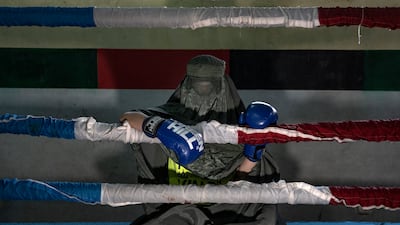
Noura later turned to boxing. She says she cut her wrists and required hospital treatment after the Taliban swept into Kabul. -
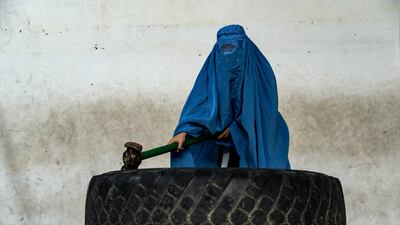
A woman with the equipment she used to build strength while practising ju-jitsu.


In addition to the new bans, rates of child marriage in the country have increased at an alarming rate.
According to the UN children's fund, about 28 per cent of Afghan women aged 15—49 marry before the age of 18.
The UN agency told The National that aid workers are hearing more reports of families exchanging their young daughters for a dowry to ensure their survival, security or to pay off loans. There have also been reports of parents selling young children to strangers.
As the dire situation in the country continues, in recent weeks, about 150 major international aid agencies have suspended operations in Afghanistan due to the ban, including the Norwegian Refugee Council.
The organisation's director, Jan Egeland, travelled to Kabul this week to meet the Taliban and press them to reverse the ban on women working with NGOs.
Adam Combs, the organisation's Asia director, told The National that he remains “hopeful” a solution can be found.
“[We must be] very clear in what we're looking for in the solutions of what is acceptable and what is doable for us, because the reality is, we cannot do our job without our female colleagues and so therefore, we need to have them with us in this solution,” Mr Combs said.
Since the Taliban returned to power in 2021, 20 years after their removal by US troops, the group has struggled to form a functioning government that can provide health services, food and economic opportunities for Afghans.
They have also imposed an extreme interpretation of Islamic law that virtually excludes women and girls from public life, despite pledges to protect women's rights.
In 2021, most female government employees were barred from coming to work. In March last year, girls were banned from secondary schools.
The dress code for women has been severely restricted and women have been banned from public parks and gyms.
Though the new measures have triggered global outrage as well as protests across Afghanistan, the Taliban have refused to overturn any of their decisions, stating that they are internal issues that should be free of foreign interference.
-
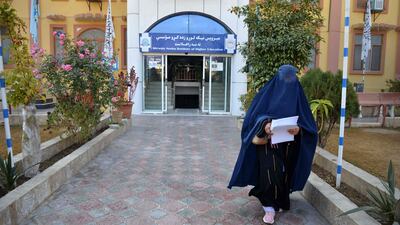
Afghanistan's Taliban rulers have banned university education for women nationwide. AFP -
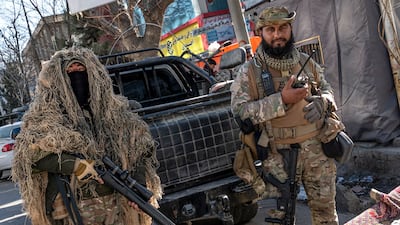
Women were stopped by armed guards from entering Afghan university campuses, a day after the nation's Taliban rulers banned them from higher education. AFP -
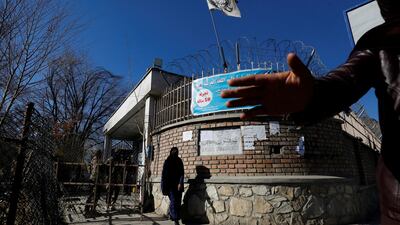
The move has provoked condemnation from the United States and the United Nations over another assault on human rights in the country. Reuters -
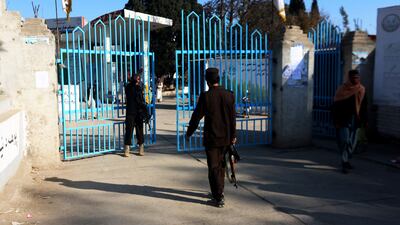
Taliban security personnel stand guard at the entrance gate of a university in Jalalabad. AFP -
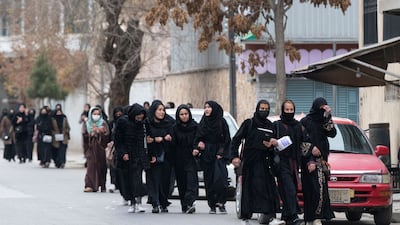
Schoolgirls return home after sitting their high school graduation exams in Kabul. AFP -
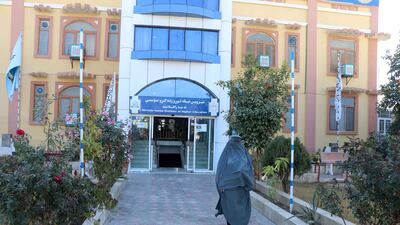
An Afghan female student leaves the Mirwais Neeka Institute of Higher Education in Kandahar. EPA -
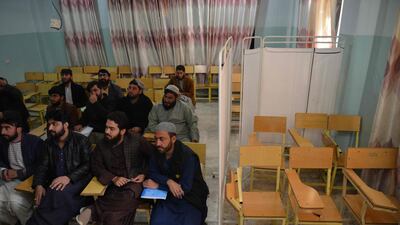
A curtain separates males and females at a university lecture in Kandahar Province. AFP



