


Libya’s political leaders must be held responsible for undermining elections, the UN special envoy for the country warned on Friday.
The situation remains tense throughout the North African nation nearly a year since elections were postponed.
Abdoulaye Bathily said signs of division in the country are already evident and he urged influential nations to pressure Libya’s rival leaders to finalise the process that will lead to elections.
He said the Security Council should back efforts by the country's UN mission to bring Libyan political leaders to the negotiating table and prevent any “further deterioration”, as the anniversary of the postponed elections approaches.
“Political leaders of all sides are to be held responsible for this disturbing development for the future of the country,” Mr Bathily said.
Election plans last December collapsed amid arguments between major factions and prominent candidates, with the central dispute involving rules governing elections and the legitimacy of the parliament.
Mr Bathily also warned the presence of foreign fighters, forces and mercenaries continues to pose a “serious challenge to the safety and security of Libyans”.
Libya election cancellation — in pictures
-
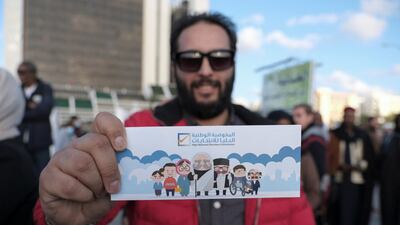
A man shows his electoral card during a protest against the postponement of the Libyan presidential election initially planned for December 24, 2021, in Benghazi, Libya. Reuters -
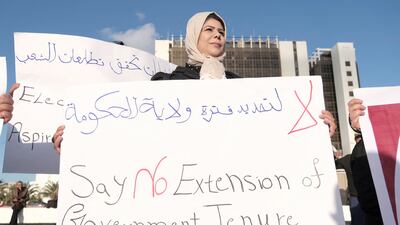
A woman holds a banner during a protest against the delay to the Libyan presidential election, in Benghazi, Libya, on December 24, 2021. Reuters -
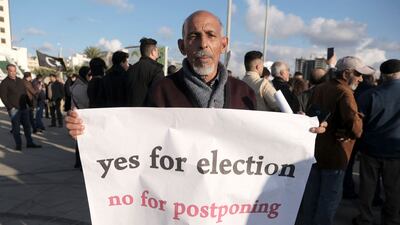
A man protests against the postponement of the Libyan presidential election, in Benghazi, Libya. Reuters -
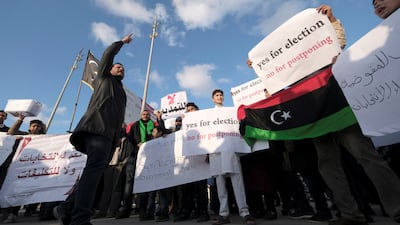
A demonstration against the postponement of the Libyan presidential election, in Benghazi, Libya. Reuters -
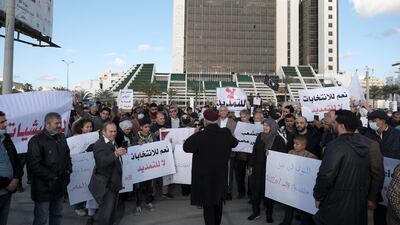
A protest in Benghazi, Libya, against the delaying of the presidential election. Reuters -
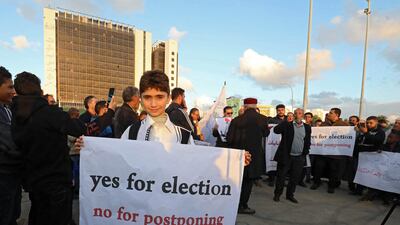
Libyans in Benghazi demonstrate against the postponement of elections. AFP -
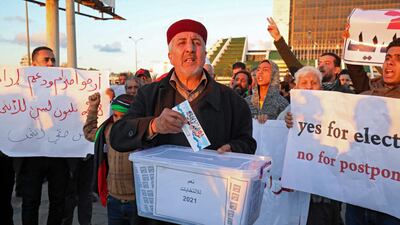
Libyans demonstrate against the postponement of elections, in the city of Benghazi. AFP


“We can already witness signs of a partitioned parallel government, separate security apparatus, a divided central bank decision by the House of Representatives to establish a Constitutional Court in Benghazi in the absence of an agreed constitution,” he said.
In addition, he noted growing unrest over oil revenue allocations and called for the establishment of a Libyan-led mechanism that brings together stakeholders from across the country to “agree on the spending priorities and ensure what oil and gas revenues are managed in a transparent and equitable manner”.
Martin Kimani, Kenya’s ambassador to the UN, echoed Mr Bathily's call for a Libyan-led process that can deliver long-term political stability. Speaking on behalf of the three African nations on the Security Council, he demanded the departure of foreign forces, fighters and mercenaries from Libya.
The country’s current political crisis stems from the failure to hold elections on December 24, 2021, and the refusal of Prime Minister Abdul Hamid Dbeibeh, who has been leading a transitional government in the capital of Tripoli, to step down.
In response, the country’s east-based parliament appointed a rival prime minister, Fathi Bashagha, who has for months sought to install his government in Tripoli.


