



Outside the Maricopa County Recorder’s office in downtown Phoenix, amid a hum of construction, Don Newton searched for a location where he could drop off his ballot for the midterm elections.
The 82-year-old said he doesn’t trust the ballot boxes the county has set up to help facilitate early voting — and he’s not alone.
“There’s a movie out there called 2000 Mules with all sorts of video of the stolen election, with the ballot boxes out there in the sticks with no lights on them or anything,” he said.
The film Mr Newton cited has been widely debunked. But that hasn’t stopped it from sewing an alarming degree of mistrust in the electoral process among a wide swathe of Americans.
In Arizona, it has inspired far right groups to send people — sometimes armed and wearing body armour — to monitor ballot boxes.
Those armed poll watchers were affiliated with a group calling itself Clean Elections USA.
Led by an evangelical Christian pastor from Oklahoma, Clean Elections USA has advocated filming and monitoring drop box locations.
But they were not the only group active in the state.
-
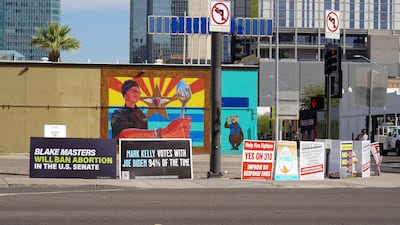
Democratic election posters in downtown Phoenix, Arizona. The race for governor and senate are neck and neck. Willy Lowry / The National -
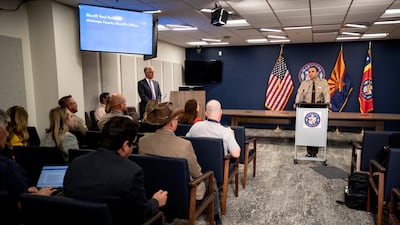
Maricopa County Sheriff Paul Penzone speaks as election officials hold a press conference to warn against 'false election narratives' at the Maricopa County Board of Supervisors building ahead of midterm elections, in Phoenix on November 7. EPA -
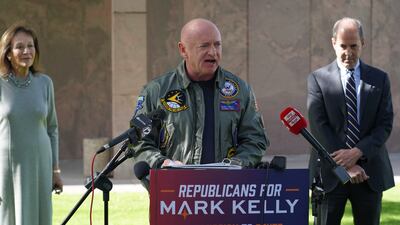
Democratic Senator Mark Kelly speaks at a campaign stop with Republicans who have endorsed him. Willy Lowry / The National -
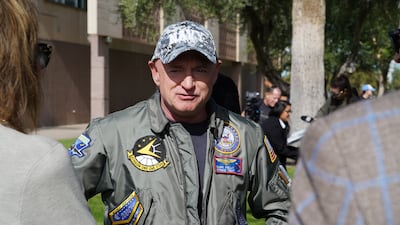
Senator Mark Kelly speaks with supporters ahead of a campaign event in Phoenix. Willy Lowry / The National -
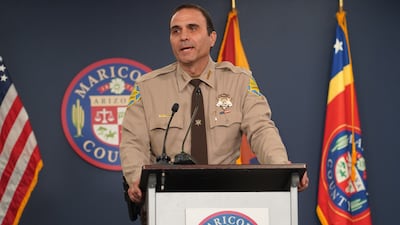
Maricopa County Sheriff Paul Penzone speaks at press conference on misinformation targeting the 2022 midterm election. Willy Lowry / The National -
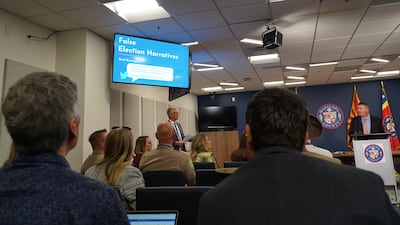
Maricopa County Board Chair Bill Gates speaks about misinformation surrounding the 2022 midterm election. Willy Lowry / The National -
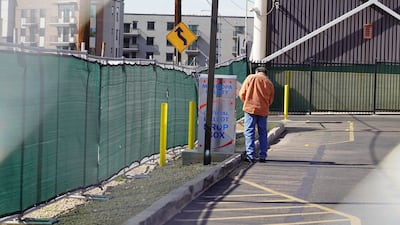
A man drops his ballot into drop box in Phoenix, Arizona. Willy Lowry / The National -
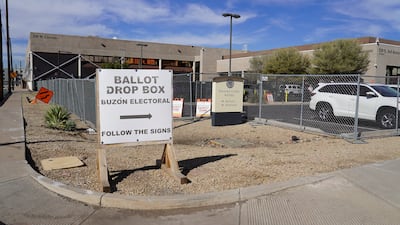
A sign directs voters to drop box location in downtown Phoenix. Willy Lowry / The National


“What we were telling our people to watch for was the guy that shows up with a backpack with 40, 50, 60 ballots and he’s stuffing the box, and then he comes back the next night and does it again,” said Jim Arroyo, of the Oathkeepers of Yavapai County.
Mr Arroyo said his “watchers” were never armed and were there strictly to make sure that nothing suspicious occurred in Yavapai County, a rural county north of Phoenix.
A US district judge ordered a temporary restraining order preventing poll watchers from coming within 23 metres of ballot boxes or drop box locations. Under the order, watchers are not allowed to carry weapons or wear body armour within 76 metres.
On Monday afternoon, just hours before election day, Maricopa County attempted to combat mistrust and misinformation regarding the integrity of their election process.
Immigrant communities in Arizona fear election outcome — in pictures
-
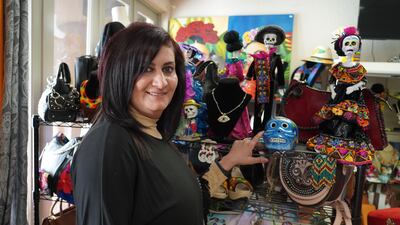
Samira Jabbar, a Venezuelan-born Palestinian American, poses inside her boutique in Phoenix, Arizona. All photos: Willy Lowry / The National -
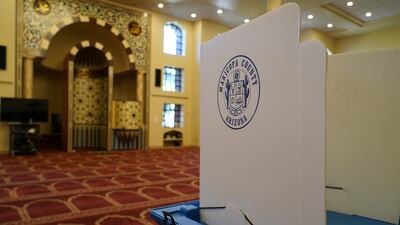
The Islamic Community Centre of Phoenix is the site of a Maricopa County polling station. -
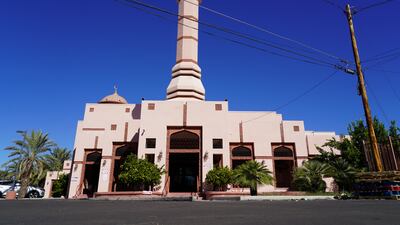
The polling station at the centre was closed on Sunday. -
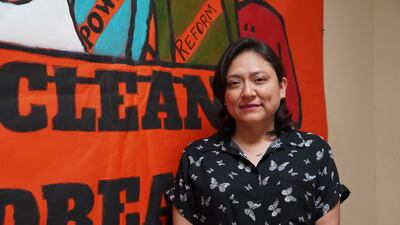
Karina Ruiz, the executive director of the Arizona Dream Act Coalition, believes Arizona will go backwards if certain candidates are elected. -
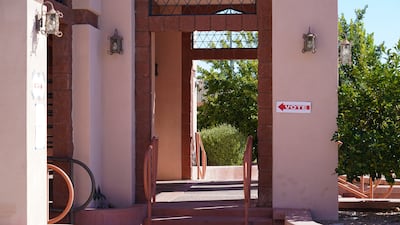
The exterior of the Islamic Community Centre of Phoenix. -
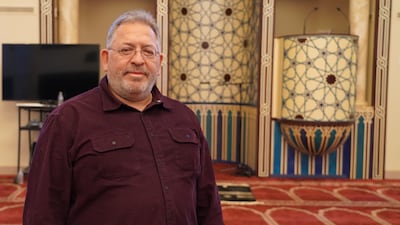
Usama Shami, president of the Islamic Community Centre of Phoenix, worries that the US has become so divided and the seesaw of power so constant that the very fabric of the country may be coming undone.


“We're certainly aware when people make allegations regarding the accuracy or the security of the voting process, we wholeheartedly refute those claims,” said Stephen Richer, the Maricopa County Recorder who oversees the county's voter registration. “Those claims have been refuted time after time.”
The county, which was at the centre of former president Donald Trump's false claims that he won the 2020 election, has repeatedly defended its process, which it said is “award winning” and attempted to assuage the public of any concerns or mistrust they may have.
But Mr Richer acknowledged that once a claim has been put on social media, it can be difficult to combat.
“The mis- and disinformation has already spread and has already become something that is a little bit hard to put back into the bottle,” he said.
The county is bracing for a difficult election day.
“Anybody out there whose intentions are to undermine this effort, to create fear, to intimidate good men and women who are trying to facilitate this process, you will have to go through us to get there and it's not going to happen on our watch,” Maricopa County Sheriff Paul Penzone said.
Mr Penzone appeared frustrated that he was being forced to direct so many resources to ensuring the safety and protection of poll workers.
“I never thought in my life that we'd be putting up physical barriers, fence lines, barbed wire, having deputies to the volume that will be committed, technology, every resource readily available for law enforcement to protect a building, where the most important thing that goes on in our nation, the free vote takes place,” he said.
While county officials have been preaching the integrity of the voting process, a slate of high-profile Republican candidates, including Kari Lake, who is running for governor, and Blake Masters, who is running for the senate, have repeatedly called into question the security of the election process.
Both Ms Lake and Mr Masters have said they believe the 2020 election was “stolen”.
The two Trump-backed candidates have yet to confirm whether they would accept the results of the vote, should they lose.
The prospect of candidates not accepting the results has frustrated county officials.
“That is one of the most selfish things that a person can do,” said Bill Gates, chair of the Maricopa County Board of Supervisors.
“Because all of this is bigger than all of us and to do that you're putting your own desires, your own goals ahead of this democratic republic.”

