



In the hours after Hurricane Ian ripped through Florida, leaving dozens dead and communities reeling, Sumter and Beverly Moore watched as weather forecasts predicted the storm would sweep out into the Atlantic Ocean before turning back and coming straight for their home on Pawleys Island, a narrow strip of earth and sand 112 kilometres north of Charleston in South Carolina.
Mr Moore, 82, is a lifelong resident of the barrier island and is no stranger to hurricanes. In 1989, Hurricane Hugo punished the South Carolina coast, destroying homes and infrastructure and causing nearly $7 billion in damages.
He will never forget arriving on Pawleys after Hugo hit.
“The island was cut in half,” he said. The storm was so powerful it swept houses off the island and on to the mainland.
Hurricanes are a part of life on this strip of the Atlantic and the Moores are veterans.
“As old as we are and as many of them as we've seen, when we go through a year like last year and we don't have one, we say: 'The Lord is looking out for us’ and this year, we just kind of say, ‘Thank you it wasn’t worse than it was',” Mr Moore said.
According to Nasa, hurricanes in the North Atlantic have been increasing in number and ferocity since the 1980s, and those who work in local government along South Carolina’s coast have seen that first hand.
“Storms are obviously becoming more frequent and they're becoming more damaging,” said Brandon Ellis, director of emergency services for Georgetown County, which is home to Pawleys Island.
Hans Paerl, a professor at the Department of Environmental Sciences and Engineering at the University of North Carolina, said the reason is clear: climate change.
“This is not rocket science,” explained Dr Paerl.
“Even myself, as an ecologist, can understand why these storms are wetter, the oceans are warming up, there's more evaporation of water going on from these warmer waters and with the intensification of low pressure systems, they just get sucked up and basically dumped on our coastal watersheds.”
The number and intensity of storms is increasing, but that won't convince the Moores to leave their beloved home. Still, they know a bad storm could have a devastating impact.
“It could wipe this island out,” Mr Moore acknowledged.
After seeing forecasts that predicted Ian would only hit South Carolina as a Category 1 hurricane, the Moores chose to stay and hunker down in their newly built house, which sits 4.4 metres in the air on stilts.
They purposely went beyond local building requirements when they rebuilt their home six years ago, knowing full well the potentially devastating effects of a hurricane.
Even with the stormproof house, the Moores felt Ian's power.
“The house shook a little bit when the wind gusts hit,” Mr Moore told The National.
Ian caused a significant storm surge that submerged most of Pawleys Island, knocking out power and wreaking havoc, but not causing total devastation.
“It was almost like a Noah's Ark experience,” Ms Moore explained. “We saw boats floating by and parts of docks floating by.”
The Moores know they are lucky. Residents of Florida, where Ian struck as a Category 4, were not as fortunate.
The storm slammed into Florida's western coast, then cleaved a diagonal path of mayhem across the state.
-
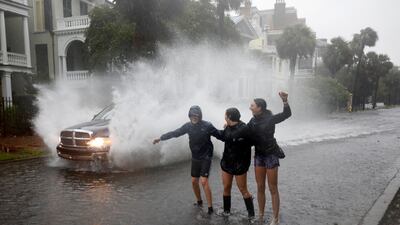
Young residents react as a truck sprays water while driving past them on a street flooded due to Hurricane Ian, in Charleston, South Carolina, US. Reuters -
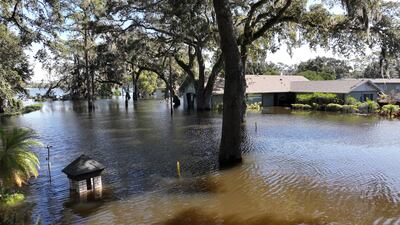
An aerial image made with a drone shows flooding following Hurricane Ian in a neighbourhood in Orlando, Florida. EPA -
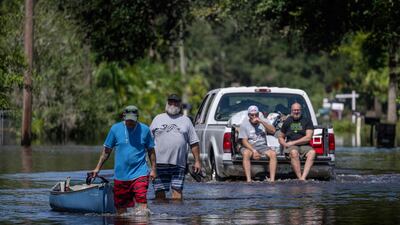
A man tows a canoe through a flooded street in New Smyrna Beach, Florida. AFP -

An aerial image made with a drone shows flooding near Orlando, Florida. EPA -
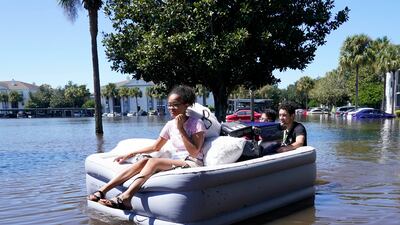
University of Central Florida students use an inflatable mattress as they leave an apartment complex near campus that was flooded during the hurricane in Orlando, Florida. AP -
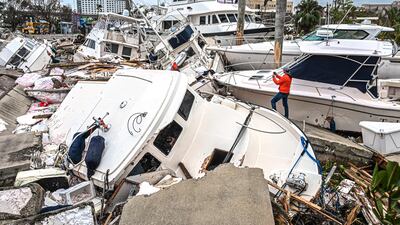
Boats wrecked by Hurricane Ian in Fort Myers, Florida. AFP -
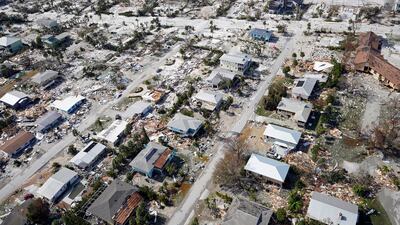
Damaged homes and debris in the aftermath of the hurricane. AP Photo -
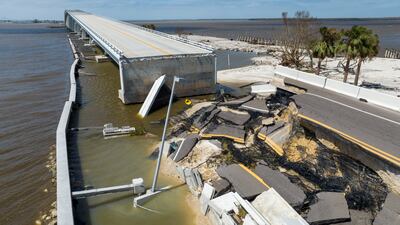
A section of the Sanibel Causeway in Florida collapsed. AP Photo -
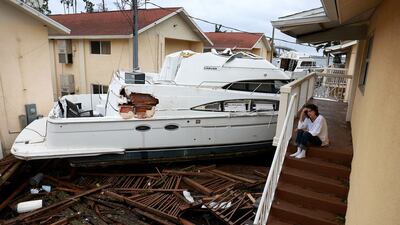
Florida resident Brenda Brennan next to a boat that washed up against her harbourside home in Fort Myers. AFP -

Cars submerged in a canal in the wake of Hurricane Ian. EPA -

Rescuers evacuate residents from the Avante at Orlando nursing home in Florida, during floods caused by Hurricane Ian. AP -
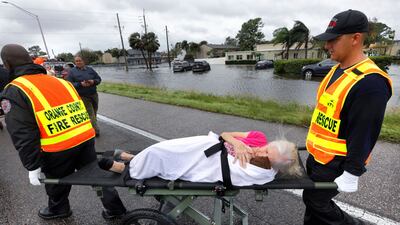
An Avante at Orlando resident is taken to safety. AP -
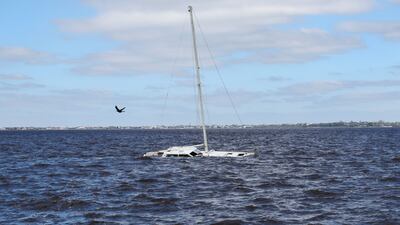
A submerged sailing boat off Punta Gorda, Florida, after Hurricane Ian passed through. Reuters -

The storm destroyed a section of the Sanibel Causeway that connects an island to the south-western mainland of Florida. AP -
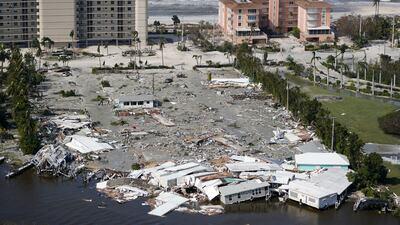
Damage caused at Fort Myers Beach, Florida. AP -
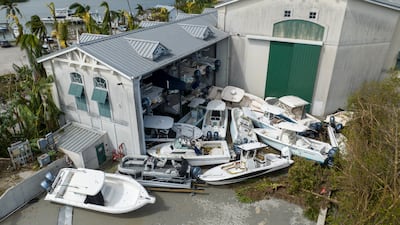
Boats left in a pile at the Port Sanibel Marina Motel by the storm surge. AP -

A vehicle partly submerged on a flooded driveway in Fort Myers. Bloomberg -
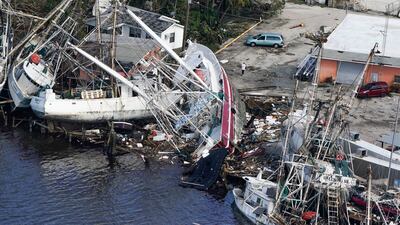
The storm wrought havoc at this marina, damaging boats. AP -
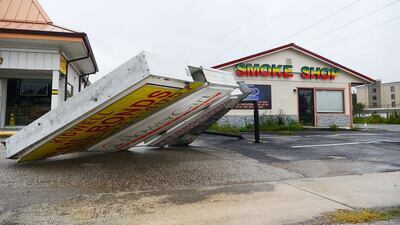
This sign in Bartow, Florida, was blown over by the hurricane. AFP -
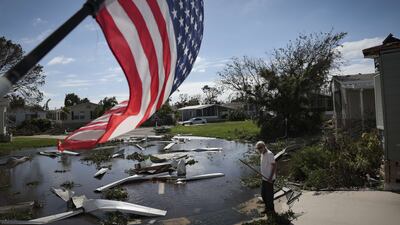
Tom Park begins cleaning up after Hurricane Ian moved through the Gulf Coast in Punta Gorda, Florida. AFP -
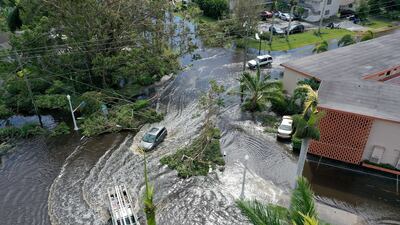
A storm surge made some roads almost impassable in Fort Myers. AFP -
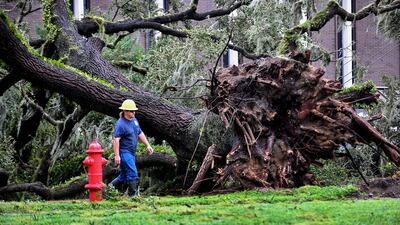
A worker repairs energy lines during a power cut after Hurricane Ian stormed through Bartow, Florida. AFP -
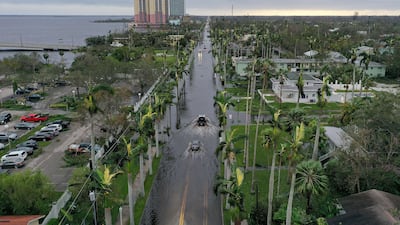
Vehicles make their way through a flooded area after Hurricane Ian tore across Fort Myers, bringing high winds, a storm surge and rain, causing severe damage. AFP -
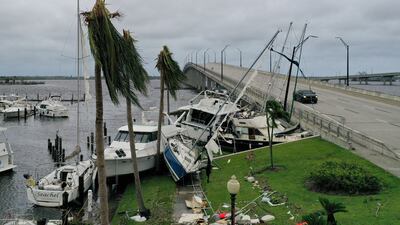
Boats are pushed up on to a causeway after Hurricane Ian hit Fort Myers. Getty Images -
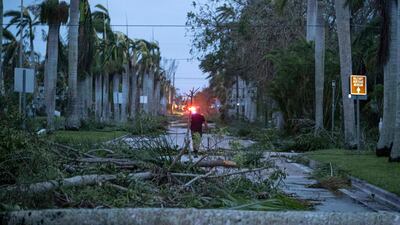
A man walks through debris on a street in the aftermath of Hurricane Ian in Punta Gorda, Florida. The storm left much of coastal south-west state in darkness early on Thursday and brought 'catastrophic' flooding. AFP -
A spiral staircase and a white pick-up truck are deposited in brushland after Hurricane Ian passed through Sanibel, Florida. AP -

A section of the causeway leading to Sanibel was knocked out by Hurricane Ian. AP -

Wind blasts across Sarasota Bay as Hurricane Ian churns to the south in Florida. The storm made US landfall at Cayo Costa with wind speeds of more than 225 kilometres per hour. AFP -
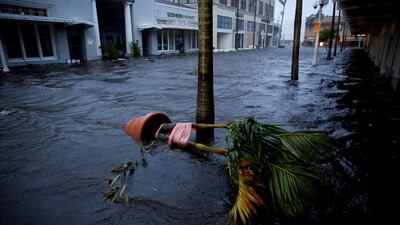
A flooded street in central Fort Myers. Reuters -
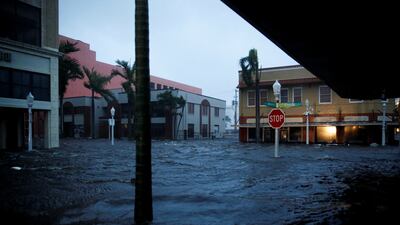
More devastation in Fort Myers. Reuters -

A man stands in the middle of 7th Street in Ybor City a few hours before the high winds hit Tampa. AP -

Traffic lights were no match for Hurricane Ian's power in Fort Myers. Reuters -
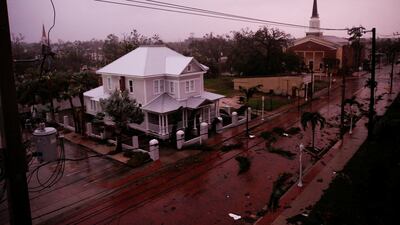
Debris strewn across a street in Fort Myers. Reuters -
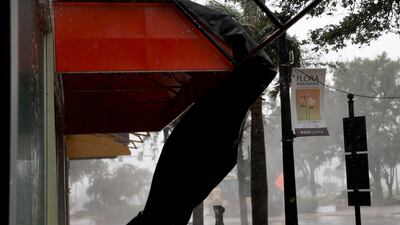
Bunting is torn from an awning in Sarasota. AFP -
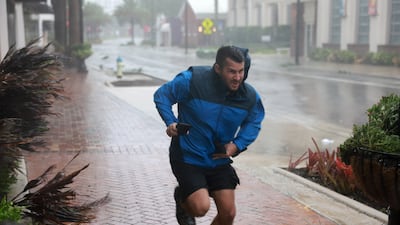
Brent Shaynore runs for cover. AFP -
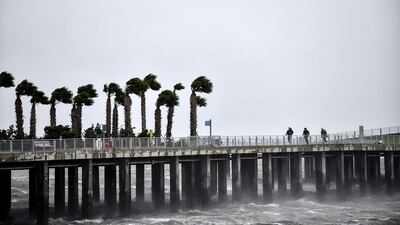
The St Pete pier in St Petersburg, Florida as Hurricane Ian hits. AFP -
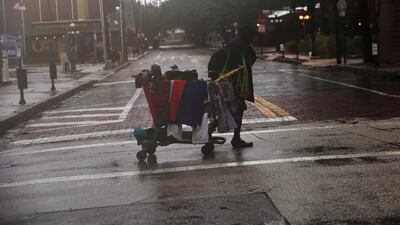
A man carries his belongings across the street in Ybor City, Tampa. Reuters -
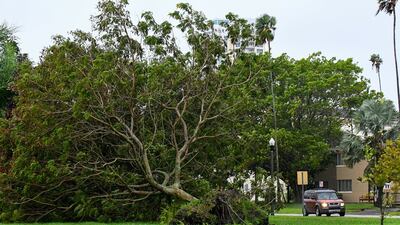
Hundreds of trees in the path of Hurricane Ian were uprooted in St Petersburg. AFP -
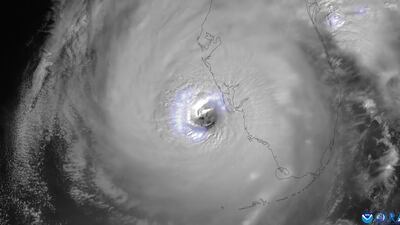
Hurricane Ian intensified to just shy of the strongest Category 5 level, threatening to wreak havoc on the southern US state. AFP -
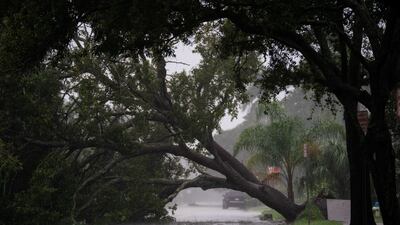
A tree is uprooted by strong winds as Hurricane Ian churns to the south in Sarasota. AFP -

Firefighters in Naples, Florida look out at their fire engine standing in water. AP -
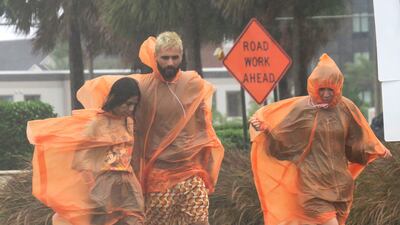
Even though there was a mandatory evacuation, some residents were either forced or chose to stay to ride out the storm. AP -
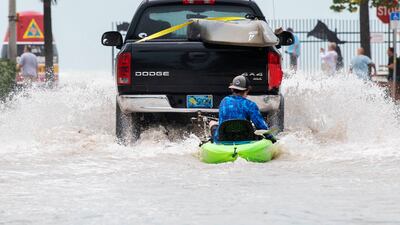
A pickup truck pulls a man on a kayak on a low-lying road after flooding in aftermath of Hurricane Ian, in Key West, Florida. AP -
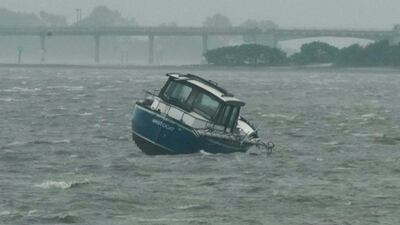
A boat rocks in the Gulf of Mexico in Dunedin, Florida, before Hurricane Ian makes landfall on Wednesday. AFP -
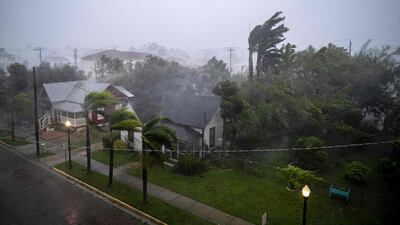
Gusts from Hurricane Ian hit in Punta Gorda, Florida. AP -

Technicians monitor Hurricane Ian at Fema in Washington. AFP -
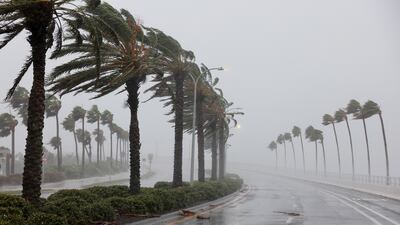
Palm trees blow in the wind from Hurricane Ian in Sarasota, Florida. AFP -

White House press secretary Karine Jean-Pierre details the Hurricane Ian response. AFP -
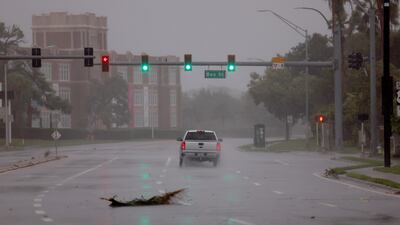
A vehicle drives through the wind and rain from Hurricane Ian in Sarasota, Florida. AFP -
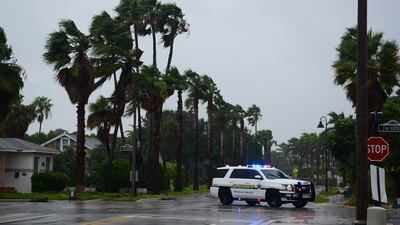
A police patrol drives around a neighbourhood of St Petersburg Beach as the wind from Hurricane Ian arrives in Florida. AFP -
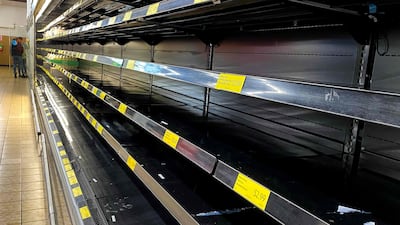
Empty grocery shop shelves at Aldi’s in Titusville, Florida, as the state's eastern coast braces for Hurricane Ian. AFP


The death toll has surpassed 100, making it one of the deadliest storms in Florida’s history.
Communities have been forever altered by the powerful hurricane, which levelled buildings, destroyed bridges and in some cases cut off islands from the mainland.
The full extent of the storm is still being assessed, but one projection suggests the financial damages could be in excess of $70bn.
Dr Paerl fears the financial burden caused by storms will only increase in the future.
“The storms are delivering more contaminants to our coastal system, which is leading to short- and long-term environmental and ultimately economic damage,” he said.
The storms, which are trending wetter and wetter, wreak havoc not only on infrastructure but on agriculture and aquaculture, Dr Paerl added.
In coastal South Carolina, residents described relief that Ian spared them its full wrath, but many know their luck could one day run out.
“It's not a not a matter of if but when that happens again,” said Mr Ellis, referring to the devastation caused by Hurricane Hugo back in 1989.
“It becomes harder and harder after every storm; our coastline gets weakened.”
As hurricanes increase in number and intensity, Dr Paerl fears there may be a time when life on some barrier islands becomes untenable.
“There are places where we probably need to seriously consider turning them back over to Mother Nature,” he said.

