

President Joe Biden's administration has announced it is barring anti-satellite missile testing by the US, a move that White House officials say is meant to underscore its hopes of establishing new norms for military action in space.
The US has sharply criticised Russia and China for conducting anti-satellite missile tests, although it used an interceptor missile fired from a US Navy warship more than 14 years ago to destroy a malfunctioning spy satellite.
-
Sheikh Zayed Grand Mosque in Abu Dhabi shot last year by KhalifaSat, UAE's first indigenously developed satellite. Photo: Mohammed bin Rashid Space Centre -
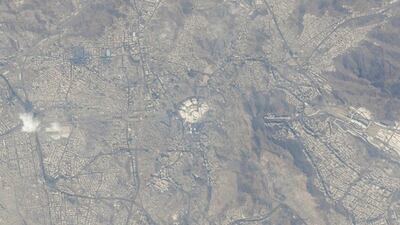
The Grand Mosque in Makkah, Saudi Arabia, captured from the International Space Station by Hazza Al Mansouri, the first Emirati astronaut in space, in 2019. Photo: Hazza Al Mansouri -
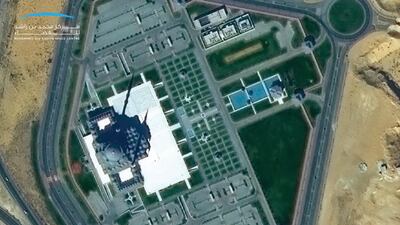
A stunning image of Sharjah’s largest mosque captured by KhalifaSat. Photo: Mohammed bin Rashid Space Centre -
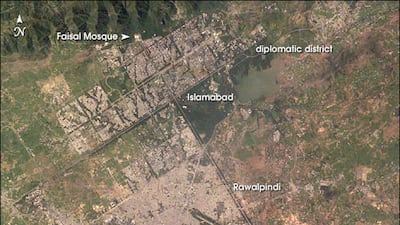
The Faisal Mosque in Islamabad, Pakistan, which is the sixth largest globally, as seen from space. Photo: Nasa's Earth Observatory -
Sheikh Zayed Grand Mosque in Abu Dhabi attracts more than 40,000 worshippers during Eid prayers. Photo: Maxar / Space Imaging Middle East -
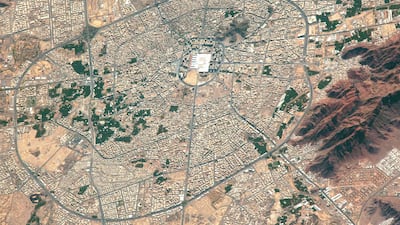
The Prophet's Mosque in Madinah, Saudi Arabia, as seen from space. Photo: Nasa -
The Grand Mosque in Makkah, Saudi Arabia, captured by KhalifaSat. Photo: Mohammed bin Rashid Space Centre


The issue is one that has taken on greater urgency after Russia in November launched a missile to destroy a defunct Soviet-era satellite.
Vice President Kamala Harris, in a speech on Monday at Vandenberg Space Force Base on the central coast of California to highlight the administration's move, criticised the Russian action as “reckless” and “irresponsible".
The strike created more than 1,500 pieces of space debris that increased risk to US and Russian astronauts aboard the International Space Station and China’s Tiangong space station, according to US Space Command.
“Simply put, these tests are dangerous,” Ms Harris said. “And we will not conduct them.”
The Russian test occurred as it was massing troops before its latest invasion of Ukraine. The more than seven-week-old war has left thousands dead and prompted the US and its allies to hit Russia with massive economic sanctions.
Ms Harris stressed that the debris created by the missile test threatens not only astronauts and US military interests but also could affect commercial satellites that the world relies on for weather forecasts, GPS systems that help drivers navigate streets, television broadcasts and critical infrastructure.
“A piece of space debris the size of a basketball, which travels at thousands of miles per hour, would destroy a satellite. Even a piece of debris as small as a grain of sand could cause serious damage,” Ms Harris said.
The announcement of the anti-satellite missile testing ban comes months after Ms Harris announced that White House National Security Council officials would work with officials at the Pentagon, State Department, and other US national security agencies to develop proposals for national security space norms.
The US is the first country to announce such a ban. Ms Harris said she hoped other nations would quickly follow.
The kind of direct-ascent weapon that the Biden administration is committing not to fire relies on interceptor missiles that travel from the Earth’s surface to strike a satellite target hundreds of miles into space.
Since the 1960s, the US, China, India and Russia have conducted more than a dozen anti-satellite tests in space that have destroyed satellites and created more than 6,300 pieces of orbital debris, according to the Secure World Foundation, a non-governmental group that advocates for sustainable and peaceful uses of outer space.
At least 4,300 pieces of that debris are still in orbit today and pose long-term threats to human space flight, science and national security missions, and the future economic development of space, according to the foundation.

