

Live updates: follow the latest news on Russia-Ukraine
Russia has started to reposition under 20 per cent of the forces arrayed around Ukraine's capital Kyiv, the Pentagon said on Wednesday, but cautioned Moscow was expected to refit and resupply them for redeployment into Ukraine, and not bring the forces home.
Russian forces bombarded the outskirts of the capital Kyiv and the besieged city of Chernihiv in northern Ukraine on Wednesday, a day after Russia said it would scale down military operations in both cities in what the West dismissed as a ploy to regroup by invaders suffering heavy losses.
Pentagon spokesman John Kirby said some of the Russian forces may have already moved into Belarus, as opposed to their home garrisons.
"They are leaving Kyiv and heading more towards the north, away from the city," Mr Kirby told Pentagon reporters.
Troops leaving the area included some of those around Chernihiv along with those fighting near the town of Sumy, he said.
He added that Kyiv was still being attacked by air and ground strikes.
A US official, speaking on the condition of anonymity, said some Russian troops were also leaving from near the Chernobyl power station. It was not clear if the troops leaving were departing the exclusion zone around the plant or the surrounding towns.
Military analysts say Russia has reframed its war goals in Ukraine in a way that may make it easier for Moscow to claim a face-saving victory despite a woeful campaign in which the Russian army has suffered humiliating setbacks.
Mr Kirby added that Russian contractor Wagner Group had deployed about 1,000 personnel into Ukraine's Donbas region, which Moscow has declared a priority.
Russian President Vladimir Putin has said in the past that Wagner and other private groups neither represent the Russian state nor are paid by it, though he says they have a right to operate provided they do not break Russian law.
The European Union imposed sanctions on Wagner last year, accusing it of fuelling violence, looting natural resources and destabilizing countries around the world.
Reuters contributed to this report.
-
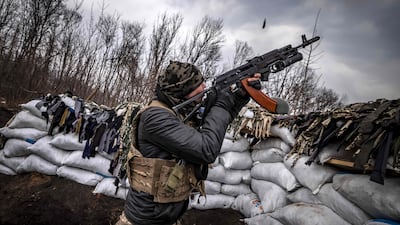
A Ukrainian soldier fires his rifle from a trench at the front east of Kharkiv in the north of Ukraine, which continues to be shelled by Russian forces. AFP -
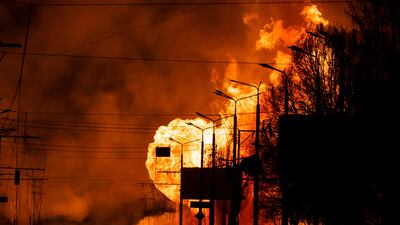
A gas station on fire in Kharkiv after Russian ttack on the northern city. AFP -
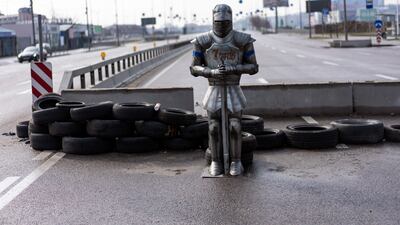
A medieval suit of armour 'stands guard' at a a Ukrainian checkpoint, on the outskirts of the capital Kyiv. AP Photo -
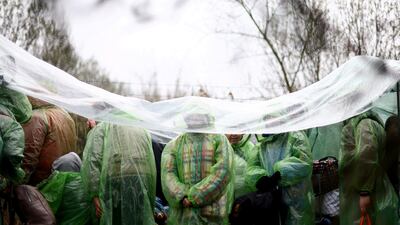
Ukrainian refugees wait in line to cross the border into Poland at Shehyni. Reuters -
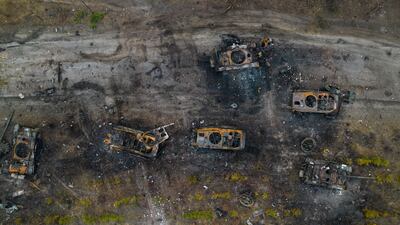
Destroyed Russian armoured vehicles on the outskirts of Kyiv. AP Photo -
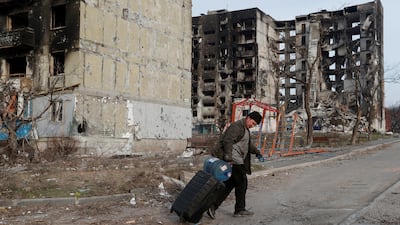
A resident passes apartment buildings destroyed by Russian attacks in the besieged southern port city of Mariupol, Ukraine. Reuters -
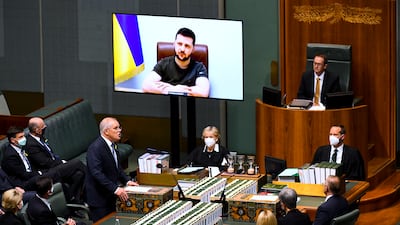
Australian Prime Minister Scott Morrison, standing, welcomes Ukrainian President Volodymyr Zelenskyy to address the House of Representatives via video link at Parliament House in Canberra. Mr Zelenskyy appealed directly to Australian legislators for more help in the war against Russia, including armoured vehicles and tougher sanctions. AP -
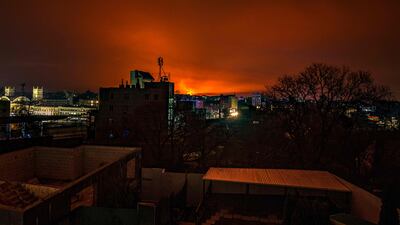
Fire lights up the sky east of Kharkiv, where Ukrainian forces pushed back Russian troops from a motorway outside the country's second-largest city. AFP -
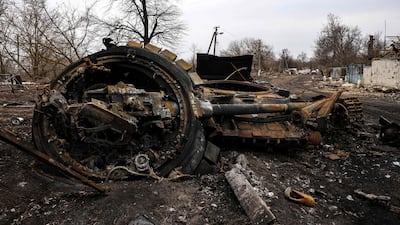
A destroyed Russian tank in the village of Lukianivka near Kyiv. AFP -
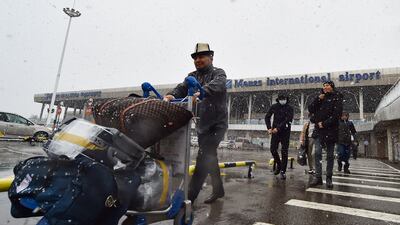
Passengers arriving from Moscow at Manas International Airport, Bishkek, Kyrgyrzstan. Hundreds of thousands of citizens of former Soviet countries in Central Asia are facing difficult choices: shrinking work opportunities in Russia and wages in the weakened rouble versus a return to the homeland where they have family homes, but even fewer job prospects. AFP -
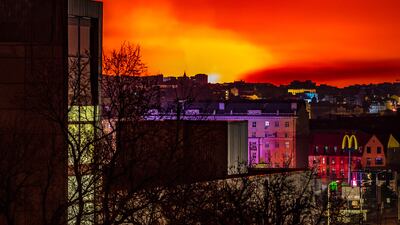
Fire and smoke light up the sky east of Kharkiv as Ukrainian forces push back Russian troops from a motorway outside the country's second-largest city. AFP -
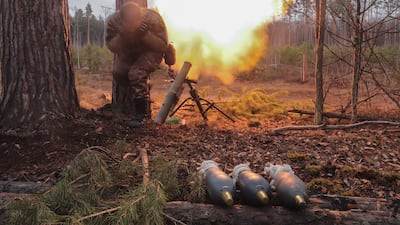
A Ukrainian soldier shoots at the Russian positions not far from the capital Kyiv. EPA -
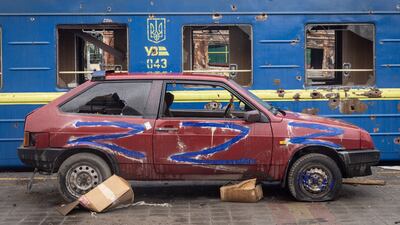
A car marked with the English letter 'Z' is found destroyed at the central Ukrainian train station that was used as a Russian base in Trostyanets. Ukrainian forces said they had retaken the north-eastern town from the Russians. Getty Images -
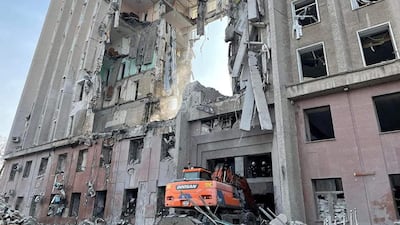
Rescue workers at the site of the regional administration building hit by Russian cruise missiles, in Mykolaiv, Ukraine. Reuters -
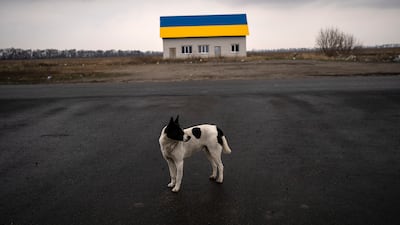
A dog looks at cars passing by on the road near a house painted with the colors of the Ukrainian flag, on the outskirts of the capital Kyiv. AP Photo -
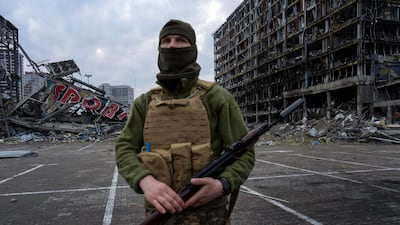
A soldier poses for the picture in Kyiv, Ukraine, while standing guard amid the destruction caused after shelling of a shopping center. AP Photo -
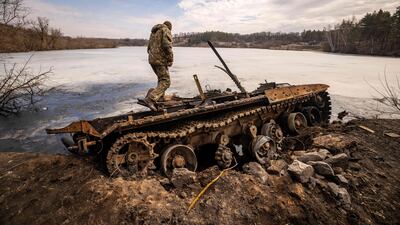
A Ukrainian serviceman stands near a destroyed Russian tank in the north-eastern city of Trostianets. AFP -
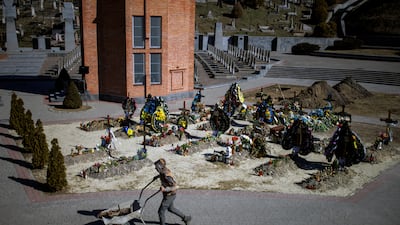
A worker pushes a cart past graves of Ukrainian soldiers who were killed in battle during Russia’s attack on Ukraine, at the Lychakiv cemetery in Lviv. Reuters -
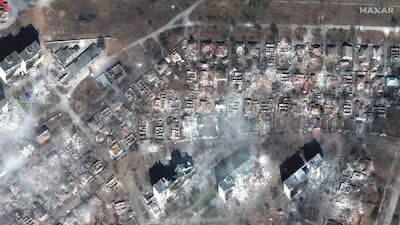
This satellite image provided by Maxar Technologies shows damaged apartment buildings and homes in Mariupol. AP -
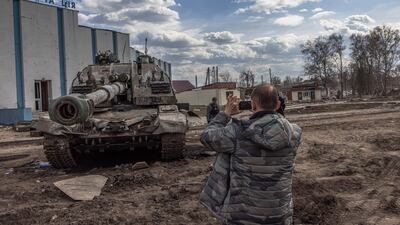
A resident takes photos of a destroyed Russian tank next to the railway station where the Russian forces were stationed, in Trostyanets, a town recaptured by the Ukrainian army. EPA -

A rescuer clears the rubble of a warehouse containing more than 50,000 tons of deep-frozen food in the town of Brovary, north of Ukrainian capital of Kyiv, after it was destroyed by Russian shelling. AFP -
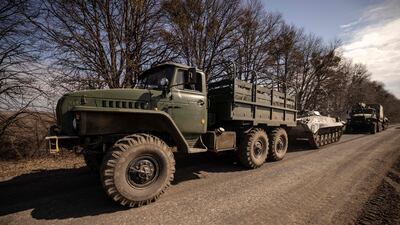
A Ukrainian army vehicle carries a Russian tank in Trostyanets. AFP -
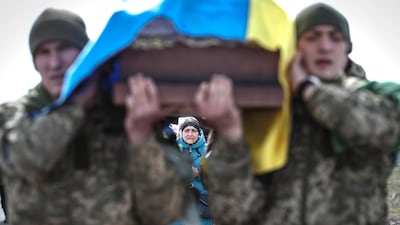
Ukrainian soldiers carry a coffin during the funeral ceremony of a comrade in Odesa. EPA -
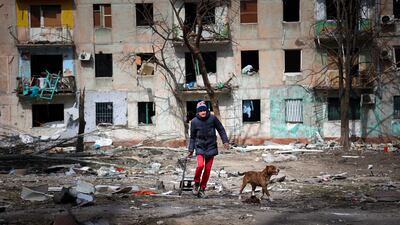
A man walks with his dog near an apartment building damaged by shelling from fighting on the outskirts of Mariupol. AP Photo -
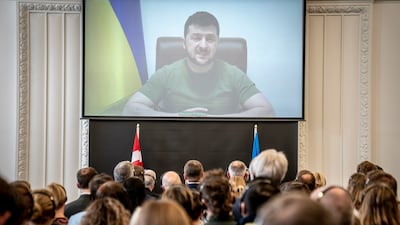
Members of the Danish Parliament attend the Ukrainian President, Volodymyr Zelensky's speech to the Danish Parliament via a video link, at the Christiansborg Castle in Copenhagen, Denmark. EPA -

A satellite image shows crowds outside a Metro grocery store in Mariupol. Reuters -
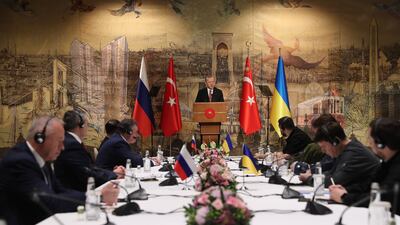
Turkish President Recep Tayyip Erdogan opens Ukrainian-Russian talks in Istanbul. President Erdogan told the delegations that "both parties have legitimate concerns." AFP -
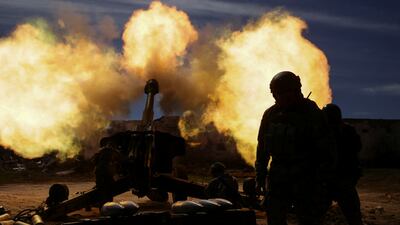
Members of the Ukrainian Volunteer Corps fire a howitzer at a position in the Zaporizhzhia region. Reuters -
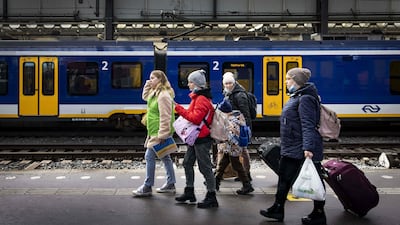
Ukrainian refugees are helped by volunteers upon their arrival at Amsterdam Central station by train from Berlin. AFP -

Ukrainian soldiers ride an armoured people carrier through the town of Trostsyanets, about 400 kilometres east of Kyiv. AP Photo -
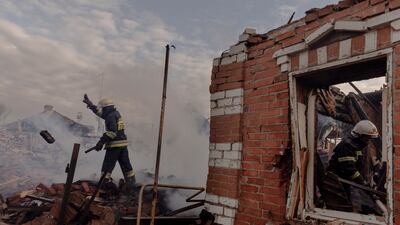
Firefighters work amid the debris of residential houses that were destroyed by Russian shelling in a settlement outside Kharkiv. Reuters -
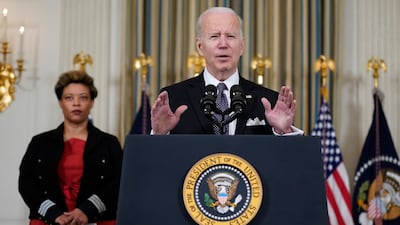
President Joe Biden said that he is not advocating for regime change in Moscow after saying Russian counterpart Vladimir Putin "cannot remain in power." AP Photo -

Firefighters work to extinguish a fire at a warehouse after it was hit by Russian shelling in Kharkiv, Ukraine. More than half of Kharkiv's 1.4 million people have fled the city since Russia's invasion on February 24. Getty Images -
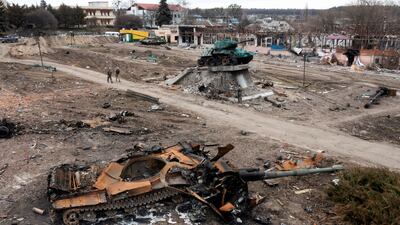
Local residents pass by a destroyed Russian tank in the town of Trostyanets, east of capital Kyiv, Ukraine. The monument to the Second World War is seen in background. AP Photo -
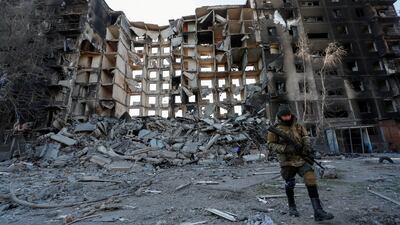
A pro-Russian troop service member walks near a destroyed apartment building in the besieged southern port city of Mariupol. Reuters -
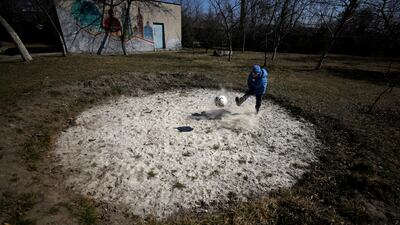
Mykhaylo, 8, who was taken away from his widowed mother along with his 9-year-old brother and 16-year-old sister, plays with a ball in the garden of a state shelter in Lviv. Reuters -

Halyna Falko, 52, talks to reporters while looking at the destruction caused after a Russian attack inside her house near Brovary, on the outskirts of Kyiv. AP Photo -
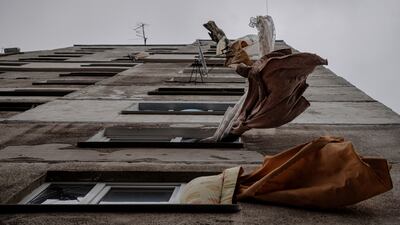
Curtains flutter in the wind at a building that was damaged by shelling in a neighbourhood that has been largely abandoned and left without water, gas and heating, as Russia's attack on Ukraine continues, in Kharkiv, Ukraine. Reuters -

People, mainly women and children, arrive at Przemysl on a train from Odesa in war-torn Ukraine in Przemysl, Poland. The Polish government has said it may spend €24 billion this year hosting refugees fleeing the war in Ukraine, and is seeking more support from the European Union. Getty Images -
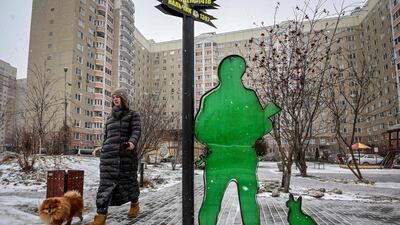
A woman walks a dog past the so-called "people's installation to a Russian soldier" nicknamed the "polite people" created by residents in the backyard of their apartment building in the town of Podolsk, outside Moscow. AFP



