


Live updates: follow the latest news on Russia-Ukraine
Mamuka Mamulashvili has spent most of his life fighting Russian forces. The Georgian commander first took up arms against the Soviets when he was 14, fighting alongside his father in the war in Abkhazia in the early 1990s.
“Me and my father fought all these years together, side-by-side against Russians,” he told The National.
Mr Mamulashvili and his father were captured by Russian soldiers and the teenager spent three months in captivity.
It did little to deter him from future fighting.
Thirty years later, he is leading a ragtag group of volunteer foreign fighters in Ukraine.
The Georgia National Legion, which has been fighting in Ukraine since 2014, is made up primarily of former Georgian soldiers, but Mr Mamulashvili said former servicemen from the UK, US and Canada have joined since Russia first invaded a little over a week ago.
He estimates that 300 fighters have signed up in the past few weeks and he expects that number to swell to a thousand.
Ukraine’s President Volodymyr Zelenskyy praised the “international legion” of volunteer soldiers who have come to protect the country from one of the world’s most powerful armies.
-
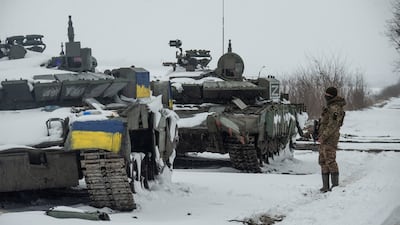
A Ukrainian serviceman stands near captured Russian tanks, one painted in the colours of the Ukrainian national flag and the other marked with the letter 'Z' in the north of the Kharkiv region, Ukraine. Reuters -
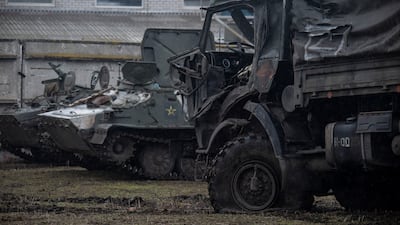
Russian military vehicles with the letter 'Z' painted on them. Reuters -
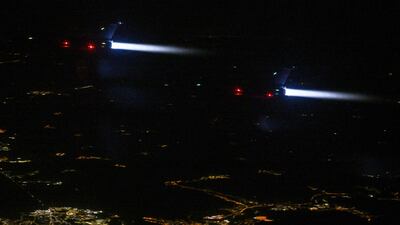
French Air Force jets patrol airspace over Poland. Nicolas Tucat / AFP -
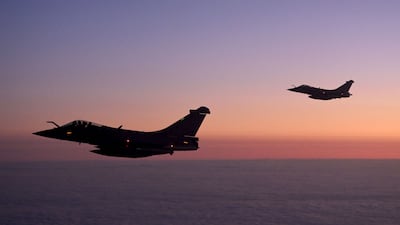
The patrol is part of Nato's surveillance system. Photo by Nicolas Tucat / AFP -
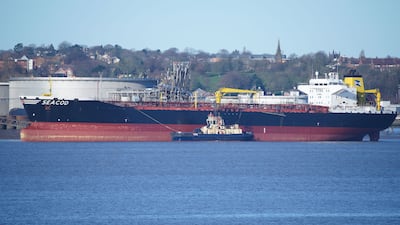
The German-flagged 'Seacod' oil tanker moored at Birkenhead Docks near the Stanlow Oil Refinery in the UK. -
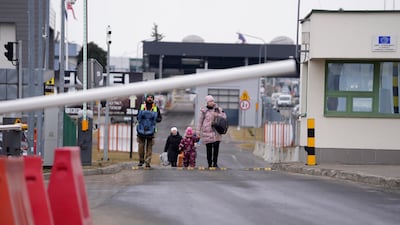
A woman holds the hand of a child as they flee Ukraine. AP Photo / Markus Schreiber -

A young woman clutches a doll as she crosses the border in Medyka, Poland. AP Photo / Markus Schreiber -
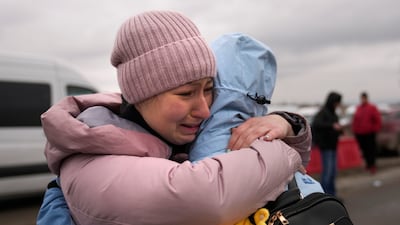
A woman weeps after finding a friend at the border crossing in Medyka. AP Photo / Markus Schreiber -
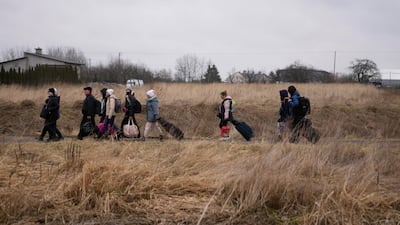
People walk with their belongings as they flee Ukraine. AP Photo / Markus Schreiber -

Ukrainian refugees arrive at Berlin central station, Germany, from Poland on March 4. EPA / Filip Singer -
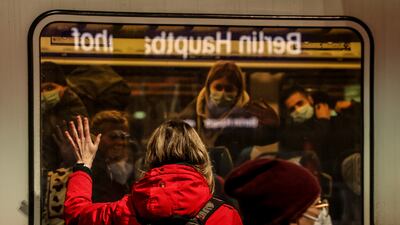
Russian troops entered Ukraine on February 24, prompting the country's president to declare martial law and triggering a series of announcements by western countries to impose severe economic sanctions on Russia. EPA / Filip Singer -

Military vessels docked at the military harbour of Constanta, Romania, on March 4. Daniel Mihailescu / AFP -
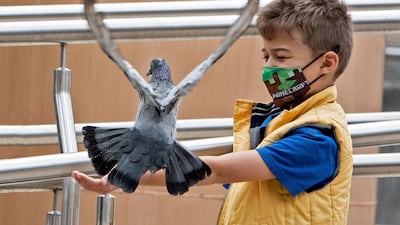
A child plays with a pigeon during a protest in San Jose, Costa Rica, against the Russian invasion in Ukraine. Ezequiel Becerra / AFP -
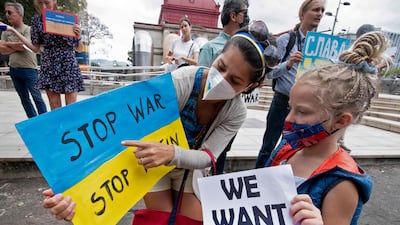
Ukrainian citizens in San Jose, Costa Rica, protest against the Russian invasion in Ukraine on March 4. Ezequiel Becerra / AFP -
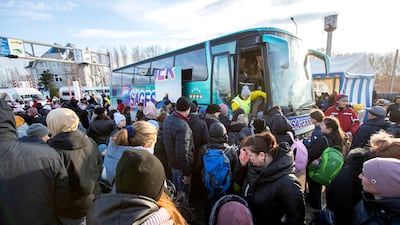
People fleeing Ukraine wait to board a bus in Palanca Village, Moldova. EPA / Dumitru Doru -
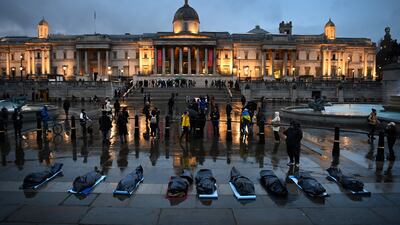
Ukrainians living in Britain join a protest at Trafalgar Square, London. EPA / Andy Rain -
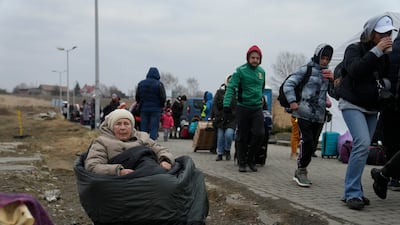
Ludmila Shkarupa, 73, from Ukraine, sits on a chair wrapping herself with a sleeping bag to avoid the cold at the border crossing in Medyka, Poland. AP -

A view shows a thermal power plant destroyed by shelling amid the Russian invasion of Ukraine in the town of Okhtyrka in the Sumy region. Reuters -
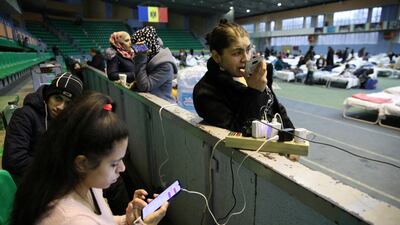
People fleeing Russia's invasion of Ukraine use mobile devices in a temporary refugee centre located at a local track-and-field athletics stadium in Chisinau, Moldova. Reuters -

A local resident walks past the remains of a house of culture following a night air raid in the village of Byshiv, 40 kilometres west of Kyiv, Ukraine. AP -

A member of the Ukrainian military guards an evacuation train of women and children who fled fighting in Bucha and Irpin. Getty Images -
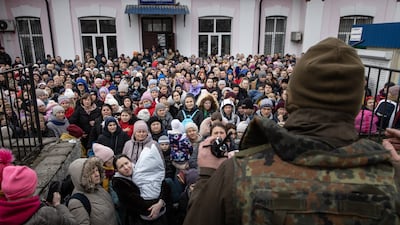
A member of the Ukrainian military gives instructions to women and children that fled fighting in Bucha and Irpin before boarding an evacuation train to Kyiv after heavy fighting overnight forced many to leave their homes. Getty Images -
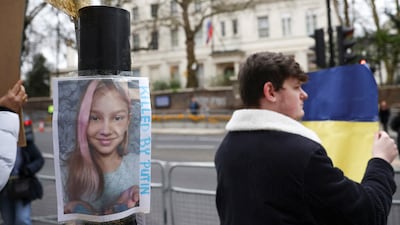
A person demonstrates outside the Russian embassy in London following Russia's invasion of Ukraine. Reuters -
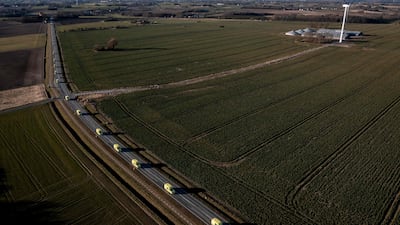
The Danish rescue group Falck A/S has donated 30 ambulances to Ukraine and neighbouring countries, where they will be used by local emergency services. AFP -
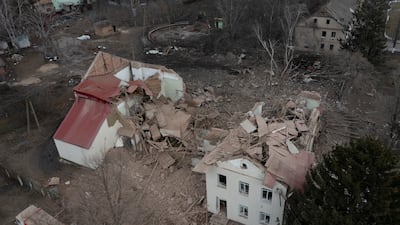
An aerial view of the remains of the local house of culture following a night air raid in the village of Byshiv, 40 kilometres west of Kyiv, Ukraine. AP -
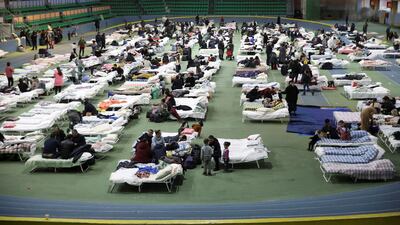
People fleeing Russia's invasion of Ukraine rest in a temporary refugee centre located at a local track-and-field athletics stadium in Chisinau, Moldova. Reuters -

Ukrainian Oleg, who decided to remain in Irpin, comforts his son, Maksim, and his wife, Yana, before the arrival of an evacuation train to the city of Kyiv. EPA -
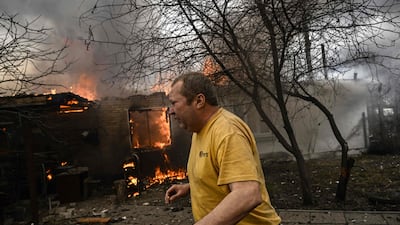
Yevghen Zbormyrsky, 49, runs in front of his burning house after being shelled in the city of Irpin, outside Kyiv. AFP -
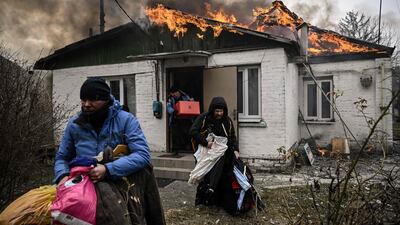
People remove personal belongings from a burning house after being shelled in Irpin. AFP -
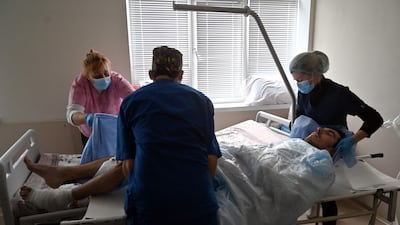
Medical workers tend to a Ukrainian serviceman wounded during the fighting with Russian troops near the Ukrainian capital, in a hospital in Kyiv. AFP -
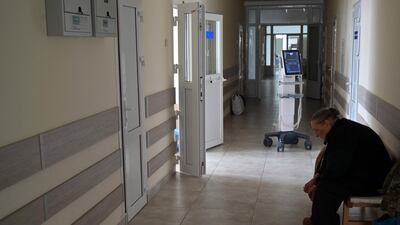
A mother of a wounded Ukrainian serviceman waits outside his ward in a hospital in Kyiv. AFP -
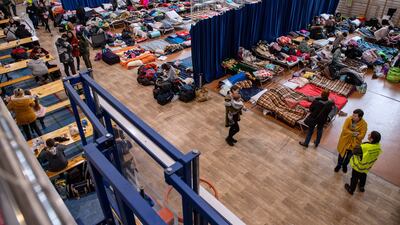
Refugees from Ukraine arrive at an assistance point organised in the sports hall of a primary school in Lubycza Krolewska in Poland. EPA -
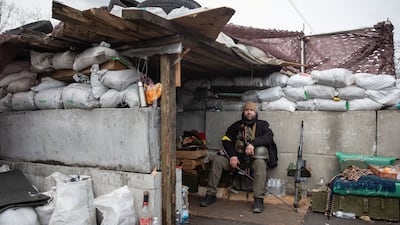
A member of Ukraine's Territorial Defence Forces at a checkpoint in Kyiv. Reuters -
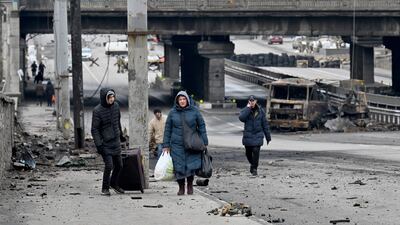
People carry their belongings past the debris of last week's combat in Kyiv. AFP -
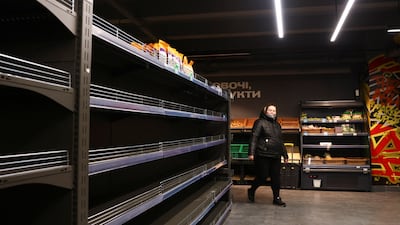
Shelves in a supermarket stand empty in Bila Tserkva, Ukraine. Reuters -
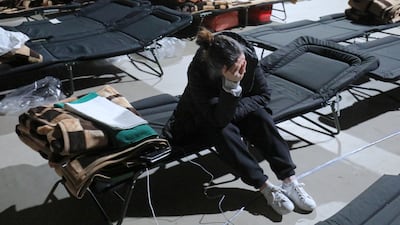
War refugees from Ukraine at the assistance point organised at the Torwar sports hall in Warsaw, Poland. EPA -
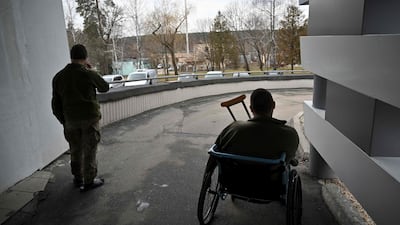
Ukrainian servicemen, wounded during the fighting with Russian troops near the Ukrainian capital, rest outside a hospital in Kyiv. AFP -
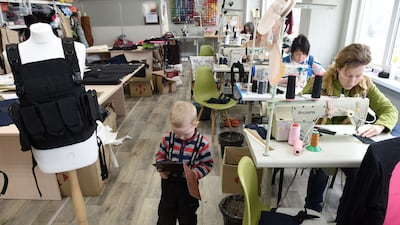
A 3-year-old boy watches cartoons on a tablet while his mother sews military vests for the Ukrainian army in the western city of Lviv. AFP -
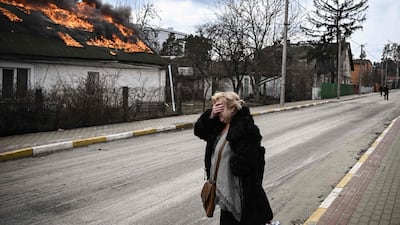
A woman's shock as she stands in front of a house burning after being shelled in Irpin, outside Kyiv. AFP -

People fleeing from Ukraine queue to board on a bus at the border crossing in Medyka, Poland. AP -
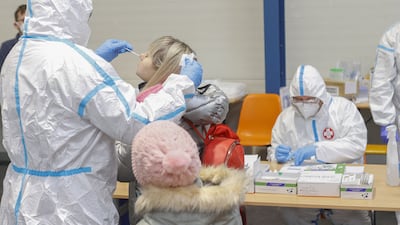
Ukrainian refugees are tested for Covid-19 in a reception centre in Vienna, Austria. AFP -

US Secretary of State Antony Blinken and Nato Secretary General Jens Stoltenberg pose with foreign ministers after a meeting at the alliance's headquarters in Brussels, Belgium. Reuters -
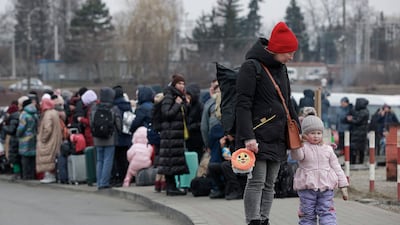
People who fled Ukraine wait for a bus to take them to the train station in Przemysl, at the border crossing in Medyka, Poland. AP Photo -
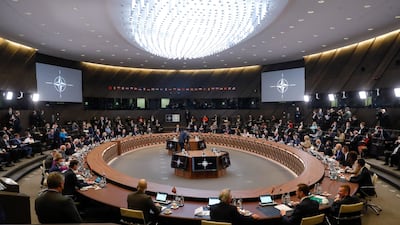
The extraordinary meeting of Nato ministers of foreign affairs about Russian aggression in Ukraine at Nato headquarters in Brussels, Belgium. EPA -
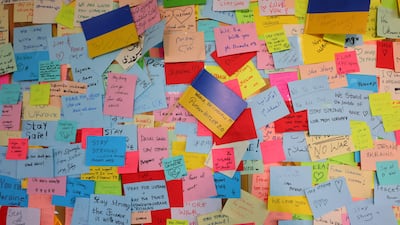
Messages in support of Ukraine on a board in the Ukrainian pavilion at Expo 2020 Dubai. AFP -
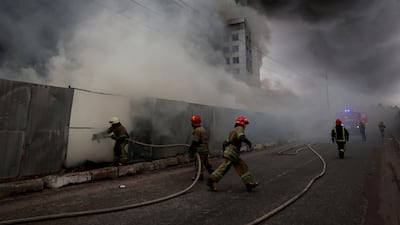
Firefighters at a warehouse that caught fire after shelling in the village of Chaiky in the Kyiv region. Reuters -
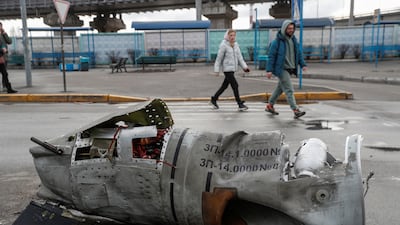
The wreckage of a missile at a bus terminal in Kyiv. Reuters -
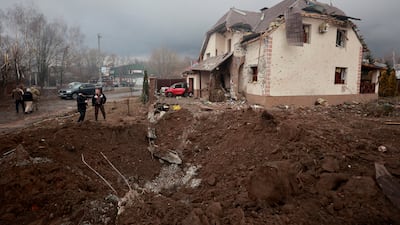
A crater in front of a house damaged by shelling in the village of Hatne. Reuters -

The damaged administrative building of the Zaporizhzhia nuclear power plant in Enerhodar, a city in the Zaporizhzhia region. Reuters -
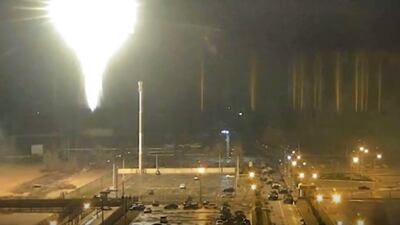
A bright object lands on the grounds of Zaporizhzhia nuclear power plant in Enerhodar, Ukraine, during heavy shelling by Russian forces. AP -
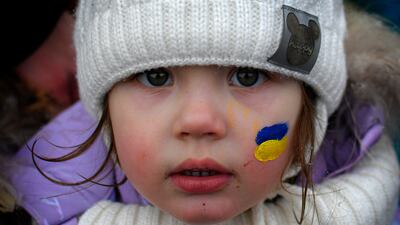
Zlata, 3, with her face painted in the colours of the Ukrainian flag, stands on the Romanian side of the border with Ukraine after fleeing the country. AP -
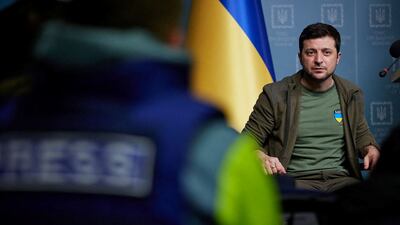
Ukrainian President Volodymyr Zelenskyy attends an interview with foreign media in Kyiv. Reuters -
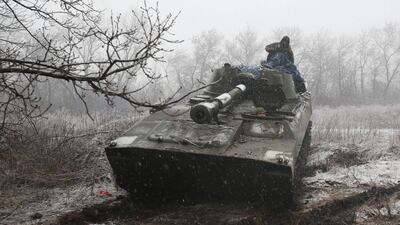
Ukrainian artillerymen maintain their position in the Luhansk region. AFP -
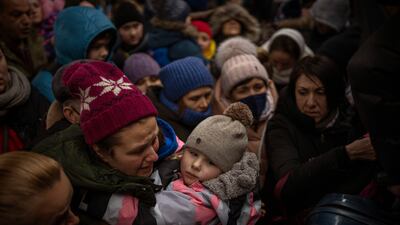
Women and children try to board a train bound for Lviv, at a station in Kyiv. AP -
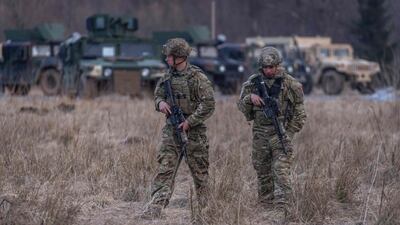
US soldiers on patrol near a military camp in Arlamow, Poland, near the border with Ukraine. AFP -

A woman and child look out the window of a train at a station in Kyiv. AP -
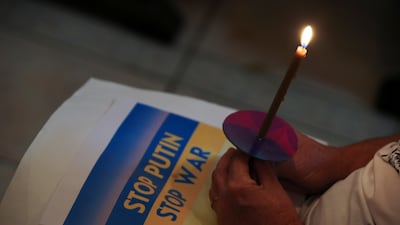
A descendant of Ukrainian immigrants attends Mass at a Ukrainian Orthodox church in Canoas, Brazil. Reuters -
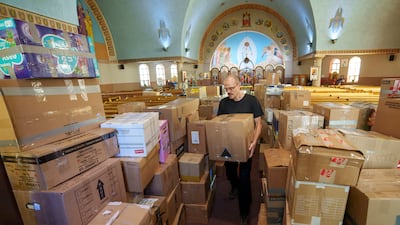
Boxes of donations destined for Ukraine at the St Michael's Ukrainian Catholic Church in Montreal, Canada. AP -
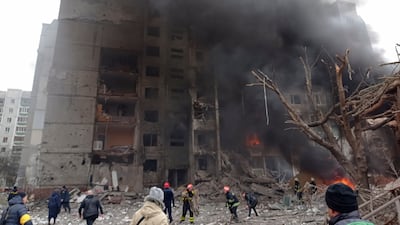
Firefighters battle a blaze at a damaged building in the Ukrainian city of Chernihiv after a Russian air raid. AP -
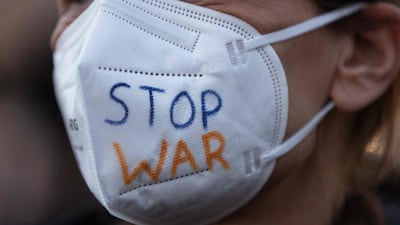
A woman in Frankfurt, Germany, attends a protest against Russia's military offensive in Ukraine. AFP


Mr Zelenskyy said 16,000 foreigners have joined Ukraine's military ranks.
But experts say the presence of foreign fighters war could draw other countries into the conflict.
“If Americans start dying in large numbers over there, it's going to be difficult for the US to sit by and watch that,” said Claire Finkelstein, faculty director for the Centre for Ethics and the Rule of Law at the University of Pennsylvania.
“Especially if we have a hostage situation or a situation where we have [prisoners of war] in some sense that need rescuing because they're being ill-treated.”
Under US Law, Ms Finkelstein said Americans are free to fight in Ukraine on both sides but in other countries, like Canada and the UK, the law is more nuanced. Both have laws aimed at deterring citizens from engaging in foreign wars.
In Ukraine, foreigners are entering a complex and dangerous environment, but Mr Mamulashvili said his men are buoyed by a sense of purpose.
“Today, democracy is defended physically in Ukraine. So everybody who has a conscience and knows what democracy and freedom are, they have to come and help you.”
But just because they are willing to fight doesn't mean they can.
The Georgian National Legion and other battalions are only accepting foreigners with military backgrounds — a crushing development for hundreds like Canadian Bryson Woolsey, who is desperate to help.
-

Damage after the shelling of buildings in central Kharkiv, Ukraine. EPA -
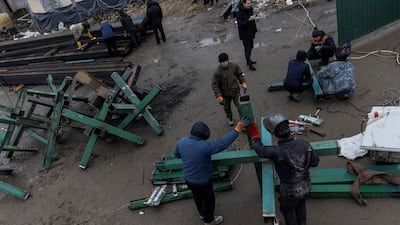
Workers from a local construction company weld anti-tank obstacles to be placed on roads around Kyiv as Russia's invasion of Ukraine continues. Reuters -
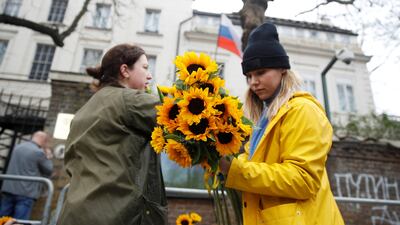
Anti-war protesters attach sunflowers to barriers in front of the Russian embassy. Reuters -
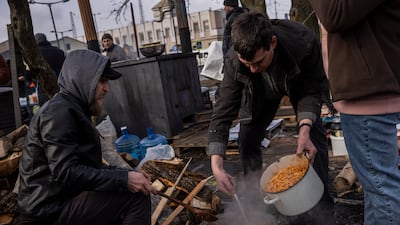
Ukrainian volunteers prepare food for displaced people outside Lviv railway station in western Ukraine. AP -
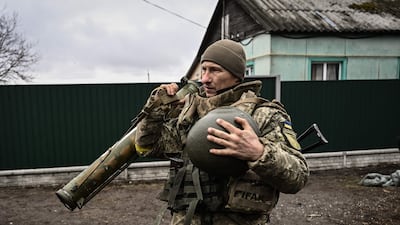
A Ukrainian soldier holds an anti-tank launcher north-east of Kyiv. AFP -
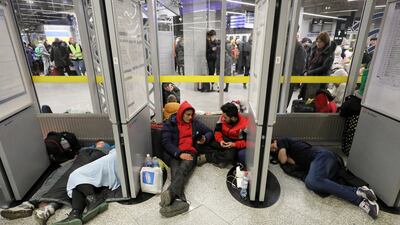
Ukrainian refugees rest at Warsaw East train station in Poland. EPA -
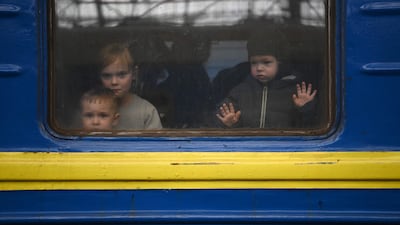
Children look out from a carriage window as a train prepares to depart from a station in Lviv to the town of Uzhhorod near the border with Slovakia. AFP -
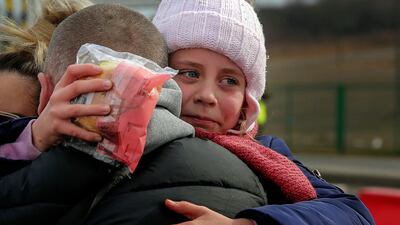
A girl who fled Ukraine is reunited with her father in Medyka, south-eastern Poland. AP Photo -
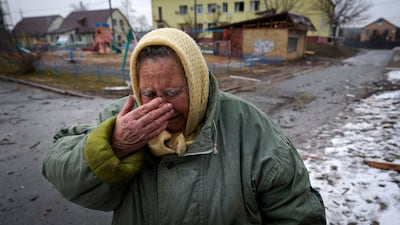
Tears outside a house damaged by a Russian airstrike in Gorenka, on the outskirts of Kyiv. AP Photo -
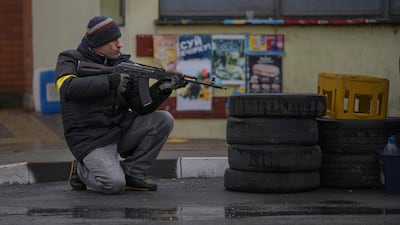
A civil defence member is poised to shoot as a vehicle approaches a checkpoint in Gorenka. AP Photo -

A Ukrainian civil defence member in the garden of a house damaged by a Russian airstrike. AP Photo -

Members of the US Army 3rd Infantry Division board a plane bound for Germany in Savannah, Georgia. EPA -
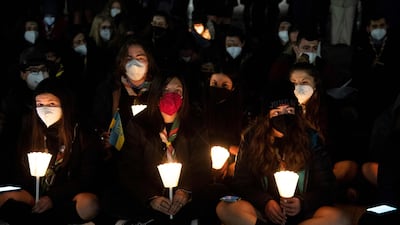
Prayers for peace in Ukraine at the Vatican's Saint Peter's Square. AFP -
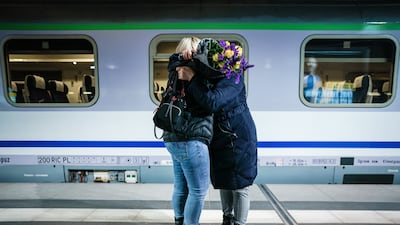
A woman (right) hugs an arriving passenger from a train carrying refugees at Berlin's central station. EPA -

Firefighters battle a blaze in a Kharkiv police building hit by shelling. AFP -
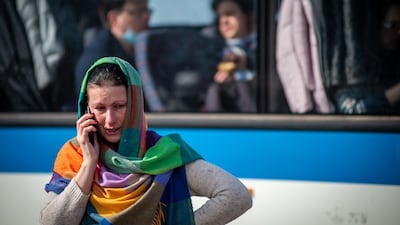
A Ukrainian woman makes a phone call after crossing the Slovakian border. AFP -

A doctor takes shelter in the basement of a Kyiv perinatal centre. Reuters -

Debris which locals say was caused by shelling in separatist-controlled Horlivka, Donetsk. Reuters -
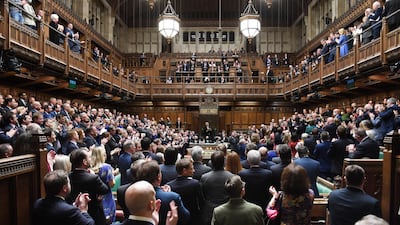
MPs in London give a standing ovation to Ukraine ambassador Vadym Prystaiko, who was in the public gallery. AP -
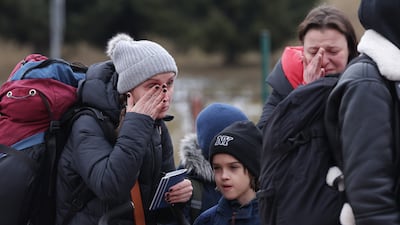
Distraught women and children fleeing Ukraine wait to enter Poland at the Korczowa crossing. Getty -
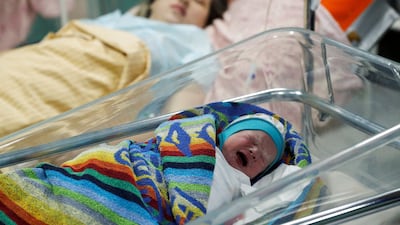
Newborn Ivan lies next to his mother as they shelter in the basement of a Kyiv perinatal centre. Reuters -
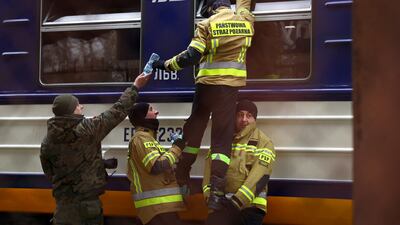
Firefighters hand water to people in a Ukrainian train full of refugees in Przemysl, Poland. Reuters -
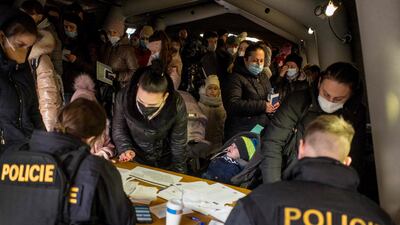
Ukrainian refugees queue to file for residency permits at Prague's police headquarters. AFP -
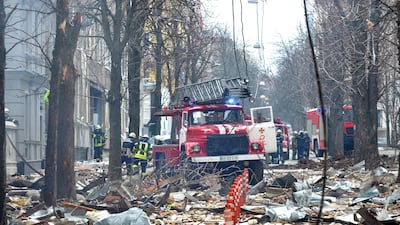
Firefighters work to contain a blaze in buildings housing the Kharkiv regional police department. AFP -
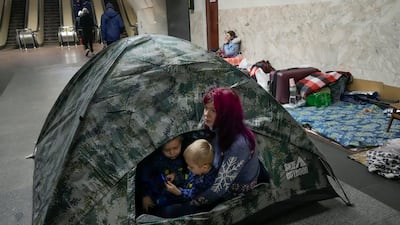
A woman and her children sit in a tent in the Kyiv subway, using it as a bomb shelter. AP -
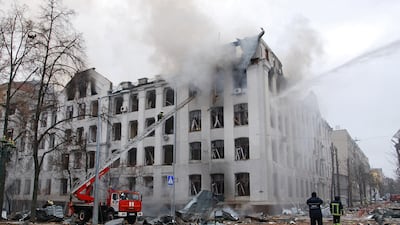
Firefighters work to extinguish a blaze at the Kharkiv National University building, which city officials said was damaged by Russian shelling. Reuters -
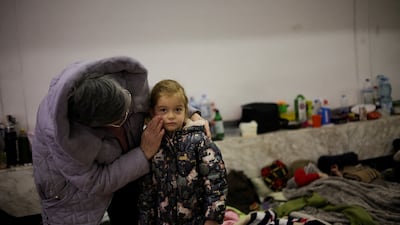
An elderly woman comforts a child as they take shelter inside an underground station in Kyiv. Reuters -
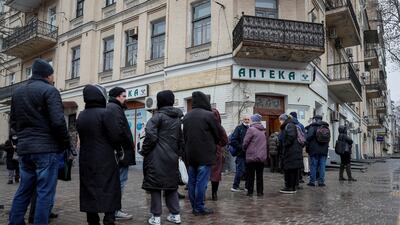
People queue at a pharmacy in central Kyiv. Reuters -
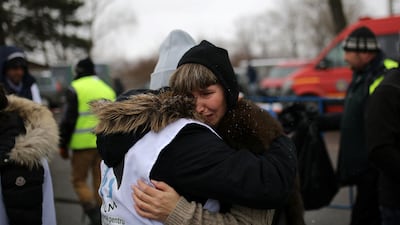
A woman is consoled by a volunteer after fleeing from Russia's invasion of Ukraine, at the border crossing in Siret, Romania. Reuters -

A Ukrainian civilian in the city of Zhytomyr practises throwing petrol bombs. Reuters -
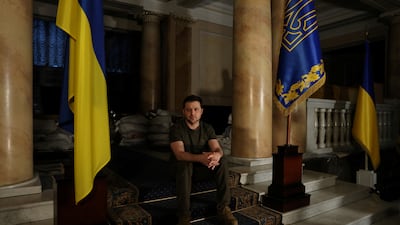
Ukrainian President Volodymyr Zelenskyy poses after an interview with Reuters in Kyiv. Reuters -
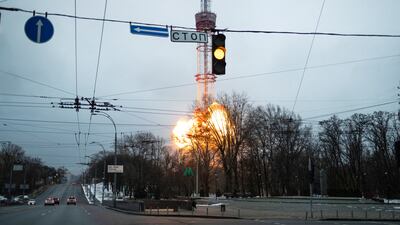
A blast is seen at Kyiv's TV tower. Reuters -
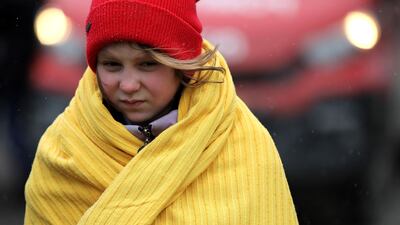
A girl in Siret, Romania, covers herself with a blanket after fleeing from Ukraine. Reuters -
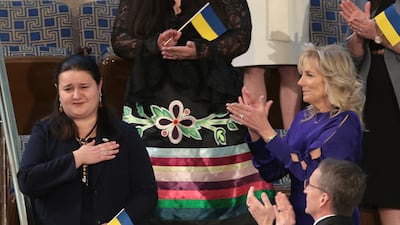
Ukraine's ambassador to the US, Oksana Markarova, acknowledges applause from US first lady Jill Biden as they attend President Joe Biden's first State of the Union address in Washington. AFP -
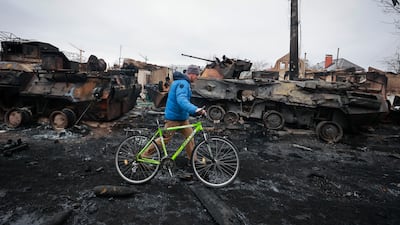
A man walks past the remains of Russian military vehicles in Bucha, close to Kyiv. AFP -
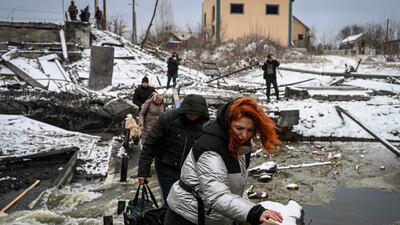
Civilians cross a river on a blown-up bridge on Kyiv's northern front. Defending the capital is a 'key priority', Ukraine's president has said. AFP -
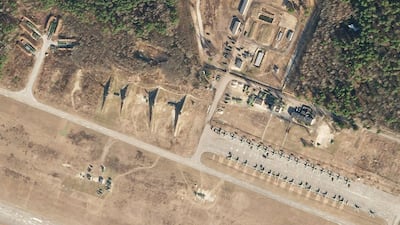
Russian aircraft on the ground at Luninets Airbase, Belarus, about 50 kilometres north of the Ukrainian border. AFP -
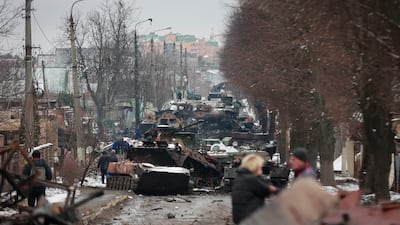
People look at the gutted remains of Russian military vehicles on a road in the town of Bucha. AP -
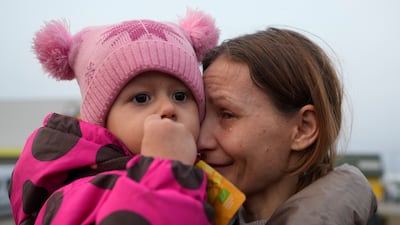
A woman with a child who fled from the war in Ukraine reunite with their family after crossing the border in Medyka, Poland. AP -
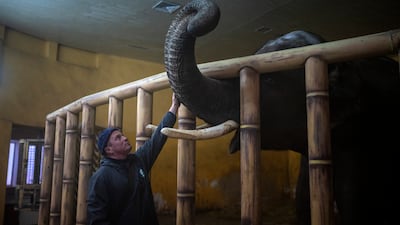
Animal keeper Kirilo Trantin comforts an elephant at Kyiv Zoo. AP -
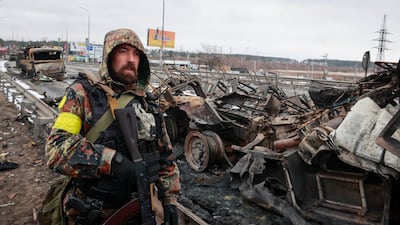
An armed man stands by the remains of a Russian military vehicle in Bucha. AP -
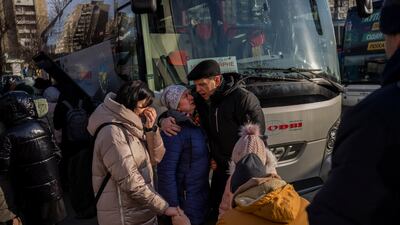
Ukrainian families say goodbye as they prepare to board a bus to Poland at Lviv, western Ukraine. AP -
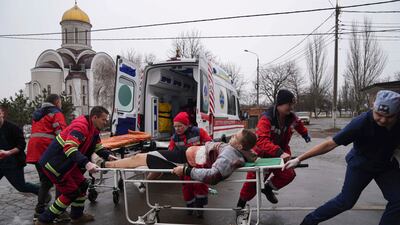
Paramedics move a man who was wounded by shelling in a residential area of Mariupol, south-eastern Ukraine. AP -
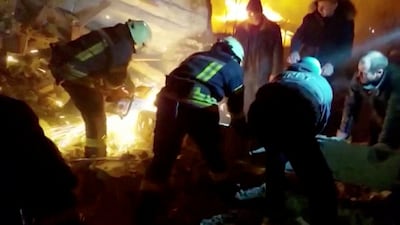
Rescuers work at the site of a Russian strike in Zhytomyr. Reuters -
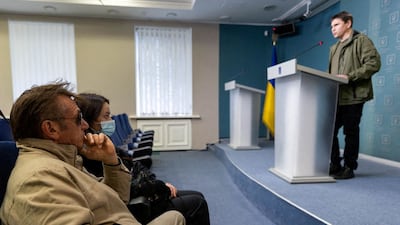
US actor and director Sean Penn attends a press briefing at the Presidential Office in Kyiv. Reuters -
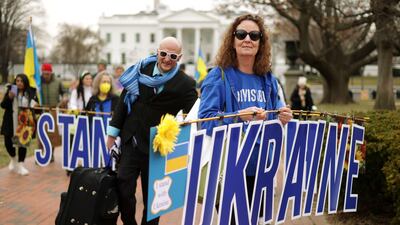
Demonstrators participate in a protest against Russia’s invasion of Ukraine at Lafayette Square in Washington. AFP -
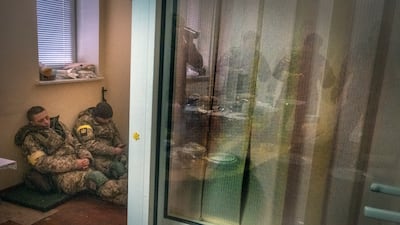
Ukrainian soldiers rest while others eat near the front line with Russian troops in northern Kyiv. AP -
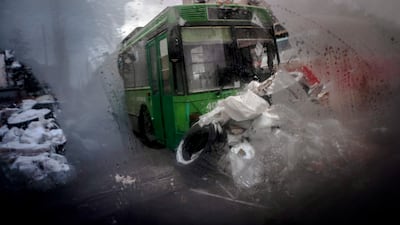
A barricade made of trams, buses and sand bags is seen through the window of car in the northern part of Kyiv. AP -
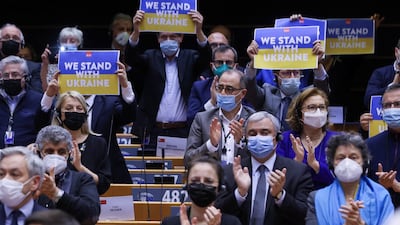
Members of the European Parliament applaud after Ukrainian President Volodymyr Zelenskyy's speech at a special session to debate its response to the Russian invasion of Ukraine. Reuters -
Ambassadors and diplomats walk out as Russia's Foreign Minister Sergey Lavrov (on screen) speaks during a recorded message at the 49th session of the UN Human Rights Council in Geneva. EPA


The 33-year-old from British Columbia quit his job as a cook to take up arms in Ukraine only to learn from the Ukrainian embassy in Ottawa that he wasn’t eligible.
“I quit the job to go over there and I jumped the gun,” Mr Woolsey said with a chuckle.
But the self-described history buff is undeterred and still searching for ways to help.
“It's kind of, really, the first, I guess, in my lifetime, really big conflict that has brought us to the brink,” he said.
Mr Woolsey said Russia’s unprovoked assault on Ukraine “struck a chord” with him and many others.
“We don't feel like we can sit and watch.”
Mr Woolsey said he wanted to carry on Canada’s strong military history and legacy from the First and Second World Wars.
Determined to help out, he started a GoFundMe page to raise money for various causes in support of Ukraine.
Russia has taken note.
In a press briefing on Thursday, the foreign ministry's spokeswoman Maria Zakharova said Russia is seeing "gangsters using western weapons and not even representing legal military units" on the streets of Ukraine.
Ukraine’s resistance, led by Mr Zelenskyy — who reportedly turned down an offer by the US to leave Ukraine — has won the admiration of many around the world.
The Ukrainian embassy in the UK quoted Mr Zelenskyy as telling the US government: “The fight is here. I need ammunition, not a ride.”
Russian forces continue to wage fierce battles in key cities across the country and have taken control of Europe’s largest nuclear power plant.
But Mr Mamulashvili and his foreign troops remain committed to the cause.
“I'm 100 per cent sure that we're going to kick their [expletive],” he said defiantly.

