


Visitors to St Paul, Minnesota's Mears Park might be a bit disappointed with the holiday lights this year, as the display has been scaled back due to marauding bands of hungry squirrels.
The community organisation Friends of Mears Park reported that the squirrel population in the area has exploded over the past decade — and with bigger numbers come bigger appetites.
“They could bite people, they could be disease-ridden. I think they would crawl up your leg if you let them,” the organisation's co-chair, Lee Ann LaBore, told CBS.
Last year, after organisers spent weeks planning and setting up the park's beloved light display, the ravenous rodents attacked, chewing through wires and causing permanent damage.
But the hardest nut to crack is why the squirrels were driven to gnaw on the lights' electrical wiring in the first place.
One theory is that it is because the wires are coated polylactic acid, a derivative of corn sugar — a tempting meal on a cold winter night.
-
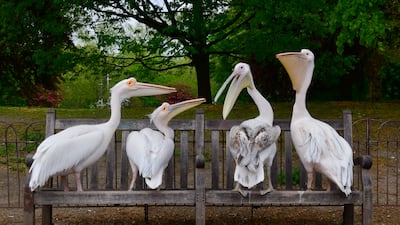
Pelicans in St James’s Park, central London. The birds were introduced to the park in the 16th century. Getty -
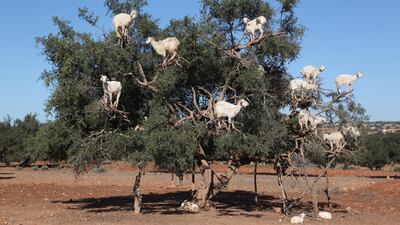
Tree-climbing goats feed on the leaves of an argan tree in Essaouira, Morocco. Getty -
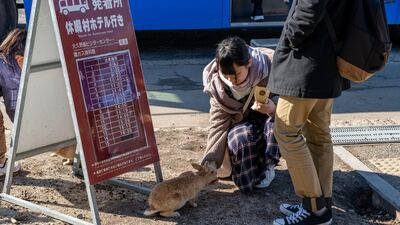
People feed wild rabbits on Okunoshima, also known as Rabbit Island, in Japan. In the 1920s the island housed to a chemical weapons plant. After the Second World War, Okunoshima was turned into a park and the bunnies were let loose. Alamy -
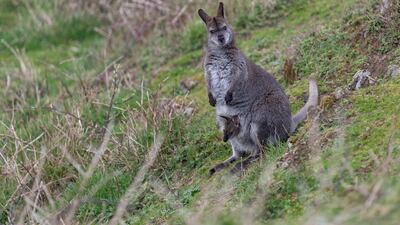
A wallaby on Lambay Island in the Irish Sea. The animals were introduced to the island in the 1950s, and more came to the island from Dublin Zoo in the 1980s. Wikimedia Commons -
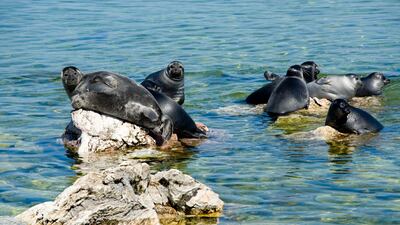
The Baikal seal lives exclusively Lake Baikal in Siberia, Russia. Alamy -

A pandemonium of parrots has lived in Telegraph Hill in San Francisco since the 1990s. Getty -
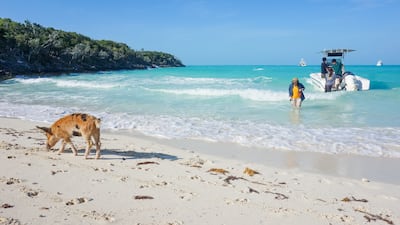
Pig Beach in the Bahamas, which feral hogs have made their home. Getty


“If people would just obey the ordinance, stop feeding them, they are very resourceful; they will find food and the population will decrease and we might be able to have our twinkly lights back on,” Ms LaBore said.
Vendors complained over the squirrelly antics and the park was forced to reconfigure the light show.
Now, instead of the traditional twinkly lights, visitors can enjoy a projected kaleidoscope of snowflakes and trees bathed in blue and green lights, with both lighting schemes free of any delicious, if toxic, snacking material.
Looking to the future, Ms LaBore said she believes the squirrels will go elsewhere if people stop feeding them.
“It's like being between a rock and the proverbial hard spot,” she told the Star Tribune. “It's just too many squirrels.”

