The US on Tuesday imposed sanctions on seven Lebanese citizens over financial links to Hezbollah.
The Treasury Department said it was placing sanctions on Ibrahim Ali Daher, the leader of Hezbollah’s Central Finance Unit, and six others.
They were being penalised for using accounts at Lebanese banks under US sanctions to transfer about $500 million on behalf of the group's financial firm, Al Qard Al Hassan.
"The threat that Hezbollah poses to the United States, our allies and interests in the Middle East, and globally, calls for countries around the world to take steps to restrict its activities and disrupt its facilitation networks," US Secretary of State Antony Blinken said.
"These designations reinforce recent US action against Hezbollah financiers who have provided support or services to Hezbollah. The United States will continue to take action to disrupt Hezbollah's operations."
The other six who had sanctions imposed are Ahmad Mohamad Yazbeck, Abbas Hassan Gharib, Wahib Mahmud Subayti, Mostafa Habib Harb, Ezzat Youssef Akar and Hasan Chehadeh Othman.
“From the highest levels of Hezbollah’s financial apparatus to working-level individuals, Hezbollah continues to abuse the Lebanese financial sector and drain Lebanon’s financial resources at an already dire time,” said Andrea Gacki, head of the Treasury Department’s sanctions office.
“Such actions demonstrate Hezbollah’s disregard for financial stability, transparency or accountability in Lebanon.”
The US has maintained sanctions on Al Qard Al Hassan since 2007.
But as Lebanon struggles with a crippling economic crisis, many Lebanese citizens turned to the Hezbollah-run company to take out interest-free micro-loans of up to $5,000.
“While [the company] purports to serve the Lebanese people, in practice it illicitly moves funds through shell accounts and facilitators, exposing Lebanese financial institutions to sanctions risk related to conducting business with a designated entity," Mr Blinken said.
"Moreover, by hoarding cash that is desperately needed by the Lebanese economy, it empowers Hezbollah to build its own support base and compromise the stability of the Lebanese state."
US sanctions forced Lebanon’s Jammal Trust Bank to close in 2019 over accounts linked to Hezbollah and Al Qard Al Hassan.
Lebanon is in the middle of a worsening financial crisis, with successive governments piling up debt since the end of the civil war in 1990.
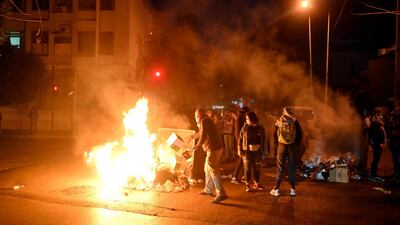
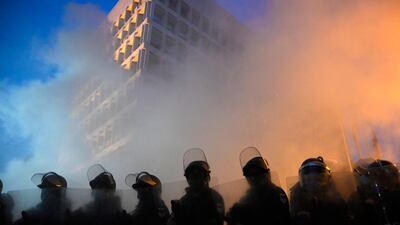
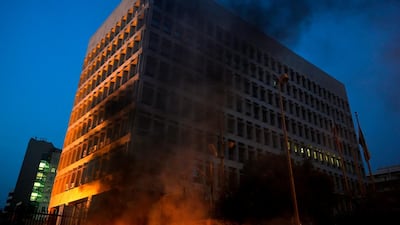
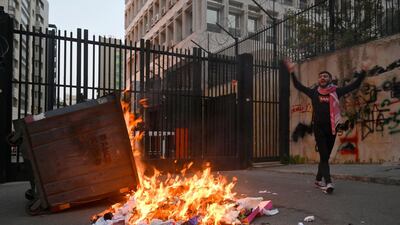
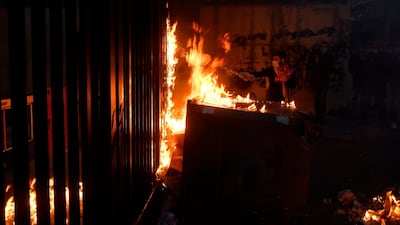
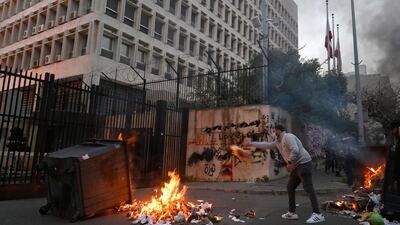
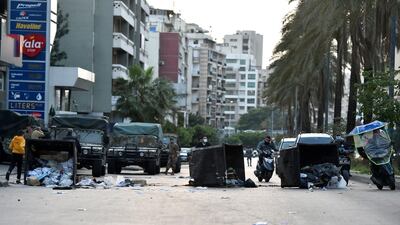
Mass protests swept the country as the price of consumer goods skyrocketed.
The political elite are yet to form a new government to provide basic services to the Lebanese population after last year's port explosion tore through Beirut.
Mercer, the investment consulting arm of US services company Marsh & McLennan, expects its wealth division to at least double its assets under management (AUM) in the Middle East as wealth in the region continues to grow despite economic headwinds, a company official said.
Mercer Wealth, which globally has $160 billion in AUM, plans to boost its AUM in the region to $2-$3bn in the next 2-3 years from the present $1bn, said Yasir AbuShaban, a Dubai-based principal with Mercer Wealth.
“Within the next two to three years, we are looking at reaching $2 to $3 billion as a conservative estimate and we do see an opportunity to do so,” said Mr AbuShaban.
Mercer does not directly make investments, but allocates clients’ money they have discretion to, to professional asset managers. They also provide advice to clients.
“We have buying power. We can negotiate on their (client’s) behalf with asset managers to provide them lower fees than they otherwise would have to get on their own,” he added.
Mercer Wealth’s clients include sovereign wealth funds, family offices, and insurance companies among others.
From its office in Dubai, Mercer also looks after Africa, India and Turkey, where they also see opportunity for growth.
Wealth creation in Middle East and Africa (MEA) grew 8.5 per cent to $8.1 trillion last year from $7.5tn in 2015, higher than last year’s global average of 6 per cent and the second-highest growth in a region after Asia-Pacific which grew 9.9 per cent, according to consultancy Boston Consulting Group (BCG). In the region, where wealth grew just 1.9 per cent in 2015 compared with 2014, a pickup in oil prices has helped in wealth generation.
BCG is forecasting MEA wealth will rise to $12tn by 2021, growing at an annual average of 8 per cent.
Drivers of wealth generation in the region will be split evenly between new wealth creation and growth of performance of existing assets, according to BCG.
Another general trend in the region is clients’ looking for a comprehensive approach to investing, according to Mr AbuShaban.
“Institutional investors or some of the families are seeing a slowdown in the available capital they have to invest and in that sense they are looking at optimizing the way they manage their portfolios and making sure they are not investing haphazardly and different parts of their investment are working together,” said Mr AbuShaban.
Some clients also have a higher appetite for risk, given the low interest-rate environment that does not provide enough yield for some institutional investors. These clients are keen to invest in illiquid assets, such as private equity and infrastructure.
“What we have seen is a desire for higher returns in what has been a low-return environment specifically in various fixed income or bonds,” he said.
“In this environment, we have seen a de facto increase in the risk that clients are taking in things like illiquid investments, private equity investments, infrastructure and private debt, those kind of investments were higher illiquidity results in incrementally higher returns.”
The Abu Dhabi Investment Authority, one of the largest sovereign wealth funds, said in its 2016 report that has gradually increased its exposure in direct private equity and private credit transactions, mainly in Asian markets and especially in China and India. The authority’s private equity department focused on structured equities owing to “their defensive characteristics.”
What went into the film
25 visual effects (VFX) studios
2,150 VFX shots in a film with 2,500 shots
1,000 VFX artists
3,000 technicians
10 Concept artists, 25 3D designers
New sound technology, named 4D SRL
Company profile
Company name: Dharma
Date started: 2018
Founders: Charaf El Mansouri, Nisma Benani, Leah Howe
Based: Abu Dhabi
Sector: TravelTech
Funding stage: Pre-series A
Investors: Convivialite Ventures, BY Partners, Shorooq Partners, L& Ventures, Flat6Labs
Trump v Khan
2016: Feud begins after Khan criticised Trump’s proposed Muslim travel ban to US
2017: Trump criticises Khan’s ‘no reason to be alarmed’ response to London Bridge terror attacks
2019: Trump calls Khan a “stone cold loser” before first state visit
2019: Trump tweets about “Khan’s Londonistan”, calling him “a national disgrace”
2022: Khan’s office attributes rise in Islamophobic abuse against the major to hostility stoked during Trump’s presidency
July 2025 During a golfing trip to Scotland, Trump calls Khan “a nasty person”
Sept 2025 Trump blames Khan for London’s “stabbings and the dirt and the filth”.
Dec 2025 Trump suggests migrants got Khan elected, calls him a “horrible, vicious, disgusting mayor”
Tank warfare
Lt Gen Erik Petersen, deputy chief of programs, US Army, has argued it took a “three decade holiday” on modernising tanks.
“There clearly remains a significant armoured heavy ground manoeuvre threat in this world and maintaining a world class armoured force is absolutely vital,” the general said in London last week.
“We are developing next generation capabilities to compete with and deter adversaries to prevent opportunism or miscalculation, and, if necessary, defeat any foe decisively.”
The Voice of Hind Rajab
Starring: Saja Kilani, Clara Khoury, Motaz Malhees
Director: Kaouther Ben Hania
Rating: 4/5
Jetour T1 specs
Engine: 2-litre turbocharged
Power: 254hp
Torque: 390Nm
Price: From Dh126,000
Available: Now
The specs
- Engine: 3.9-litre twin-turbo V8
- Power: 640hp
- Torque: 760nm
- On sale: 2026
- Price: Not announced yet
Types of policy
Term life insurance: this is the cheapest and most-popular form of life cover. You pay a regular monthly premium for a pre-agreed period, typically anything between five and 25 years, or possibly longer. If you die within that time, the policy will pay a cash lump sum, which is typically tax-free even outside the UAE. If you die after the policy ends, you do not get anything in return. There is no cash-in value at any time. Once you stop paying premiums, cover stops.
Whole-of-life insurance: as its name suggests, this type of life cover is designed to run for the rest of your life. You pay regular monthly premiums and in return, get a guaranteed cash lump sum whenever you die. As a result, premiums are typically much higher than one term life insurance, although they do not usually increase with age. In some cases, you have to keep up premiums for as long as you live, although there may be a cut-off period, say, at age 80 but it can go as high as 95. There are penalties if you don’t last the course and you may get a lot less than you paid in.
Critical illness cover: this pays a cash lump sum if you suffer from a serious illness such as cancer, heart disease or stroke. Some policies cover as many as 50 different illnesses, although cancer triggers by far the most claims. The payout is designed to cover major financial responsibilities such as a mortgage or children’s education fees if you fall ill and are unable to work. It is cost effective to combine it with life insurance, with the policy paying out once if you either die or suffer a serious illness.
Income protection: this pays a replacement income if you fall ill and are unable to continue working. On the best policies, this will continue either until you recover, or reach retirement age. Unlike critical illness cover, policies will typically pay out for stress and musculoskeletal problems such as back trouble.
Spec%20sheet
%3Cp%3E%3Cstrong%3EDisplay%3A%3C%2Fstrong%3E%204.7%22%20Retina%20HD%2C%201334%20x%20750%2C%20625%20nits%2C%201400%3A1%2C%20True%20Tone%2C%20P3%3Cbr%3E%3Cstrong%3EChip%3A%3C%2Fstrong%3E%20Apple%20A15%20Bionic%2C%206-core%20CPU%2C%204-core%20GPU%2C%2016-core%20Neural%20Engine%3Cbr%3E%3Cstrong%3ECamera%3A%3C%2Fstrong%3E%2012MP%2C%20f%2F1.8%2C%205x%20digital%20zoom%2C%20Smart%20HDR%2C%20Deep%20Fusion%3Cbr%3E%3Cstrong%3EVideo%3A%3C%2Fstrong%3E%204K%2B%40%2024%2F30%2F60fps%2C%20full%20HD%2B%40%2030%2F60fps%2C%20HD%2B%40%2030%20fps%3Cstrong%3E%3Cbr%3EFront%20camera%3A%20%3C%2Fstrong%3E7MP%2C%20f%2F2.2%2C%20Smart%20HDR%2C%20Deep%20Fusion%3B%20HD%20video%2B%40%2030fps%3Cbr%3E%3Cstrong%3EBattery%3A%3C%2Fstrong%3E%20Up%20to%2015%20hours%20video%2C%2050%20hours%20audio%3B%2050%25%20fast%20charge%20in%2030%20minutes%20with%2020W%20charger%3B%20wireless%20charging%3Cbr%3E%3Cstrong%3EBiometrics%3A%3C%2Fstrong%3E%20Touch%20ID%3Cbr%3E%3Cstrong%3EDurability%3A%3C%2Fstrong%3E%20IP67%2C%20dust%2C%20water%20resistant%20up%20to%201m%20for%2030%20minutes%3Cbr%3E%3Cstrong%3EPrice%3A%3C%2Fstrong%3E%20From%20Dh1%2C849%3C%2Fp%3E%0A
Manikarnika: The Queen of Jhansi
Director: Kangana Ranaut, Krish Jagarlamudi
Producer: Zee Studios, Kamal Jain
Cast: Kangana Ranaut, Ankita Lokhande, Danny Denzongpa, Atul Kulkarni
Rating: 2.5/5
Second Test
In Dubai
Pakistan 418-5 (declared)
New Zealand 90 and 131-2 (follow on)
Day 3: New Zealand trail by 197 runs with 8 wickets remaining