


Live updates: Follow the latest news on Israel-Gaza
Pressure for the UK to shift its position on Gaza and call for a ceasefire is mounting, after MPs were told of a huge rise in malnourishment and infectious diseases.
Humanitarian aid agencies told MPs on Tuesday that doctors were seeing more malnourished patients, with the risks of widespread famine growing daily.
Infectious diseases such as scabies, typhoid and hepatitis had become widespread, with no services for testing and limited medical supplies.
Labour MP Sarah Champion, who chaired the meeting with aid agencies, said she hoped the government will begin to move on its current position in light of the worsening crisis.
Ms Champion plans to meet UK Foreign Secretary David Cameron privately on Tuesday.
“I know that he is starting to move on the ceasefire and on whether or not Israel is breaching international law, so I hope he moves further on that after our meeting tomorrow,” she told The National.
Ms Champion, who voted for a ceasefire in December, feared Israel’s bombardment and siege of Gaza could leave Palestinians with no hope for the future.
“What I heard today was the psychological warfare going on,” she said.
“People are having their hope taken away from them and the UNRWA [UN Palestinian refugee agency] representative said that she feels like a ghost now.
“That destroys the future for the Palestinian people in Gaza, which I think is a horrific to do."

Although more aid trucks were entering Gaza, they were subject to extensive delays and hundreds of thousands of Palestinians could not be reached by aid workers, agencies told MPs.
The about 5,600 trucks of aid delivered so far since the conflict began three months ago was the equivalent of 12 days of supplies entering Gaza before the war.
Two thirds of hospitals in Gaza were no longer operational, with supplies needed for field hospitals, and more staff to run them, said Dr Ghada Al Jadba, chief of the health programme at the UNRWA.
Hospitals in Gaza were reporting up to 20 cases of malnourishment a week, with patients initially coming in to treat injuries or infection, said Rohan Talbot, of the British charity Medical Aid for Palestinians.
Mothers were being rolled into maternity wards minutes before giving birth, then ushered out again as soon as possible, owing to a lack of space and services.
Inadequate nourishment meant they struggled to breastfeed, and baby formula was being prepared with unclean water that made the babies ill, Mr Talbot said.
Famine was “months” away, but a significant population were already at critical levels of hunger.
“The food that they do eat is not of sufficient nutritional quality,” Mr Talbot said.
A generation of children would have stunted growth, which could develop into acute malnutrition.
“It won’t be long before this becomes a mortal issue,” Mr Talbot said.
Nine thousand children have lost a limb, with no rehabilitative services, which will take “years and years” to build, he said.
Mr Talbot urged MPs to question whether the UK aid that had entered Gaza had been properly distributed around the territory.
Aid workers were unable to access the 800,000 Palestinians who remain stranded in the north of Gaza, an area designated as a military zone by the Israeli military.
Dr Al Jadba described instances in which shelters marked with a UN flag had become targets for Israeli forces.
The rapid growth of infectious diseases was the result of people overcrowding in shelters, with hundreds sharing a single toilet and shower.
This was compounded by fuel shortages that limited waste disposal and sewerage systems, and the lack of clean water.
“Hygiene is a disaster. The numbers [of infectious disease cases] are increasing dramatically every week,” Dr Al Jadba said.
Latest from the Israel-Gaza war - in pictures
-
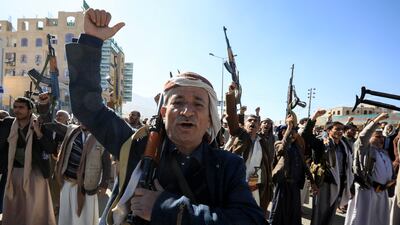
Houthi fighters shout gather in Sanaa. The rebels have launched attacks in the Red Sea in response to the Gaza war. EPA -
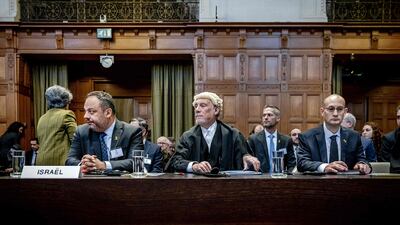
From left, Israeli Foreign Ministry adviser Tal Becker, lawyer Malcolm Shaw and Gilad Noam, deputy attorney general for international affairs, at the International Court of Justice in The Hague. AFP -
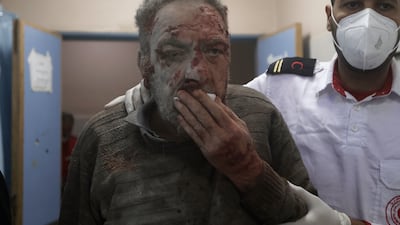
A Palestinian man injured in an Israeli strike receives treatment in Khan Younis, southern Gaza. AP -

Palestinian medics mourn after members of the Palestinian Red Crescent were killed in an Israeli strike in Deir Al Balah. Reuters -
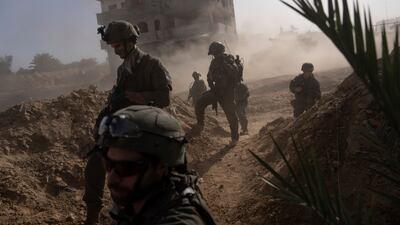
Israeli soldiers take up positions during a ground operation in Khan Younis. AP -
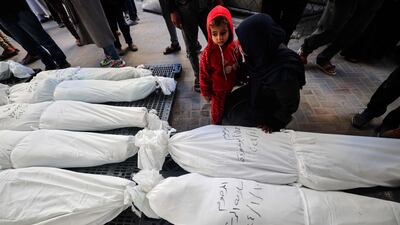
Mourners gather at Al Najar hospital in Rafah, after several relatives of a member of the Hamas general military council were killed in a strike. AFP -
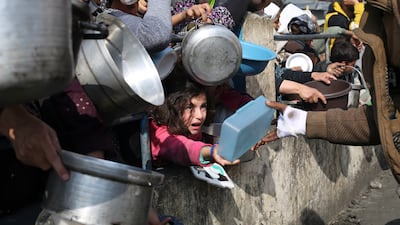
Palestinians wait to receive food aid in Rafah. AP -

A mass grave in Rafah. More than 23,000 people have been killed in Gaza since October 7. AFP -

Palestinians search the rubble of destroyed buildings after an Israeli attack on Rafah. AFP -
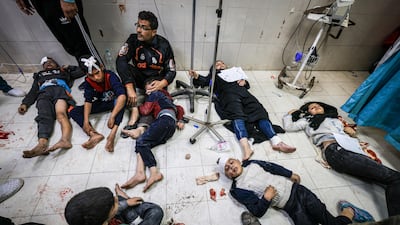
Injured Palestinians receive treatment at Nasser hospital in Khan Younis. AFP -
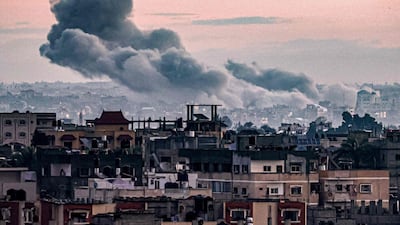
Smoke rises over Khan Younis in the southern Gaza Strip, as seen from Rafah, during sustained Israeli air strikes. AFP -
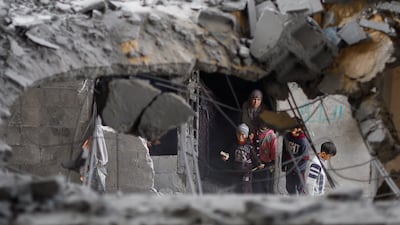
The destruction has spread throughout the Gaza Strip, from the north to Rafah in the south. Reuters -
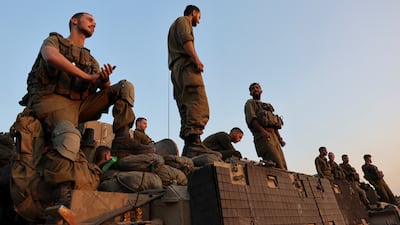
Israeli soldiers stand on an armoured personnel carrier near the Israel-Gaza border, in southern Israel. Reuters -
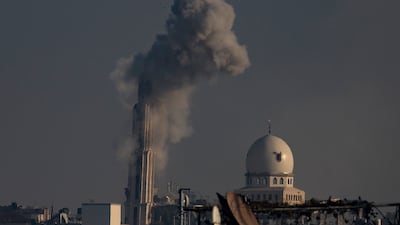
Smoke rises following Israeli air strikes in Khan Younis, the southern Gaza Strip. EPA -
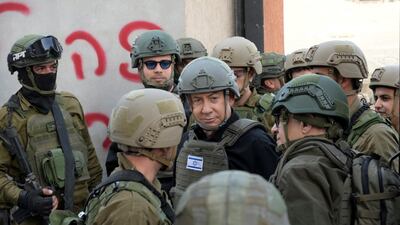
Israeli Prime Minister Benjamin Netanyahu receives a security briefing with commanders and soldiers in the northern Gaza Strip. AP -
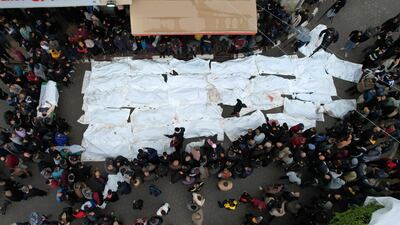
Palestinians mourn their relatives killed in an Israeli strike on the Al Maghazi refugee camp. AFP -
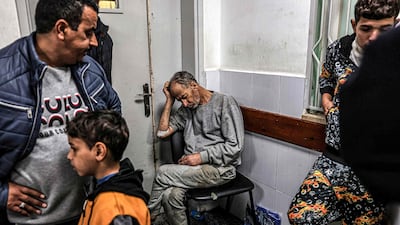
A Palestinian man detained by the Israeli military awaits treatment for his injuries in Rafah. AFP


Medical professionals had lost loved ones and were struggling to keep their own families alive, let alone the scores of patients entering hospitals every day.
“To be a paramedic in Gaza means when you leave emergency services, you will not be sure whether you will be alive to return,” said Nebal Farsakh, spokeswoman for the Palestinian Red Crescent.
“Your mind is exhausted thinking about your family who are under constant bombardment, knowing that they don’t have proper access to food and water,” said Ms Farsakh.
Aid agencies urged the UK government to call for an immediate ceasefire, in addition to relief.
“Stop this madness,” said Dr Al Jadba.
The meeting came as Mr Cameron admitted he was “worried” that Israel had breached international law, when giving his first testimony to the foreign affairs committee on Tuesday.
The UK has called for a "sustainable ceasefire" that could only be implemented once Hamas lays down its arms and hostages are released.
Until then, it is pushing for humanitarian "pauses" that would allow aid into Gaza.
Critics, including the British charity War Child, say the policy supports the "continuation of violence" in Gaza.
Ms Champion echoed the aid agencies’ calls for an immediate ceasefire, deploring the conditions they described in the hearing.
“It is absolutely wicked and immoral that international conventions are not respected. I am disgusted by what I’m hearing in this session,” she told the committee.
“The situation is utterly desperate. It feels totally unnecessary.
“I cannot see why we’re not all calling for a ceasefire. Its deplorable, what’s going on."

