


The UK needs more diplomats and Arabists on the ground in the Middle East to help steer foreign policy for the region.
John Casson, a former ambassador to Egypt and a self-described Arabist, said the UK's focus on security and stability in Arab countries had come at the expense of listening to the societal changes happening within them.
“The Orientalist perspective still pertains. We tend to imagine the Middle East and North Africa as either a region of grotesque threats or fabulous riches,” said Mr Casson, who served as an adviser to former prime minister David Cameron on the Middle East.
“We do not think about Arab populations as citizens with their own rights, responsibilities and political complexity,” he said.
“Simply thinking in terms of a great power game doesn’t actually engender stability and security."
The current Israel-Gaza war was a “very good example” of how the UK has prioritised the voices of “incumbents in certain states” over others on the ground.
“We swallowed the line that Palestine was no longer an issue of generational salience in the region. It was all about Iran now,” Mr Casson said.
“There wasn't a Palestinian incumbent to really talk to, so we didn't pay any attention to the needs of Palestinian society or Palestinian politics."
This resulted in the UK being “leveraged by Israel” without presenting options to end the fighting. “We are managing a state's toxic status quo instead of offering any way out of the cycle of violence,” he added.
The need for grounded Arab expertise
Mr Casson fears the government’s pledge to support a two-state solution had become an “empty phrase” and an excuse for a lack of action on the Palestinian issue.
“We say we support what the [Israeli Prime Minister Benjamin] Netanyahu government is doing and we support two-state solution [but] those two things are incompatible,” he said.
He hit back at MPs who voted against a ceasefire without offering a military solution to the war. “You have a responsibility to name the military outcome that is going to effectively defeat Hamas in a way that justifies the cost,” he said.
Part of the problem, he said, was the “siloed” approach to foreign policy in Whitehall, which focuses on security, intelligence gathering and institution building without giving an overarching picture of "national interest".
“If it’s just people sitting in Whitehall, with glib, securocratic answers, we will not understand how to generate leverage,” he said.
Israel Gaza war two months on - in pictures
-
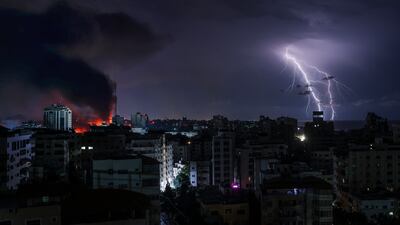
Lightning strikes as smoke billows following an Israeli bombardment of Gaza city. AFP -

A funeral of Palestinians killed in Israeli strikes in Khan Younis in the southern Gaza Strip. Reuters -
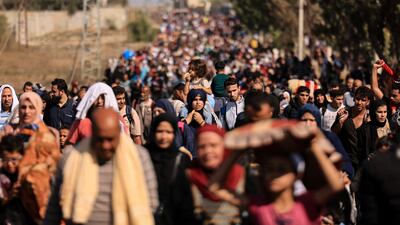
Palestinian families fleeing Gaza city and other parts of northern Gaza head south. AFP -
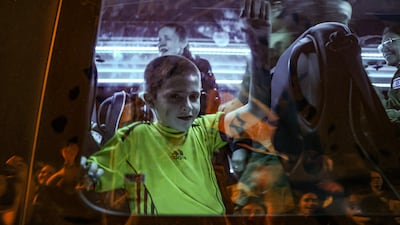
Tal Almog-Goldstein, a hostage released by Hamas, is driven to an army base in Ofakim, southern Israel. AFP -
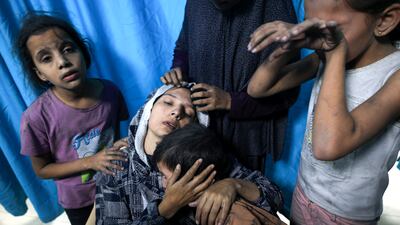
A wounded Palestinian woman is surrounded by her children at Nasser Hospital in Khan Younis after Israeli air strikes hit their home. AFP -
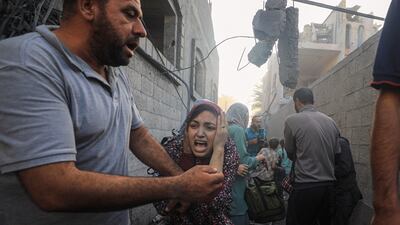
People flee following Israeli air strikes on a neighbourhood in the Al Maghazi refugee camp in the central Gaza Strip. AFP -
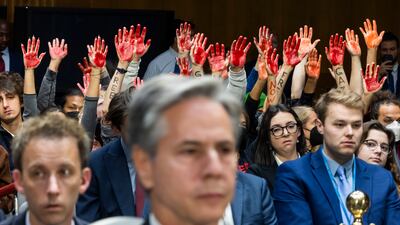
Protesters calling for a ceasefire in Gaza raise their arms as US Secretary of State Antony Blinken testifies at a Senate review of national security requests in Washington. EPA -
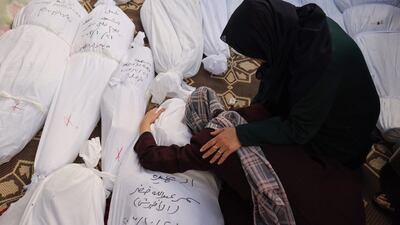
A woman cradles the body of her sister, killed in an Israeli bombardment in Rafah in the southern Gaza Strip. AFP -

A bloody handprint inside a house at Nir Oz kibbutz, one of the Israeli communities near the Gaza Strip attacked on October 7 by Hamas. AFP -
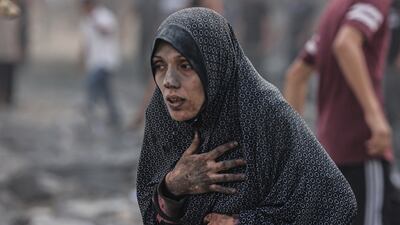
A Palestinian woman in shock after air strikes hit buildings near her home in Rafah. AFP -
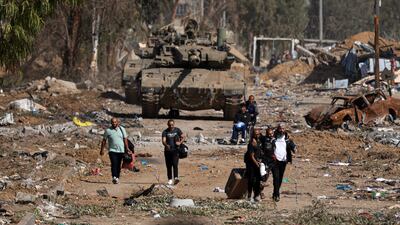
Palestinians fleeing the north trudge along the Salaheddine road in the southern outskirts of Gaza city, with Israeli tanks in the background. AFP -
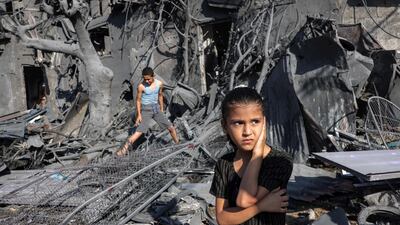
A girl wonders what it is all about after a bombardment in Rafah. AFP -
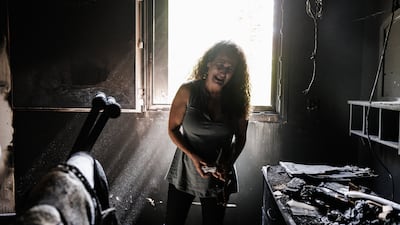
Kibbutz Nir Oz resident Hadas Kalderon, whose children were taken hostage, breaks down. Her mother and niece were killed. Getty Images -

Many displaced Palestinians are now taking shelter in tented camps at UN-run centres. Reuters -
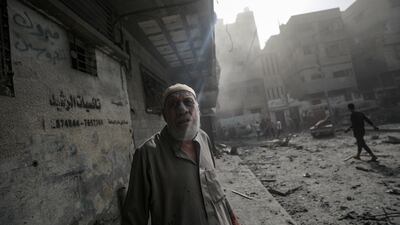
Destruction as far as the eye can see in Gaza city. EPA -
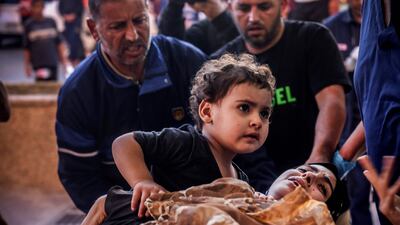
A boy helps wheel his injured mother into Nasser Hospital in Khan Younis. AFP -
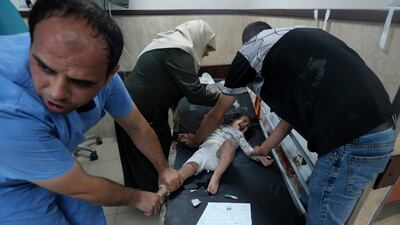
A Palestinian child is treated at Al Aqsa Hospital in Deir al Balah. AP -

A man mourns as bodies are returned to relatives for burial. Reuters -

Members of the Jewish community and supporters of Israel attend a rally in New York calling for the release of hostages held by Hamas. AFP -

Palestinians collect water, of which there is an acute shortage in the Gaza Strip, from a desalination plant. Reuters -
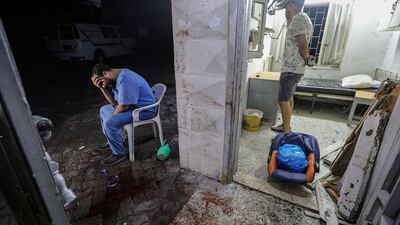
A doctor assesses the situation at Al Ahli Arab Hospital after yet another air strike in Gaza city. EPA


Critique of current strategies and the call for deepened regional expertise
The Integrated Review, which outlines the government’s foreign policy strategy, “drips of something that’s been written by someone whose never left the shores of this country”.
“It’s entirely self-referential, it's full of this muscular language,” Mr Casson said.
The All Party Parliamentary Group system could be more effectively used to advocate Britain’s interests overseas. “It is entirely counter-productive,” he said. "It's used by other countries to leverage us, it's not used by us to leverage and build national consensus in terms of British theories of change."
He urged the government to develop diplomats who “know a country” and can give a “rounded societal analysis”.
“We need to develop a different type of expertise that's more profound ... people that know the region, have relations in the region, return to the same countries over and over again,” he told MPs on the foreign affairs committee hearing on Tuesday.
Giving the Israel-Palestine conflict as an example, he added: “The person writing the paper to the Foreign Secretary about a two-state solution should be someone who has actually lived there, who has been through the previous four Gaza wars, who sees how they always end with a pause, which becomes a ceasefire, which becomes something else,” he said.

