


Labour plans to improve the nation's oral health with an extra 700,000 urgent dentist appointments and supervised toothbrushing in schools across England.
Under a package of proposals aimed at “rescuing NHS dentistry”, people most in need of treatments including fillings and root canals would be prioritised.
A programme to help three to five-year-olds form healthy brushing habits in a bid to tackle preventable tooth decay in children has also been proposed by the party.
The plans would be backed by £111 million ($135 million) a year, which Labour said would come from abolishing the non-dom tax status.
Scrapping the regime is how the party proposes to fund the largest-ever workforce expansion of the NHS if it wins the general election expected next year.
Incentives would be offered for new dentists to work in underserved areas under the proposals to tackle so-called dental deserts – areas of the country with less access to services.
In his first policy announcement ahead of the party’s annual conference in Liverpool, leader Keir Starmer said a Labour government would “do more than fix the basics” by also overhauling the NHS dental contract to change how the service worked in the long term.
“People are finding it impossible to get an NHS dentist when they need one, with appalling consequences. Horror stories of DIY dentistry are too frequent,” he said.
“My Labour government will not stand for millions of people being denied basic health care. To rescue dentistry from the immediate crisis, we will provide 700,000 more appointments a year to those in the most urgent need, recruit more dentists to areas with the most severe shortages and protect children’s teeth.
“But my mission-led government will always do more than fix the basics. We will reform the dental contract to rebuild the service in the long-run, so NHS dentistry is there for all who need it.”
Keir Starmer – in pictures
-
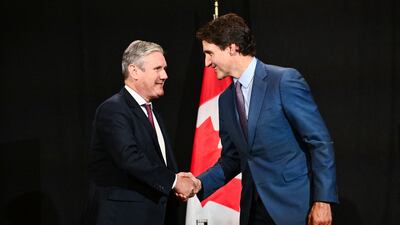
British Labour leader Keir Starmer, left, with host Canadian Prime Minister Justin Trudeau at the Global Progress Action Summit on September 16, 2023 in Montreal. As Britain prepares for a general election in the spring of 2024, Mr Starmer is being feted by international leaders as a statesman on a par with Conservative leader and Prime Minister Rishi Sunak. AFP -

British Labour leader Keir Starmer, left, at a meeting with Jonas Gahr Store, Prime Minister of Norway, at the Global Progress Action Summit, a one-day forum for progressive political leaders that took place on September 16 in Montreal. Other Labour figures at the summit included former prime minister Tony Blair and David Miliband, environment and communities minister in the Blair administration. AFP -
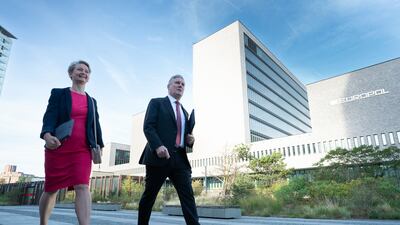
Labour leader Keir Starmer and shadow home secretary Yvette Cooper arrive at Europol in The Hague, Netherlands, to discuss how a Labour government would address Channel crossings by would-be asylum seekers to the UK in light of the ruling Conservatives' policy of sending failed claimants to Rwanda. PA -

Labour opposition leader Keir Starmer, left, with then Conservative prime minister Boris Johnson at the Cenotaph in Whitehall, London, on November 14, 2021 for the Remembrance Sunday commemorations. From the rear left are former Conservative prime minister David Cameron, former Labour prime minister Gordon Brown, and former Labour prime minister Tony Blair. AFP -
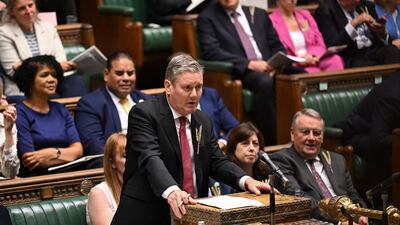
Labour leader and leader of the opposition Keir Starmer speaks during Prime Minister's Questions in the House of Commons in London on September 13, 2023. PA


It comes after a report by the Health and Social Care Committee, published in July, which indicated more people were pulling out their own teeth at home as they did not have easy access to NHS services.
The review included a YouGov poll of 2,104 people across the UK conducted in March 2023, in which 10 per cent admitted to attempting “DIY dentistry”.
Experts have called for urgent change to NHS dentistry after figures revealed the number of patients being seen remained well below pre-pandemic levels.
Data published by NHS Digital revealed 18.1 million adults in England were seen by an NHS dentist in the 24 months leading up to June 2023 compared with 21.9 million in June 2019.
The government has launched a consultation on how delays could be improved, including a proposal to grant dental hygienists the power to administer certain medicines without the need for a prescription.
But its long-awaited dental recovery plan, which aims to improve access and increase the number of NHS dentists, has not yet been published.
Claire Stevens, spokeswoman for the British Society of Paediatric Dentistry. welcomed Labour’s proposals, saying: “This is a serious plan to both grip the immediate crisis and set NHS dentistry on the path to recovery in the long-term.”
Chris Groombridge, chairman of the charity Teeth Team, added: “As a charity dedicated to providing dental education in schools, we all too often see tooth decay which is largely preventable.
“We therefore welcome Labour’s commitment to a toothbrushing programme for three to five-year-olds to help them form healthy habits and protect kids’ teeth.”
Shawn Charlwood, chairman of the British Dental Association’s General Dental Practice Committee, said: “We’re seeing patients in pain reach for pliers because of choices made in Westminster … Labour has recognised the scale of this crisis.
“NHS dentistry is hanging by a thread, and every party has a moral responsibility to set out a plan.”
The Department for Health and Social Care has been contacted for comment.

