Burqa-clad Afghan women climb a stony path in Kabul. AFP

Foreign aid cuts 'to leave vulnerable women without critical services'


Soraya Ebrahimi
  • English
  • Arabic

Foreign Office ministers have been warned that hundreds of thousands of vulnerable women and girls around the world will be left without critical services after UK aid cuts in 2023-2024.

The budget for Official Development Assistance is due to rise marginally in 2023-2024, then by 12 per cent in 2024-2025 to £8.3 billion ($10.6 billion), a programme of allocations published by the Foreign, Commonwealth and Development Office showed last month.

Despite the projections indicating an increase, ODA spending is yet to return to pre-2020 levels, which is when the government decided to temporarily reduce it from 0.7 per cent of gross national income to 0.5 per cent.

An equality impact assessment conducted by the FCDO was provided to ministers this year to inform their decisions on where significant cuts to the budget for 2023-2024 would fall.

The assessment, published by the International Development Committee, made several examples showing possible effects on groups with protected characteristics due to reductions in spending on programmes specifically for vulnerable and marginalised groups.

In particular, it highlighted the consequences for women’s health and well-being, leading to maternal deaths.

“Due to the scale of the ODA reductions (76 per cent) in Afghanistan, the FCDO will not be able to support critical services for women and girls," the assessment said.

“Since returning to power, the Taliban has imposed restrictions on women and girls, preventing them from enjoying their human rights and systematically erasing them from public spaces.

“Therefore, reducing funding will potentially leave some of the most vulnerable women and girls in the world without critical services.”

Afghan women living under Taliban rule - in pictures

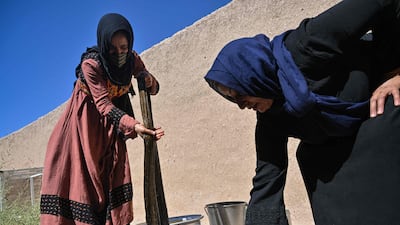
  • Women wash freshly dyed silk in a factory in Herat province. Whether Afghan girls receive an education under the Taliban is turning into an issue of wealth, young women living under the regime say. AFP
    Women wash freshly dyed silk in a factory in Herat province. Whether Afghan girls receive an education under the Taliban is turning into an issue of wealth, young women living under the regime say. AFP
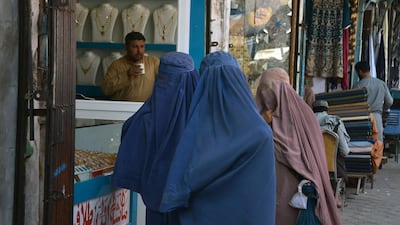
  • Afghan women walk in a Kandahar market. Even if Afghan girls can receive an education, the likelihood they will be able to put it to any use is low. AFP
    Afghan women walk in a Kandahar market. Even if Afghan girls can receive an education, the likelihood they will be able to put it to any use is low. AFP
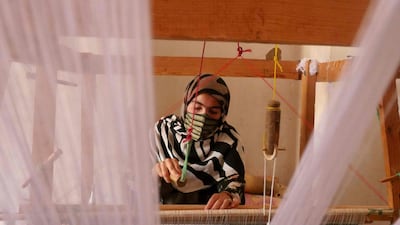
  • An Afghan women weaves silk to make scarfs and other products inside a workshop in the Zandajan district of Herat province. Many Afghan girls fear the longer they stay away from school, the more pressure will build to conform to patriarchal standards and marry. AFP
    An Afghan women weaves silk to make scarfs and other products inside a workshop in the Zandajan district of Herat province. Many Afghan girls fear the longer they stay away from school, the more pressure will build to conform to patriarchal standards and marry. AFP
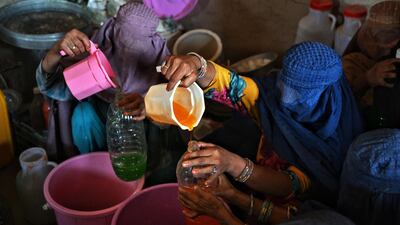
  • Burqa-clad women work in a shampoo factory in Kandahar. AFP
    Burqa-clad women work in a shampoo factory in Kandahar. AFP
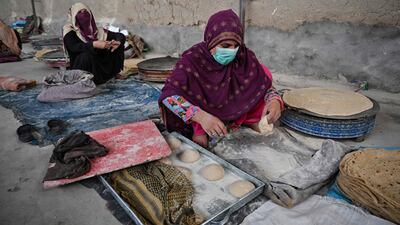
  • Women make flatbread in a factory in Kandahar. AFP
    Women make flatbread in a factory in Kandahar. AFP
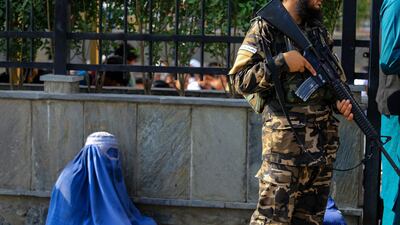
  • An Afghan woman begs as Taliban fighters stand guard in Kabul. Amnesty International says the Taliban have breached women's and girls' rights to education, work and free movement since they took control of the government. EPA
    An Afghan woman begs as Taliban fighters stand guard in Kabul. Amnesty International says the Taliban have breached women's and girls' rights to education, work and free movement since they took control of the government. EPA
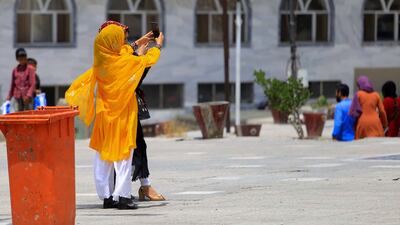
  • Afghan women take a selfie at a park in Kabul. The rates of child, early and forced marriage in Afghanistan are increasing under Taliban rule, Amnesty International has said. EPA
    Afghan women take a selfie at a park in Kabul. The rates of child, early and forced marriage in Afghanistan are increasing under Taliban rule, Amnesty International has said. EPA
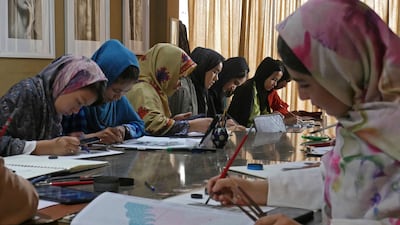
  • Afghan girls paint at a workshop class in Herat. The World Bank estimates that for each year of secondary education, the likelihood of marrying before the age of 18 decreases by five percentage points or more. AFP
    Afghan girls paint at a workshop class in Herat. The World Bank estimates that for each year of secondary education, the likelihood of marrying before the age of 18 decreases by five percentage points or more. AFP
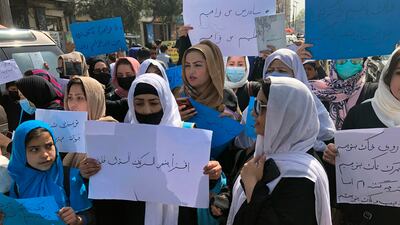
  • Afghan women protest in Kabul. The lives of Afghan women and girls are being destroyed by the Taliban’s crackdown on their human rights, Amnesty has said. AP
    Afghan women protest in Kabul. The lives of Afghan women and girls are being destroyed by the Taliban’s crackdown on their human rights, Amnesty has said. AP
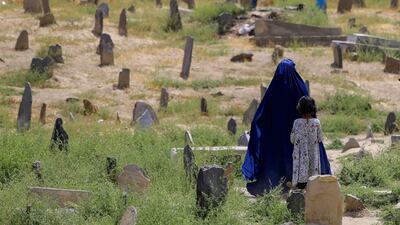
  • An Afghan woman walks in a graveyard in Kabul. EPA
    An Afghan woman walks in a graveyard in Kabul. EPA
  • Shgofe, an Afghan newscaster, presents a programme on private channel 1TV in Kabul. Female TV presenters and reporters in Afghanistan continue to appear with their faces covered to comply with a mandate issued by the Taliban. EPA
    Shgofe, an Afghan newscaster, presents a programme on private channel 1TV in Kabul. Female TV presenters and reporters in Afghanistan continue to appear with their faces covered to comply with a mandate issued by the Taliban. EPA
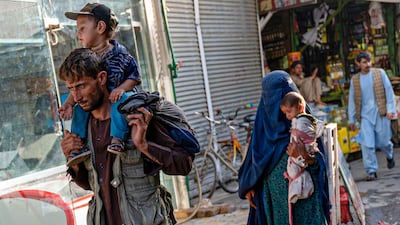
  • An Afghan family walk past a market near the Pul-e Khishti Mosque in Kabul. AFP
    An Afghan family walk past a market near the Pul-e Khishti Mosque in Kabul. AFP
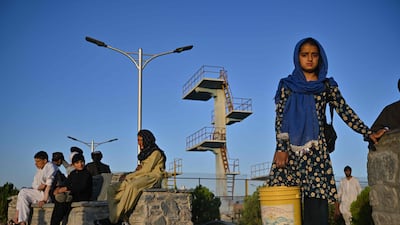
  • People at Wazir Akbar Khan Hill in Kabul. Whether Afghan girls receive an education under the Taliban is turning into an issue of wealth, young women living under the regime say. AFP
    People at Wazir Akbar Khan Hill in Kabul. Whether Afghan girls receive an education under the Taliban is turning into an issue of wealth, young women living under the regime say. AFP
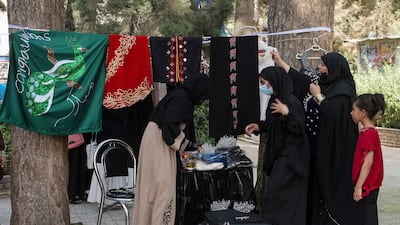
  • Women browse through garments and fabrics for sale in a stall at a women's handicraft market in Herat. AFP
    Women browse through garments and fabrics for sale in a stall at a women's handicraft market in Herat. AFP
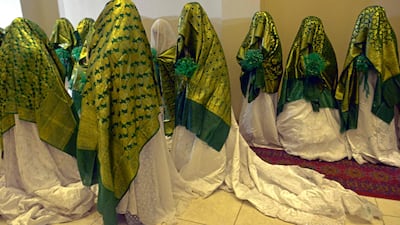
  • Brides wait for the start of a mass wedding in Kabul. Dozens of Afghan women, concealed in thick green shawls, were married off in an austere ceremony attended by hundreds of guests and gun-toting Taliban fighters. AFP
    Brides wait for the start of a mass wedding in Kabul. Dozens of Afghan women, concealed in thick green shawls, were married off in an austere ceremony attended by hundreds of guests and gun-toting Taliban fighters. AFP

On sexual and reproductive health rights, it said on Pan Africa: “Spend reductions on the Women’s Integrated Sexual Health Programme will mean that the programme’s results for women and girls would be reduced by approximately 60 per cent.

“The number of couple years of protection provided will drop from nearly 3 million to around 1.1 million; the number of unsafe abortions averted from nearly 300,000 to approximately 115,000; number of maternal deaths averted will drop from 2,531 to just over 1,000.”

On Yemen, it said: “Half a million women and children in Yemen will not receive health care and fewer preventable deaths will be avoided.

"It may cause lasting damage to health systems in Yemen, if other donors are unable to fund.”

According to the assessment, girls’ education in Ethiopia will also be compromised and violence against women and girls in South Sudan and Somalia will not receive adequate attention and response.

Cuts to disability, religion, and LGBTQ+ inclusion efforts in various countries will affect vulnerable groups, limiting access to improved learning environments, healthcare and support services.

In a letter sent in July alongside the full equality impact assessment to the Labour chairwoman of the IDC, Sarah Champion, Foreign Office minister Andrew Mitchell said the report had been “a key component of allocation decision-making”.

Mr Mitchell also included a paper showing the adjustments that were made in response to equality considerations and to “ensure support reached the most vulnerable”.

The paper said the “limited funds meant not all equality impacts could be mitigated but, using in-year underspends and other resources identified by officials, FCDO ministers made adjustments which included the following 2023-2024 funding uplifts targeted at helping the most vulnerable and those with a relevant protected characteristic”.

They included an increase to Afghanistan’s allocation by £41 million, to £100 million to allow the continuation of humanitarian and women's and girls’ programmes, and an increase to Yemen’s allocation by £32 million, to £87 million, for the humanitarian response.

There was also an increase to Syria’s allocation by £30 million to £77 million, and to Somalia’s allocation by £30 million, to £90 million.

There was also £12 million to central humanitarian and health programmes focused on sexual and reproductive health and rights, and £21 million to NGOs supporting the most vulnerable.

“By the FCDO’s own assessment, critical support to tackle malnutrition will not be delivered," Ms Champion said.

"Programmes aimed at reaching those furthest behind – including women, girls and people with disabilities – will be cut.

“There will be a further political hit to the UK’s leadership on global and regional programmes.

“These must have been intolerable decisions for officials to make, and it is hard to see how the terrible impact set out here sits with FCDO’s recently restated commitment to ‘persuade more of our fellow citizens that international development is core to our own national interest as well as the right thing to do’.

“It is crucial that promised uplifts in the planned allocations for 2024/2025 go to the people with protected characteristics who, by FCDO’s own assessment, have borne the brunt of these cuts.”

A Foreign Office spokesman said: “UK aid spending is due to increase to £8.3 billion next year, and will be focused on programmes addressing humanitarian crises, protecting women and girls and supporting the world’s most vulnerable, while delivering value for money for taxpayers.

“While the budget for low-income countries has had to be reduced in the short term to achieve our savings target, it is due to nearly double for these countries the year after, including in Africa where aid will rise from £646 million to £1.364billion.”


%20Ramez%20Gab%20Min%20El%20Akher
%3Cp%3E%3Cstrong%3ECreator%3A%3C%2Fstrong%3E%20Ramez%20Galal%3C%2Fp%3E%0A%3Cp%3E%3Cstrong%3EStarring%3A%3C%2Fstrong%3E%20Ramez%20Galal%3C%2Fp%3E%0A%3Cp%3E%3Cstrong%3EStreaming%20on%3A%20%3C%2Fstrong%3EMBC%20Shahid%3C%2Fp%3E%0A%3Cp%3E%3Cstrong%3ERating%3A%20%3C%2Fstrong%3E2.5%2F5%3C%2Fp%3E%0A
Results

5pm: Maiden (PA) Dh 80,000 (Turf) 1,400m. Winner: Al Ajeeb W’Rsan, Pat Dobbs (jockey), Jaci Wickham (trainer).

5.30pm: Maiden (PA) Dh 80,000 (T) 1,400m racing. Winner: Mujeeb, Fabrice Veron, Eric Lemartinel.

6pm: Handicap (PA) Dh 90,000 (T) 2,200m. Winner: Onward, Connor Beasley, Abdallah Al Hammadi.

6.30pm: Sheikh Zayed bin Sultan Al Nahyan Jewel Crown Prep Rated Conditions (PA) Dh 125,000 (T) 2,200m. Winner: Somoud, Richard Mullen, Jean de Roualle.

7pm: Wathba Stallions Cup Handicap (PA) Dh 70,000 (T) 1,600m. Winner: AF Arrab, Tadhg O’Shea, Ernst Oertel.

7.30pm: Handicap (TB) Dh 90,000 (T) 1,400m. Winner: Irish Freedom, Richard Mullen, Satish Seemar.

Top financial tips for graduates

Araminta Robertson, of the Financially Mint blog, shares her financial advice for university leavers:

1. Build digital or technical skills: After graduation, people can find it extremely hard to find jobs. From programming to digital marketing, your early twenties are for building skills. Future employers will want people with tech skills.

2. Side hustle: At 16, I lived in a village and started teaching online, as well as doing work as a virtual assistant and marketer. There are six skills you can use online: translation; teaching; programming; digital marketing; design and writing. If you master two, you’ll always be able to make money.

3. Networking: Knowing how to make connections is extremely useful. Use LinkedIn to find people who have the job you want, connect and ask to meet for coffee. Ask how they did it and if they know anyone who can help you. I secured quite a few clients this way.

4. Pay yourself first: The minute you receive any income, put about 15 per cent aside into a savings account you won’t touch, to go towards your emergency fund or to start investing. I do 20 per cent. It helped me start saving immediately.

Guide to intelligent investing
Investing success often hinges on discipline and perspective. As markets fluctuate, remember these guiding principles:
  • Stay invested: Time in the market, not timing the market, is critical to long-term gains.
  • Rational thinking: Breathe and avoid emotional decision-making; let logic and planning guide your actions.
  • Strategic patience: Understand why you’re investing and allow time for your strategies to unfold.
 
 
Company%C2%A0profile
%3Cp%3ECompany%3A%20Zywa%3Cbr%3EStarted%3A%202021%3Cbr%3EFounders%3A%20Nuha%20Hashem%20and%20Alok%20Kumar%3Cbr%3EBased%3A%20UAE%3Cbr%3EIndustry%3A%20FinTech%3Cbr%3EFunding%20size%3A%20%243m%3Cbr%3ECompany%20valuation%3A%20%2430m%3C%2Fp%3E%0A

The Dictionary of Animal Languages
Heidi Sopinka
​​​​​​​Scribe

if you go

The flights Fly Dubai, Air Arabia, Emirates, Etihad, and Royal Jordanian all offer direct, three-and-a-half-hour flights from the UAE to the Jordanian capital Amman. Alternatively, from June Fly Dubai will offer a new direct service from Dubai to Aqaba in the south of the country. See the airlines’ respective sites for varying prices or search on reliable price-comparison site Skyscanner.

The trip 

Jamie Lafferty was a guest of the Jordan Tourist Board. For more information on adventure tourism in Jordan see Visit Jordan. A number of new and established tour companies offer the chance to go caving, rock-climbing, canyoning, and mountaineering in Jordan. Prices vary depending on how many activities you want to do and how many days you plan to stay in the country. Among the leaders are Terhaal, who offer a two-day canyoning trip from Dh845 per person. If you really want to push your limits, contact the Stronger Team. For a more trek-focused trip, KE Adventure offers an eight-day trip from Dh5,300 per person.

GAC GS8 Specs

Engine: 2.0-litre 4cyl turbo

Power: 248hp at 5,200rpm

Torque: 400Nm at 1,750-4,000rpm

Transmission: 8-speed auto

Fuel consumption: 9.1L/100km

On sale: Now

Price: From Dh149,900

UAE currency: the story behind the money in your pockets
The specs

Engine: 5.2-litre V10

Power: 640hp at 8,000rpm

Torque: 565Nm at 6,500rpm

Transmission: 7-speed dual-clutch auto

Price: From Dh1 million

On sale: Q3 or Q4 2022 

3%20Body%20Problem
%3Cp%3E%3Cstrong%3ECreators%3A%3C%2Fstrong%3E%20David%20Benioff%2C%20D%20B%20Weiss%2C%20Alexander%20Woo%3C%2Fp%3E%0A%3Cp%3E%3Cstrong%3EStarring%3A%20%3C%2Fstrong%3EBenedict%20Wong%2C%20Jess%20Hong%2C%20Jovan%20Adepo%2C%20Eiza%20Gonzalez%2C%20John%20Bradley%2C%20Alex%20Sharp%3C%2Fp%3E%0A%3Cp%3E%3Cstrong%3ERating%3A%3C%2Fstrong%3E%203%2F5%3C%2Fp%3E%0A

Mercer, the investment consulting arm of US services company Marsh & McLennan, expects its wealth division to at least double its assets under management (AUM) in the Middle East as wealth in the region continues to grow despite economic headwinds, a company official said.

Mercer Wealth, which globally has $160 billion in AUM, plans to boost its AUM in the region to $2-$3bn in the next 2-3 years from the present $1bn, said Yasir AbuShaban, a Dubai-based principal with Mercer Wealth.

Within the next two to three years, we are looking at reaching $2 to $3 billion as a conservative estimate and we do see an opportunity to do so,” said Mr AbuShaban.

Mercer does not directly make investments, but allocates clients’ money they have discretion to, to professional asset managers. They also provide advice to clients.

“We have buying power. We can negotiate on their (client’s) behalf with asset managers to provide them lower fees than they otherwise would have to get on their own,” he added.

Mercer Wealth’s clients include sovereign wealth funds, family offices, and insurance companies among others.

From its office in Dubai, Mercer also looks after Africa, India and Turkey, where they also see opportunity for growth.

Wealth creation in Middle East and Africa (MEA) grew 8.5 per cent to $8.1 trillion last year from $7.5tn in 2015, higher than last year’s global average of 6 per cent and the second-highest growth in a region after Asia-Pacific which grew 9.9 per cent, according to consultancy Boston Consulting Group (BCG). In the region, where wealth grew just 1.9 per cent in 2015 compared with 2014, a pickup in oil prices has helped in wealth generation.

BCG is forecasting MEA wealth will rise to $12tn by 2021, growing at an annual average of 8 per cent.

Drivers of wealth generation in the region will be split evenly between new wealth creation and growth of performance of existing assets, according to BCG.

Another general trend in the region is clients’ looking for a comprehensive approach to investing, according to Mr AbuShaban.

“Institutional investors or some of the families are seeing a slowdown in the available capital they have to invest and in that sense they are looking at optimizing the way they manage their portfolios and making sure they are not investing haphazardly and different parts of their investment are working together,” said Mr AbuShaban.

Some clients also have a higher appetite for risk, given the low interest-rate environment that does not provide enough yield for some institutional investors. These clients are keen to invest in illiquid assets, such as private equity and infrastructure.

“What we have seen is a desire for higher returns in what has been a low-return environment specifically in various fixed income or bonds,” he said.

“In this environment, we have seen a de facto increase in the risk that clients are taking in things like illiquid investments, private equity investments, infrastructure and private debt, those kind of investments were higher illiquidity results in incrementally higher returns.”

The Abu Dhabi Investment Authority, one of the largest sovereign wealth funds, said in its 2016 report that has gradually increased its exposure in direct private equity and private credit transactions, mainly in Asian markets and especially in China and India. The authority’s private equity department focused on structured equities owing to “their defensive characteristics.”

CRICKET%20WORLD%20CUP%20QUALIFIER%2C%20ZIMBABWE%20
%3Cp%3E%3Cstrong%3EUAE%20fixtures%20%20%3C%2Fstrong%3E%3C%2Fp%3E%0A%3Cp%3E%3Cstrong%3EMonday%2C%20June%2019%20%3C%2Fstrong%3E%3C%2Fp%3E%0A%3Cp%3ESri%20Lanka%20v%20UAE%2C%20Queen%E2%80%99s%20Sports%20Club%26nbsp%3B%3C%2Fp%3E%0A%3Cp%3E%3Cstrong%3EWednesday%2C%20June%2021%20%3C%2Fstrong%3E%3C%2Fp%3E%0A%3Cp%3EOman%20v%20UAE%2C%20Bulawayo%20Athletic%20Club%26nbsp%3B%3C%2Fp%3E%0A%3Cp%3E%3Cstrong%3EFriday%2C%20June%2023%3C%2Fstrong%3E%3C%2Fp%3E%0A%3Cp%3EScotland%20v%20UAE%2C%20Bulawayo%20Athletic%20Club%26nbsp%3B%3C%2Fp%3E%0A%3Cp%3E%3Cstrong%3ETuesday%2C%20June%2027%20%3C%2Fstrong%3E%3C%2Fp%3E%0A%3Cp%3EIreland%20v%20UAE%2C%20Bulawayo%20Athletic%20Club%3C%2Fp%3E%0A
Updated: August 01, 2023, 11:01 PM