


Two men have been convicted of plotting to illegally sell Anglo-Saxon coins of “immense historical significance” abroad.
The metal detectorists were found guilty of conspiring to sell criminal property worth £766,000 ($955,000), namely ninth-century coins believed to have been buried by a Viking.
Craig Best, 46, and Roger Pilling, 75, were also convicted of separate charges after a trial at Durham Crown Court of possessing the criminal property, which was thought to be part of a larger, undeclared find known as the Herefordshire Hoard.
The coins over which they were convicted have never been declared as treasure and have not been handed to the Crown.
Best, of South View, Bishop Auckland, was arrested with three coins at a Durham hotel in May 2019 in a sting operation by police.
He thought he was meeting a metals expert, employed by a broker working for a wealthy US-based buyer, but he was speaking to an undercover detective.
Pilling, who owned an engineering business, was arrested at his home in Loveclough, Lancashire, and another 41 coins were seized.
These 44 coins came from the Herefordshire Hoard, discovered in 2015, worth millions of pounds, and which was also not declared.
Gold coins from 7th century found hidden in wall - in pictures
-
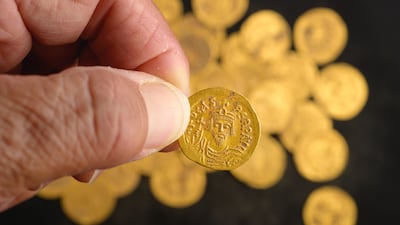
A coin featuring the image of eastern Roman emperor Phocas. Archaeologists in Israel say 44 pure gold coins dating to the 7th century have been found hidden in a wall at a nature reserve. All photos: Israel Antiquities Authority -
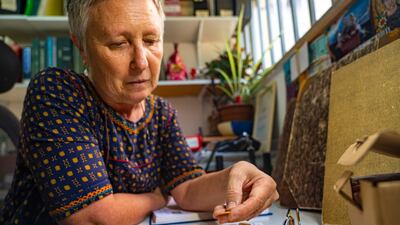
Dr Gabriela Bijovsky, a currency expert at the Israel Antiquities Authority, examines the coins. -

The hoard sheds light on the end of the Byzantine rule in the area. The Byzantine Empire was the eastern half of the Roman Empire. -
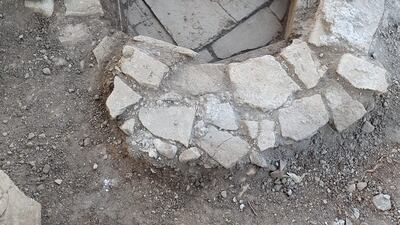
The remains of a water fountain, near the place where the coins were found. -
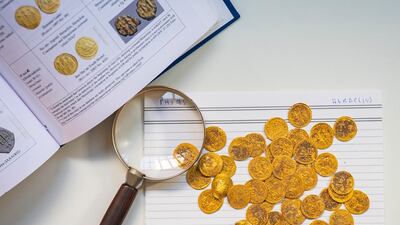
The hoard, which weighs about 170 grams, was found at the Banias site. -

An image of Emperor Heraclius and his son on one of the coins. -
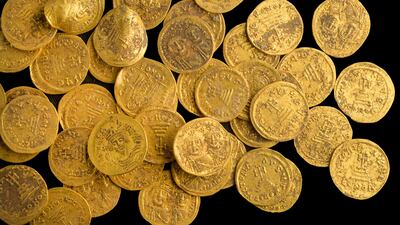
Some of the coins feature the image of Emperor Phocas but most are from the time of his successor Heraclius.


Four people have already been convicted for their roles in concealing that find.
The sting was set up after Best tried to sell coins to a US collector, who then contacted UK-based experts about the apparent availability of extremely rare and valuable examples, and the authorities were alerted.
It was believed the coins were made between 874 and 879 and were buried by a Viking during this particularly violent period of English history.
They included two extremely rare examples of two-headed coins, showing Alfred of Wessex and Ceolwulf, a figure who was discredited by Saxon writers as a Viking puppet ruler.
After the conviction, Det Supt Lee Gosling, said: “This is an extremely unusual case, as it is not very often we get the chance to shape British history.
“It is astonishing that the history books need rewriting because of this find.
“These coins come from a hoard of an immense historical significance relating to the Vikings and we are delighted that they are now with the British Museum.
“This has been a lengthy and complex investigation and I would like to thank our specialist officers and the historical experts for all their help.”
Dr Gareth Williams, a coin expert from the British Museum, said: “New finds have the potential to increase our knowledge. The coins are very much part of our heritage.
“The theft of finds like this are not just a theft from the landowner, who have rights, it is a theft of our heritage.”
Judge James Adkin said sentencing would be complicated as the offence was rare and he adjourned the case until Thursday.
Remanding them in custody, he told the convicted men: “You have both been convicted of what I consider to be compelling evidence of serious criminality, in relation to these artefacts.
“You are both aware of what the sentence is likely to be, imprisonment for years.”

