


Israel's major parties in the Knesset will seek to build a “stronger national consensus” on the government's plans for judicial reforms, a former Israeli ambassador to the UK has said.
Israeli Prime Minister Benjamin Netanyahu announced he will delay the process for discussions on the planned judicial overhaul to next month.
Further readings of the justice bill will be delayed until after the Passover recess, Mr Netanyahu said on Monday, confirming a statement from a right-wing party in his government coalition.
Mark Regev, the former Israeli ambassador to the UK, said polling released on Monday showed 60 per cent of Israelis were in favour of moving ahead with judicial reforms.
“I think what we are going to see is the major parties in the Knesset … trying to reach understanding, whereby we move forward on judicial reform but it is somehow made in a way that it’s less confrontational and you can build a stronger national consensus behind the proposals,” Mr Regev said.
“The attempt will be made. We will have to see if it happens or not.”
He said the government was elected in November with a majority and an agenda to complete judicial reform.
But even people who voted for the government “support the idea that this be done in a less confrontational manner, this be done through consensus”.
Israel protests - in pictures
-

Israeli police disperse demonstrators blocking a road in Tel Aviv during a protest against plans by the government to overhaul the judicial system. AP -
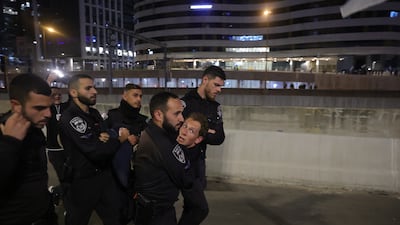
Police arrest a protester in Tel Aviv. EPA -
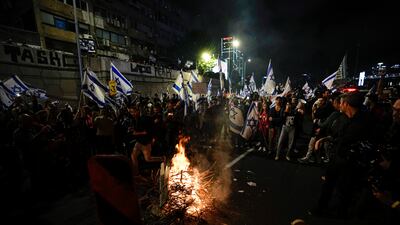
Demonstrators set up a bonfire on a road. AP -

Israeli security forces use a water cannon to disperse protesters. AFP -
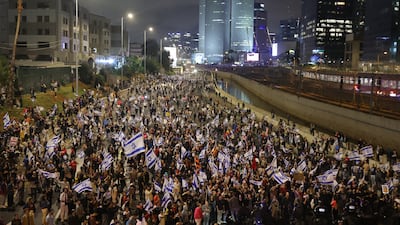
Thousands of protesters block the Ayalon main road. EPA -
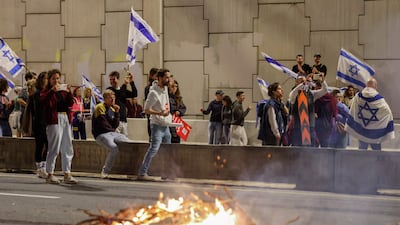
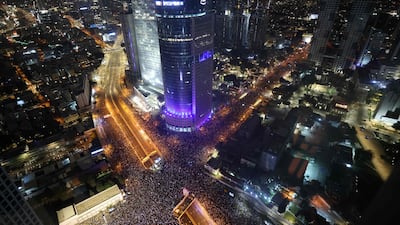
The Tel Aviv protest swelled on Saturday to about 200,000 demonstrators, according to Israeli media estimates. AFP -
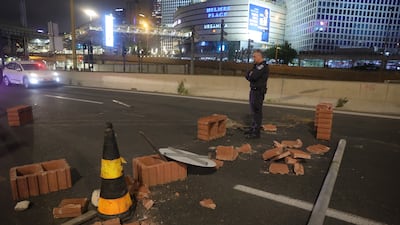
A roadblock placed by protesters on the Ayalon main road. EPA -
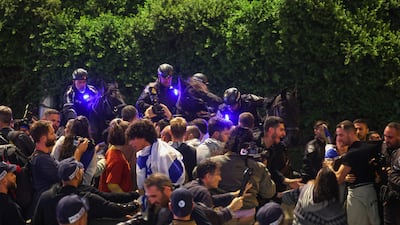
Demonstrations erupted in January after the coalition government announced its package of changes. AFP -
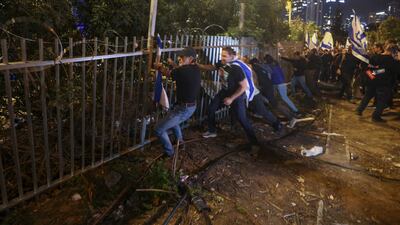
Israeli protesters dislodge a fence. AFP -
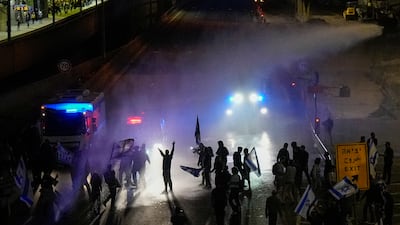
Police use a water cannon to disperse protesters. AP -

An aerial view of the protest. Reuters -
Plans to hand more control to politicians and diminish the role of the court have been questioned by Israel’s allies including the US. AFP -

Protesters with placards of Prime Minister Netanyahu saying 'We will not forget, we will not forgive'. EPA


He said there is support on both sides of the legal divide for this dialogue process.
“The people who support the reform see Israel’s very activist Supreme Court as sort of a House of Lords like you have in Britain, which limits the power of the elected government,” Mr Regev said.
“In Israel, we have a very activist judiciary and the idea that one branch reigns supreme over the other two is of concern to many voters.”
Israel came to a standstill as more than 80,000 people took to the streets to protest against the judicial reforms and Mr Netanyahu's dismissal of a government minister opposing the legislation.
The proposed changes, which critics have called an attack on Israel's democracy, would make it harder for the Supreme Court's powers to rule against the legislature and the executive. They would also give the government more power to appoint judges.
The reforms have split the newly formed government, with far-right ministers such as Security of Minister Itamar Ben-Gvir threatening to resign if the legislation does not pass.

