


A campaign of air strikes against ISIS in Iraq that killed several civilians are probably linked to UK forces, despite long-standing claims from the government that British weapons did not harm a single non-combatant there, a report has shown.
The UK government and military have for years stood by the assertion that they fought a “perfect” war against ISIS in Iraq that protected civilians.
Allies in the US-led coalition have, however, admitted to killing hundreds of civilians in Iraq while supporting Iraqi ground troops in the period after 2014.
The Ministry of Defence said British troops had not killed or harmed civilians in Iraq and declined to confirm or deny whether the specific strikes were conducted by its forces.
“There is no evidence or indication that civilian casualties were caused by strikes in Syria and Iraq,” a representative said.
“The UK always minimises the risk of civilian casualties through our rigorous processes and carefully examines a range of evidence to do this, including comprehensive analysis of the mission data for every strike.”
But an investigation by The Guardian with non-profit watchdog Airwars claims to have identified six strikes in the Iraqi city of Mosul that killed civilians and appear to have been carried out by British forces in 2016 and 2017.
The deaths and injuries of several people, including children, have been described by victims for the first time following missile attacks that devastated their families.
A mother lost her eldest daughter after a missile exploded in a Mosul street and had to have both of her own legs amputated.
Her second daughter still has shrapnel in her skull and her son, a toddler at the time, lost parts of a foot and hand.
A missile destroyed another woman’s home, killing almost all her immediate family, including her mother, father, two siblings and two nephews.
The US-led coalition has not said which country fired the weapons although it has accepted civilian casualties were caused by both air strikes.
The Guardian and Airwars investigation found in total, across the six strikes in Mosul that were identified as likely to have been British attacks, the coalition accepts killing 26 civilians.
The coalition accepted killing two civilians in a further strike in Mosul on 9 January 2017 that was confirmed as an RAF mission.
Britain accepts carrying out that attack but denies civilian casualties, saying the dead were militants.
Militias who played a vital role in defeating ISIS — in pictures
-
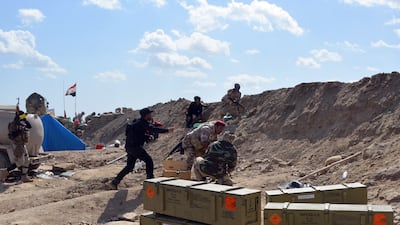
Iraqi government forces and allied militias take a position in the northern part of Diyala province as part of an assault to retake the city of Tikrit from ISIS, on March 2, 2015. All photos: AFP -
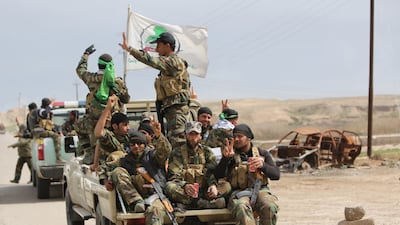
Members of the Iraqi paramilitary Popular Mobilisation units flash the 'V' for victory sign after regaining control of the village of Albu Ajil, near Tikrit, on March 9, 2015. -
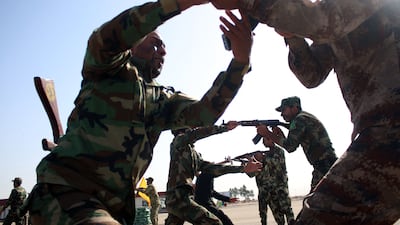
Fighters from a Popular Mobilisation unit take part in an exercise during their graduation ceremony in the southern Iraqi city of Basra, on April 9, 2015. -
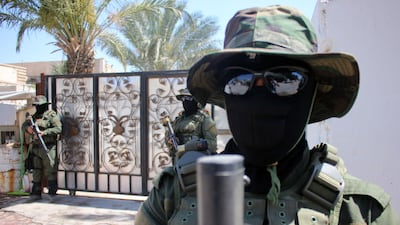
Iraqi fighters of the Shiite group Asaib Ahl Al Haq (The League of the Righteous) stand guard outside their headquarters on May 18, 2015, in the mainly Shiite southern city of Basra, as Shiite militias converged on Ramadi in a bid to recapture it from ISIS. -
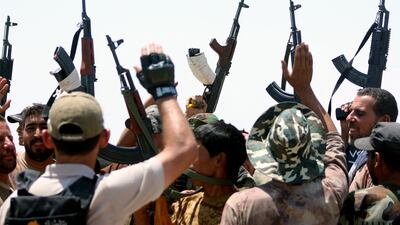
Iraqi government forces and members of the Popular Mobilisation units raise their weapons on the front line during battles with ISIS on the road leading to Saqlawiya, in Iraq's Anbar province, on August 4, 2015. -
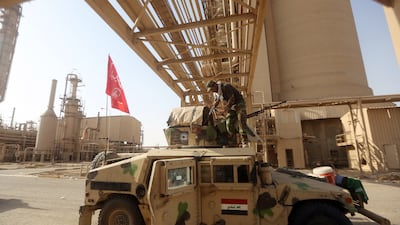
An Iraqi Shiite fighter cleans his weapon on his vehicle at the petrochemical plant in the town of Baiji, north of Tikrit, on October 16, 2015. -
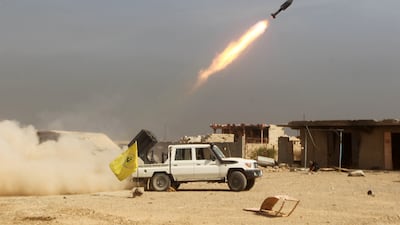
Iraqi Shiite fighters fire a rocket during a military operation against ISIS as they advance towards the centre of Baiji, about 200 kilometres north of Baghdad, on October 19, 2015. -
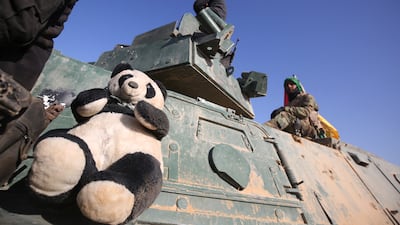
Iraqi Shiite fighters from the Hashed Al Shaabi paramilitaries advance in a desert area near the village of Tall Abtah, south-west of Mosul, on November 28, 2016, during a broad offensive by Iraq forces to retake Mosul from ISIS. -
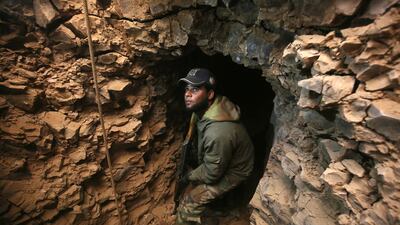
An Iraqi Shiite fighter from the Hashed Al Shaabi paramilitary forces inspects an underground tunnel in the town of Tal Abtah, south of Tal Afar, on December 10, 2016. -
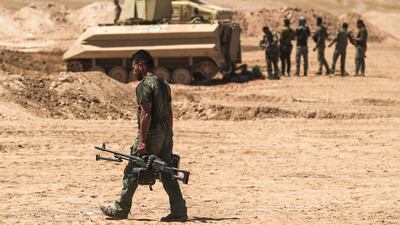
Iraqi pro-government forces advance towards the Unesco-listed ancient city of Hatra, south-west of Mosul, during an offensive to retake the area from ISIS fighters, on April 26, 2017. -
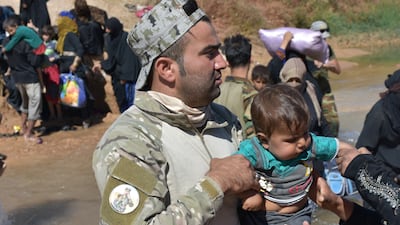
A fighter from the Hashed Al Sahaabi units helps displaced people who fled from battles to oust ISIS from Hawija cross a river in the area of Zarga, about 35km south-east of Kirkuk, on October 4, 2017. -
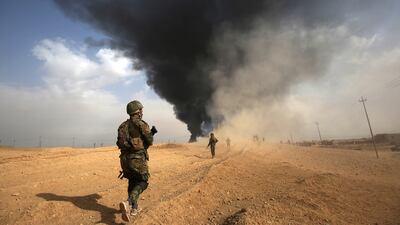
Iraqi forces advance towards the city of al-Qaim, in Iraq's western Anbar province near the Syrian border, as they fight against remnant pockets of ISIS forces, on November 3, 2017. -
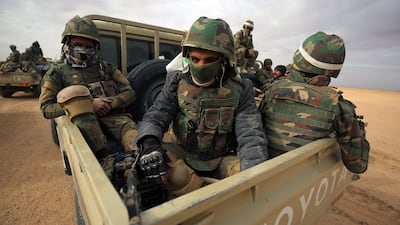
Iraqi forces ride in the back of pick-up trucks during the advance through Anbar province in the western desert bordering Syria, on November 25, 2017, to flush out remaining ISIS fighters in the region. -
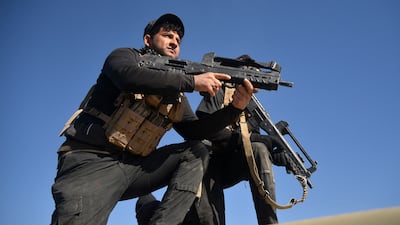
Members of the Iraqi forces and the Hashed Al Shaabi carry their firearms as they stand on an infanty-fighting vehicle near the Iraqi-Syrian border, about 80km west of the border town of al-Qaim, on December 9, 2017. -
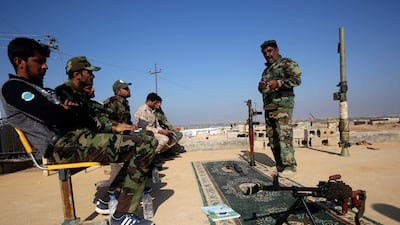
Abbas Hamza Hassan, a 56-year-old Iraqi fighter, is pictured on November 13, 2018 while training fellow Hashed members how to use weapons in the western Iraqi province of Anbar.


The Guardian’s report is likely to put increased pressure on the British authorities over how transparent their policies are when it comes to assessing civilian casualties.
The UK did not do enough to locate civilians killed and injured, said the 2016 Chilcot Report on the UK’s role in the 2003 invasion and subsequent occupation of Iraq.
The report recommended improving this and said that “a government has a responsibility to make every reasonable effort to understand the likely and actual effects of its military actions on civilians”.
The UK was no more transparent during the next British campaign in Iraq and the government has refused to detail how it assesses reported casualties, despite requests from MPs.
As part of the Operation Inherent Resolve coalition battling ISIS fighters, the UK began bombing Iraq again in 2014.
Air strikes in Syria began a year later and between 2014 and 2020, it dropped more than 4,000 munitions in the two countries.
The British military claims there was not one civilian death during those strikes that killed 3,052 militants in Iraq.
The US-led coalition, which includes Britain, did not break down which countries were responsible for air strikes that killed 1,437 civilians during that period.
Former British military officials have said the UK position was unconvincing.
Greg Bagwell, a retired air marshal, said even though Britain has some of the best systems in the world to protect civilians, the current position that the UK had made no targeting errors was “a stretch”.
“If we were saying we were 90 per cent better than everyone else [at protecting civilians], that might be a credible argument. When you keep saying the number is zero and therefore we’re 100 per cent perfect, it clearly becomes hard to sell that,” he said.
British officials had been told several times their strikes may have killed civilians, and that “to suggest they have not … is nonsense”, a senior coalition source told the BBC in 2018.
The Guardian and Airwars combed through public statements and information from both sides of the Atlantic to investigate which deaths might have been caused by British air strikes, including 1,300 coalition documents detailing individual cases of civilian casualties released by the US military in December 2021 following a freedom of information request from The New York Times.
The information was cross-referenced against regular Ministry of Defence updates on strikes, and the dates and locations of all attacks in which the UK military claimed it had killed or injured ISIS fighters, which were released to Airwars after freedom of information requests.
Details pointed towards British involvement in 43 air strikes resulting in civilian casualties.
These were narrowed down further by looking at information such as target types, munitions and specific location to give a shortlist of eight strikes.
The Guardian and Airwars then travelled to Mosul to look for survivors.
The investigation is far from a comprehensive account of potential British casualties in Mosul, but it raises serious questions about the government’s position.
Britain insists its secrecy about civilian casualties is to protect the military, but its allies have been more open.
“There’s no argument why if the US can disclose this information, that the UK can’t disclose it either,” says Jen Gibson, a long-time campaigner on military transparency and former head of Extrajudicial Killings at Reprieve.
Even if Britain were to accept responsibility for the killings, survivors are unlikely to be able to seek compensation.
A law passed in 2021 sets a six-year limit on any claim for damages and that period has already passed.

